
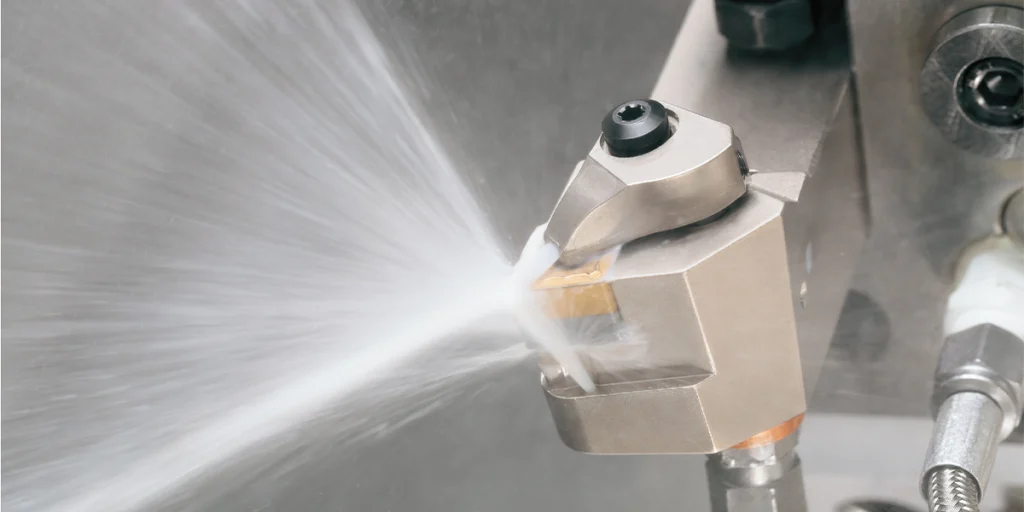
Numerical control (NC) machining is a process that uses digital programs to drive machine tools to manufacture parts. It is widely used in the production of precision parts, product development and verification, and small-batch manufacturing. Compared with traditional machining methods, NC machining relies not only on equipment performance but also on a complete engineering process, including design, programming, process planning, and quality control.
In actual manufacturing, machining quality often does not depend on a single factor, but rather on the level of coordination throughout the entire process. From part design to final inspection, each step directly affects dimensional accuracy, machining efficiency, and production costs.
Therefore, understanding the standard CNC machining process is fundamental to ensuring stable part quality and smooth project progress.
Overview of the standard process of CNC machining
A complete CNC machining process typically includes the following key stages, each with its own technical focus:
1. Component Design and Engineering Evaluation
The machining process typically begins with a 3D model. Engineers need to assess whether the part’s structure is suitable for CNC machining, for example:
- Are there any deep cavity structures that are difficult to fabricate?
- Are there excessively small interior angle radii?
- Are there any unreasonable tolerance requirements?
This stage of optimization can significantly reduce the difficulty and cost of subsequent processing.
2. CAM Programming and Machining Path Generation
After confirming that the part design is machinable, the machining path needs to be generated using CAM software. This mainly includes:
- Tool selection
- Cutting parameter settings
- Processing sequence planning
The program is eventually converted into G-code, which is used to control the machine tool’s motion trajectory.
The rationality of the processing path will directly affect:
- Surface quality
- Processing time
- Tool life
3. Machine tool preparation and clamping
After the program is completed, machine tool preparation work needs to be performed, including:
- Workpiece clamping and positioning
- Tool installation and tool setting
- Establishment of coordinate system
Clamping stability is one of the important factors in ensuring machining accuracy.
4. Trial Cutting and Parameter Optimization
Before formal production, trial cuts are usually required to verify the results.
- Is the program correct?
- Is the toolpath reasonable?
- Do the dimensions meet the tolerance requirements?
If necessary, cutting parameters may need to be adjusted or machining strategies optimized.
5. Batch processing execution
After a trial cut confirms everything is correct, the formal machining stage begins. The advantages of CNC machining become particularly apparent at this stage:
- Stable reprocessing capability
- High consistency
- Lower human error
For batch production of parts, fixture optimization is often combined to further improve efficiency.
6. Testing and Quality Control
After machining, the dimensions need to be verified using testing equipment to ensure that the parts meet the drawing requirements. Common testing items include:
- Dimensional tolerances
- Geometric tolerances
- Surface roughness
For high-precision parts, the entire process of quality traceability may also be involved.
Key points in the part design phase
In CNC machining, part design not only determines product functionality but also directly impacts machining difficulty, production efficiency, and manufacturing costs. Many machining problems do not arise during the machining stage but are already brewing issues in the design phase. Therefore, Design for Manufacturing (DFM) is particularly crucial.
1. Set appropriate tolerance ranges
Excessively tight tolerances significantly increase machining difficulty and inspection costs, but do not necessarily lead to improved performance. Tolerances should be set appropriately based on the function of the part during the design phase.
- Standard tolerances can be used for general structural dimensions.
- Use precision tolerances again for key mating parts
- Avoid requiring uniform high precision across the entire size
Reasonable tolerance allocation can effectively control processing costs.
2. Avoid structures that are difficult to manufacture.
Some structures are feasible in design, but are difficult to machine using CNC machining, for example:
- Deep and narrow cavity
- Too small interior angle radius
- Thin-walled structures with high slenderness ratio
These structures can easily lead to tool vibration, deformation, or decreased machining efficiency. It is generally recommended to optimize the structure according to the standard tool dimensions.
3. Prioritize features that can be machined using standard cutting tools.
Non-standard cutting tools usually mean:
- Increased processing cycle
- Rising costs
- Decreased tool stability
When designing, it is important to match the specifications of common cutting tools as much as possible, such as standard hole diameters and common chamfer dimensions.
4. Consider the clamping and machining direction.
CNC machining often requires multiple setups to complete complex structures. If the design does not consider the machining direction, it may lead to:
- Difficulty in clamping
- Accuracy accumulation error increases
- Increased processing costs
By reducing the number of clamping operations, machining stability and efficiency can be significantly improved.
Programming and process planning
After the part design is confirmed, CNC machining enters the programming and process planning stage. This stage determines the machining path, tool selection, and cutting strategy, and is one of the core links affecting machining quality and efficiency.
1. CAM Programming and Toolpath Generation
Engineers use CAM software to convert 3D models into machining paths that can be executed by machine tools. This process typically includes:
- Rough machining path planning
- Semi-finishing optimization
- Finishing contour control
Proper path planning can reduce idle travel, improve processing efficiency, and ensure surface quality.
2. Tool selection and cutting parameter setting
The choice of cutting tools directly affects machining stability and surface finish. Key considerations include:
- Material type
- Processing depth
- Tool rigidity
At the same time, appropriate cutting parameters need to be matched, for example:
- Spindle speed
- Feed rate
- Depth of cut
Inappropriate parameters may lead to accelerated tool wear or decreased surface quality.
3. Processing sequence optimization
Process planning typically follows these basic principles:
- Start with the rough and work your way up to the fine.
- Surface first, hole later
- Baseline first, then features
A proper processing sequence can reduce deformation problems caused by stress release and improve dimensional stability.
4. Application of Multi-Axis Machining Strategies
For complex structural parts, multi-axis machining is often required to reduce the number of setups and improve accuracy. Multi-axis machining can:
- Improve the ability to process complex curved surfaces
- Improve surface uniformity
- Shorten the overall processing cycle
However, it also requires higher programming experience and better equipment performance.
Trial cut and formal production
After programming and process planning are completed, CNC machining typically does not proceed directly to mass production. Instead, trial cutting and verification are required first. The purpose of trial cutting is to check the feasibility of the program and process under real machining conditions, thereby reducing the risks associated with mass production.
1. Program verification and processing path confirmation
The trial cutting phase first needs to verify whether the program has the following problems:
- Risk of tool interference or collision
- Inappropriate processing path
- Cutting parameters mismatch
By running in single segments or without load, potential problems can be detected in advance, thus preventing damage to the machine tool or workpiece.
2. Critical Dimension Inspection and Process Correction
After the trial cut is completed, key dimensions need to be checked, including:
- Fitting dimensions
- Key profile dimensions
- Hole position accuracy
If a deviation occurs, it is usually adjusted in the following ways:
- Correct tool compensation value
- Optimize cutting parameters
- Adjust the processing sequence
This stage is crucial for ensuring the stability of subsequent batch processing.
3. Formal batch processing control
After a trial cut confirms everything is correct, the formal production stage can begin. To ensure batch consistency, it is usually necessary to establish stable processing control methods, such as:
- Fixed clamping method
- Standardized tool management
- Sampling inspection during processing
For medium- or large-volume projects, specialized fixtures will be used to improve efficiency and reduce human error.
Post-processing inspection and quality control
Quality control is a crucial link in the CNC machining process. Its goal is not only to check whether the parts meet the drawing requirements, but more importantly, to ensure the stability and traceability of the machining process.
1. Dimensional inspection and tolerance verification
After machining, the parts usually need to be dimensionally inspected. Common inspection items include:
- Linear dimensions
- Aperture and spacing
- Geometric tolerances
Depending on the required precision, the following may be used:
- Calipers and micrometers
- Altimeter
- Coordinate measuring equipment
For precision parts, inspection reports are usually included as part of the delivery documentation.
2. Surface quality and appearance inspection
Besides dimensional requirements, surface quality is also an important indicator for evaluating processing quality, for example:
- Surface roughness
- Consistency of machining texture
- Burr control status
In some industries (such as medical and electronic structural components), appearance quality also directly affects product performance.
3. Batch quality stability control
In mass production, sampling inspection is typically used to ensure processing stability, including:
- First article inspection
- Sampling inspection during the process
- Final inspection and confirmation
For high-requirement projects, quality traceability records may also be established to ensure that the processing data for each batch of parts can be traced back.
Professional CNC machining customization service provider
Choosing the right CNC machining partner is often more important than simply comparing prices. Stable machining capabilities, mature process experience, and a comprehensive quality control system can significantly reduce project risks and shorten delivery cycles.
If you are looking for reliable CNC machining customization services, the following information can be used to obtain more accurate engineering support:
- 3D drawings or 2D drawings
- Material requirements
- Surface treatment requirements
- Expected quantity
The engineering team typically provides machining suggestions based on the part’s structure, along with reasonable manufacturing plans and quotations. Project requests are welcome for further technical support.