


PTFE (Teflon) Machining Services
Zhuohua Hardware provides custom PTFE (Teflon) machining services for prototypes, low-volume production, and mass manufacturing. Using precision CNC machining and complementary manufacturing processes, we produce high-performance PTFE components for chemical processing, fluid handling, semiconductor, medical, and industrial applications.
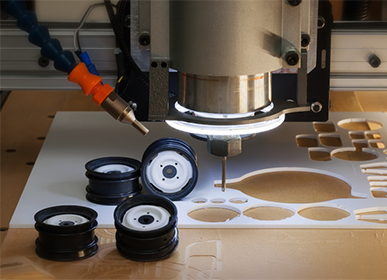
Why Choose Our PTFE (Teflon) Machining Services
Our PTFE machining services deliver precision-manufactured components for applications requiring excellent chemical resistance, low friction, and long-term performance. From prototype development to production manufacturing, we provide reliable machining solutions with consistent quality and dependable lead times.
PTFE Grades We Machine
We machine a variety of PTFE materials for sealing, chemical processing, electrical insulation, and low-friction applications. Material selection is based on application requirements, operating conditions, and performance needs.
Seals, gaskets, insulation parts, high-purity components.
Valve seats, bearings, wear rings, structural components.
Bushings, sliding components, compressor parts.
Dynamic seals, bearing components, low-friction applications.
Heavy-duty bearings, wear pads, industrial machine components.
Precision PTFE Parts We Manufacture
We manufacture custom PTFE parts for prototypes, replacement components, and production applications. Our machining capabilities support sealing systems, chemical processing equipment, fluid handling systems, and other demanding industrial applications.
Industries We Serve
Our PTFE machining services support industries requiring chemical resistance, low friction, high-temperature stability, and high-performance plastic components for demanding operating environments.
Chemical Processing
Seals, valve seats, pump components, pipe system parts
Semiconductor
High-purity components, insulators, fluid handling parts
Oil & Gas
Sealing rings, bearings, valve components, wear parts
Medical Devices
Laboratory equipment parts, sealing components, insulation parts
Food Processing
Gaskets, guides, wear strips, processing equipment components
Industrial Equipment
Bushings, bearings, wear rings, sliding components
PTFE Manufacturing Capabilities
We provide complete PTFE manufacturing solutions from prototype development to production. Manufacturing processes are selected according to part geometry, operating conditions, wear requirements, and production volume.
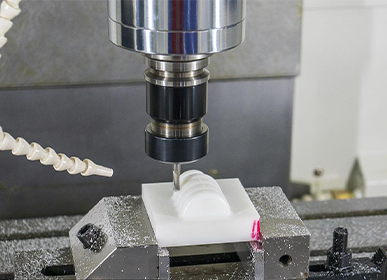
CNC Milling
Precision machining for seals, valve components, wear rings, insulation parts, and complex PTFE components.
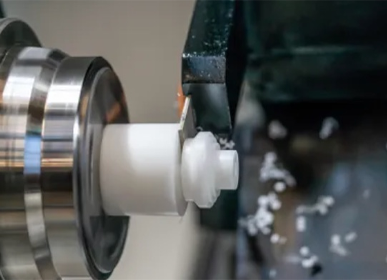
CNC Turning
Accurate machining for bushings, bearings, sleeves, sealing rings, and other cylindrical PTFE parts.
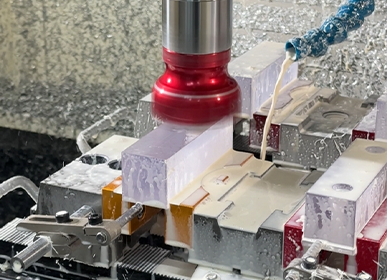
PTFE Prototyping
Rapid production of functional prototypes for design validation, testing, and product development.
Surface Finishing Options
We provide finishing services to improve the functionality, dimensional consistency, and assembly quality of custom PTFE parts.
Application Notes
Surface finishing options are selected according to material characteristics, functional requirements, and application needs.
Explore Surface FinishingTolerance & Quality Control
We implement standardized quality control throughout every stage of PTFE machining to ensure dimensional accuracy, repeatability, and reliable product quality.
| Feature | Capability |
|---|---|
| General Tolerance | ISO 2768-m unless otherwise specified |
| Precision Tolerance | Up to ±0.01 mm depending on part geometry and machining requirements |
| Production Consistency | Stable quality from prototype through production |
Our PTFE Manufacturing Process
Our streamlined PTFE manufacturing process ensures efficient communication, consistent quality, and reliable delivery from prototype development to production manufacturing.
Why Zhuohua Hardware
Zhuohua Hardware is a trusted China PTFE machining manufacturer providing custom PTFE parts for customers worldwide. From rapid prototyping to production manufacturing, we deliver precision machining, engineering support, and one-stop manufacturing solutions for high-performance plastic components.