


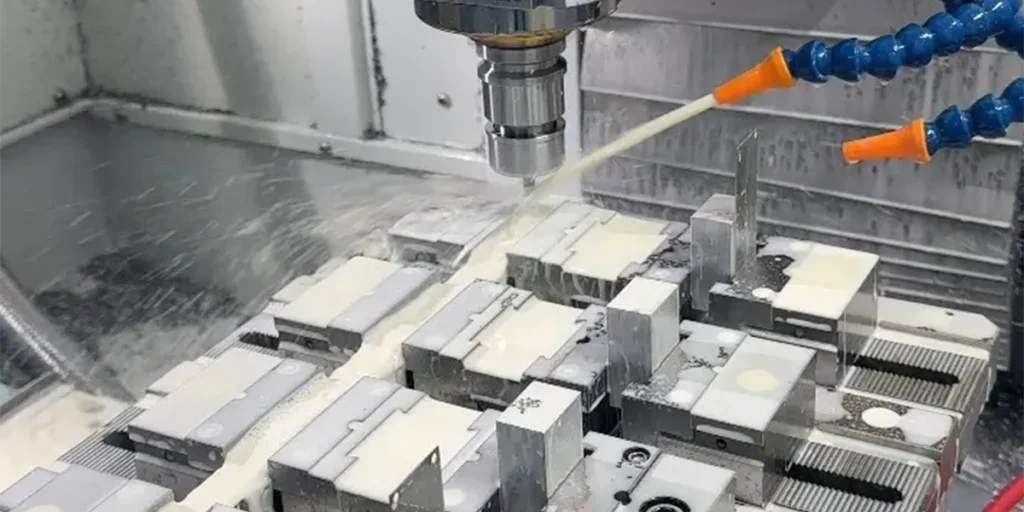
During the inquiry or drawing evaluation process, many customers will first focus on one question: How high a precision can CNC machining achieve?
This is reasonable, but in actual production, higher precision is not always better. Excessively high tolerance requirements often significantly increase processing costs, extend delivery times, and even affect the manufacturability of the structural design. The truly reasonable approach is to formulate achievable and economical precision standards while meeting the functional requirements of the product.
As a CNC machining service provider, we typically consider the following factors when making recommendations during the project evaluation phase:
- Actual use scenarios of the parts
- Material properties and structural complexity
- Batch size and cost control objectives
- Subsequent assembly requirements
Understanding the common accuracy ranges of CNC machining is the first step in developing a reasonable technical solution.
Common CNC precision range
The accuracy of CNC machining is usually expressed as dimensional tolerance. Different equipment levels, process conditions and part structures will affect the final achievable accuracy level.
Under standard CNC machining conditions, the common precision ranges in the industry are as follows:
1. Standard CNC machining accuracy
The tolerance range for most standard mechanical parts is typically controlled within ±0.01 mm to ±0.05 mm.
This accuracy range applies to:
- Structural components
- Shell-type parts
- Non-critical mating parts
While ensuring processing efficiency, it can also effectively control manufacturing costs.
2. Precision CNC machining accuracy
For parts requiring assembly fit or functional specifications, higher precision is typically needed: ±0.005 mm to ±0.01 mm.
Common applications include:
- Shaft-type mating structure
- Sealed structure
- Medical and precision instrument parts
Such precision typically requires more stable equipment conditions and stricter process control.
3. Ultra-precision machining range (special cases)
When dealing with optical, aerospace, or high-precision components, some critical dimensions may require ±0.002 mm or higher.
However, it should be clear that this type of precision usually has significant limitations:
- Only applicable to local critical dimensions
- Processing costs have increased significantly
- Processing cycle extended
In engineering practice, ultra-high precision is not used for all parts; instead, key dimensions are controlled according to functional requirements.
From a manufacturing perspective, reasonable precision settings should follow one principle: meet the functional requirements, rather than endlessly pursuing higher tolerances.
In real-world projects, by optimizing structural design and coordination, it is often possible to significantly reduce processing difficulty and costs while ensuring performance.
Key factors affecting accuracy
The accuracy of CNC machining is not determined by a single factor, but is the result of the combined effects of equipment, process, materials, and structural design. In actual project evaluation, the following factors are usually key to influencing accuracy.
1. Machine tool equipment level
The precision of the machine tool itself is a fundamental requirement, including:
- Spindle runout accuracy
- Precision of lead screw and guide rail
- Servo system control capabilities
- Thermal stability
Ordinary machining equipment can stably control the accuracy to around ±0.01 mm, while high-end precision equipment can further improve it to ±0.005 mm or even higher. However, it should be noted that the higher the precision of the equipment, the higher the machining cost will be, so it is usually only used for critical dimensions.
2. Material properties
Different materials exhibit significant differences in stability during processing, for example:
- Aluminum alloys are easy to process, but they are prone to significant thermal deformation.
- Stainless steel is difficult to cut, and the cutting tools wear out quickly.
- Engineering plastics are prone to stress deformation.
The hardness, thermal conductivity, and internal stress of a material all directly affect its dimensional stability.
In actual production, for materials with a high risk of deformation, it is often necessary to:
- Step-by-step processing
- Reserve a margin
- Secondary finishing
3. Part structural design
Structural complexity is one of the important factors affecting accuracy, for example:
- Thin-walled structures are prone to deformation.
- Insufficient rigidity of deep cavity structure
- Slender shafts are prone to vibration.
If the design does not consider manufacturability, even with sufficient equipment precision, it is difficult to consistently achieve ideal tolerances. Therefore, manufacturers typically recommend that customers conduct DFM (Manufacturability Analysis) to optimize the structure and reduce manufacturing risks.
4. Cutting tools and machining parameters
Tool quality and cutting parameters directly affect machining stability, including:
- Knife material
- Tool wear condition
- Cutting speed and feed rate
- Cutting strategy
A well-planned process is often more effective than simply upgrading equipment.
5. Environmental and Testing Conditions
In high-precision machining, environmental factors cannot be ignored, for example:
- Temperature changes cause material expansion.
- Clamping method affects dimensional stability
- The accuracy of the testing equipment affects the final judgment.
When tolerances are within ±0.005 mm, environmental control usually becomes a necessity.
The boundary between precision machining and conventional machining
In actual projects, many clients will directly request “precision machining”. However, from a manufacturing perspective, precision machining is not a fixed standard, but is closely related to functional requirements.
It can usually be distinguished from two dimensions: tolerance range and process requirements.
1. Classification based on tolerance range
Common reference ranges in the industry are:
Conventional CNC machining
- Tolerance range: ±0.01 mm ~ ±0.05 mm
- Applicable to structural components and non-critical mating parts
Precision CNC machining
- Tolerance range: ±0.005 mm ~ ±0.01 mm
- Suitable for functional fit or sealing structures.
Ultra-precision machining
- Tolerance range: ±0.002 mm or higher
- Typically used only for local critical dimensions
It should be emphasized that most industrial parts do not need to be fully upgraded to the precision level.
2. Classification from the perspective of process control
Precision machining typically implies stricter manufacturing controls, for example:
- More stable equipment conditions
- More complex process flow
- More frequent size checks
- Higher-grade tool configuration
These factors directly impact processing costs and production cycles.
Therefore, during the project evaluation phase, a more reasonable approach is to focus high precision on key functional dimensions rather than comprehensively increasing the tolerance level of the entire part.
3. Functionality is more important than tolerance values.
In engineering practice, the core objective of part accuracy is to meet assembly and functional requirements, rather than pursuing numerical values themselves.
For example:
- Non-mating surfaces typically do not require high precision.
- Larger tolerances are allowed in the external dimensions.
- Strict control is only required for critical hole locations or mating structures.
By properly allocating tolerances, manufacturing costs can be effectively reduced while ensuring performance.
Risks of excessively high precision requirements
In real-world projects, improving accuracy is not simply a technical issue, but a comprehensive factor that directly impacts cost, delivery time, and processing stability. Blindly increasing tolerances during the design phase without considering actual functional requirements often leads to the following risks.
1. Processing costs have increased significantly.
With each increase in precision, the processing difficulty typically increases non-linearly, mainly reflected in:
- Processing time extended
- Increased tool wear
- Increased testing costs
- Increased equipment occupancy costs
For example, increasing the precision from ±0.02 mm to ±0.005 mm could increase the overall processing cost by 30%–100%.
2. Extended processing cycle
High precision usually means:
- Multiple finishing processes
- More stringent clamping control
- More frequent size checks
These factors directly impact delivery time, especially for small-batch or complex structural parts.
3. Decreased yield
When tolerance requirements are too tight, material stress release, temperature changes, or minor vibrations can all cause dimensional fluctuations, thereby increasing the risk of scrap.
Common situations include:
- Deformation of thin-walled structures
- Dimensional drift of deep cavity components
- Long dimension cumulative error
In mass production, these problems are amplified.
4. Decreased manufacturability of the design
Some designs can theoretically achieve high precision, but are difficult to control stably in actual manufacturing. For example:
- Excessively long tolerance chains
- Unreasonable baseline design
- Unnecessary full-size high tolerances
The sensible approach is to focus on improving the precision of key functional dimensions rather than improving the overall performance.
From a manufacturing perspective, it is recommended to follow the principle of setting tolerances based on functionality rather than numerical values.
Professional CNC machining customization service provider
In actual projects, reasonable accuracy depends not only on equipment capabilities, but also on the preliminary process assessment and structural optimization.
As a CNC machining customization service provider, we will provide the following during the quotation stage:
- Design-based manufacturability analysis (DFM)
- Recommendations for accuracy and cost optimization
- Material and process matching scheme
- Mass production risk assessment
If you are developing new products or optimizing parts, please submit your drawings or technical requirements. We will provide a more reasonable processing solution based on the actual application scenario and help you achieve the best balance between accuracy, cost and delivery time.