


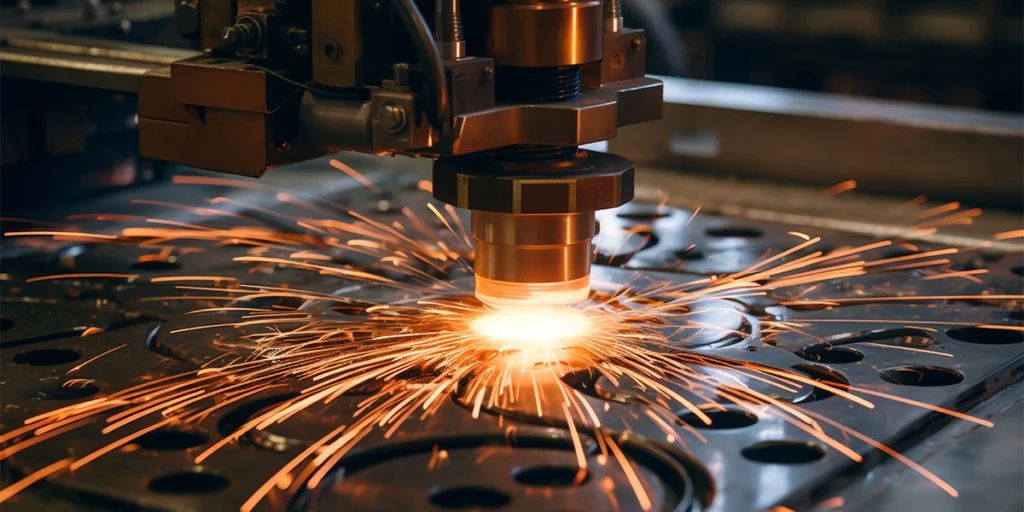
In CNC machining projects, material selection often directly affects machining efficiency, machining costs, and the quality of the final parts. Even with identical structural designs, different metal materials can exhibit significant differences in their performance during the cutting process, such as tool wear rate, surface roughness stability, and machining cycle time.
Therefore, during product development or component optimization, engineers typically focus on the machinability of materials. Choosing easily machinable metals can not only shorten processing cycles but also effectively reduce overall manufacturing costs.
Common CNC-machined metals include aluminum alloys, stainless steel, carbon steel, copper alloys, and titanium alloys, among which the machining difficulty varies considerably. Understanding “which metals are easier to machine” and “why they are easier to machine” is a crucial step in developing a reasonable manufacturing plan.
In actual production, most industrial metals can be processed by CNC equipment, but optimization is required by combining material properties and process design.
Criteria for judging free-working metals
In the field of mechanical manufacturing, the ease of processing materials is not a single indicator, but rather determined by a combination of multiple processing factors. It can typically be judged from the following dimensions:
1. Magnitude of cutting force
The lower the cutting force, the lower the tool load, and the more stable the machining process. Free-machining metals typically possess the following characteristics:
- Lower hardness
- Good plasticity
- Stable material structure
For example, aluminum alloys have low cutting resistance during the cutting process, which allows for higher feed rates.
2. Tool wear condition
Tool life directly affects machining costs and efficiency. Materials with the following properties are easier to machine:
- Not prone to work hardening
- Contains no large amount of hard particles
- Good thermal conductivity
Conversely, materials like titanium alloys and high-temperature alloys typically experience faster tool wear, significantly increasing the difficulty of machining them.
3. Chip removal performance
Chip removal performance determines machining stability and surface quality. Ideal easily machinable materials typically possess the following characteristics:
- Chips are prone to breakage
- Non-stick knife
- Does not form a fibroma
If chip removal is difficult, it can easily lead to:
- Tool damage
- Surface scratches
- Processing interruption
4. Thermal stability
If the heat generated during machining cannot be effectively dissipated, it will accelerate tool wear and affect dimensional stability. Metals with good thermal conductivity are more suitable for high-speed machining, such as aluminum and copper.
5. Surface quality stability
Easily processed materials are generally more readily available:
- Lower surface roughness
- Stable dimensional accuracy
- Fewer post-processing requirements
This is especially important for the manufacture of precision parts.
From an engineering perspective, there is no absolutely “easiest” metal to process; there are only material choices that are more suitable for the current structure and application scenario. In actual projects, a balance must usually be struck between performance requirements and processing costs.
Comparison of common easy-to-machine metals
In actual CNC machining projects, the machinability of different metals varies significantly. Influencing factors include material hardness, thermal conductivity, cutting stability, and work hardening tendency. Below are some common types of easily machinable metals used in engineering and their typical characteristics:
1. Aluminum alloy
Aluminum alloys are generally considered to be one of the easiest metals to CNC machine, and are widely used in the manufacture of structural and exterior parts.
Key features include:
- Low cutting resistance, enabling high-speed machining.
- Good thermal conductivity, resulting in lower tool wear.
- Excellent chip removal performance
- Good surface quality is easily obtained
In actual production, aluminum alloys are suitable for:
- Rapid prototyping
- Small to medium batch production
- Machining of complex structural components
Therefore, aluminum alloys are often the preferred material for CNC machining projects.
2. Brass
Brass has excellent machinability and performs stably in precision parts machining.
The processing advantages include:
- Chips are prone to breakage
- Not prone to work hardening
- Stable surface roughness
Brass is commonly used for:
- Precision connectors
- Valve body parts
- Electrical structural components
At the same time, brass causes less wear on cutting tools, making it suitable for machining high-precision small parts.
3. Low carbon steel
Low-carbon steel balances mechanical properties and processing stability, making it one of the commonly used materials in industrial manufacturing.
Its processing characteristics include:
- Stable cutting performance
- Relatively low cost
- Good balance between strength and processability
However, compared to aluminum alloys, low-carbon steel is generally less efficient to process.
4. Stainless steel (some models)
The machinability of stainless steel varies considerably, with significant differences between different grades. For example:
- Austenitic stainless steel is prone to work hardening.
- Martensitic stainless steel has high hardness.
Although stainless steel is more difficult to machine than aluminum alloy, stable machining can still be achieved through proper tool selection and cutting parameter optimization.
The relationship between processability and cost
There is a direct relationship between the machinability of materials and manufacturing costs. Generally, the better the machinability, the shorter the processing cycle, the lower the tool consumption, and the more controllable the overall cost.
In CNC machining, costs are mainly affected by the following factors:
1. Processing time
The easier the material is to cut, the higher the processing efficiency.
For example:
- Aluminum alloys can be machined at high speeds, significantly reducing machining cycle time.
- For titanium alloys or high-hardness materials, the feed rate needs to be reduced.
Changes in processing time directly affect equipment operating costs.
2. Tool Consumption
Difficult-to-machine materials typically accelerate tool wear, for example:
- Stainless steel is prone to work hardening.
- Titanium alloys have high cutting temperatures.
Increased tool change frequency will significantly increase processing costs.
3. Processing stability
Materials with poor machinability are prone to the following:
- Chipped edge of the knife
- Unstable surface quality
- Dimensional deviation fluctuation
This will lead to an increase in rework rates, thereby affecting overall production costs.
4. Post-processing requirements
Some materials may require additional processing after manufacturing, for example:
- Stress relief treatment
- Polishing
- Surface strengthening treatment
These will all increase manufacturing costs.
Therefore, in engineering practice, material selection often requires striking a balance between the following three points:
- Structural performance requirements
- Processing difficulty
- Manufacturing costs
Choosing the right materials can not only improve processing efficiency, but also significantly reduce the overall project risk.
In real-world projects, most industrial metal materials can be machined using CNC technology; the differences lie in the machining strategies and cost control methods. Experienced machining teams can optimize materials and processes based on the part’s structure and performance requirements, resulting in more stable and economical manufacturing solutions.
Engineering Material Selection Recommendations
In actual CNC machining projects, material selection depends not only on the machining difficulty but also on the functional requirements of the part, its operating environment, and cost control. A reasonable material selection strategy typically follows these principles:
1. Prioritize meeting functional requirements.
The mechanical properties of materials are always the primary factor, for example:
- Strength requirements
- Corrosion resistance
- Wear resistance
- Thermal stability
If the parts are used in high-load or extreme environments, material properties should be prioritized even if the processing is difficult.
2. Optimize processability while meeting performance requirements.
When multiple materials can meet the performance requirements, the material with better processability should be selected first, for example:
- Replace some structural steel with aluminum alloy
- Select free-machining stainless steel grades
- Optimize material condition (e.g., process in annealed state)
This can effectively reduce processing costs and shorten delivery cycles.
3. Optimize material selection in conjunction with structural design.
Complex structures increase the difficulty of material processing, for example:
- Deep cavity structure
- Thin-walled structure
- High-precision mating structure
In this case, optimization can be achieved in the following ways:
- Adjust the structural design
- Choose more stable materials
- Improve the processing route
Materials and structural design should be considered together, rather than being decided separately.
4. Conduct a processing feasibility assessment during the development phase.
Many processing cost issues stem not from the materials themselves, but from a lack of early manufacturing assessments. It is recommended to incorporate processing recommendations during the product development phase, including:
- Tolerance reasonableness assessment
- Material processability analysis
- Optimization of processing route
This “DFM (Design for Manufacturing)” approach can significantly reduce the cost of later modifications.
Professional CNC machining customization service provider
Different metal materials exhibit significant differences in CNC machining, while proper process planning can substantially improve machining efficiency and quality stability. Whether it’s aluminum alloys, stainless steel, copper alloys, carbon steel, or high-strength alloy materials, most industrial metals can be stably machined using appropriate CNC processes.
We have long provided customized CNC machining services for various metal materials, supporting:
- Rapid prototyping
- Small batch and mass production
- Machining of complex structural parts
- Precision tolerance control and surface treatment accessories
If you are evaluating material selection or processing options, you can submit drawings or project requirements. We can provide processing feasibility advice and quotation references to help you advance the project more efficiently.