


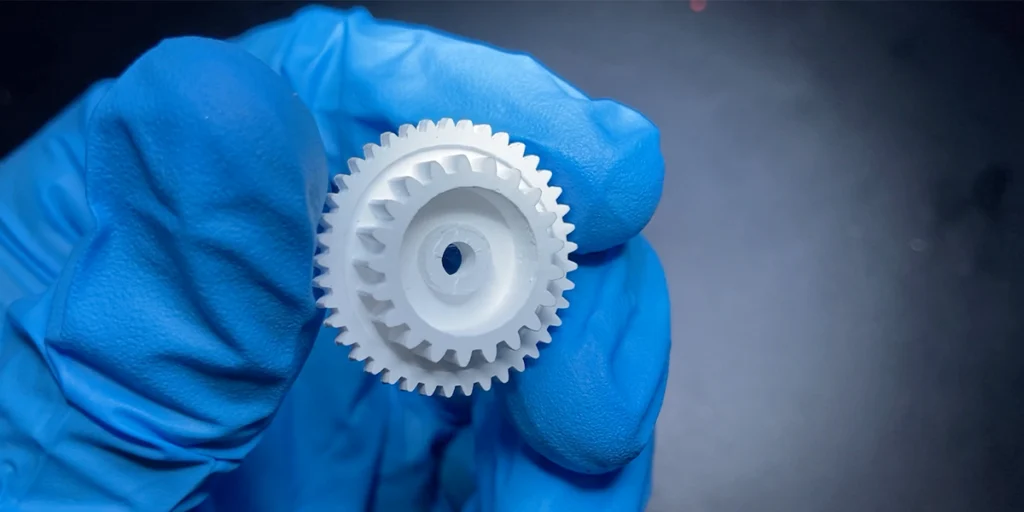
In modern manufacturing, CNC machining and 3D printing have become the two most common methods for manufacturing parts. They represent subtractive manufacturing and additive manufacturing, respectively, and play different roles in product development, functional verification, and mass production.
As product structures become more complex and development cycles shorten, more and more engineering teams are using both CNC machining and 3D printing simultaneously.
- Rapid prototyping using 3D printing
- Using CNC machining to produce high-precision functional parts
Therefore, the question of “how CNC machining compares with 3D printing” is not a simple substitution relationship, but a matter of process selection and combination optimization.
In real-world projects, material properties, precision requirements, structural complexity, and cost control all influence process decisions. For parts that need to simultaneously meet both appearance verification and mechanical performance requirements, a reasonable combination of the two processes can often significantly shorten the development cycle.
If a manufacturing service provider has both CNC and 3D printing capabilities, the engineering team can switch from prototype to mass production within the same supply chain, thereby reducing communication costs and improving project stability.
Differences in process principles
The most fundamental difference between CNC machining and 3D printing lies in the different ways materials are formed.
CNC machining: Subtractive manufacturing
Numerical control machining belongs to the subtractive manufacturing process. Its basic logic is to gradually remove the raw material through cutting with a cutting tool, and finally form the target structure.
Typical processes include:
- Generate CAM toolpaths from CAD models.
- The CNC system controls the tool movement trajectory.
- The part contour is gradually formed through cutting.
This method has distinct characteristics:
- High material density
- Stable mechanical properties
- High dimensional accuracy
- Good surface quality
However, there are also certain limitations, such as the high difficulty in processing the complex internal cavity structure.
3D Printing: Additive Manufacturing
3D printing is a type of additive manufacturing, which forms part structures by depositing materials layer by layer, rather than by cutting away materials.
The common process is as follows:
- Slice the 3D model
- Stack materials layer by layer.
- Perform necessary post-processing after completion.
The advantages of this approach are mainly reflected in:
- Capable of manufacturing complex structures
- No need for traditional toolpath planning
- Fast prototyping speed
3D printing has significant advantages, especially in complex internal structures or lightweight designs.
Accuracy vs. Strength Comparison
In engineering manufacturing, the dimensional accuracy and mechanical strength of parts often determine the choice of machining process. CNC machining and 3D printing differ significantly in these two key indicators.
CNC machining: high precision and stable material properties
CNC machining is based on cutting and shaping solid materials (such as aluminum alloys, stainless steel or engineering plastics). The materials themselves are industrial standard materials with dense internal structure and obvious isotropy, so the machined parts have stable mechanical properties.
Under conventional industrial machining conditions, CNC machining can typically achieve:
- Dimensional tolerance: ±0.01 mm (or even higher precision)
- Surface roughness: Ra 0.8–3.2 μm (depending on the process)
- Strength performance: close to or equivalent to the properties of the raw materials.
Because there are no interlayer structure issues, CNC-machined parts have an advantage in the following scenarios:
- Functional structural components
- Load-bearing components
- Precision-fitting components
This is why, in the final product stage, most key components are still mainly machined using CNC machining.
3D printing: high degree of structural freedom, but performance is affected by the manufacturing process.
3D printing forms materials by stacking them layer by layer. Its mechanical properties are affected to some extent by the printing direction, especially in the interlayer bonding area, where the strength is usually lower than that of the material itself.
Different 3D printing technologies vary considerably, but their overall performance is generally as follows:
- Dimensional tolerance: Approximately ±0.1 mm (varies depending on manufacturing process)
- The surface roughness is relatively high, requiring post-processing.
- There are directional differences in interlayer strength.
However, the advantage of 3D printing lies not in extreme precision, but in structural complexity. For example:
- Complex internal passageways
- Lightweight lattice structure
- Complex geometries that cannot be machined with traditional cutting tools
During the product development phase, 3D printing can quickly verify structural designs and significantly shorten the R&D cycle.
Cost vs. Delivery Time
Besides precision and strength, cost and delivery cycle are also important factors in choosing a manufacturing process. CNC machining and 3D printing offer different advantages at different stages of production.
CNC machining: significant cost advantage in batch production, but requires relatively more upfront preparation.
CNC machining typically requires the following preparation process:
- Process Analysis
- Tool selection
- CAM programming
- Clamping scheme design
These preparatory works will incur certain upfront costs, but once the stable processing stage begins, their advantages will become apparent:
- Unit cost decreases significantly with batch size
- High processing efficiency
- Wide range of material choices
For small to medium batch production (10–10,000 pieces), CNC machining is generally more cost-effective. In terms of lead time, routine CNC projects can typically be completed within 3–7 days (depending on complexity).
3D printing: moldless, quick start-up, and more advantageous for small batches.
3D printing requires almost no complex process preparation; manufacturing can begin once the model is sliced, giving it a significant advantage in the prototyping stage.
- No tool planning required
- No fixture required
- Suitable for single-piece or very small-batch production.
In the product development phase, 3D printing is commonly used for:
- Appearance verification
- Structural testing
- Rapid design iteration
In terms of delivery time, simple structural parts can usually be completed in 1–3 days. However, as the quantity increases, the cost reduction of 3D printing is limited, which is why it is less used for mass production.
Comparison of typical application scenarios
In actual engineering manufacturing, CNC machining and 3D printing are not in competition, but rather are selected or combined based on different application requirements. Understanding the typical application scenarios of both processes helps in making more rational manufacturing decisions early in a project.
Typical application scenarios of CNC machining
When parts need to meet the requirements of high precision, high strength, and stable mass production, CNC machining is usually a better choice, especially suitable for the following scenarios:
- Functional mechanical parts (gears, shafts, structural components)
- Precision assemblies (with strict tolerance requirements)
- Mass production of metal parts
- Appearance parts with high surface quality requirements
- Core components of industrial equipment
Once a product enters the mass production stage, CNC machining can provide consistent and stable machining quality and effectively control unit costs.
Typical application scenarios of 3D printing
3D printing is more suitable for manufacturing parts with complex structures or in the research and development stage. Common applications include:
- Product appearance prototype verification
- Rapid structural test specimens
- Complex internal channel structure
- Lightweight structural design
- Small batch custom parts
In the early stages of product development, 3D printing can significantly shorten the design iteration cycle and reduce the trial and error costs caused by mold making or complex processing.
Common Combination Patterns in Engineering Practice
In an increasing number of projects, the two processes will be used in combination:
- Use 3D printing to complete structural verification.
- Optimize design and functional testing
- Use CNC machining to produce final functional parts.
This approach can significantly improve R&D efficiency while ensuring performance, and it is also a relatively mature engineering strategy in the current manufacturing industry. For projects that involve multiple processes simultaneously, having a single supplier handle both CNC machining and 3D printing can reduce supply chain communication costs and improve overall delivery stability.
Professional precision parts processing service provider
In the manufacturing of complex parts, choosing only a single process often makes it difficult to balance precision, structure, and cost. Manufacturing service providers with integrated CNC machining and 3D printing capabilities can offer more suitable manufacturing solutions based on project requirements.
We offer:
- Multi-axis CNC precision machining services
- Supports multiple 3D printing processes (plastics and metals)
- One-stop manufacturing solution from prototype verification to small-batch production
- Rapid quotation and engineering manufacturability analysis (DFM)
If you are evaluating whether CNC machining or 3D printing is more suitable for your parts, or if you wish to optimize processing costs and delivery time, please submit your drawings or project requirements. Our engineering team will provide targeted manufacturing advice and quotation support.