


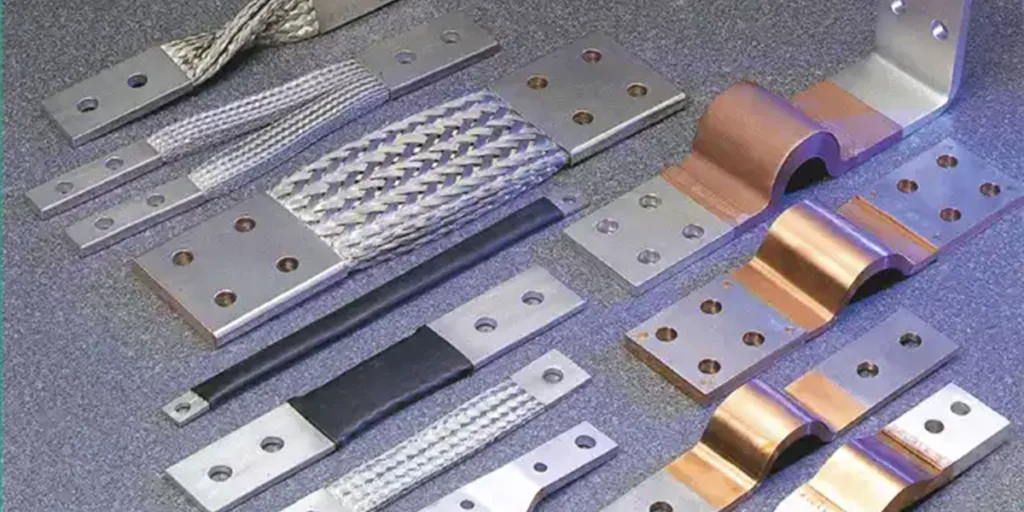
In simple terms, sheet metal stamping is a processing method that uses a die to apply pressure to a metal sheet, causing the sheet to separate or change shape under stress, thereby obtaining the desired part.
In the entire sheet metal processing system, stamping is a typical forming and separation process. It does not form the material by cutting it, but rather uses external force to change the shape or structure of a metal sheet in one step, making it a very important fundamental process in sheet metal manufacturing.
Sheet metal stamping processes typically have two very distinct characteristics:
- Molds are required
Stamping processes rely on dies to define the shape and size of parts, and the precision and consistency of parts are largely determined by the dies. - Suitable for mass production
Once the mold is completed, the stamping process can quickly and repeatedly produce a large number of identical parts, and the unit cost will decrease significantly as production volume increases.
Because of these characteristics, sheet metal stamping is often used in the manufacture of metal parts with relatively fixed structures and large quantity requirements, occupying a very core position in sheet metal processing.
Working principle of sheet metal stamping
From the perspective of the work process, sheet metal stamping is not complicated; it is essentially a repetitive action process that follows fixed steps.
1. The metal sheet is placed into the mold.
Before processing begins, the metal sheet is placed in a designated position in the mold. The mold is pre-designed with the shape of the part, and the position of the sheet determines the outline and size of the final product.
2. Apply downward pressure with the punch.
Once the equipment is started, the punch moves vertically downwards, engaging with the die to apply pressure to the sheet metal. This action is the core of the stamping process and the starting point for shape formation.
3. The sheet material deforms or separates.
Under pressure, the metal sheet will change according to the mold structure:
- Some parts were squeezed, bent, or stretched.
- Some parts were directly separated.
Throughout the process, the board material is not “cut,” but rather forced by external forces to change its shape or structure.
4. Remove the finished product from the mold.
Once the punch returns to its initial position, the finished part is ejected from the die, and a complete stamping operation ends. This process can be performed quickly and repeatedly to continuously produce the same parts.
Overall, the working principle of sheet metal stamping is: to control the shape through molds, to complete the forming or separation through pressure, and to achieve efficient manufacturing through repetitive actions.
This principle is also an important basis for the widespread application of sheet metal stamping in mass production.
Common types of sheet metal stamping
From the perspective of processing purpose, sheet metal stamping is not a single processing method, but can be used to separate materials or form shapes according to requirements. In actual production, common sheet metal stamping types can be mainly divided into the following three categories.
1. Stamping for cutting (separating materials)
The main purpose of stamping is to separate material from sheet metal or to form a specific structure on sheet metal.
Common forms include blanking and punching, which are typically used to obtain the basic shape or functional holes of a part.
Typical applications: metal brackets, mounting plates, standard punched parts, etc.
2. Forming stamping (changing shape)
Forming stamping does not completely separate the material, but rather uses a die to change the shape of the sheet metal to form the desired structure.
Common forming methods include bending and shallow stretching, which are mainly used to obtain angles, curved surfaces, or simple three-dimensional structures.
Typical applications: chassis, appliance covers, structural bending parts, etc.
3. Composite stamping (multi-process combination)
Compound stamping refers to the simultaneous completion of multiple processing actions in a single or continuous stamping process, such as separating and then forming.
This method can reduce the number of processes, improve processing efficiency, and increase part consistency.
Typical applications: mass-produced standard parts and industrial components with relatively fixed structures.
Overall, there is no absolute standard for “which is better” among different types of sheet metal stamping; the key lies in the part structure, quantity requirements, and production efficiency requirements. This is one of the reasons why stamping processes are highly flexible in sheet metal processing.
Application scenarios of sheet metal stamping
The key to determining whether a product is suitable for sheet metal stamping lies not in the industry itself, but in the characteristics of the product itself. In actual manufacturing, sheet metal stamping typically occurs in the following scenarios.
1. Parts requiring mass production
When the demand for parts is large and production needs to be stable over a long period of time, the advantages of sheet metal stamping become very obvious.
By repeatedly using molds, a large number of parts with consistent shapes can be produced quickly, making them suitable for products requiring continuous supply.
Common examples: internal structural components of home appliances, standard hardware, and fixed-size metal brackets.
2. Products with high requirements for size and shape consistency
Sheet metal stamping relies on mold forming. Once the mold is stable, the size and shape of the parts can be repeated very well.
This type of process is particularly suitable for parts that require high assembly precision.
Common examples: automotive parts, equipment housing components, and structural components requiring precise fit.
3. Products that are highly sensitive to unit manufacturing costs
Under mass production conditions, stamping can effectively reduce the cost of molds, thus significantly reducing the processing cost of individual parts.
Therefore, sheet metal stamping is often a common choice when a product needs to strike a balance between cost control and production efficiency.
Common examples: appliance casing parts, industrial standard parts, mass-produced metal fittings.
Overall, sheet metal stamping is more suitable for products with relatively fixed structures, clear quantity requirements, and an emphasis on consistency and efficiency. When a product meets these characteristics, the stamping process often demonstrates significant advantages in production efficiency and cost control.
Advantages and disadvantages of sheet metal stamping process
After understanding the working method and application scenarios of sheet metal stamping, many readers will be concerned about a more practical question: Is this process worth choosing?
The answer is not “the more the better,” but rather whether it matches the usage scenario.
Advantages of Sheet Metal Stamping (Why Choose)
High production efficiency
Sheet metal stamping relies on molds and presses to complete the forming process, producing near-finished parts in a single stamping operation. Under suitable conditions, it is ideal for continuous, high-cycle production, quickly meeting large-volume demands.
Good dimensional consistency
The shape and size of the parts are determined by the mold. As long as the mold is stable, the error of products in the same batch is minimal. This high degree of consistency makes the assembly of stamped parts easier and facilitates standardized production.
Low unit cost under mass production conditions
Although initial investment in molds is required, the cost of molds can be quickly amortized in mass production. Compared to multi-process manufacturing, stamping has a greater cost advantage in large-scale production.
Suitable for parts with relatively fixed structures
For parts that are produced long-term, have mature designs, and are not frequently modified, stamping is a highly efficient and reliable option.
Disadvantages of sheet metal stamping
The initial cost of molds is relatively high.
Stamping is highly dependent on dies, and die design and manufacturing are themselves a significant investment. If it is only for small-batch or trial production, the economics are not ideal.
Not suitable for small-batch, multi-variety production
When product models are frequently switched, mold replacement and debugging will significantly reduce overall efficiency and increase management costs.
Design changes are costly.
Once the structure of a part changes, it often means that the mold needs to be modified or even remade. This is a significant limitation for products that are still undergoing repeated trial and error.
Not all sheet metal parts can be made by stamping.
For parts with extremely complex structures and large dimensional variations, stamping may not be the most suitable process and needs to be combined with other sheet metal processing methods.
A core judgment principle
Sheet metal stamping is not a “one-size-fits-all solution,” but rather a “scaled solution.”
When the demand for parts is stable, the batch size is sufficient, and the design is mature, its advantages will be fully amplified; however, in scenarios with small batches and rapid iterations, choosing stamping may actually increase costs and risks.
This is precisely the point that many readers who are new to sheet metal processing tend to overlook.