


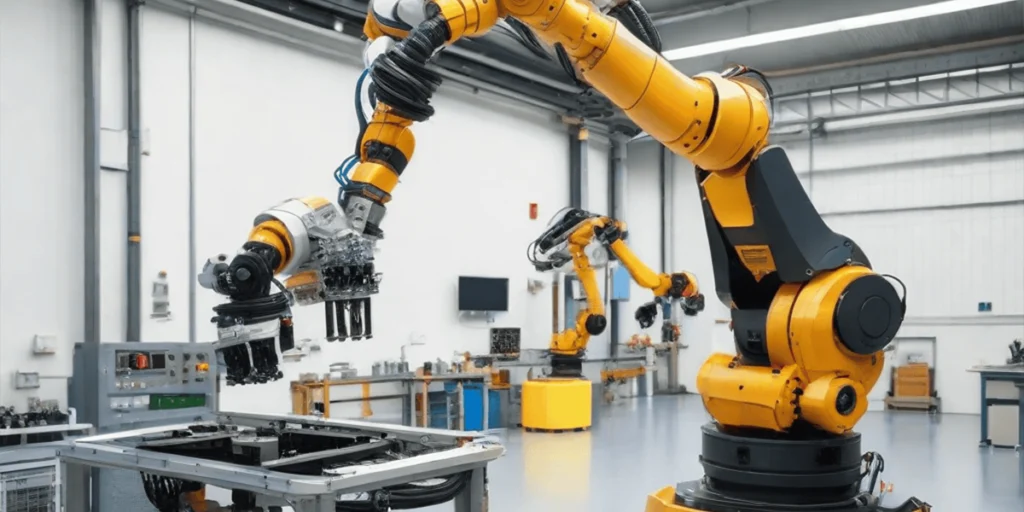
Metallic materials
In robotic articulated arms, most key structural components and transmission parts are still primarily made of metal. Different materials vary significantly in weight, strength, wear resistance, and processing difficulty, requiring selection based on specific applications.
Aluminum alloy (lightweight)
Aluminum alloy is one of the most widely used materials in robot structural components, mainly for:
- Robotic arm linkage
- Shell structural components
- Supporting framework
Its advantages are:
- Lightweight design helps reduce inertia and increase speed.
- Excellent machinability, suitable for CNC machining of complex structural parts
- Costs are relatively controllable
However, it also has limitations:
- Its strength and wear resistance are not as good as steel.
- Limited use in high-load joints
Therefore, aluminum alloys are typically used for medium- to light-load structural components and parts where weight reduction is required.
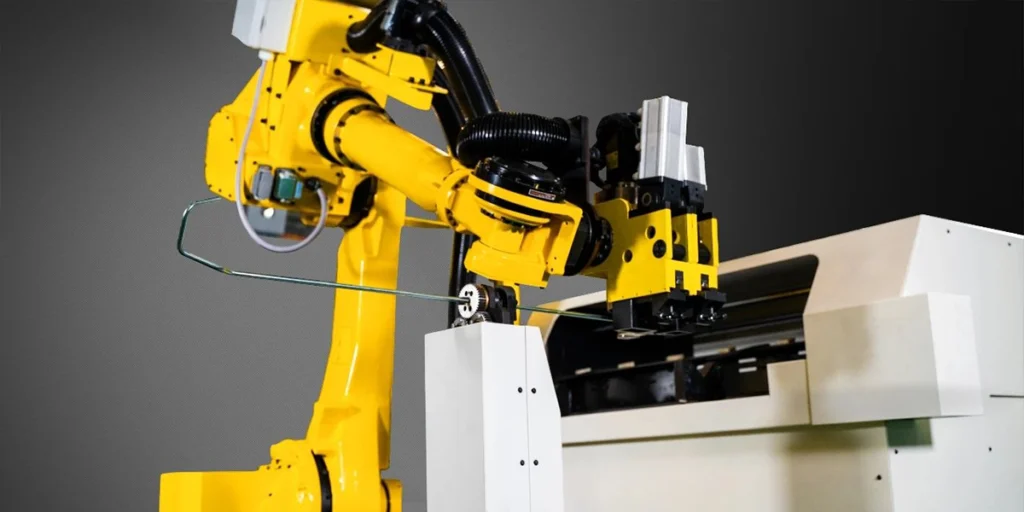
High-strength steel
Steel is mainly used for components requiring high strength and wear resistance, such as:
- Drive shaft
- Gears
- Key load-bearing structural components
Its characteristics:
- High strength and strong load-bearing capacity
- Good wear resistance, suitable for long-term operation
- High rigidity helps improve overall stability.
But correspondingly:
- Relatively heavy
- More difficult to process than aluminum
- Higher cost
Steel is typically used in high-load, high-stress areas, especially in joints and transmission systems.
Titanium alloys (high-end applications)
Titanium alloys are mainly used in high-end or special applications, such as:
- High-performance robots
- Aerospace robots
- Medical equipment
Its advantages:
- High strength but low weight (better than steel)
- Strong corrosion resistance
- Good stability under high temperature conditions
However, its drawbacks are also obvious:
- High material costs
- The processing is difficult and requires advanced equipment and processes.
- The processing cycle is relatively longer.
Therefore, titanium alloys are often used in critical components where weight, strength, and environmental adaptability are all of high importance.
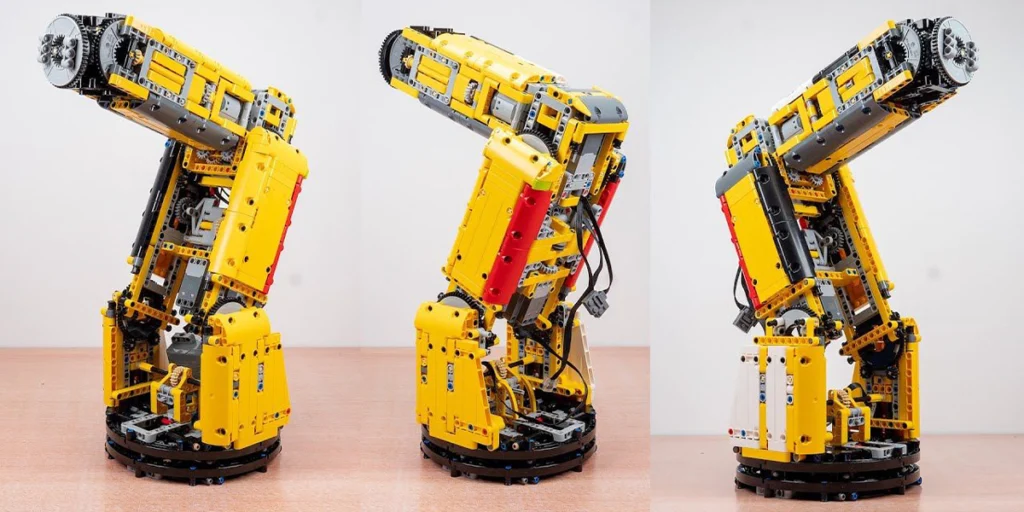
Engineering plastics (insulation and weight reduction)
In robotic systems, engineering plastics are often used as a complement to metal materials for specific functional components.
Common applications include:
- Insulating components
- Lightweight structural components
- Sliding or low-friction areas
- Sensor mounting structure
Commonly used materials:
- POM (Good abrasion resistance and dimensional stability)
- Nylon (high strength, suitable for structural components)
- ABS / PC (suitable for housings and functional components)
Its advantages:
- Lightweight
- Possesses electrical insulation properties
- Lower processing costs
- Some materials possess self-lubricating properties.
The limitation is:
- Its strength and rigidity are lower than those of metals
- Limited performance under high temperature or high load conditions
Therefore, engineering plastics are typically used for non-core load-bearing components or functional auxiliary structures.
Requires support for robot parts materials and processing.
If you are choosing materials for robot parts or looking for reliable processing solutions, we can provide support. We have extensive experience in manufacturing robot parts and are familiar with the processing requirements of aluminum, steel, titanium, and various engineering plastics in different application scenarios.
Whether it’s structural components, joint parts, or transmission parts, we can provide suitable material recommendations and high-precision CNC machining solutions based on your design requirements, with an accuracy of ±0.02 mm.
If you are working on a robotics project, you can submit your drawings or requirements directly, and we will provide you with material suggestions, processing plans, and quotations.