


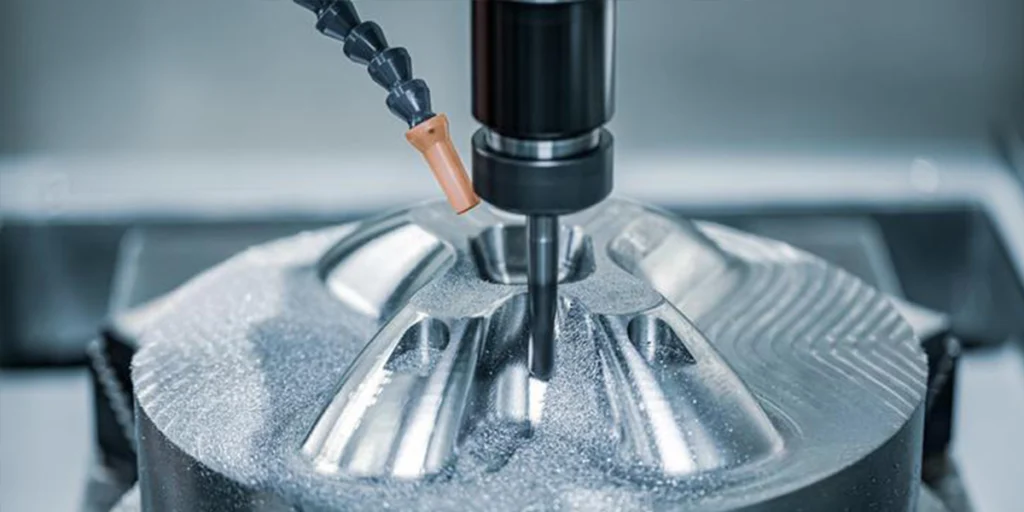
Characteristics of defense parts
Mechanical parts used in the defense industry differ significantly from those used in ordinary commercial products. They are typically applied in environments with high loads, high vibrations, high impacts, extreme temperature differences, or long-term continuous operation, thus requiring a much higher level of reliability than general industrial standards.
In many defense projects, a seemingly ordinary machined part may play a critical role in connection, positioning, sealing, transmission, or structural support. If the part fails, it will not only affect equipment downtime, but may also affect the performance and safety of the entire system.
This is why the defense industry typically has more stringent requirements for manufacturers of CNC-machined parts.
1. Low design tolerance
Defense-grade machined parts are commonly found in the following systems:
- Structural components of optical equipment
- Communication equipment connectors
- Vehicle and powertrain components
- Hydraulic and pneumatic system components
- Guiding and positioning components
- Electromechanical actuator parts
These parts are often small in size, but they perform critical functions and have a low tolerance for design errors.
For example:
- Hole misalignment may cause assembly interference.
- Coaxiality errors may cause instability during high-speed rotation.
- Insufficient thread precision may affect the sealing connection.
- Excessive surface roughness may accelerate wear.
Therefore, defense projects place more emphasis on manufacturing details than just the dimensions on the drawings.
2. High precision requirements
Many customers only focus on the accuracy of a single piece, but defense projects are more concerned with the following: the first piece must be qualified, and the hundredth piece must also be qualified.
This means that suppliers must not only have processing capabilities, but also stable replication capabilities, including:
- Tool life management
- Tooling and fixture consistency
- Standardization of processing parameters
- Process inspection mechanism
- Batch tracking capability
At Zhuohua Hardware, we have long implemented batch consistency control processes to support customers in transitioning from sample verification to stable mass production.
3. Small batches, multiple shipments
Unlike consumer goods, the common order model for defense-related projects is:
- Small-batch trial production
- Phased verification
- Multiple batches of replacement orders
- Long-term continuous procurement
This requires manufacturers to have flexible production scheduling capabilities, rather than a factory model that is only suitable for large-volume orders.
We support:
- Small-batch prototyping
- Stable delivery of medium-volume orders
- Long-term recurring order management
This flexible supply chain is more practical for R&D or project-based clients.
4. High complexity of parts
Defense-related parts are typically accompanied by:
- Strict tolerance marking
- Special chamfer/rounded corner requirements
- Surface treatment specifications
- Special Material Description
- Testing Requirements
If suppliers only process according to drawings and lack engineering understanding, the risk of rework will increase significantly.
Therefore, a supplier truly suitable for defense projects needs to possess the following qualities:
- Sales responsiveness
- Engineering review capabilities
- Manufacturing execution capability
- Quality closed-loop capability
This is why we insist on the “sales + engineering collaboration” model when serving our clients.
5. Common CNC turning parts for national defense
The following parts are frequently manufactured using CNC turning:
- Precision shaft components
- Threaded fasteners
- Sensor housing
- Aluminum alloy structural sleeve
- Stainless steel seals
- Brass communication connectors
- High-strength steel mechanical support components
Many parts are also finished by combining milling, drilling, tapping or surface treatment.
Leveraging Zhuohua Hardware’s turning and milling synergy capabilities, we can support one-stop production of such complex parts.
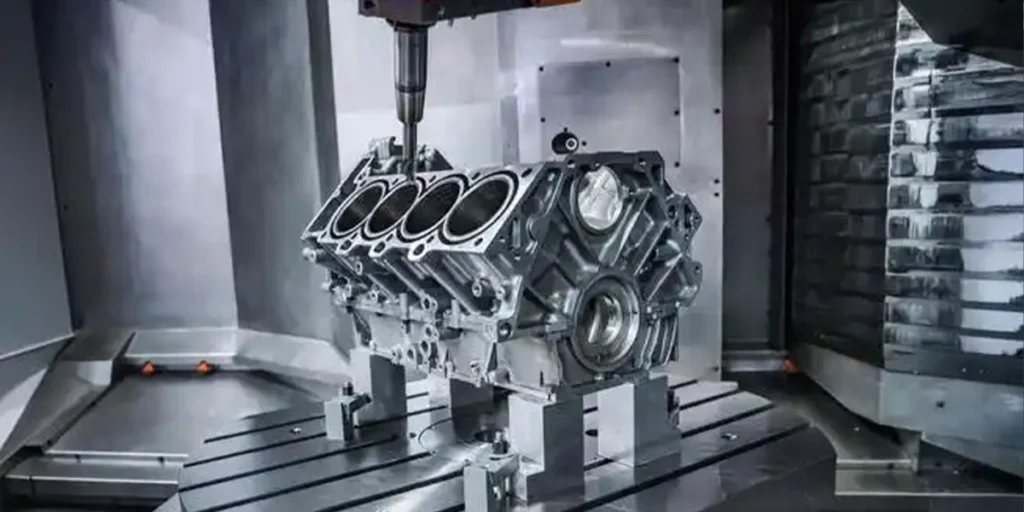
Materials and durability requirements
The selection of materials for defense industry components is typically more stringent than for ordinary industrial products. Customers are not only concerned with material prices, but also with long-term stability in complex environments.
Whether a part is qualified often depends not on whether it “can be manufactured,” but on whether it remains reliable in actual use environments. This is why defense projects require the involvement of specialized manufacturers in the evaluation process during the materials phase.
1. High strength requirement
Many defense components need to withstand:
- Continuous load
- Impact load
- High-frequency vibration
- Torque output
- Prolonged fatigue use
Therefore, common materials include:
- Alloy steel
- Tool steel
- Stainless steel
- High-strength aluminum alloy
For example:
- High-strength steel of type 4140/4340 is used for structural components.
- 17-4PH stainless steel is used in high-strength and corrosion-resistant applications.
- 7075 aluminum alloy is used for applications requiring lightweight and high strength.
2. Corrosion resistance and stability
Some devices may be in the following condition:
- High humidity environment
- Seaside environment
- Long-term outdoor use
- Large-scale temperature variations
At this point, the material must possess stable corrosion resistance. Common solutions include:
- SUS316 stainless steel
- Anodized aluminum alloy
- Coated steel parts
- Special surface treatment materials
If the wrong material is selected, even if the dimensions are perfectly correct, it may fail quickly during use.
3. Lightweight requirements
Mobile platforms, airborne equipment, and portable devices typically place great emphasis on weight control. In these cases, customers often choose:
- 6061 aluminum alloy
- 7075 aluminum alloy
- Titanium alloys (high-end demand)
Through proper design and CNC turning manufacturing, the overall weight can be reduced while maintaining strength.
4. Wear resistance and lifespan
For moving parts, rotating parts, and contact parts, the materials also need to be considered:
- Surface hardness
- Friction properties
- Service life
- Heat treatment adaptability
Common methods include:
- Quenched steel parts
- Surface nitriding
- Hard anodizing
- Nickel plating
5. Material traceability
Defense projects typically do not accept alternative materials that “look similar”.
Customers are more concerned about:
- Is the specified brand name accurate?
- Are the batches consistent?
- Is the source of the raw materials clear?
- Whether subsequent orders can be supplied continuously
This requires manufacturers to have stable supply chain management capabilities.
Zhuohua Hardware’s material manufacturing capabilities
At Zhuohua Hardware, we support processing of 50+ metals and engineering plastics , and can provide material certification, batch management, and stable procurement processes according to customer requirements.
If you are developing a high-reliability component project, please provide drawings or requirements. We can assist in evaluating material selection, processing feasibility, and cost optimization solutions.
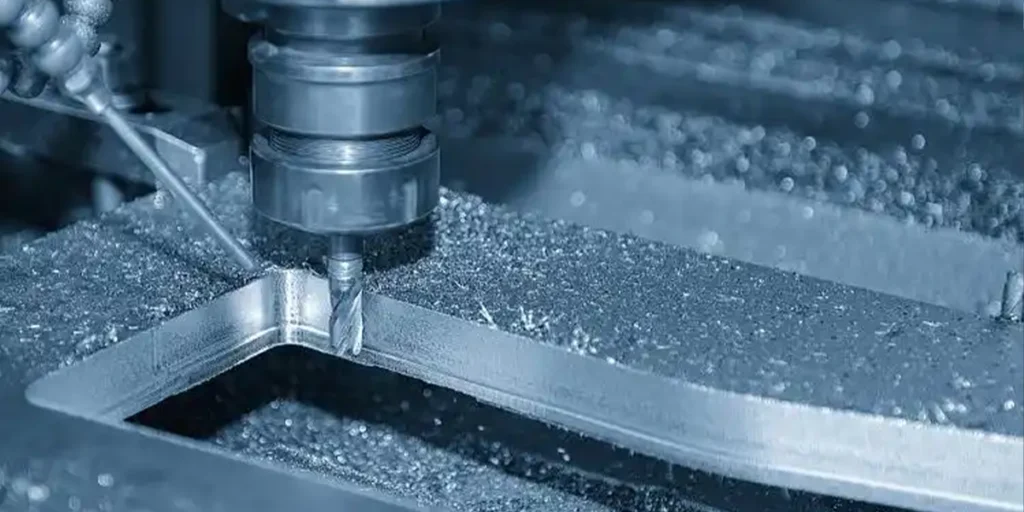
Confidentiality and Quality Management
In the manufacturing of defense industry parts, price is usually not the primary factor. Customers are more concerned with two things: information security and product reliability.
This is why many defense-related procurement projects prioritize confidentiality and quality management capabilities when selecting suppliers.
For manufacturers, being able to process parts is just the basics; the real barrier to entry is being able to establish controlled processes.
1. High data confidentiality requirements
Defense projects often involve:
- Specialized structural design
- Non-disclosed dimensional parameters
- Assembly interface information
- Material Specifications
- System function related components
If this information is leaked, it could cause commercial losses, or even more serious risks.
Therefore, customers typically require suppliers to have strict information management processes, such as:
- Hierarchical access control for drawings
- Designated personnel to handle projects
- Controlled file storage
- Approval mechanism for outsourced materials
- Simultaneous management of samples and documents
At Zhuohua Hardware, we value the protection of our clients’ intellectual property and project information, and implement internal controlled processes for drawings, quotations, process documents, and client data.
2. Strict confidentiality system
Many companies sign confidentiality agreements, but in reality, management is lax, and risks still exist.
Truly effective confidentiality management should be reflected in daily operations:
- Who can see the blueprints?
- Who can download the file?
- Who is responsible for production coordination?
- Whether irrelevant transmission is controlled in the workshop
- Are the sample labels standardized?
- Is the shipping information accurate?
These kinds of details determine whether secrecy is truly achieved.
3. Quality Management
Defense customers typically do not accept the “this batch is good, we’ll see how it goes next time” approach.
They are more concerned with:
- Are the dimensions consistent across batches?
- Is the processing controlled?
- Is the anomaly traceable?
- Is there any basis for the test results?
- Are the improvement measures closed-loop?
This requires manufacturers to have systematic quality management, rather than relying on personal experience.
4. Key Quality Control Points
For CNC-machined parts, we typically focus on controlling the following aspects:
- Incoming material control
Confirm the material grade, specifications, and appearance to prevent problems from entering production at the source. - First item confirmed
After the first piece is machined, the key dimensions, tolerances, threads, and surface condition are verified before mass production begins. - Process Inspection
Regular spot checks during mass production are conducted to prevent batch abnormalities caused by tool wear or equipment misalignment. - Final inspection and outgoing inspection
Ensure that the quantity, size, appearance, and packaging meet the customer’s requirements.
5. Emphasis on document delivery
Overseas clients typically place greater emphasis on document delivery capabilities, for example:
- Inspection report
- Supporting documents
- Size Record
- Batch information
- Shipment List
This information can help clients with internal audits and facilitates subsequent tracking.
Zhuohua Hardware can provide corresponding quality documentation support according to project requirements, helping customers reduce procurement risks.
6. Synergy between sales and engineering
In demanding projects, relying solely on sales to relay messages can easily lead to errors, while relying solely on engineering may result in a slow response.
We emphasize even more:
- Sales respond quickly to customer needs
- Direct assessment of manufacturing risks in engineering
- Quality Confirmation Standards
- Closed-loop tracking of production execution
This collaborative model is more suitable for advancing high-standard projects.
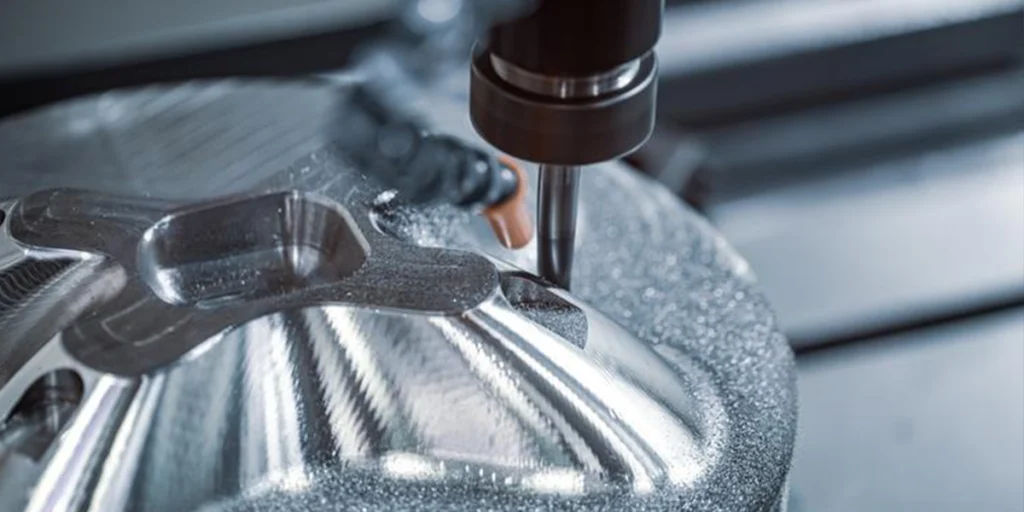
The Importance of Stable Delivery Capability
In defense industry projects, a single successful prototype does not guarantee a supplier’s qualification. The real key is the ability to deliver consistently, stably, and on time.
Many projects have long cycles, multiple phases, and rapidly changing requirements. If the supplier’s delivery is unstable, it will directly affect the customer’s overall plan.
1. Long-term supply model
Unlike orders for disposable consumer goods, defense-related projects often involve:
- First batch of sample verification
- Second-stage test piece
- Small-batch trial assembly
- Periodic replenishment
- Continuous procurement over many years
This means that customers don’t need the factory with the lowest initial quote, but rather a long-term, reliable manufacturing partner.
2. Stable delivery time
Some suppliers place their first order quickly, but subsequent delivery times spiral out of control:
- Production capacity cannot be scheduled
- Slow raw material preparation
- Repeat orders have low priority.
- Delayed quality rework
For customers, this volatility cost is very high.
In contrast, stable delivery means:
- Project plans are controllable
- Inventory pressure has decreased
- Internal coordination is smoother.
- More peace of mind in subsequent procurement
3. Batch Consistency
If the dimensions of each batch of parts fluctuate significantly, the customer will face the following challenges:
- Assembly rework
- Additional filters
- On-site modifications
- System debugging delay
These hidden costs are often far higher than the differences in the unit price of parts. Therefore, stable delivery includes not only on-time shipments but also consistent quality output.
4. Supply chain risk management
In recent years, global manufacturers have generally placed great emphasis on supply chain risk management, and customers will assess:
- Are there enough devices?
- Does it support multiple processes?
- Can it handle additional order demands?
- Is there spare capacity?
- Does the company have export experience?
These capabilities determine whether a supplier is reliable in unforeseen circumstances.
5. Delivery support capabilities
We have a long history of working on projects for overseas clients and possess the following fundamental capabilities:
- Approximately 100 CNC turning machines
- 300+ CNC milling machines
- 3-axis/5-axis collaborative machining capability
- Prototype to mass production support
- Delivery within 5 business days (depending on the project)
- 50+ material processing capabilities
- Global delivery experience
This means that customers can perform rapid verification in small batches or gradually increase the order size.
6. Delivery risks
For long-term projects, we typically recommend:
- Assess annual needs in advance
- Establish a mechanism for preparing commonly used materials.
- Curing process parameters
- Retain historical inspection records
- Establish a fast order replenishment channel
This will make customers more efficient and stable in subsequent procurement.
If you are looking for a precision turning supplier for long-term cooperation, Zhuohua Hardware can assist in evaluating capacity, delivery time, and continuous supply solutions.