
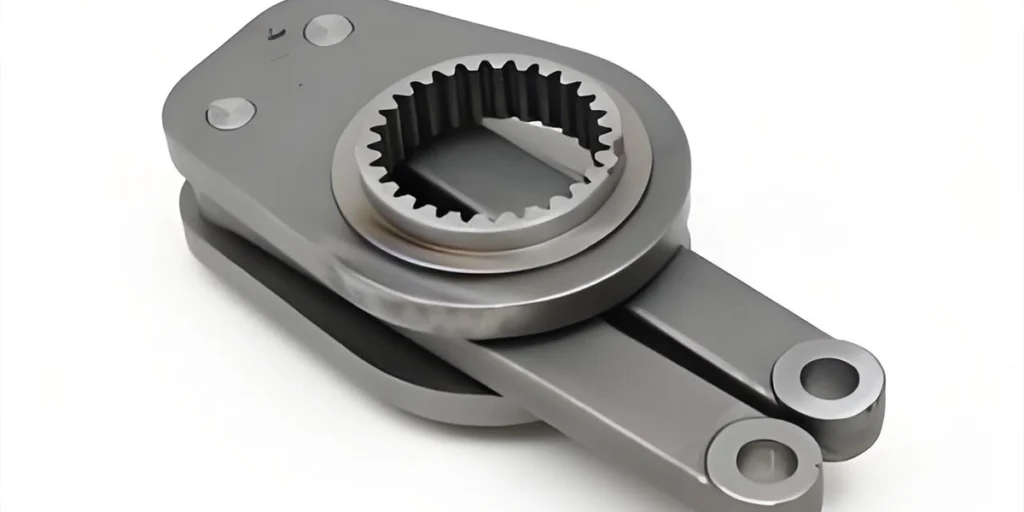
CNC machining of alloy steel is widely used in aerospace, energy, automotive, oil and gas, and heavy industry. Compared to ordinary carbon steel, alloy steel has higher strength, wear resistance, and heat resistance, but these advantages also mean greater machining difficulty.
For many buyers and engineers, the real issue isn’t “whether it can be manufactured,” but rather:
- Whether dimensional tolerances can be stably controlled
- Can rapid tool wear be prevented?
- Can batch consistency be guaranteed?
- Can quality be kept consistent while controlling costs?
This is why professional alloy steel CNC machining service providers usually pay more attention to process stability, rather than just the machine tool itself.
At Zhuohua Hardware, we have long provided CNC machining services for alloy steel to global clients, including 4140, 4340, tool steel, and heat-treated alloy steel parts. With our multi-axis CNC milling and turning capabilities, we can support complex projects from prototyping to mass production.
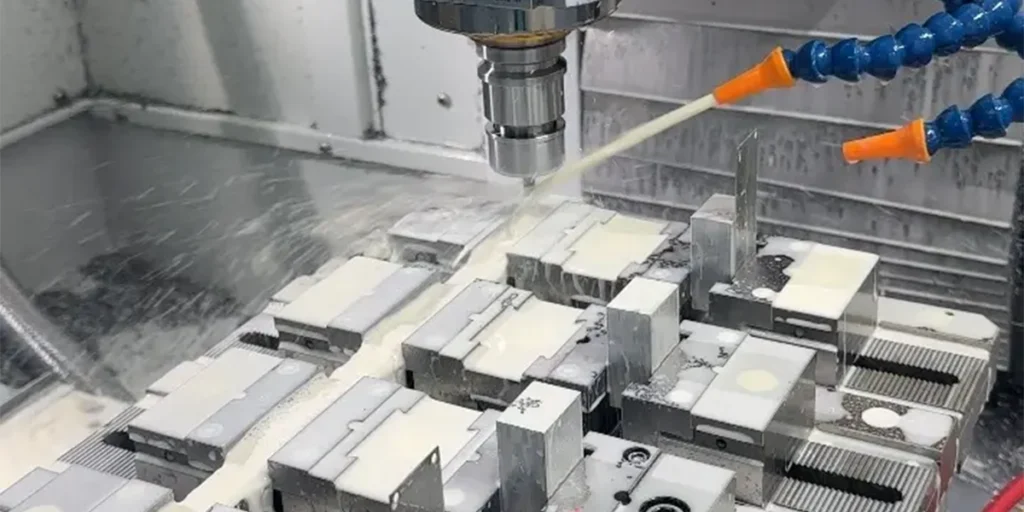
Why is alloy steel difficult to machine?
Compared to aluminum, stainless steel, and even some low-carbon steels, the biggest feature of CNC machining of alloy steel is that it has “stronger material properties,” but this also directly increases the cutting load, machining heat, and tool wear.
Especially in high-precision alloy steel machining projects, machining parameters, tool paths, and cooling strategies directly affect the quality of the final parts.
High hardness
Many alloy steels, such as 4140, 4340, or tool steels, experience a significant increase in hardness after heat treatment. This high hardness can improve the wear resistance and service life of parts, but it also increases cutting resistance.
In actual CNC machining of alloy steel, high hardness usually leads to the following problems:
- Tool wear rate increases
- Chipping at the cutting edge
- Decreased processing efficiency
- Unstable surface roughness
Especially when machining quenched alloy steel parts, if the tool material is not selected properly, dimensional drift and tool failure can easily occur.
This is why professional alloy steel machining service providers typically use high-performance carbide cutting tools and dynamically adjust cutting parameters based on the material’s hardness.
For complex structural parts, multi-axis CNC machining can also reduce repeated clamping, thereby reducing the cumulative error in the machining of hard materials.
High strength
Besides hardness, the high strength of alloy steel also increases machining difficulty. High strength means the material is more difficult to “cut” during machining, and the cutting tool needs to withstand a higher load. This is especially evident when CNC turning alloy steel parts.
Typical problems include:
- Increased cutting force
- Increased spindle load
- Increased processing vibration
- Thin-walled areas are prone to deformation.
For example, when machining large alloy steel flanges, shaft parts, or industrial connectors, insufficient fixture rigidity may cause slight offsets during machining, ultimately affecting coaxiality and roundness.
In our alloy steel CNC machining projects, the engineering team typically conducts DFM (manufacturability analysis) in advance to optimize clamping schemes and machining sequences, thereby reducing the machining risks associated with high-strength materials.
For high-strength alloy steel parts, it is usually more important to properly control the depth of cut and feed rate than to simply increase the rotational speed.
Cutting heat problem
Cutting heat is one of the most easily underestimated problems in the machining of alloy steel. Due to the high strength of alloy steel, a large amount of frictional heat is generated between the tool and the workpiece.
If heat cannot be dissipated in time, it will directly affect:
- Tool life
- Dimensional stability
- Surface quality
- Internal stress of the workpiece
Especially during deep cavity machining, continuous turning, or high-speed cutting, the local temperature may rise rapidly.
Many customers find that the same drawings, processed by different suppliers, result in significant differences in the lifespan and dimensional stability of the final parts. The reason is often not the equipment, but rather the difference in thermal control capabilities during processing.
Professional alloy steel machining services typically employ the following methods:
- High-pressure cooling system
- Segmented cutting strategy
- Optimal toolpath
- Thermal deformation compensation
To reduce the impact of the cutting heat.
At Zhuohua Hardware, we develop independent processing solutions based on the characteristics of different alloy steel materials, including tool selection, cooling methods, and finishing strategies after heat treatment, thereby improving processing stability and batch consistency.
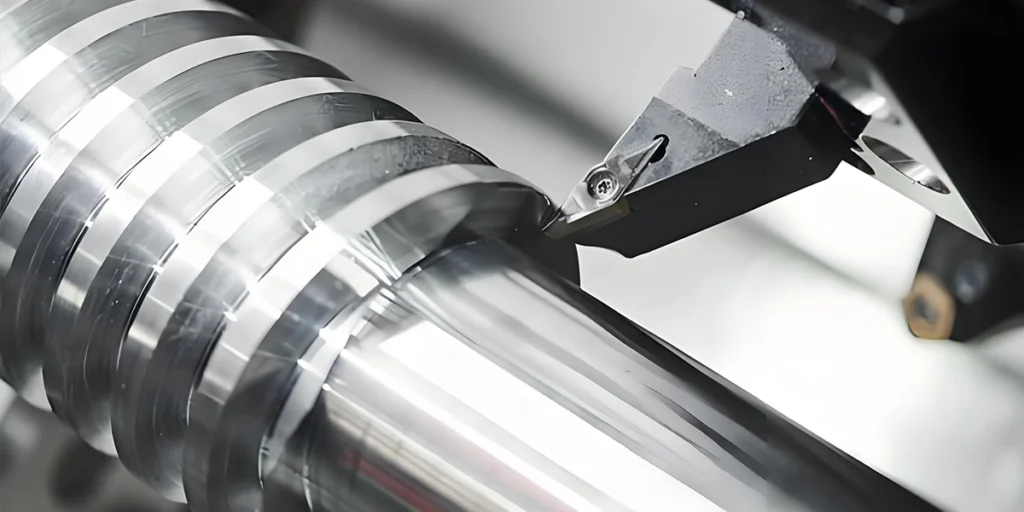
Challenges in turning hardened alloy steel
Turning of hardened alloy steel is one of the most challenging processes in CNC machining of alloy steel. Although the mechanical properties of alloy steel are significantly improved after quenching or tempering, the machining difficulty also increases substantially. Especially in high-precision CNC turning projects, machining stability is often more important than machining speed.
Many suppliers can process ordinary steel, but when turning hardened alloy steel, the following problems often occur:
- Abnormal tool wear
- Size fluctuation
- Surface burns
- Vibrating knife pattern
- Poor batch consistency
This is why high-end industrial equipment, aerospace, and energy industries typically prefer suppliers with expertise in alloy steel processing.
Tool life issues
Tool life is one of the most critical issues in turning hardened alloy steel. As the material hardness increases, the cutting edge of the tool will be subjected to higher pressure and frictional heat.
If the cutting parameters are unreasonable, the tool may fail in a short period of time:
- Broken Blade
- Accelerated wear and tear
- Hot cracking
- Plastygium
This problem is particularly pronounced when turning 4140 heat-treated alloy steel or high-hardness tool steel.
In an effort to increase efficiency, many inexperienced suppliers use excessively high cutting speeds, but this often results in a significant reduction in tool life and can even affect the dimensional stability of parts.
Professional alloy steel CNC machining services are typically based on:
- Material hardness
- Workpiece structure
- Machining allowance
- Surface requirements
Dynamic adjustment:
- Cutting speed
- Feed rate
- Depth of cut
- Tool coating
In our actual projects, for high-hardness alloy steel parts, we usually prefer coated carbide tools with higher heat resistance to improve stability and reduce tool change frequency.
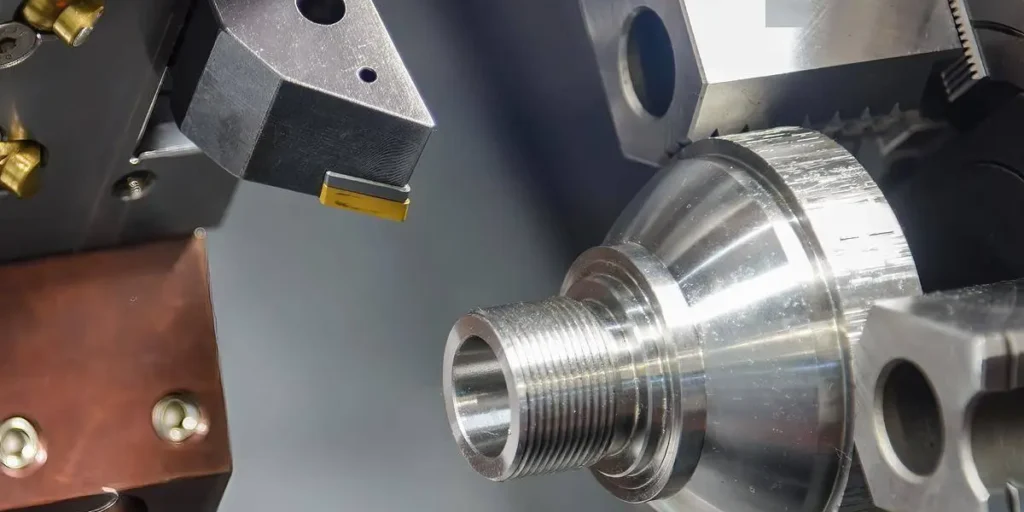
Processing vibration
Vibration during machining is another common problem when turning hardened alloy steel. Due to the high strength of the material, the cutting forces generated during machining are also greater. If the machine tool rigidity, fixture design, or tool extension length control is inadequate, vibration can easily occur.
Vibration not only affects surface quality, but may also cause:
- Dimensions out of tolerance
- Broken knife
- Roundness error
- Coaxiality offset
This problem is particularly noticeable for slender shaft parts or large alloy steel machined parts.
In CNC turning projects involving complex alloy steel, we typically reduce vibration in the following ways:
- Shorten the tool overhang length
- Improve clamping stability
- Use a high-rigidity tool holder
- Optimize cutting path
- Phased processing
For some high-precision parts, multi-axis CNC turning centers can also reduce repeated clamping, thereby further reducing the risk of vibration.
Surface quality control
When purchasing CNC machined alloy steel parts, many customers pay attention not only to the dimensions but also to the surface quality.
Especially in hydraulic systems, sealing structures, bearing mating areas, and high-load contact surfaces, surface roughness directly affects the lifespan of parts. However, surface quality control is not easy during the turning of hardened alloy steel.
Frequently asked questions include:
- Vibrating knife pattern
- Burn marks
- Microcracks
- Uneven surface hardening layer
These problems are often related to:
- Tool wear
- Insufficient cooling
- Inappropriate parameters
- Machine tool stability
Directly related.
Specialized alloy steel machining suppliers typically employ more stable machining strategies during the finishing stage, for example:
- Small-scale deep precision machining
- Constant temperature cooling
- Precision tool compensation
- Online size inspection
This is to ensure that high-precision alloy steel parts can meet the requirements for long-term use.
For export projects, we also provide dimensional inspection reports and surface quality control solutions according to customer industry standards to ensure the consistency of batch parts.
Machining Guide for 4140 Alloy Steel
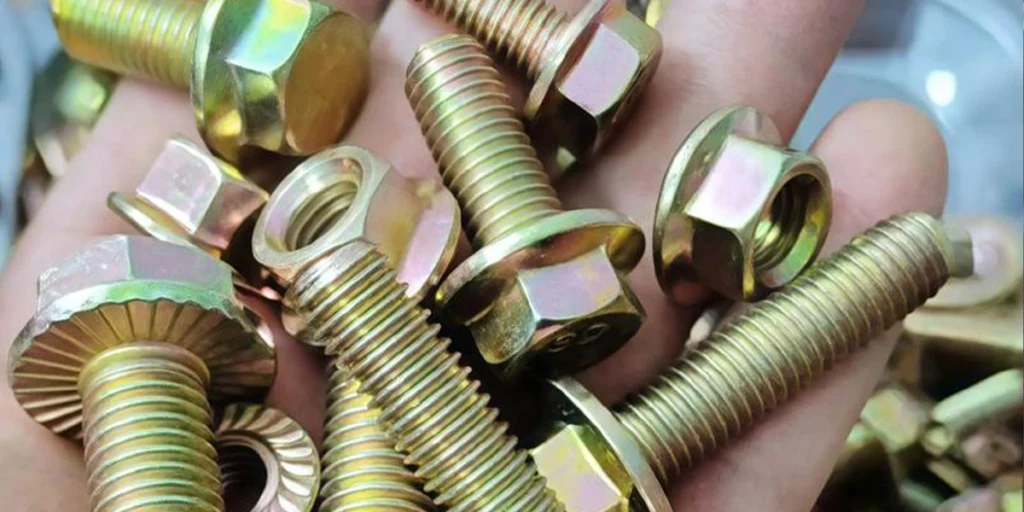
4140 is one of the most common alloy steel materials in industrial manufacturing, widely used in shaft parts, flanges, connectors, gears, hydraulic components, and high-load mechanical structural parts. Due to its combination of strength, toughness, and wear resistance, 4140 alloy steel is ideal for high-strength applications, resulting in stable demand in the aerospace, oil and gas, automotive, and heavy equipment industries.
However, for many CNC machining suppliers, 4140 alloy steel is not considered an “easy-to-machine” material, especially after heat treatment, where machining stability and tool life decrease significantly. Therefore, CNC machining of 4140 alloy steel typically relies more on experience, equipment rigidity, and process control capabilities.
Characteristics of 4140 alloy steel
4140 is a chromium-molybdenum alloy steel with high tensile strength, good hardenability, and excellent fatigue resistance. Compared to ordinary carbon steel, it maintains more stable mechanical properties under high loads and complex working conditions.
The most distinctive feature of this material is its “balanced performance.” It can achieve higher hardness through heat treatment while maintaining a certain degree of toughness, making it widely used in industrial parts that need to withstand long-term impact and wear.
However, for CNC turning, 4140 material also presents several typical problems, including high cutting forces, high machining heat, and rapid tool wear. Especially when machining deep holes, slender shafts, or large parts, improper process parameters can easily lead to problems such as tool vibration, dimensional drift, or unstable surface roughness.
In actual alloy steel CNC machining projects, we usually formulate different machining plans according to the material state (pre-hardened, tempered or quenched) because the cutting characteristics under different hardness are very different.
Recommended cutting parameters
There is no completely unified standard for the cutting parameters of 4140 alloy steel, because the actual machining effect is affected by the material hardness, tool material, machine tool rigidity and cooling conditions.
For pre-hardened 4140 material, a medium cutting speed combined with a stable feed rate can typically be used to balance machining efficiency and tool life. However, when machining high-hardness 4140 heat-treated parts, it is more important to control cutting heat and tool load, rather than simply pursuing speed.
In our alloy steel CNC turning projects, the engineering team typically prioritizes optimizing the following aspects:
- Control the depth of cut to avoid instantaneous tool overload.
- Use coated carbide tools with higher heat resistance
- Maintain a stable feed rate and reduce intermittent cutting.
- High-pressure cooling improves chip removal efficiency
For mass production projects, we also optimize toolpaths and tool change strategies based on part structure to improve machining stability and reduce tooling costs.
Compared to processing ordinary steel, 4140 alloy steel requires a more stable and conservative process logic, because many processing problems do not appear on the first part, but gradually emerge during continuous processing.
Precautions for processing after heat treatment
Heat treatment significantly improves the hardness and wear resistance of 4140 alloy steel, but it also further increases the difficulty of processing.
Many customers choose a process route of “rough machining first, then heat treatment, and finally finish machining” because the material may undergo slight deformation during heat treatment. If the material is machined to the final size in one go, the accuracy after heat treatment often cannot be guaranteed.
Special attention needs to be paid to the following during the finishing process of 4140 heat-treated parts:
- Stress relief inside the workpiece
- Thermal deformation control
- Risk of surface burns
- Finishing allowance control
Especially in high-precision shaft parts and sealed mating areas, even very small dimensional changes can affect the final assembly performance.
Therefore, professional alloy steel machining service providers usually leave a reasonable machining allowance after heat treatment and adopt a low-depth finishing strategy to reduce the impact of machining heat on dimensional stability.
For complex structural parts, we also use staged processing and online inspection to ensure batch consistency and avoid the risk of rework later.
How to improve processing stability
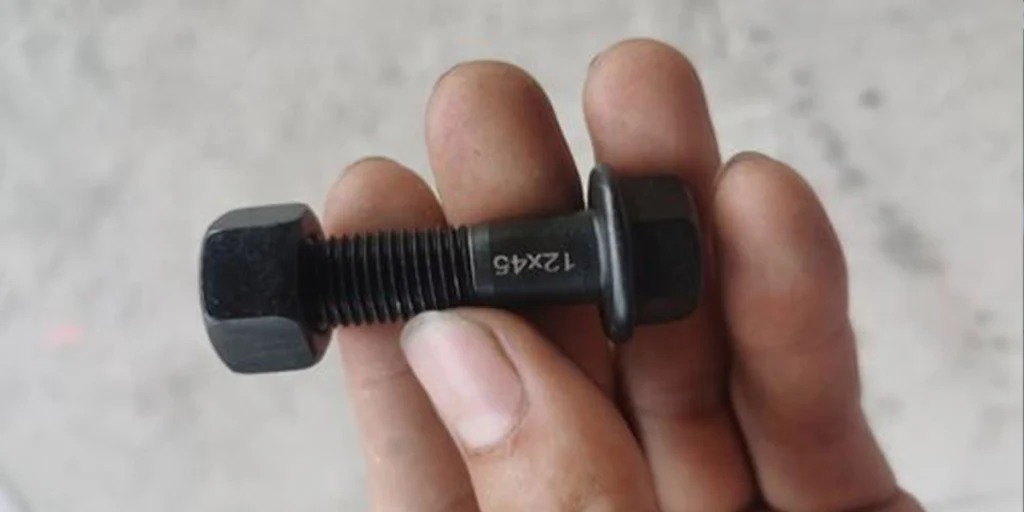
In CNC machining of alloy steel, what truly determines the quality of a part is often not a single piece of equipment, but the stability of the entire machining system.
Many projects don’t suffer from the problem of being “unmanufacturable,” but rather from the inability to achieve stable mass production over the long term. For example, the first piece might pass inspection, but subsequent batch production may result in dimensional drift, abnormal tool wear, or inconsistent surface quality. These issues are particularly common in the machining of high-hardness alloy steels.
Therefore, professional alloy steel processing services focus more on stable processing capabilities than just the results of a single processing operation.
Tool material selection
Cutting tools are one of the core factors affecting the machining stability of alloy steel. Due to the high hardness and strength of alloy steel, ordinary cutting tools are difficult to operate stably for extended periods. Especially when turning hardened alloy steel, if the tool’s heat resistance is insufficient, it is prone to chipping and rapid wear.
In real-world projects, we typically select different tooling options based on the material’s condition. For example:
- For pre-hardened materials, processing efficiency should be given priority.
- For high-hardness materials, tool stability should be a priority.
- For complex structures, vibration resistance should be given priority.
For high-precision CNC machining of alloy steel, we typically use high-performance coated carbide tools and adjust the tool tip angle and cutting parameters according to different machining stages to extend tool life and improve surface quality.
Coolant Management
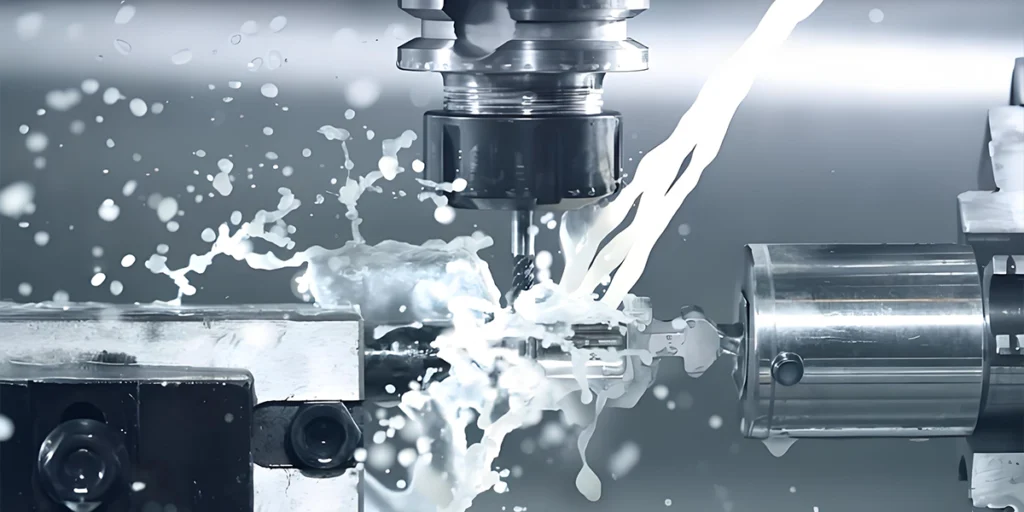
Many machining problems are not essentially “cutting problems,” but rather temperature control problems. Alloy steel machining generates a significant amount of heat; if the coolant supply is insufficient, it can easily lead to:
- Tool temperature too high
- Thermal expansion of the workpiece
- Surface burns
- Unstable chip removal
Especially in deep hole machining and continuous turning, coolant management directly affects machining stability.
Professional alloy steel CNC machining services typically employ high-pressure cooling systems to improve chip removal efficiency and reduce cutting zone temperature. Furthermore, different materials and machining methods require different concentrations and types of coolant.
For high-precision parts, we also try to minimize temperature fluctuations during the machining process, because even slight thermal deformation can affect the final tolerance.
Reasonable fixture design
In the machining of high-strength alloy steel, the rigidity of the fixture is often more important than many customers realize.
If the clamping is unstable, even with a high-precision machine tool, minute displacements may occur during machining, leading to:
- Coaxiality deviation
- Roundness issue
- Surface vibration marks
- Size fluctuation
Especially when machining large flanges, long shaft parts, or complex irregular structures, a well-designed fixture can significantly improve machining stability.
In our alloy steel machining projects, the engineering team usually optimizes the clamping scheme in advance based on the part structure to minimize machining stress concentration and repeated clamping errors.
For mass production projects, custom fixtures can also significantly improve processing efficiency and consistency.
How to reduce the risks in alloy steel processing
For many buyers, the real risk of CNC machining of alloy steel is not the price, but the project getting out of control.
Because alloy steel parts are typically used in high-load, high-wear, or critical industrial applications, inconsistent manufacturing quality can lead to subsequent costs far exceeding the cost of the part itself. For example:
- Assembly failed.
- Premature wear
- Seal failure
- Batch rework
- Project Delay
This is why more and more customers are starting to value a supplier’s engineering capabilities, rather than just their quote.
Professional alloy steel processing suppliers typically conduct a Design for Metals Market (DFM) analysis at the beginning of a project, comprehensively assessing everything from material condition and heat treatment scheme to clamping method and processing sequence to reduce subsequent production risks.
At Zhuohua Hardware, we have long provided CNC machining services for alloy steel to industrial clients worldwide , including:
- CNC milling of alloy steel
- CNC turning of alloy steel
- Machining of complex multi-axis parts
- Finishing after heat treatment
- From prototype to mass production
Our engineering team develops customized processing solutions based on part structure and application scenarios to improve processing stability, control batch consistency, and help customers reduce long-term manufacturing costs.
For complex alloy steel parts machining projects, experienced machining suppliers are often not only manufacturers, but also a key part of the entire manufacturing risk control process.