

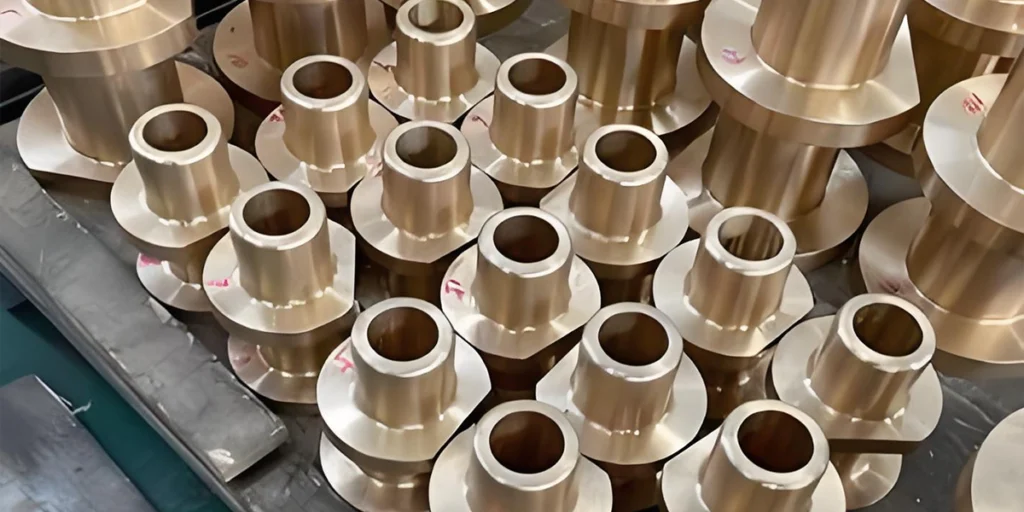
Copper is one of the most important engineering materials in modern electrical systems. From power distribution equipment and industrial control systems to new energy vehicles, communication equipment, and data center infrastructure, copper components are present in almost every scenario requiring efficient power transmission.
For product engineers and procurement teams, selecting the right copper material is only the first step. What truly determines product performance and long-term reliability is often the machining quality, dimensional accuracy, and contact surface stability of the copper parts themselves.
As a long-standing CNC machining supplier serving the electronics, electrical, and industrial equipment industries, Zhuohua Hardware provides customers with a one-stop manufacturing service, from copper material machining, precision turning, complex milling to surface treatment. This article will focus on why the electrical industry widely uses copper and the machining characteristics of common copper electrical parts.
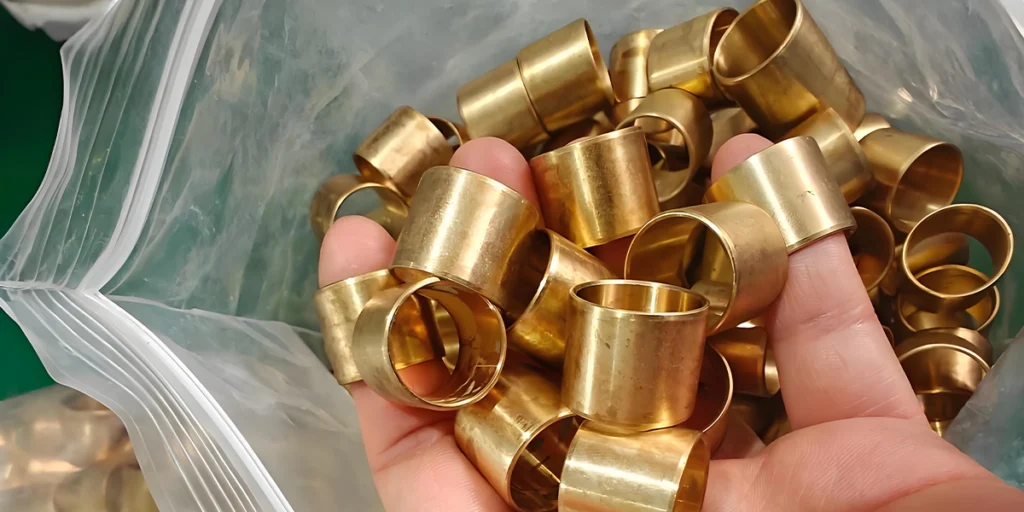
Why does the electrical industry use copper extensively?
Among many metallic materials, copper has always been the preferred material in the field of electrical engineering. Although aluminum can be used as an alternative in some scenarios, copper still has irreplaceable advantages in applications requiring high conductivity, high reliability, and long-term stability.
This is why copper has always occupied a core position in everything from industrial equipment to AI servers, from power distribution systems to new energy vehicles.
High conductivity
One of the most important properties of copper is its excellent electrical conductivity. Among common engineering metals, pure copper has the second highest conductivity after silver, but due to its cost and manufacturability advantages, copper has become the standard material for the vast majority of electrical systems.
High conductivity means:
- Higher current transfer efficiency
- Lower energy consumption
- More stable electrical performance
- Fewer fever problems
This advantage is particularly pronounced for high-power devices.
For example:
- Distribution cabinet busbar system
- Battery connectors for new energy vehicles
- Industrial control equipment
- Data center power supply system
- AI Server Power Supply Module
These applications often require handling high current loads for extended periods.
Insufficient conductivity not only reduces system efficiency but can also lead to localized overheating, thus affecting equipment lifespan. Therefore, in many critical applications, engineers typically prioritize:
- C101 oxygen-free copper
- C110 electrolytic copper
- High conductivity copper alloy
Instead of other cheaper but less conductive materials.
For these types of projects, the machining quality of copper parts is equally important. Even if the material itself has excellent electrical conductivity, burrs, scratches, or dimensional deviations during machining can affect the final conductivity. This is why high-precision CNC machining of copper is crucial for the electrical industry.
low resistance
In addition to its high conductivity, copper also has low resistivity. From an engineering perspective, low resistance means less current is lost during transmission.
This can bring several practical advantages:
- Reduce energy consumption
- Reduce fever
- Improve equipment efficiency
- Extend the lifespan of electronic components
This is especially critical in high-current systems.
For example, in the power system of new energy vehicles, the current may reach hundreds of amperes or even higher.
If the resistance of the connector or busbar increases even slightly, it may cause:
- Temperature rise
- Increased power loss
- System efficiency decreases
Therefore, when designing copper conductive parts, many customers not only focus on the material itself, but also pay special attention to:
- Flatness of contact surface
- Size consistency
- Surface roughness
- Coating quality
These factors all affect the final contact resistance.
In real-world projects, we frequently collaborate with clients to optimize the structure of copper components. By improving contact area design and manufacturing processes, we help reduce overall system resistance and enhance long-term reliability. For high-volume OEM projects, this optimization often results in significant performance improvements.
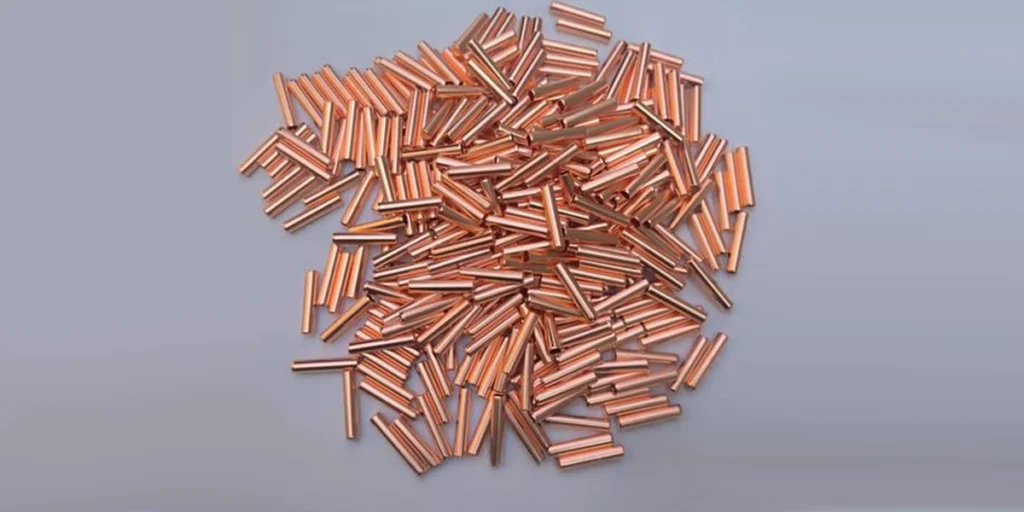
Common copper electrical parts
Copper has a wide range of applications in electrical systems. Although the structure and function of different devices vary, most copper electrical components perform the same core task: to transmit electrical energy or signals efficiently, safely, and stably.
Based on our project experience, the following types of products are the most common copper CNC machined parts.
Busbar
The busbar is one of the most typical copper components in a power distribution system.
Its main function is:
- Transmitting large currents
- Distribute electrical energy
- Connects multiple electrical units
Commonly found in:
- Distribution cabinet
- Switchgear
- Energy storage system
- New energy vehicle battery systems
- Data center power supply equipment
Compared to traditional cables, copper busbars have the following advantages:
- Higher current carrying capacity
- Lower energy consumption
- Better heat dissipation performance
- More compact installation space
Busbar fabrication typically requires:
- High flatness
- High hole positioning accuracy
- Good edge quality
- Stable surface treatment effect
For large busbar projects, batch consistency is often more important than individual component accuracy.
Therefore, professional manufacturers usually establish standardized testing procedures to ensure that the quality of the entire batch remains consistent.
Terminal blocks
Terminal blocks are among the most common connecting elements in various electrical devices. Their function is to establish a reliable electrical connection between different conductors.
Typical applications include:
- Power distribution equipment
- Control system
- Automated equipment
- Industrial machinery
- Power System
Although terminal blocks are usually small in size, they require very high processing quality.
in particular:
- Thread accuracy
- Contact surface quality
- Aperture tolerance
- Assembly fit dimensions
Even the slightest error can lead to poor contact or loose connection.
For industrial equipment that operates for extended periods, this problem can eventually escalate into malfunctions or even safety risks. Therefore, precision CNC machining is often the primary manufacturing method for high-end copper terminal blocks.
Connector
Connectors are widely used in electronic devices and communication systems. Their core function is to ensure the stable transmission of power, signals, or data. As devices continue to miniaturize, modern connectors place higher demands on the machining of copper components.
Typical characteristics include:
- Tiny size
- Complex structures
- High assembly precision
- Extremely low contact resistance
Common applications:
• Communication equipment
- Industrial control systems
- New energy vehicles
- Consumer electronics products
- Medical electronic equipment
For these types of products, the manufacturing process not only needs to ensure dimensional accuracy, but also requires strict control over burrs and surface defects. Even extremely small burrs can affect subsequent assembly or electrical performance.
PCB terminals
PCB terminals are important components used to connect conductors in electronic circuits.
They typically undertake:
- Current transmission
- Signal connection
- Fixed circuit interface
Compared to large electrical components, PCB terminals often have smaller dimensions and higher precision requirements.
Typical characteristics include:
- Micropores
- Fine structure
- High-density layout
- Strict tolerance requirements
Therefore, the manufacturing process typically requires:
- Precision turning
- Micro-milling
- High magnification detection
- Strict burr control
For mass-produced electronic products, the dimensional consistency of PCB terminals directly affects the efficiency of automated assembly.
This is why more and more electronic equipment manufacturers tend to establish long-term partnerships with suppliers who have experience in precision copper processing.
At Zhuohua Hardware, we can process a wide range of copper electrical components, from large copper busbars to miniature PCB connectors, and support the machining of various copper alloy materials . Leveraging our 3-axis and 5-axis CNC milling and precision CNC turning capabilities , we can help customers achieve stable delivery from prototype development to mass production.
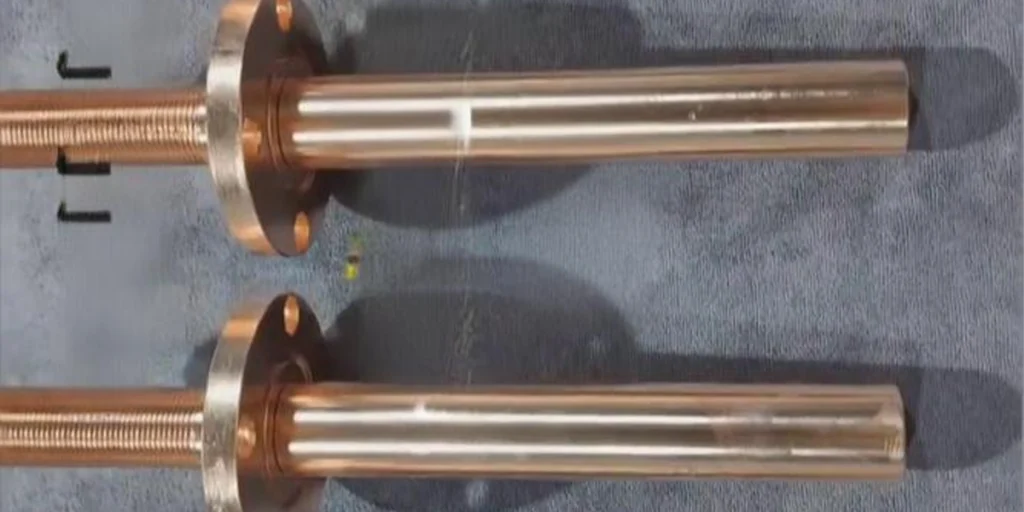
Machining difficulties of electrical copper parts
From the outside, many copper electrical parts do not appear to have complex structures. However, for manufacturers, copper parts used in the electrical industry are often more difficult to process than ordinary mechanical parts.
The reason is that electrical components not only need to meet dimensional requirements, but also must ensure conductivity, assembly stability, and long-term reliability.
In actual production, many projects ultimately fail not because of material issues, but because the processing quality fails to meet electrical application standards. The most critical challenges typically lie in precision control and contact surface quality.
Accuracy requirements
Modern electrical equipment is evolving towards higher power, higher density, and miniaturization. This means that more and more copper parts need to perform complex connection functions within a limited space.
For many projects, dimensional errors not only affect assembly but also directly impact electrical conductivity.
For example:
- Busbar mounting hole position deviation
- Insufficient connector concentricity
- Inconsistent PCB terminal dimensions
- Terminal block dimensions out of tolerance
These problems can all lead to:
- Assembly difficulties
- Insufficient contact pressure
- Increased resistance
- Increased risk of product failure
Especially in new energy vehicles, battery systems, and industrial automation equipment, many copper parts require highly repetitive assembly.
Therefore, the most important aspect of mass production is not the precision of individual pieces, but the consistency of the entire batch. As a copper CNC machining supplier, we typically develop different tolerance control schemes based on the characteristics of the parts.
For example:
- Controlling concentricity of precision-machined parts
- Milling assembly controls hole position accuracy
- Dimensional control of assembly parts
For high-precision projects, we also combine online inspection and first-article verification processes to ensure that dimensions remain stable during mass production.
At Zhuohua Hardware, our CNC machining accuracy can reach ±0.02mm, and we can provide corresponding inspection reports and quality documents to support customer drawings.
Contact surface quality
For electrical copper components, the contact surface is often more important than the dimensions themselves, because current is ultimately transmitted through these contact areas.
If the contact surface has the following problems:
- Knife marks
- Scratches
- Oxidation
- Burrs
- Uneven surface
All of these can potentially increase contact resistance.
With increased contact resistance, the system may exhibit the following:
- Localized fever
- Increased energy loss
- Decreased conductivity
- Reduced long-term reliability
In high-current applications, this effect is amplified further.
For example, connectors in data center power supply systems, new energy vehicle bus systems, and energy storage devices typically require extremely high contact surface quality.
To meet these requirements, the machining process of copper parts typically requires key control:
- Tool wear condition
- Finishing parameters
- Surface roughness
- Deburring process
- Surface treatment consistency
For parts that require nickel, silver, or gold plating, the quality of the basic machining can directly affect the adhesion of the subsequent plating layer.
Therefore, established copper processing plants typically focus not only on dimensional tolerances but also on establishing dedicated surface quality control processes. For long-term, high-volume projects, this capability often determines the stability of the final product.
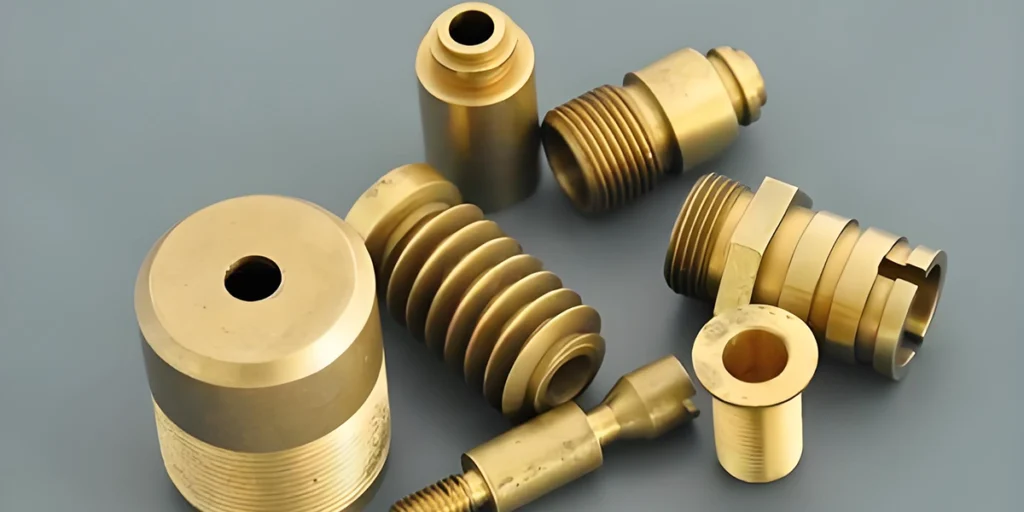
How to choose a reliable copper component supplier
With the rapid development of the global electronics, electrical and new energy industries, there are more and more suppliers in the market that can provide copper parts processing services.
However, there are not many manufacturers capable of consistently producing high-quality copper components. For procurement teams, simply comparing prices is usually insufficient.
The factors that truly influence a project’s success often include:
- Processing capacity
- Engineering support
- Quality control
- Delivery stability
Therefore, when choosing a copper CNC machining partner, it is recommended to focus on the following aspects.
Do you have experience in copper processing?
Copper is a special material. Many factories can process aluminum or steel parts, but they may not be able to reliably process high-precision copper parts.
The reason is that copper materials are prone to:
- Sticky knife
- Burrs
- Surface scratches
- Size fluctuation
Therefore, it is very important whether the supplier has mature copper processing experience.
In the early stages of a project, it’s important to understand the following:
- Does the company process copper materials regularly?
- Have you processed similar products?
- Are you familiar with the requirements of the electrical industry?
- Do you have experience with copper parts?
Experienced suppliers are often able to identify risks early in the DFM (Design for Manufacturing) phase and provide more reasonable manufacturing recommendations.
Do they have the appropriate equipment capabilities?
| Part type | Main processes |
| busbar | CNC milling |
| Terminal blocks | CNC turning |
| copper connectors | Precision turning + micro milling |
| copper components | Multi-axis machining |
Different copper parts have vastly different requirements for equipment. For example:
If the supplier’s equipment capacity is limited, production often needs to be subcontracted multiple times. This not only increases costs but also increases quality risks.
Therefore, it is recommended to prioritize options that possess:
- CNC milling
- CNC turning
- Multi-axis machining
- Mass production capability
A one-stop manufacturer.
At Zhuohua Hardware, we have dozens of CNC milling and CNC turning machines to support production needs ranging from simple copper parts to complex copper assemblies.
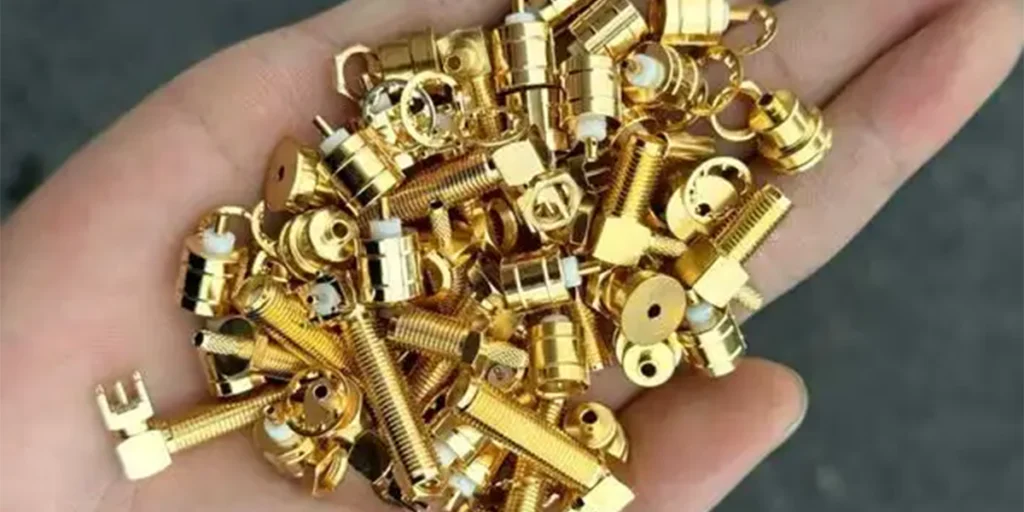
Does it have a quality control system?
For the electrical industry, quality control is more than just dimensional inspection.
Many customers are more concerned about:
- Batch consistency
- Surface quality
- Material traceability
- Test Records
Established suppliers typically have a complete quality process, including:
- Incoming material inspection
- First article inspection
- Process inspection
- Outbound inspection
For critical projects, the following should also be supported:
- Size Inspection Report
- Material Certificate
- Surface treatment report
These documents can help clients establish a complete quality traceability system.
Can it support long-term projects?
Many purchasing decisions are not about fulfilling a single order. What truly matters is whether the supplier can provide continuous supply for years to come.
Therefore, an assessment is recommended:
- Production capacity
- Engineering support capabilities
- Delivery time stability
- International logistics experience
For OEM customers in particular, a stable supply is often more valuable than the lowest price.
As a manufacturer specializing in precision machining , Zhuohua Hardware supports the entire manufacturing process from rapid prototyping to mass production, machining copper, brass, and various copper alloys, and providing milling, turning, and surface finishing services to help customers shorten development cycles and reduce supply chain management complexity.