
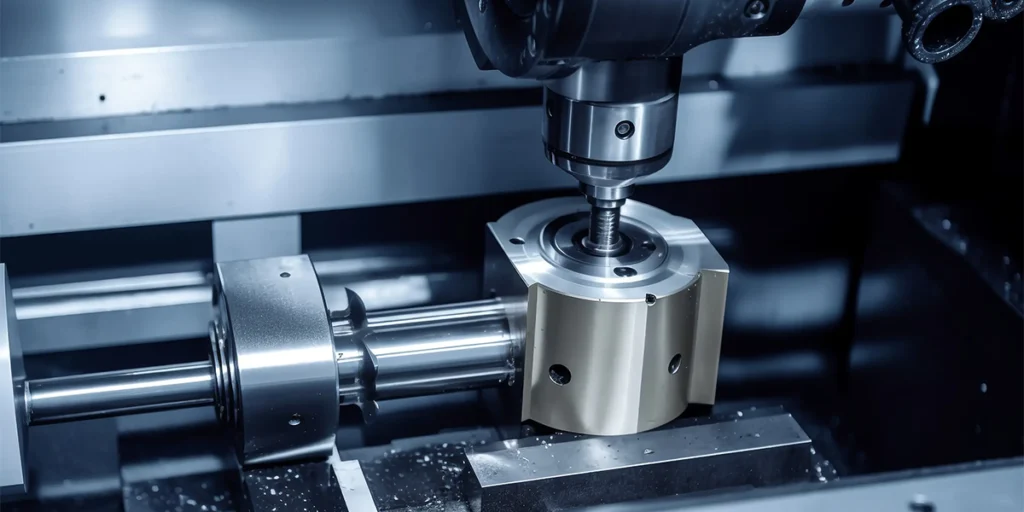
Numerical control machining has become one of the fundamental processes in modern manufacturing systems. From high-strength structural components to precision functional parts, CNC machining is widely used in many industrial fields due to its stable machining accuracy, material adaptability, and flexible production modes.
Especially with the current trend of shorter product iteration cycles and increased demand for customization, more and more companies are choosing CNC machining as the core solution for prototype manufacturing, small-batch production, and the processing of key components.
In actual business, different industries have significantly different requirements for CNC machining. Therefore, choosing a manufacturer with machining experience in multiple industries can often effectively reduce development risks and improve project implementation efficiency.
The following section will analyze the key role of CNC machining in practical applications, starting from several typical industries.
Automobile manufacturing
The automotive industry is one of the most widespread applications of CNC machining. Whether it’s traditional gasoline-powered vehicles or new energy vehicles, a large number of core components need to be manufactured using CNC machining.
For example, in the supply chain systems of OEMs such as Toyota and Tesla, CNC machining is mainly used for the following types of parts:
- Engine and transmission system parts
- Structural components of electric drive system
- Aluminum alloy housing and bracket
- Precision connectors and functional components
These parts typically have the following characteristics:
- Complex geometric structure
- Tolerance requirements are stable
- Large batch demand
- High processing efficiency is required.
Compared to traditional machining methods, CNC machining has significant advantages:
- High consistency in mass production: Through program control, the dimensions of parts in different batches can be kept stable, reducing assembly errors.
- Applicable to a variety of metal materials, such as aluminum alloys, stainless steel, and alloy steel, to meet the requirements of automotive lightweighting.
- Rapid prototyping capability: During the development of new models, CNC machining can quickly complete the manufacturing of functional verification parts, shortening the R&D cycle.
In real-world projects, automotive customers typically focus not only on machining accuracy but also on evaluating:
- Processing cost optimization capability
- Delivery time stability
- Mass production experience
We have extensive experience in CNC machining of automotive parts, especially in aluminum alloy structural components, small-batch functional parts, and complex housings. We can provide integrated support from drawing evaluation to mass production. If you are developing an automotive-related project, you can quickly obtain machining suggestions and quotations based on 3D drawings.
Medical Devices
The medical device industry has significantly higher requirements for CNC machining than ordinary industrial products, with the core requirements being precision stability, material reliability, and quality traceability.
In the medical field, CNC machining is commonly used in manufacturing:
- Surgical instrument structural components
- Medical device functional components
- Implantable device prototype
- Precision stainless steel and titanium alloy parts
These parts typically have the following characteristics:
- Strict tolerance requirements (commonly ±0.01 mm or higher)
- High surface quality requirements
- The materials are mostly medical-grade stainless steel or titanium alloy.
- Must comply with quality system standards
For example, compliance with the ISO 13485 quality system has become a crucial threshold for the medical component supply chain. Additionally, products targeting the North American market must also adhere to relevant US Food and Drug Administration regulations.
Compared to other industries, CNC machining for medical devices places greater emphasis on the following capabilities:
1. Precision machining control capability
Thin-walled structures, small-sized holes, and complex contours place high demands on process stability.
2. Material processing experience
Titanium alloys and medical-grade stainless steel are difficult to machine, requiring strict control of cutting tools and parameters.
3. Small batch, rapid delivery
Medical product development cycles are typically short, and prototype verification is frequently required.
In medical projects, manufacturers are not only the implementers of manufacturing, but also need to provide technical advice during the **DFM (Manufacturability Analysis)** phase to reduce design risks and improve manufacturing success rates.
We have extensive experience in machining structural components and precision metal parts for medical devices, enabling rapid delivery from prototype to small-batch production. If you have medical project needs, you can obtain machining suggestions and quotations based on your drawings.
Aerospace
Aerospace is one of the application fields with the highest CNC machining technology, which places extremely high demands on material properties, structural reliability and machining accuracy.
In aerospace manufacturing systems such as Boeing and Airbus, a large number of critical structural components rely on CNC machining, for example:
- Aluminum alloy structural components
- Titanium alloy connectors
- High-strength alloy parts
- Complex thin-walled structural components
Aerospace parts typically have the following machining characteristics:
- The material has high hardness and is difficult to cut.
- Complex structure and high removal rate
- Strict tolerance and geometric requirements
- Extremely high requirements for stability and consistency
Therefore, aerospace CNC machining relies not only on equipment precision, but also on:
- Multi-axis machining capability
- Stable process control
- Strict testing procedures
Unlike the automotive industry, aerospace projects typically involve small batches of high-value parts, requiring manufacturers to have higher technical capabilities.
Common challenges in the machining of aerospace structural components include:
- Thin-walled deformation control
- Optimization of titanium alloy processing efficiency
- High-precision hole machining stability
Suppliers with experience in aerospace machining can provide more reliable technical support in terms of machining strategies and clamping design.
We can provide multi-axis CNC machining services, supporting the manufacturing of complex structural parts made of materials such as aluminum alloy, stainless steel and titanium alloy, suitable for prototype and small-batch needs in the development stage of aerospace equipment.
Industrial equipment
In the field of industrial equipment manufacturing, CNC machining is mainly used to produce functional structural parts and high-strength mechanical components. These parts typically do not prioritize aesthetics, but rather focus on structural reliability, assembly accuracy, and durability.
Typical applications include:
- Structural components of automated equipment
- Mechanical transmission components
- Tooling and fixtures
- Hydraulic and pneumatic system components
Industrial equipment parts typically have the following processing characteristics:
- Wide range of sizes (from small precision parts to large structural components)
- Mostly requiring medium precision, but emphasizing stability.
- Batch demand is not fixed, and orders have a project-based characteristic.
With the rapid development of automated equipment, more and more equipment manufacturers need to:
- Rapid prototyping and verification of structural design
- Small-batch production of custom parts
- Flexible adjustment of processing plans
CNC machining has a clear advantage in this scenario, as it can complete production without molds and can quickly adjust the machining path according to design iterations.
In actual projects, industrial equipment customers typically focus on:
- Processing cycle
- Cost control capability
- Structural fabrication experience
We have long provided CNC machining support to manufacturers of automated equipment and machinery, especially in the machining of aluminum alloy structural parts, steel functional parts, and non-standard parts. We can provide process optimization suggestions based on drawings to help customers reduce machining risks and improve assembly efficiency.
Consumer electronics
The consumer electronics industry’s demand for CNC machining is mainly concentrated on exterior structural parts and precision small-sized parts, which have high requirements for surface quality and machining accuracy.
In the product supply chains of brands such as Apple and Samsung Electronics, CNC machining is widely used in:
- Metal frame for mobile phones
- Laptop casing
- Structural components for smart devices
- Precision connection components
Consumer electronics components typically have the following characteristics:
- Complex structure and small size
- High surface treatment requirements (anodizing, sandblasting, etc.)
- Strict requirements for processing consistency
- Short product iteration cycle
Compared to traditional manufacturing methods, CNC’s advantages in the consumer electronics field are mainly reflected in:
- High-precision surface processing capability: capable of achieving complex contours and fine edge and corner structures.
- Rapid product iteration support: Suitable for small-batch trial production during the new product development stage.
- Compatibility with multiple surface treatments: Meets the surface texture requirements of appearance parts.
As consumer electronics products continue to evolve towards thinner, lighter, and more precise designs, the requirements for CNC machining are also constantly increasing, including higher machining stability and more refined surface control capabilities.
We have extensive experience in processing structural components for consumer electronics, and can support precision machining of materials such as aluminum alloys, stainless steel and engineering plastics, along with a variety of surface treatment processes to meet the production needs of both appearance and functional components.
Professional precision parts processing service provider
Different industries have different requirements for CNC machining, but the core considerations always revolve around precision, stability, material expertise, and delivery capabilities. From rapid prototyping in the product development stage to small-batch and mass production, choosing a machining service provider with experience in multiple industries can significantly reduce project risks and improve production efficiency.
We specialize in precision CNC machining and manufacturing, and support:
- Processing of aluminum alloys, stainless steel, titanium alloys and engineering plastics
- Production of complex structural parts and high-precision functional components
- From prototype to small-batch manufacturing
- A variety of surface treatment supporting services
At the initial stage of a project, we can provide manufacturability analysis (DFM) and machining suggestions based on 2D/3D drawings to help optimize structural design and control machining costs. If you are developing a new component project, please submit your drawings or technical requirements, and we will provide a quick quote and professional machining solutions.