
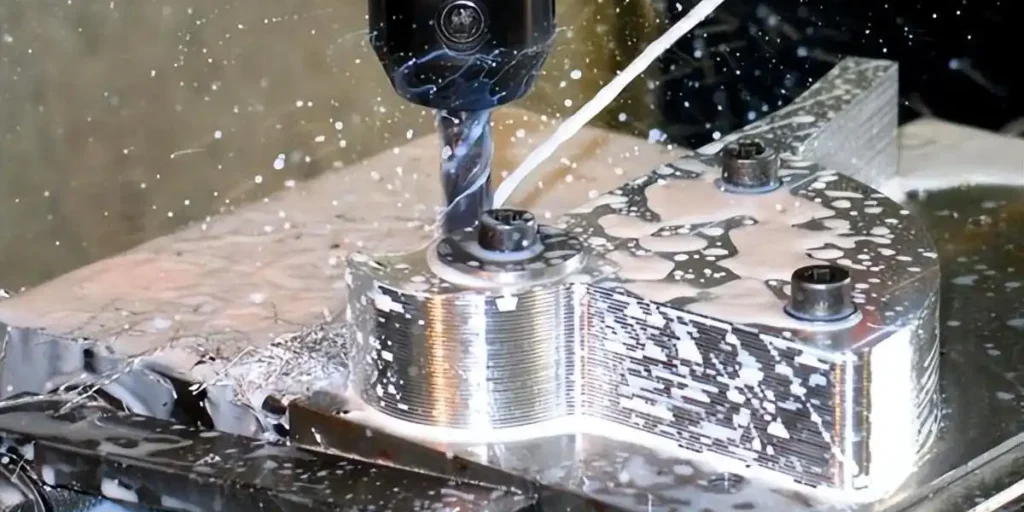
As the manufacturing industry continues to evolve towards higher precision, higher efficiency, and digitalization, CNC machining is shifting from traditional “competition based on equipment capabilities” to “competition based on system capabilities.” Simply relying on machine tool performance is no longer sufficient to create a long-term advantage. Automation integration, data-driven process optimization, and composite machining technologies are becoming the core development directions in the field of CNC machining.
Against the backdrop of accelerated restructuring of global supply chains, customers are placing higher demands on parts processing:
- Shorter delivery cycle
- More stable batch consistency
- More complex structural processing capabilities
- More transparent production process
These demands have driven CNC machining to gradually upgrade from a stand-alone machining model to digital manufacturing units and intelligent production systems. For enterprises, understanding the future trends of CNC machining is not only related to the direction of equipment investment, but also directly affects supplier selection and product development efficiency.
The trend of automation and unmanned operation
Automation and unmanned operation are becoming one of the most clearly defined development paths for CNC machining. Their core objective is to reduce human intervention while improving production cycle stability and machining consistency.
Traditional CNC machining typically relies on operators to complete the following steps:
- Loading and unloading
- Tooling change
- Process Adjustment
- Production monitoring
However, with the maturity of automation technology, more and more manufacturing companies are beginning to adopt it:
- Automated loading and unloading system
- Robotic handling unit
- Automatic tool management system
- Online detection system
By combining these automation modules, CNC machine tools can form independently operating processing units, enabling continuous production over long periods of time.
The advantages of unmanned processing are mainly reflected in:
- Improve equipment utilization: Significantly increase machine tool uptime by operating at night or continuously.
- Reduce fluctuations in labor costs: Reduce reliance on skilled operators and make production more stable.
- Improve batch consistency: Automated processes reduce human error and ensure stable part dimensions.
- Shorter delivery cycle: Automated production cycle is more controllable, making it suitable for urgent orders and mass production.
In real-world manufacturing environments, automation does not mean completely eliminating human labor. Rather, it means freeing up human labor from repetitive tasks through process optimization and automation integration, allowing it to shift towards process control and quality management.
Currently, an increasing number of specialized parts processing companies are building automated CNC production lines to meet market demands for high precision, small batches, and diverse product varieties. This production model not only improves delivery capabilities but also makes the processing of complex structural parts more reliable.
Intelligent manufacturing and data-driven
In the field of CNC machining, automation addresses the issue of “reducing manual labor,” while intelligent manufacturing addresses the issue of “optimizing decision-making.” With the development of industrial software and equipment networking technologies, CNC machining is gradually entering a data-driven stage.
In traditional processing methods, process optimization often relies on experience, for example:
- Cutting parameters were adjusted through trial cuts.
- Tool life is determined manually.
- Processing anomalies rely on operator detection.
This approach is not only inefficient, but also difficult to replicate at scale.
The core of data-driven manufacturing is to continuously optimize processes by collecting and analyzing data from the manufacturing process. This mainly includes:
1. Equipment Data Acquisition
Real-time monitoring of parameters such as spindle load, vibration, and temperature is used to determine the machining status.
2. Tool life management
Predict tool wear using data to reduce quality problems caused by tool malfunctions.
3. Optimization of process parameters
Based on historical processing data, parameters such as feed rate and rotation speed are dynamically adjusted.
4. Quality Traceability System
Establish a complete processing data chain from raw materials to finished products to improve quality controllability.
For customers, the value of data-driven production is mainly reflected in two aspects:
- Higher processing stability
- Stronger batch consistency
This is also an important reason why more and more companies are starting to pay attention to the digital capabilities of CNC machining suppliers when choosing them.
In practical applications, processing plants with data management capabilities are usually able to resolve processing anomalies more quickly and continuously optimize the processing technology of complex parts, thereby shortening the delivery cycle.
High precision and composite machining
As product structures become increasingly complex, single processes are no longer sufficient to meet the demands of modern parts manufacturing. High-precision and composite machining are becoming another important direction for the upgrading of CNC machining technology.
The demand for high-precision machining continues to rise
In fields such as medical devices, semiconductor equipment, and optical structural components, tolerance requirements for parts are constantly tightening. Common requirements include:
- Micrometer-level size control
- Higher surface quality requirements
- More stringent assembly consistency
Key factors affecting high-precision machining include:
- Machine tool structural rigidity
- Temperature-controlled environment
- Tool quality
- Process path design
True precision machining relies not only on equipment, but also on mature process experience.
Composite machining reduces clamping errors
Traditional processing typically requires multiple steps, for example:
- Turning
- Milling
- Drilling
- Tapping
Each additional clamping operation may introduce cumulative errors.
Composite machining technology, through multi-axis machining or mill-turn machining, can complete multiple machining operations in a single setup. Its advantages include:
- Reduce clamping error
- Improve machining accuracy
- Shorten production cycle
- Reduce human intervention
This type of processing method is particularly suitable for parts with complex structures and high precision requirements.
In actual manufacturing, high precision and complex machining capabilities have become important criteria for judging a supplier’s technical level. Machining companies with experience in multi-axis machining and precision processes are better able to handle complex structural parts and high-standard tolerance requirements. For projects requiring stable quality and rapid delivery, choosing a supplier with precision machining capabilities is often more important than simply focusing on price.
The actual impact on manufacturing enterprises
The development of CNC machining technology is not just a matter of equipment upgrades; it has also directly changed the operating models and competitive logic of manufacturing enterprises. The focus of future competition is shifting from “processing capabilities” to “comprehensive manufacturing capabilities.”
1. Delivery capability becomes a core competitive advantage.
As product iteration speeds up, customers are paying more and more attention to:
- Prototyping cycle
- Small batch delivery speed
- Project response efficiency
Processing companies with automation and digitalization capabilities can significantly shorten delivery cycles through standardized processes and stable production capacity.
2. The importance of process engineering capabilities continues to increase.
The proportion of complex parts is constantly increasing, and relying solely on equipment is no longer sufficient to meet processing demands. Manufacturing enterprises need to strengthen:
- Process planning capability
- Multi-axis machining experience
- Understanding of Materials Processing
- Precision control system
In the future, highly skilled process teams will become one of the core assets of processing enterprises.
3. Small batches and multiple varieties have become the norm.
Traditional manufacturing tends to favor mass production, while the current market environment favors:
- Rapid prototyping
- Parallel production of multiple models
- Continuous design optimization
Because CNC machining eliminates the need for molds, it can adapt to these changes more flexibly, and therefore plays an increasingly important role in the product development stage.
4. Supplier selection criteria are changing.
Customers are no longer just focusing on a single quote, but are paying more attention to:
- Processing stability
- Technical support capabilities
- Project communication efficiency
- Continuous delivery capability
This means that CNC machining service providers with a complete quality system and mature process experience will have a greater advantage in long-term cooperation.
Professional precision parts processing service provider
As CNC machining develops towards automation, intelligence, and high precision, selecting a machining partner with stable process capabilities and rich project experience has become a key factor in ensuring product quality and delivery cycle.
We specialize in precision CNC machining and have long served the manufacturing of complex structural parts across multiple industries. Our capabilities include:
- Multi-axis CNC machining capability
- Support for small-batch and mass production
- Experience in processing various metals and engineering plastics
- Complete quality inspection process
If you are looking for a reliable CNC machining supplier, or need a design manufacturability assessment (DFM), please submit your drawings or project requirements. We can provide you with rapid technical feedback and machining quotation support.