
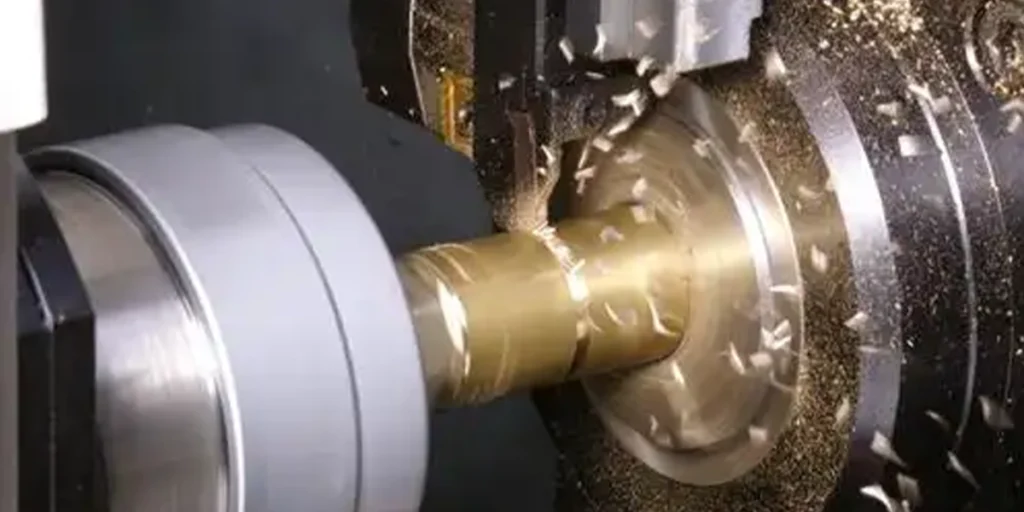
In actual manufacturing projects, CNC machining is not simply a matter of “uploading drawings and starting to machine,” but a systematic process that includes engineering assessment, process planning, programming, production execution, and quality control. For customers, a clear understanding of the complete CNC machining process helps to better control costs, delivery time, and product quality.
As a professional CNC machining service provider, we typically follow standardized processes to advance each project, ensuring that every step from drawings to finished products is controllable and traceable.
Requirements confirmation and drawing evaluation
The first step in CNC machining is not the machining process itself, but rather the engineering assessment. This stage directly determines the subsequent process route, cost structure, and machining feasibility.
When a client submits 3D drawings (such as STEP, STP, IGES) or 2D engineering drawings, our engineering team typically conducts the following review:
1. Structural manufacturability analysis (DFM)
- Are there excessively deep cavities or inaccessible areas?
- Does the structure have excessively small rounded corners or acute angles?
- Is there an unreasonable wall thickness design?
These issues will not affect the design functionality, but they will significantly impact the manufacturing difficulty and cost.
2. Tolerance and Surface Requirements Assessment
- Are there any unnecessary ultra-high precision requirements?
- Have critical dimension tolerances been specified?
- Does the surface roughness match the actual usage scenario?
Setting reasonable tolerances can significantly reduce processing costs.
3. Material and Heat Treatment Validation
- Whether to specify material grade
- Is heat treatment or hardening required?
- Does it involve special materials (such as high-temperature alloys or engineering plastics)?
Different materials directly affect the choice of cutting tools and machining strategies.
4. Quantity and delivery date confirmation
- Prototyping, small batch, or mass production?
- Are there any urgent delivery needs?
At this stage, we typically provide engineering advice (DFM Feedback) to customers to optimize processing costs and production stability without changing functionality.
CNC machining process planning
After completing the drawing evaluation, the next crucial stage in CNC machining begins—process planning. The core objective of this stage is to determine how to machine this part, including the machining sequence, equipment selection, and fixture design.
Typical processes include:
1. Breakdown of processing steps
Based on the part structure, the machining process is broken down into multiple steps, for example:
- Rough processing (removing excess material)
- Semi-finishing
- Finishing
- Secondary clamping and machining
A well-planned workflow can improve dimensional stability and reduce the risk of deformation.
2. Equipment Selection
Select appropriate equipment based on the part’s structure and precision requirements, for example:
- Three-axis CNC machining center
- Four-axis/five-axis machining centers
- CNC turning center
Complex structures typically require multi-axis equipment to reduce the number of clamping operations and improve accuracy.
3. Tool and cutting parameter planning
Different materials require different types of cutting tools:
- Carbide cutting tools
- Coated cutting tools
- High-speed machining tools
It will also be set according to the material properties:
- Spindle speed
- Feed rate
- Depth of cut
This step directly affects machining efficiency and tool life.
4. Clamping and positioning scheme design
Stable clamping is crucial for ensuring accuracy. Common methods include:
- Standard vise clamping
- Customized clamps
- Vacuum adsorption clamping
For high-precision parts, the clamping method is often more important than the machine tool accuracy.
By following the above process, we can minimize risks and ensure stable production before formal programming and processing.
Programming and Machine Tool Preparation
After completing the process planning, the crucial stage before actual production begins—CNC program preparation and machine tool preparation. This step directly determines the rationality of the machining path and the stability of the final machining accuracy.
1. CAM Programming and Toolpath Generation
Engineers will use CAM software to generate machining toolpaths based on the 3D model provided by the customer. This process typically includes:
- Roughing toolpath generation (rapid removal of excess material)
- Semi-finishing path optimization (deformation control)
- Finishing toolpath settings (to ensure dimensional and surface quality)
- Special structural treatments (deep cavities, thin walls, complex curved surfaces, etc.)
During the programming phase, the following parameters will be optimized:
- Cutting strategies (contour machining, contour machining, adaptive machining, etc.)
- Tool entry method (reduce tool impact)
- Smoothness of the toolpath (to avoid tool vibration)
A proper toolpath not only affects machining quality, but also directly impacts machining time and cost.
2. Program Simulation and Interference Check
Before officially starting the process, we usually conduct a program simulation to avoid processing risks.
- Tool-workpiece interference detection
- Fixture collision detection
- Trip range check
Virtual simulation can help identify potential problems in advance, reduce trial cutting costs, and improve processing safety.
3. Machine tool preparation and tool setting
After the program is confirmed, the machine tool preparation stage begins, which mainly includes:
- Tool mounting and tool length measurement
- Workpiece clamping and datum establishment
- Coordinate system settings (G54 and other workpiece coordinate systems)
- Verification of cutting parameters
For precision parts, the following is usually also performed:
- Spindle runout detection
- Machine tool preheating treatment
- Ambient temperature control
These details can significantly affect processing stability.
4. First Article Trial Cut
Before mass production, we will perform a first-piece processing and conduct a thorough inspection:
- Key dimensions
- Surface quality
- Assembly related dimensions
If any discrepancies exist, adjustments will be made promptly.
- Tool compensation
- Cutting parameters
- Clamping method
Only after the first piece passes inspection can the formal production stage begin.
CNC machining execution stage
Once the program and equipment are ready, the actual CNC machining stage begins. To ensure the stability of batch processing, we typically employ standardized production control procedures.
1. Rough processing stage
The main goal of rough machining is to quickly remove excess material while ensuring the overall structural stability of the workpiece.
The key control measures during this stage are:
- Cutting efficiency
- Tool wear
- Workpiece stress and deformation
For easily deformable materials (such as aluminum alloys or thin-walled structural parts), reasonable allowances will be reserved to provide a stable foundation for subsequent precision machining.
2. Semi-finishing stage
Semi-finishing is used to further stabilize dimensions and reduce residual stress from roughing.
Common measures include:
- Adjust cutting parameters
- Optimize toolpath
- Controlling local deformation
This stage is a crucial transitional step to ensure accuracy.
3. Finishing stage
Finishing determines the final quality of a part, and the main focus is on:
- Dimensional tolerance control
- Surface roughness
- Edge quality
For high-precision parts, the following is typically used:
- Machining with small cutting amounts
- High-precision cutting tools
- Stable clamping method
Secondary clamping may be used when necessary to ensure critical dimensions.
4. Process quality control
During the processing, we will perform process quality control (IPQC), for example:
- Spot check key dimensions
- Monitor tool wear status
- Adjust tool compensation value
Process control can prevent the accumulation of batch errors.
5. Surface treatment and post-treatment (if required)
Post-processing can be performed according to customer needs after processing, such as:
- Deburring
- Surface sandblasting
- Anodizing
- Electroplating treatment
Post-treatment not only improves the appearance quality, but also enhances corrosion resistance and wear resistance.
Final inspection and delivery
In CNC machining projects, quality inspection is not only the final step in production, but also a crucial step in ensuring that parts meet design requirements and assembly functions. We typically use standardized quality control processes to ensure that each batch of parts has stable dimensional consistency and traceability.
1. First Article Inspection (FAI)
After mass production is completed, the first or key sample will undergo comprehensive testing, focusing on:
- Verification of critical dimension tolerances
- Hole position and geometric tolerance inspection
- Surface roughness inspection
For high-precision parts, coordinate measuring machines are typically used for inspection to ensure accurate and reliable dimensional data.
2. In-process quality control (IPQC)
For bulk orders, we conduct random checks during production to prevent dimensional deviations caused by tool wear or clamping changes. Key control measures include:
- Spot checks of critical dimensions
- Tool status monitoring
- Workpiece consistency verification
Process control can effectively reduce batch risks.
3. Final Quality Control (OQC) before shipment
After all machining and surface treatment of the parts are completed, a final inspection will be conducted before shipment to ensure that:
- Dimensions meet the drawing requirements
- No obvious processing defects on the surface
- Quantity and labeling are correct
According to customer requirements, the following can be provided:
- Size Inspection Report
- Supporting documents
- Surface treatment report
4. Packaging and Logistics Arrangements
Different types of parts have different packaging requirements, for example:
- Precision parts are packaged with shockproof materials.
- Surface-treated parts are packaged with scratch-resistant material.
- Export orders will be packaged with rust-proof materials.
Proper packaging can prevent secondary damage during transportation and ensure that parts still meet quality standards upon arrival.
Professional CNC machining customization service provider
A complete and stable CNC machining process is the foundation for ensuring part quality and reliable delivery. From drawing evaluation to process planning, and then to machining execution and quality inspection, every step directly affects the final product performance.
If you are looking for a stable CNC machining partner, we can provide services based on your drawings and requirements:
- Processing Feasibility Analysis (DFM)
- Rapid prototyping and small-batch production
- Support for multiple materials and processes
- Rigorous quality control process
We welcome you to submit your drawings or leave your project requirements. Our engineering team will communicate with you as soon as possible to provide a suitable processing plan and quotation.