
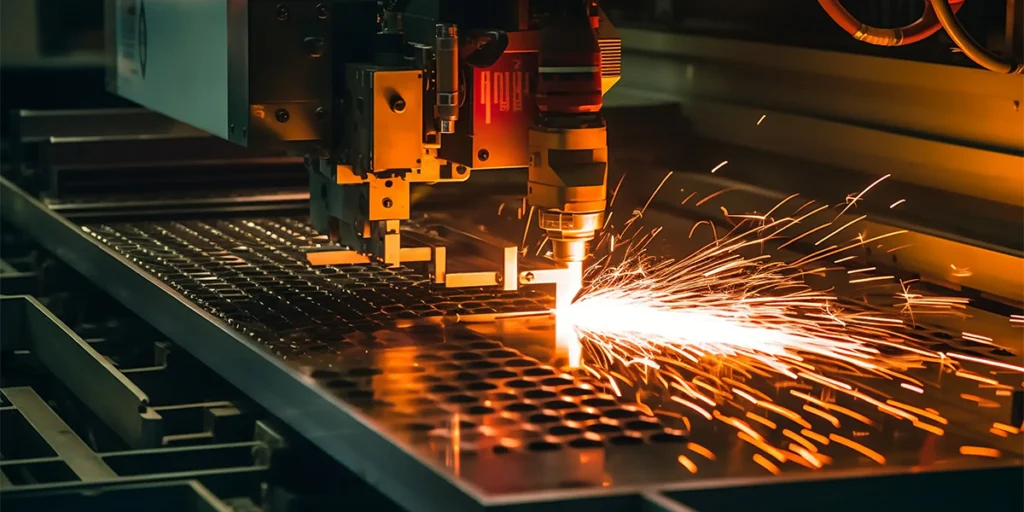
In CNC machining, material selection often directly determines machining feasibility, machining costs, and the quality of the final part. Many customers focus more on structure and tolerances when submitting drawings, but neglect whether the material itself is suitable for CNC cutting processes.
From a manufacturing perspective, not all materials are suitable for CNC machining. Some materials, due to unstable physical properties, sensitive thermal properties, or excessively high processing costs, lack practical production value even if they are theoretically machinable.
As a CNC machining service provider, during the project evaluation phase, we typically consider the material’s machinability, thermal stability, and structural risks to provide more reasonable machining recommendations. Below, we summarize several types of materials that are unsuitable for CNC machining or pose a high machining risk from an engineering perspective.
Physical property limitations
The physical properties of a material are the primary factor determining the feasibility of CNC machining. If the material is too soft, too brittle, or has an uneven internal structure, it will affect cutting stability and may even lead to the scrapping of the part.
The following types of materials commonly encounter problems in CNC machining:
1. Materials that are too soft (easily deformed)
These types of materials are prone to the following problems during processing:
- Tool extrusion deformation
- Size cannot be consistently controlled
- Surface develops burrs or stringiness
Typical materials include:
- Silicone
- Rubber
- Polyurethane Soft Rubber
- Soft PVC
These materials are more suitable for use:
- Compression molding
- Injection molding
- Die cutting
Instead of traditional CNC cutting.
2. Materials that are too brittle (easily break).
Brittle materials are prone to edge breakage or overall cracking during the cutting process, which places extremely high demands on tool path and machining parameters.
Common materials include:
- Ordinary glass
- Ceramics
- Quartz
- Sintered magnetic materials (Ferrite)
While some ceramics can be precision machined, it usually requires:
- Specialized diamond cutting tools
- Ultra-low feed parameters
- High-cost equipment
Therefore, it is not recommended for routine CNC machining projects.
3. Materials with non-uniform internal structure
Inconsistencies in the internal density or structure of certain materials can lead to problems during processing:
- Localized edge chipping
- Unstable surface quality
- Abnormal tool wear
Typical examples include:
- Timber (especially natural timber)
- Low-density foam material (Foam)
- Graphite blocks (some grades)
Although these materials can be processed, they are not typically used for high-precision parts.
Thermal stability issues
During CNC machining, cutting continuously generates heat. If the material has poor thermal stability, it is prone to softening, melting, or thermal deformation, thus affecting dimensional accuracy and surface quality. These problems are particularly common in engineering plastics and some composite materials.
The following are some materials that are easily affected by heat during CNC machining:
1. Low melting point engineering plastics
These types of materials are prone to softening due to frictional heating during the cutting process, leading to:
- Knife sticking
- Surface melting and wire drawing
- Unstable dimensions
Common materials include:
- Polyethylene (PE)
- Polypropylene (PP)
- Polystyrene (PS)
- Thermoplastic elastomers (TPE)
These materials are generally more suitable for:
- Injection molding
- Extrusion molding
Instead of high-precision CNC cutting.
2. Plastics with low heat distortion temperature
Some plastics undergo structural deformation at relatively low temperatures, and even with proper control of cutting parameters, dimensional deviations may still occur.
Typical materials include:
- ABS (more pronounced in thin-walled structures)
- PMMA (Acrylic)
- Nylon (PA6 / PA66, more noticeable after absorbing moisture)
Nylon materials are also affected by moisture absorption, which can cause dimensional changes after processing.
3. Laminated composite materials
Laminated structural materials are prone to delamination or edge cracking during processing due to the combined effects of heat and cutting forces.
Common materials include:
- Fiberglass board (FR4)
- Carbon fiber laminate
- Epoxy laminate
These types of materials typically require:
- Specialized cutting tools
- Lower feed rate
- Vacuum adsorption fixture
Otherwise, surface quality will be difficult to control.
From a processing perspective, thermal stability issues do not necessarily mean that the material is unprocessable; rather, they imply a narrower processing window, higher process requirements, and a greater likelihood of increased costs. During the project evaluation phase, a comprehensive assessment is usually necessary, taking into account the part’s structure, wall thickness, and tolerance requirements.
Unreasonably costly materials
In CNC machining, there is another type of material that is not impossible to machine, but the machining cost is far beyond what is reasonable, making it uncommercially viable. This situation is more common in high-performance and specialty materials.
For customers, choosing this type of material often brings the following benefits:
- Tool wear costs increased significantly
- Processing time is significantly extended
- Prices have increased significantly
Therefore, reasonable substitutions are needed during the engineering phase.
1. Ultra-high hardness metallic materials
Excessive hardness can significantly reduce cutting efficiency and accelerate tool wear.
Typical materials include:
- Tungsten Alloy
- Hardened die steel (e.g., HRC50 and above)
- High-temperature alloys (Inconel series)
- Cobalt-chromium alloy (CoCr)
These materials typically require:
- Carbide or ceramic cutting tools
- Multiple layered processing
- Longer processing cycle
It is not recommended for use on regular CNC parts unless absolutely necessary.
2. Ultra-high performance engineering plastics
Although some high-performance plastics can be processed, the materials themselves are extremely expensive and the processing is quite difficult.
Commonly included:
- PEEK (Polyetheretherketone)
- PI (polyimide)
- PPS (polyphenylene sulfide)
These types of materials are mostly used for:
- Medical
- Aviation
- High-temperature environment applications
If the actual operating requirements of the parts are not high, the following can usually be used:
- POM
- Nylon (PA)
- PTFE
By replacing materials with other alternatives, costs can be significantly reduced.
3. Large-size rare material blanks
Certain special materials are feasible to process in small sizes, but when the part size is large:
- Difficulty in procuring raw materials
- Low material utilization rate
- The cost of raw materials accounts for too high a proportion.
This type of situation is more common in the following materials:
- Titanium alloy thick plate
- High-purity graphite
- Large-size ceramic blanks
The structure usually needs to be optimized during the design phase to reduce material waste.
From a practical production perspective, material cost plus processing difficulty is often more important than the performance of a single material. Appropriate material selection can not only reduce processing costs but also improve delivery time stability and batch consistency.
Alternative processing solutions are recommended.
When certain materials suffer from deformation, cracking, heat-affected zones, or excessive costs during CNC machining, a more stable and economical manufacturing solution can usually be achieved through material substitution or process substitution.
In actual project evaluations, we provide customers with the following common alternative suggestions based on the part’s function, structure, and usage environment:
1. Alternatives to soft materials
For materials such as silicone and rubber that cannot be stably cut, it is generally recommended to use molding processes instead.
- Silicone → Silicone molding
- Rubber → Rubber compression molding
- TPE → Injection Molding
If it is only used for structural verification, it can be temporarily replaced with:
- POM (Polyoxymethylene)
- ABS
- Nylon (PA)
In order to complete the CNC prototype machining.
2. High-cost material alternatives
When the properties of materials far exceed actual requirements, they can be replaced by engineering plastics or conventional metals, thereby significantly reducing processing costs.
Common alternative logic:
- PEEK → POM / PA / PTFE
- Titanium alloy → Aluminum alloy (such as 6061 / 7075)
- Inconel high-temperature alloy → Stainless steel (such as 304 / 316)
Provided that strength or temperature resistance requirements are met, alternative materials can typically reduce processing costs by 30%–70%.
3. Alternatives to brittle materials
For materials that are prone to cracking, such as glass and ceramics, the following alternative methods can be used:
- Ordinary glass → PMMA (acrylic)
- Ceramic → PEEK or PPS
- Quartz → Optical-grade plastic
This approach maintains the required appearance or functionality while significantly improving processing stability.
4. Optimization scheme for laminate material processing
For composite materials such as FR4 and carbon fiber plates, the following is recommended:
- Optimize toolpath
- Control the machining direction
- Add structural chamfer design
Performing manufacturability optimization (DFM) during the design phase is often more effective than simply adjusting manufacturing parameters.
Professional CNC machining customization service provider
In real-world projects, determining whether a material is suitable for CNC machining often requires a comprehensive assessment of the part’s structure, tolerance requirements, and application scenario. Choosing an experienced CNC machining service provider can mitigate machining risks and reduce trial-and-error costs from the initial design stage.
We provide our customers with:
- Material processability assessment
- Suggestions for optimizing processing technology
- Cost-optimized alternatives
- Support for small-batch and mass production
If you are evaluating whether a certain material is suitable for CNC machining, or if you wish to obtain a more reasonable machining solution, please submit your drawings or material information to us for communication. We will provide targeted technical advice and quotation support.