
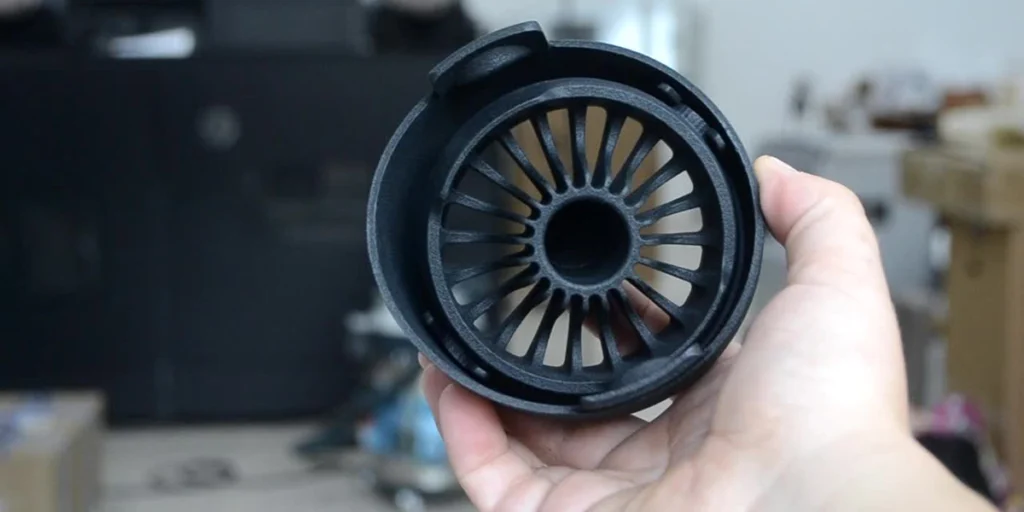
With the rapid development of additive manufacturing technology, 3D printing is increasingly entering the industrial manufacturing field. From rapid prototyping to small-batch functional parts, 3D printing demonstrates a degree of design freedom that is difficult to achieve with traditional manufacturing methods. Therefore, a common question is gradually being raised: Will 3D printing replace CNC machining?
In fact, these two processes are not simply in competition, but rather are technological systems based on completely different manufacturing logics. They differ significantly in terms of material compatibility, structural complexity, dimensional accuracy, batch production capacity, and cost structure, and each plays to its own strengths in different application scenarios.
In real-world projects, an increasing number of manufacturing needs involve the simultaneous use of CNC machining and 3D printing. For example:
- Use 3D printing for rapid structural verification
- Use CNC machining to complete the production of final functional parts
- Alternatively, a combination of complex structures and high precision can be achieved through hybrid processes.
For companies that require precision parts machining, understanding the applicable boundaries of the two processes is more practical than simply comparing “which will replace which”.
The fundamental difference between 3D printing and CNC machining
The biggest difference between 3D printing and CNC machining lies in the material forming method. This fundamental difference directly determines their different performance in terms of precision, strength, structural design, and production efficiency.
1. Different manufacturing logic: Additive manufacturing vs. Subtractive manufacturing
3D printing belongs to additive manufacturing, which forms part structures by depositing materials layer by layer. Common processes include:
- Slice the 3D model
- Layer-by-layer deposition or solidification of materials
- Finally, a complete part is formed.
This method is almost unrestricted by traditional toolpaths and can manufacture complex internal structures, such as:
- Hollowed-out structure
- Lightweight lattice structure
- Internal flow channel structure
CNC machining belongs to subtractive manufacturing, which uses cutting tools to remove material and form parts. Its core characteristics are:
- Processing from physical materials
- Procedural forming through multi-axis motion
- More suitable for high precision and high strength requirements
Because the materials themselves are standard industrial materials (such as aluminum alloys, stainless steel, engineering plastics, etc.), CNC machining is more stable in terms of mechanical properties.
2. Differences in precision and surface quality
Under normal circumstances:
- CNC machining can reliably achieve precision of ±0.01 mm or even higher.
- 3D printing accuracy is typically in the range of ±0.05–0.2 mm.
In addition, 3D printed parts usually require additional post-processing (grinding, sandblasting or machining) to achieve a better surface quality, while CNC machining can directly achieve a lower surface roughness.
Therefore, CNC has an advantage in the following scenarios:
- Precision fit structure
- Sealed structure
- Functional mechanical parts
3. Differences in material systems
Although the range of 3D printing materials is constantly expanding, there are still significant limitations:
Common materials for 3D printing
- Photosensitive resin
- Nylon
- Some metal powder
Common materials for CNC machining
- Aluminum alloy
- Stainless steel
- Titanium alloy
- Copper alloys
- Engineering plastics (POM, PEEK, ABS, etc.)
In terms of strength, temperature resistance, and long-term stability, CNC machining still holds an advantage.
4. Differences in batch size and cost structure
The advantages of 3D printing are mainly reflected in:
- Lower unit cost
- No mold required
- Rapid prototyping
CNC machining is more suitable for:
- Small to medium batch production
- Functional structural components
- High-precision components
In actual manufacturing projects, many customers first use 3D printing to verify the structure before switching to CNC mass production, in order to balance development efficiency and product quality.
In our actual production, we often provide customers with a combination solution of 3D printing + CNC secondary finishing, for example:
- Printing complex structural blanks
- Critical dimensions are controlled to maintain tolerances through CNC precision machining.
- Shorten the overall manufacturing cycle
This hybrid manufacturing approach is becoming an increasingly common engineering practice.
The Real-World Limitations of 3D Printing
Despite the clear advantages of 3D printing in rapid prototyping and manufacturing complex structures, there are still some key limitations in practical industrial applications, which also determine that it is difficult to completely replace CNC machining.
1. Gap still exists in material properties.
The variety of 3D printing materials is increasing, but they still differ from standard industrial materials, mainly in the following aspects:
- Insufficient interlayer bond strength
- Non-uniform mechanical properties in all directions (anisotropy)
- Limited high-temperature stability
Especially in the field of metal parts, although metal additive manufacturing can be applied to some high-end industries, the overall cost is high and the post-processing requirements are stringent. In contrast, CNC machining directly uses standard bars or sheets, resulting in more stable material properties, making it suitable for load-bearing structural components and parts that have been used for a long time.
2. Dimensional accuracy and consistency limitations
There are several factors that affect accuracy during the 3D printing process:
- Material shrinkage
- Stacking error
- Heat distortion
- Impact of supporting structure
Therefore, for parts requiring high-precision fit (such as bearing seats, sealing structures, and assembly interfaces), secondary CNC machining is usually still necessary to ensure dimensional tolerances. In actual production, many customers adopt a “printing + CNC finishing” approach to balance complex structures and dimensional accuracy.
3. Surface quality and post-processing costs
Most 3D printing processes produce noticeable layer patterns that require additional processing.
- Polishing
- Sandblasting
- Polishing
- Machining
When high surface finish is required, post-processing costs increase significantly, thereby diminishing the cost advantage of 3D printing.
4. Mass production efficiency issues
3D printing is more suitable for:
- Prototype manufacturing
- Small batch production
- Complex structural parts
However, in medium- or high-volume production, printing speeds typically cannot match CNC machining, especially in metalworking scenarios, where unit costs rise rapidly. Therefore, from an industrial manufacturing perspective, 3D printing is more of a supplementary process than a complete replacement.
CNC’s irreplaceable application scenarios
Despite the continuous development of additive manufacturing technology, CNC machining remains significantly irreplaceable in several key manufacturing areas, especially in the production of functional parts.
1. High-precision assembly structure
CNC machining remains the preferred solution when parts have the following requirements:
- Strict tolerance control (e.g., ±0.01 mm)
- High consistency mass production
- Precision fit structure
For example:
- Shaft-type structures
- Sealed structure
- Precision mounting holes
These scenarios have extremely high requirements for dimensional stability, which CNC machining can reliably achieve through mature processes.
2. High-strength metal functional components
In the following industry applications, parts typically need to withstand:
- High load
- High-temperature environment
- Prolonged fatigue use
These types of parts typically use:
- Aluminum alloy
- Stainless steel
- Titanium alloy
CNC machining can directly use standard industrial materials and ensure that the material properties are not damaged by optimizing cutting parameters, thus giving it an advantage in the manufacturing of functional parts.
3. Small to medium batch production scenarios
CNC machining has significant advantages when orders enter the trial production or small-batch production stage:
- No mold required
- Stable processing
- Controllable unit cost
In contrast, 3D printing has limited cost reduction per unit as volume increases, while CNC machining can significantly improve efficiency through process optimization.
4. Parts requiring high surface quality
For exterior parts or seals, there are usually specific requirements for surface roughness, for example:
- Ra 1.6 or lower
- • Requirements for pretreatment before anodizing or electroplating
CNC machining can directly achieve good surface quality and is compatible with various post-processing techniques.
In real-world projects, we frequently evaluate the optimal solution for clients—3D printing or CNC machining—based on the part’s structure and intended use. For complex prototypes, we recommend 3D printing for rapid verification; for functional parts or mass production, we use CNC machining to ensure dimensional accuracy and material properties. This application-based process selection is becoming a standard procedure for an increasing number of manufacturing projects.
Future Collaboration Models
Current manufacturing trends indicate that 3D printing will not replace CNC machining, but rather they are becoming complementary. As product development cycles shorten and structural complexity increases, more and more companies are adopting hybrid manufacturing models to balance design freedom with manufacturing precision.
1. Division of labor between prototype and mass production processes
During the product development phase:
- Use 3D printing to quickly validate structural designs
- Shorten product iteration cycle
- Reduce development costs
When a product enters the functional verification or mass production stage:
- Use CNC machining to ensure dimensional accuracy
- Improve material strength and stability
- Meets assembly and long-term use requirements
This division of labor has become a common process in hardware development.
2. 3D printing + CNC secondary finishing
For parts with complex structures but high requirements for critical dimensions, a common solution is:
- Using 3D printing to create complex structures
- Perform CNC precision machining on key assembly areas.
- Ultimately, a combination of complex structures and high precision is achieved.
For example:
- Internal flow channel structure parts
- Lightweight structural components
- Functional integrated structural components
This hybrid manufacturing model not only improves design flexibility but also significantly reduces the overall manufacturing cycle.
3. Digital manufacturing drives process integration
With the development of CAD/CAM software and intelligent manufacturing technology, 3D printing and CNC machining are gradually merging.
- Unified management of digital models
- Automated process changeover
- Online detection and feedback optimization
The core of future manufacturing is not a single process, but rather selecting the most suitable combination of processes based on the needs of the parts.
Professional precision parts processing service provider
Whether it’s 3D printing or CNC machining, the key is not which process to choose, but rather to develop a reasonable manufacturing plan based on the part’s structure, materials, and application scenario.
We also offer:
- CNC precision machining services (turning, milling, multi-axis machining)
- Industrial-grade 3D printing services (plastic and metal prototyping)
- Support for small-batch and functional component production
- One-stop manufacturing solution from prototype verification to mass production
If you are evaluating 3D printing or CNC machining solutions, or looking to optimize the manufacturing costs and lead times of existing parts, please submit your drawings or project requirements. Our engineering team can provide process suggestions and a rapid quote based on your specific application scenario.