
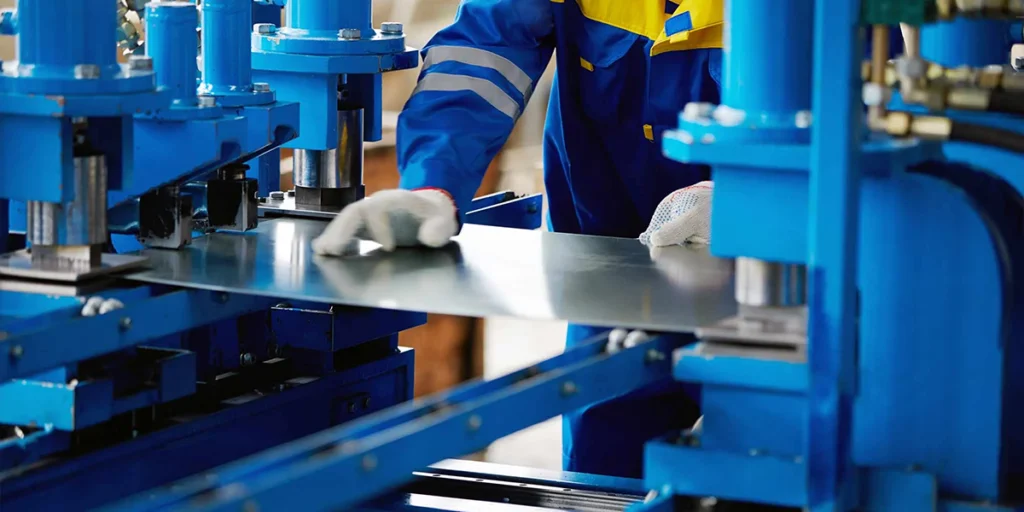
Main classifications of sheet metal processing technology
In actual production, “sheet metal processing” is not a single fixed processing method, but rather the result of a series of different processes working together. Even with the same metal sheet, different product structures, functional requirements, and production scales often require completely different sheet metal processing techniques.
To better understand these differences, the most effective way is not to memorize all the process names, but to first figure out: what problem does each of these sheet metal processing processes “solve”?
Based on the processing purpose, common sheet metal processing techniques can generally be divided into the following categories:
- Sheet metal cutting processing : mainly used to separate and cut metal sheets into the required basic shapes, and is the starting point of the entire processing flow.
- Sheet metal forming processes : By applying external force to sheet metal, plastic deformation is caused to obtain specific geometric shapes and structures.
- Sheet metal surface and functional processes : Enhancing the strength, functionality, or appearance of parts without altering the overall structure.
- Sheet metal connection and assembly processes : combining multiple sheet metal parts together to form a complete component or product that can be used in practice.
This classification method helps to understand the logic of sheet metal processing as a whole and provides a clear direction for the selection of specific processes.
Sheet metal cutting processing technology
In sheet metal processing, the role of cutting processes is very clear: they are only responsible for separating metal sheets into the required contours or sizes without changing the overall shape of the sheet.
In other words, when the processing goal is simply to “cut a whole sheet into several parts” rather than bending, stretching, or forming, cutting-type sheet metal processing techniques are usually preferred.
Common characteristics of cutting processes
Regardless of the cutting method used, this type of sheet metal process typically shares the following characteristics:
- The processing mainly involves material separation.
- No significant plastic deformation is involved.
- Mostly used in the early stages of sheet metal processing.
- Provides a basic blank for subsequent forming, joining and other processes.
Common cutting-type sheet metal processing techniques
In actual production, sheet metal cutting mainly includes the following common methods:
Shearing process
Shearing is a basic cutting method that uses the relative movement of upper and lower blades to cut metal sheets into the required size.
This process is typically used to cut regular straight edges and is suitable for obtaining sheet blanks with basic shapes such as rectangles and strips.
Blanking/Punching process
Punching and punching rely on the action of dies to cause the sheet metal to break and separate under pressure.
This type of process is often used to machine holes in sheet metal or to obtain the shape of parts with specific contours, and is suitable for mass production.
Other cutting methods
In addition to shearing and punching, sheet metal processing also employs laser cutting, plasma cutting, or water jet cutting, depending on the requirements, to meet the cutting needs of more complex contours or special materials.
What problems are cutting-type sheet metal processing techniques suitable for solving?
Cutting processes are mainly used to address the following types of needs:
- Break down the entire sheet metal into workable part dimensions.
- Provides a basic profile for subsequent bending, forming, or assembly.
- Machining holes, openings, or external boundaries on sheet metal.
- Meets initial processing requirements of varying precision, batch size, and complexity.
It is important to note that cutting processes themselves do not determine the three-dimensional structure of the final product, but rather lay the foundation for subsequent processing steps.
The position of cutting processes in the overall processing flow
In a complete sheet metal fabrication process, cutting is usually one of the first steps. Only after the sheet metal is correctly cut into the appropriate shape and size can subsequent forming, surface treatment, and joining processes proceed smoothly.
Therefore, the choice of cutting method often directly affects the efficiency, accuracy, and overall cost of subsequent processing.
Sheet metal forming processing technology
In sheet metal processing, when simply “cutting the sheet metal” is no longer sufficient to meet product requirements, forming processes must be introduced.
For example, when parts require a three-dimensional structure, curved shape, or certain strength and functional characteristics, simple cutting is no longer sufficient.
The core of forming sheet metal processing technology is to use external force to cause controllable plastic deformation of metal sheets, thereby obtaining the required geometric shape and structural features.
Common characteristics of forming processes
Compared to cutting processes, forming sheet metal processing typically has the following characteristics:
- The material is not separated during processing, but its shape is changed.
- Processing is accomplished by relying on the plasticity of the material.
- Higher requirements for product structure design and process planning
- It often directly determines the final shape and function of a part.
Common forming sheet metal processing techniques
Based on the different deformation methods and application scenarios, common forming processes can be summarized into the following categories:
Bending Forming
Bending is one of the most common sheet metal forming methods. It involves applying directional pressure to the sheet metal to form a certain angle along the bending line.
This technology is widely used in the manufacture of structural components such as boxes, brackets, and shells.
Drawing/Deep drawing
Drawing processes use dies to stretch sheet metal into shapes with depth or curves, making them suitable for manufacturing container or shell parts.
Compared to bending, this type of process requires higher material ductility.
Other forming methods
In actual production, forming methods such as flanging and rolling are also used to strengthen the edges, improve the structure, or meet assembly requirements, depending on the structural requirements of the parts.
The basic requirements of forming process for materials and design
Forming sheet metal is not suitable for all materials and structures, and usually requires the following conditions to be met:
- The material possesses sufficient plasticity and ductility.
- Reasonable forming radius and structural design
- The deformation process shall not exceed the material’s bearing capacity limit.
If the material selection or structural design is unreasonable, problems such as cracking, wrinkling or dimensional instability may occur during the molding process.
Surface and functional sheet metal processing techniques
Many people believe that sheet metal “surface finishing” is merely for improving appearance. However, in actual manufacturing, these processes serve more of a functional and structural reinforcement role.
Once the basic shape of a part has been cut and formed, if further improvements in strength, stability, safety, or recognizability are needed, surface and functional sheet metal processing techniques will be introduced.
Why are surface and functional processes needed?
Without significantly altering the overall structure of the part, this type of process can help solve some practical problems, such as:
- The board material itself lacks rigidity
- The surface needs to have anti-slip or durable properties.
- Components need clear labeling or functional differentiation.
- Local structures are prone to deformation or stress concentration during use.
By properly treating the surface or function of the parts, the overall performance of sheet metal parts can be improved without adding extra components.
Common surface/functional sheet metal processes
In sheet metal fabrication, the following processes are often used for functional enhancement:
Imprinting process
Embossing involves pressing text, patterns, or partial structures onto the surface of a sheet material using a mold, for identification, positioning, or functional differentiation. Embossing typically does not significantly increase material thickness but can improve legibility and localized strength.
Embossing process
Embossing creates regular or irregular patterns on the surface of sheet metal, which can improve appearance, enhance slip resistance, or improve overall rigidity. This process is commonly used for sheet metal parts where tactile feel or safety is important.
Reinforcing rib treatment
By pressing ribs into the surface or specific areas of sheet metal, the overall rigidity and resistance to deformation of parts can be improved. Reinforcing ribs are a common way to enhance structural stability without increasing material thickness.
What practical problems do these technologies solve?
In summary, surface and functional sheet metal processes mainly address the following needs:
- Increased strength : Reduced deformation through structural textures or reinforcing ribs.
- Anti-slip and safety : Improves surface friction properties
- Identification and functional differentiation : Facilitates identification, installation, or use.
- Structural stability : Reduces the risk of localized failures during use.
These processes are typically used as supplementary steps in the sheet metal fabrication process, in conjunction with preceding cutting and forming processes, to improve the final performance of the parts.
Sheet metal connection and assembly processes
Once the parts are made, how do you turn them into a “usable product”?
In sheet metal processing, cutting and forming are only the first steps. What truly determines whether a product is usable, easy to assemble, and durable is often the final connection and assembly process.
Even the most precise sheet metal parts can suffer from insufficient strength, loosening, deformation, or even irreparable problems if the connection method is inappropriate. Therefore, the connection process is an indispensable part of sheet metal processing.
Why is joining technology indispensable in sheet metal processing?
Sheet metal products are usually composed of multiple parts, such as chassis, brackets, shells, and structural components.
The core functions of the joining process include:
- Assemble disparate parts into a complete structure
- Ensure overall strength and stability
- Affects assembly efficiency and production costs
- Determines whether the product is easy to disassemble and maintain.
In other words, a product can only truly “take off” if the right connection method is chosen.
Common types of sheet metal connection methods
From an application perspective, sheet metal connection methods can be broadly categorized into three types:
1. Riveting connections
Two or more sheet metal parts are fixed together by plastic deformation.
- No high temperature required, suitable for thin sheets
- Reliable connection and high assembly efficiency
- Most are non-removable structures.
Commonly found in sheet metal parts that require rapid assembly and structural stability.
2. Welded connections
Heat is used to locally melt and bond metals together.
- High connection strength and good overall integrity
- Suitable for load-bearing structures or components with high sealing requirements.
- High requirements for process and deformation control
It is often used in frames or load-bearing parts where high strength is required.
3. Mechanical connections
Assembly is performed using screws, nuts, clips, etc.
- Removable for easy maintenance
- Flexible process and highly adaptable
- Strength depends on the design and fastening method
It is very common in products such as chassis and equipment enclosures.
Typical application scenarios of different connection methods
Different connection technologies are not about which is “more advanced,” but rather whether they are suitable.
- One-time structural components : more inclined towards riveting or welding
- Products requiring repair or upgrades : Mechanical connections are more suitable.
- For components with high aesthetic requirements : connection methods that have minimal impact on the surface will be prioritized.
The connection method is essentially a balance between structure, efficiency, and usage requirements.
The actual impact of connection method on the product
During the design and manufacturing stages, the connection process directly affects:
- Cost : Welding equipment and labor costs are generally higher than those for simple mechanical connections.
- Strength : Welded and partially riveted structures have stronger overall integrity.
- Maintainability : The detachable connection facilitates future maintenance and replacement.
This is why, in sheet metal fabrication, the connection method often needs to be considered in conjunction with the product’s intended use, rather than being decided separately.
How to choose between different sheet metal processes
Put the previous process knowledge into practice.
The preceding sections introduced various sheet metal processes such as cutting, forming, surface treatment, and joining. However, in real-world projects, few people ask, “Which process is the best?”
A more practical question is: which process is most suitable for my product?
To determine the sheet metal workmanship, you can usually start from the following four aspects.
1. Examine the complexity of the product structure.
The product structure determines the “combination method” of the processes.
- Simple structure, mainly flat parts → can be completed by shearing/laser cutting + basic bending.
- For structures with three-dimensional requirements and reinforcement, a combination of forming processes, reinforcing ribs, and connection processes is used.
- If opening, closing, or installation of other components is required, the connection method and assembly space need to be considered in advance.
The more complex the structure, the less likely the process is to exist in a single form.
2. Examine the material type and properties.
Different metallic materials have vastly different adaptability to processing methods:
- Stainless steel: High strength, but relatively more difficult to form and weld.
- Aluminum alloys: Lightweight, suitable for forming and surface treatment
- Carbon steel plate: High versatility, wide range of processing options
The materials themselves often directly limit or guide the available sheet metal processes.
3. Check the production batch size
Batch size directly affects whether the process is “cost-effective”.
- Small batch/customized parts → More flexible manufacturing processes, reducing mold investment
- For medium to large-volume production, efficiency-oriented processes such as stamping and die forming have a greater advantage.
The same product may use completely different processes during the prototyping and mass production stages.
4. Consider the requirements for accuracy and cost.
This is the most easily overlooked yet most crucial point in actual projects.
- High precision requirements: Process stability and equipment accuracy are given priority.
- Cost-sensitive products: Trade-offs need to be made between the number and complexity of processes.
Accuracy and cost are almost always a “balancing act”.
At last
In actual sheet metal processing, process selection is never a matter of “choosing from a table,” but rather a process of constantly weighing options based on product requirements.
Even with the same structure and materials, the final process may be completely different depending on the application scenario, batch size, or cost target.
Understanding the differences between various sheet metal processing techniques is not essentially about memorizing more terminology, but about being able to determine which processes are necessary and which can be optimized when dealing with specific products.
In subsequent articles, we will break down individual sheet metal processing techniques in greater depth, and further explain the trade-off logic of different techniques in real production by combining them with practical application scenarios, so as to help you apply this knowledge of techniques to specific projects.