
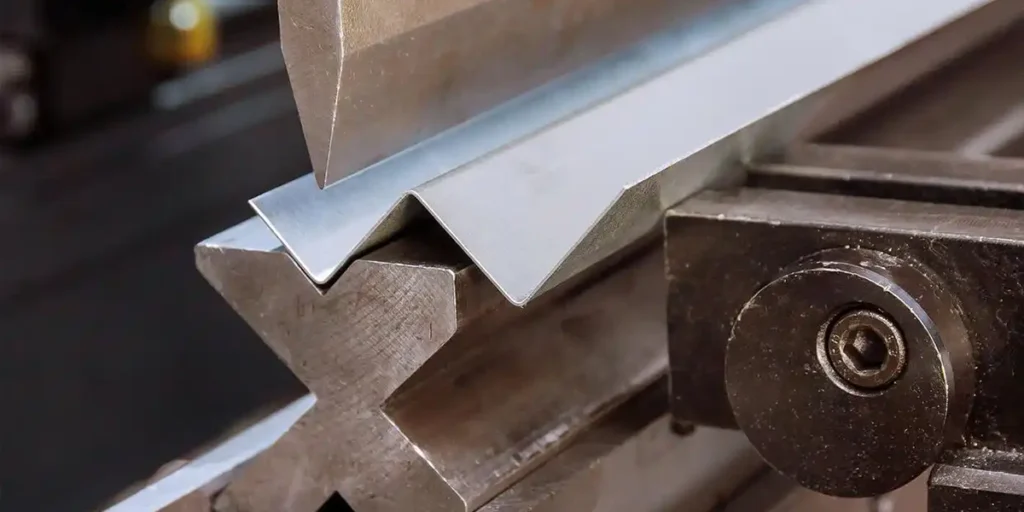
In the manufacturing industry, no process is without its flaws, and sheet metal processing is no exception.
Although sheet metal processing has significant advantages in terms of efficiency, cost control, and batch consistency, and is therefore widely used in industries such as industrial equipment, construction, automobiles, and electronics, it also has some objective and unavoidable limitations.
It is important to emphasize that understanding the disadvantages of sheet metal processing does not negate the process itself.
Instead, this is for specific projects—
- Determine if it suits the current product requirements.
- Avoid unnecessary design rework and cost waste
- Make more rational and appropriate manufacturing choices
Next, we will objectively analyze the potential shortcomings of sheet metal processing technology from the perspectives of materials, design, cost, and precision, to help you understand its applicable boundaries more comprehensively.
Limitations of sheet metal processing technology
Overall, sheet metal fabrication is better suited to manufacturing needs under specific conditions; it is not a universal solution for all metal parts. Understanding these limitations helps determine whether the process is suitable early in the project.
This is mainly reflected in the following aspects:
Mainly applicable to thin sheet metal
Sheet metal processing is generally most effective for thin sheet materials. As the thickness of the sheet increases, the processing difficulty, equipment load, and forming risks all increase significantly. Some ultra-thick sheets are not suitable for conventional sheet metal processes.
Limited ability to handle complex three-dimensional structures
Sheet metal processing mainly involves planar or quasi-planar deformations such as shearing, bending, and stamping. For three-dimensional parts with complex structures, numerous spatial curved surfaces, and concentrated details, it is often difficult to form them in one go, and other processing methods are needed to complete the process.
Not suitable for all high-strength or special materials
Some high-strength, high-hardness, or poorly ductile materials are more prone to cracking, springback, or forming difficulties during sheet metal processing, requiring higher standards for processes and equipment.
This limitation does not involve specific operational details, but rather helps readers establish a clear cognitive boundary: what sheet metal processing “excels at and what it is not good at”.
Based on this, further exploration from the perspectives of materials, design, and precision will make it easier to understand and judge.
Material limitations in sheet metal processing
From the perspective of “whether it can be done”, sheet metal processing does have certain requirements for materials, but these limitations mean that additional considerations need to be made to process or design adjustments, rather than simply that it is “unprocessable”.
This is mainly reflected in the following aspects:
Material thickness limit
Sheet metal processing is generally more suitable for thin sheet materials. As the material thickness increases, the forming difficulty, equipment load, and processing risks all increase, placing higher demands on process stability.
Material ductility requirements
Sheet metal processing often involves bending, stretching, and other deformation operations, which place certain demands on the plasticity and ductility of the material. Materials with insufficient ductility are more prone to cracking or incomplete forming during processing.
The difficulty of processing high-hardness or brittle materials
Materials with higher strength and hardness require more sophisticated equipment, molds, and processing parameters. They are also more prone to springback or mold wear issues, necessitating targeted process control.
Material springback and cracking risk
Different materials exhibit significant differences in springback characteristics after molding, and improper springback control can affect dimensional accuracy; materials with weaker deformation capacity are also more prone to cracking during the molding process.
Overall, these restrictions do not mean that materials “cannot be used for sheet metal processing,” but rather that a comprehensive evaluation of thickness, performance, and processing capabilities is necessary during the material selection stage to lay a solid foundation for subsequent processing and quality control.
Limitations of Sheet Metal Fabrication on Design
In sheet metal fabrication, the rationality of the design often directly determines the processing difficulty, cost, and quality of the finished product. These limitations are not to “negate the design itself,” but rather to emphasize that the design needs to be coordinated with the specific processing technology.
Common design constraints mainly include the following aspects:
Bending radius limitation
When bending sheet metal parts, a minimum bending radius requirement must be met. If the bending radius is too small, it can easily lead to material cracking or unstable bending accuracy. Therefore, it is necessary to reserve a reasonable bending space during the design phase.
Distance between hole and bend edge
If the hole is too close to the bending edge, deformation will occur during bending, affecting the hole’s position accuracy and even causing localized breakage. A well-designed hole edge distance helps ensure processing stability and dimensional consistency.
Forming depth and structural complexity
Sheet metal processing is more suitable for relatively regular, well-defined structures. For excessively deep forming, too many curved surfaces, or overly complex structures, additional processes are often required, or even a combination of other processing methods.
Tolerance superposition problem
Sheet metal parts typically require multiple processing steps, each of which introduces a certain degree of error. If the design tolerances are too strict, these errors can be amplified during actual production, affecting the assembly result.
Overall, the limitations that sheet metal processing imposes on design are essentially requirements for manufacturability. Only by fully considering the characteristics of the process during the design phase can more stable and economical production be achieved while ensuring functionality.
Cost and accuracy related issues
In sheet metal processing, cost and precision are often interrelated and mutually influential, which is one of the core issues of greatest concern to procurement and decision-making levels. It’s not that sheet metal processing “cannot achieve precision,” but rather that the level of precision usually depends on the cost invested and the process configuration.
From a cost perspective, the main potential impacts are as follows:
The difference between small batches and large batches is significant.
Sheet metal processing has a greater cost advantage in mass production, while in small-batch or customized projects, the costs of equipment debugging and process preparation are difficult to spread, resulting in relatively higher unit costs.
Impact of mold cost
Some sheet metal processes require molds. The design, manufacturing, and debugging of molds are costly, which can significantly increase the overall processing cost for small-batch orders.
Increased costs due to secondary processing
To meet appearance, assembly, or precision requirements, secondary processing steps such as grinding and correction are often required, which directly lengthens the processing cycle and increases costs.
From the perspective of accuracy, the main influencing factors include:
Effect of bending springback
Different materials have different degrees of springback after bending. If not properly controlled, this can affect dimensional consistency and requires compensation during the process or design stages.
Forming consistency problem
In multi-piece production, material differences, equipment status, and operating parameters can all affect the consistency of forming, especially in mass production.
Multi-process error accumulation
Sheet metal parts typically require multiple processing steps, each of which introduces a certain amount of error, which may accumulate and affect the final assembly accuracy.
Overall, the precision required for sheet metal processing is not determined by a single factor, but rather by the combined effects of materials, processes, equipment, and cost. Achieving stable production by reasonably balancing costs while clearly defining precision requirements is key.
How to reduce the impact of sheet metal processing defects
The “disadvantages” we mentioned earlier do not mean that sheet metal processing is uncontrollable. On the contrary, in actual projects, most problems can be avoided or effectively controlled in advance through the right methods. The key lies in having systematic judgment and experience.
We can approach this from the following four directions:
1. Reasonable material selection
The differences in strength, ductility, and springback characteristics among different materials directly affect the processing results. Choosing materials more suitable for sheet metal forming, while meeting functional requirements, helps reduce risks such as bending springback, cracking, and dimensional fluctuations.
2. Early Design Optimization (DFM Mindset)
Considering ease of manufacturing during the design phase is often more effective than remedial measures later. Properly setting tolerances, avoiding unnecessary structural complexity, and reserving process space for bending and assembly can reduce manufacturing difficulties and potential problems from the outset.
3. Select a suitable combination of processes.
Sheet metal processing is not accomplished by a single process. By properly combining processes such as cutting, bending, and welding, it is possible to control costs while improving forming stability and overall quality, and avoiding the amplification of defects due to improper process selection.
4. Choose an experienced sheet metal processing manufacturer.
Experience often determines whether a problem will occur. Manufacturers who are familiar with material properties, understand process boundaries, and have a mature process database can usually predict risks early on and control “defects within acceptable limits” through process adjustments.
In summary, the drawbacks of sheet metal processing are not insurmountable; the real difference lies in knowing how to address them. Understanding these influencing factors allows us to transform limitations into controllable conditions during design and production, ultimately achieving stable and reliable processing results.
At last
The shortcomings of sheet metal processing are not essentially “process problems,” but rather “perception problems.” When materials, structure, precision, and cost are misjudged, any process will expose its limitations.
The truly mature approach is not to avoid sheet metal processing altogether, but to clearly understand from the early stages of a project what it is suitable for, what it is not suitable for, and what problems can be controlled in advance.
When design, material selection, and processing experience work in synergy, sheet metal fabrication remains an efficient, stable, and cost-effective manufacturing method. Understanding these boundaries is the first step in making the right manufacturing decisions.