


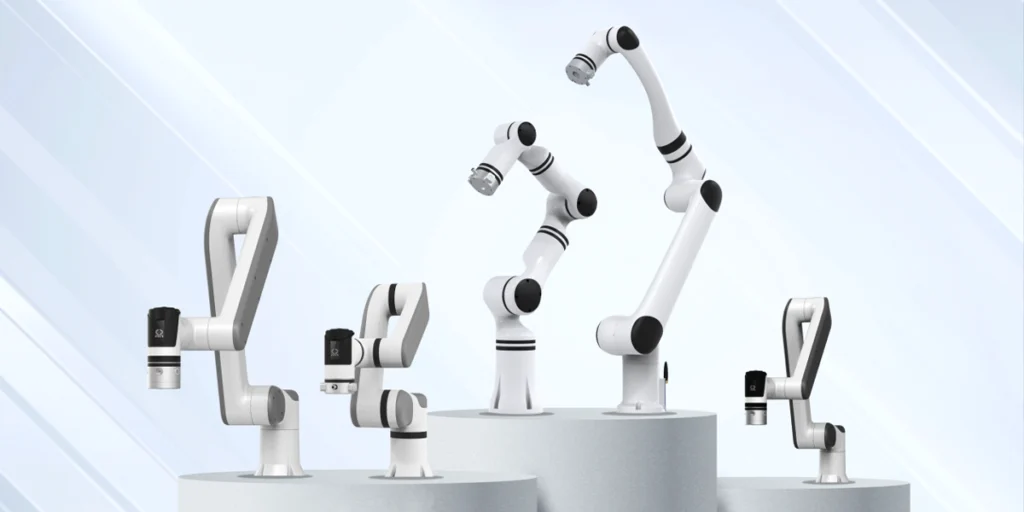
The impact of multi-axis linkage machining on structural accuracy
Robot joint parts typically have complex three-dimensional structures, such as curved surface transitions, multi-angle holes, and asymmetric geometric features. These structures cannot be completed by simple three-axis machining and usually require multi-axis linkage machining.
In actual machining, multi-axis linkage is mainly used for:
- Machining of complex curved surfaces
- Machining of multi-angle holes and mounting surfaces
- Integrated structural component molding
Compared to traditional machining methods, multi-axis machining can reduce the number of setups and improve structural consistency, but it also brings higher machining difficulty.
- The toolpath is complex, requiring advanced programming skills.
- Higher requirements for machine tool stability during processing
- Even slight deviations can affect the overall geometric accuracy.
For robot joint components, the accumulation of errors from multiple clamping operations is a major problem. If critical structures cannot be completed in a single clamping operation, machining errors will directly impact:
- Joint fit accuracy
- Motion stability
- Assembly consistency
Therefore, in the manufacturing of such parts, multi-axis linkage machining is usually preferred to control the source of error by reducing the number of clamping operations.
In our actual machining projects, for robot joint parts, we prioritize the use of 5-axis CNC machining solutions to complete the machining of multiple surfaces and complex structures in a single setup, ensuring the relative positional accuracy between key dimensions and reducing the problem of error accumulation from the source.
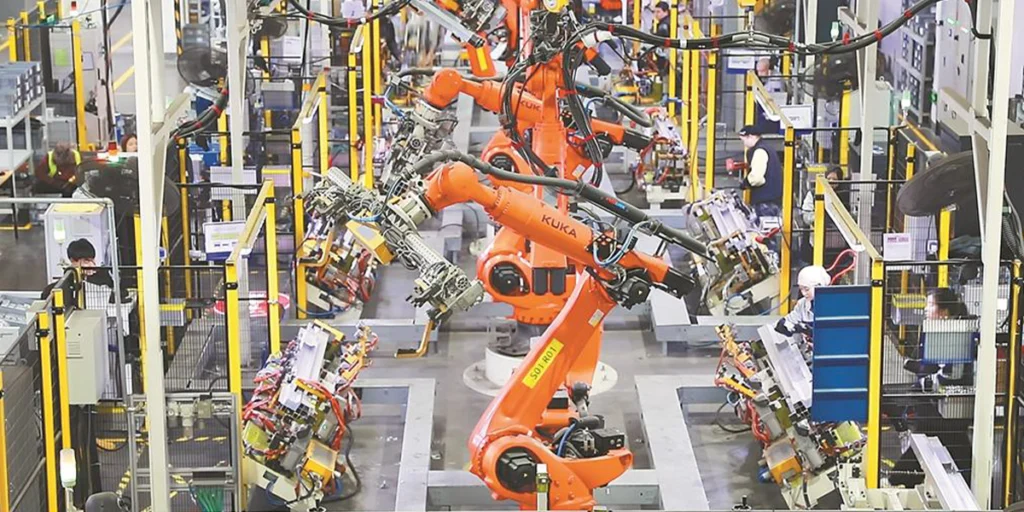
Coaxiality and parallelism control
In robot joint components, coaxiality and parallelism are among the most critical geometric tolerances, directly affecting the joint’s operational accuracy and stability.
Typical applications include:
- Shaft and bearing fit
- Multi-hole coaxial structure
- Parallelism between mounting surfaces
If these critical dimensions are not properly controlled, a series of problems will arise:
- Joints do not move smoothly
- Increased transmission resistance
- Increased vibration and noise
- Accelerated wear after long-term operation
For robotic arms, these kinds of errors are not amplified individually, but rather accumulate at each level in a multi-joint system, ultimately affecting the overall accuracy.
During the manufacturing process, this type of tolerance control mainly faces two challenges:
- Multi-faceted processing leads to inconsistent benchmarks
- Positional offset caused by secondary clamping
If the baseline changes, the overall geometry may still fail, even if individual dimensions are acceptable.
In our machining practice, for joint parts with such high precision requirements, we usually control them from two aspects:
- By optimizing the process planning, the number of clamping operations can be reduced, ensuring consistent datum standards.
- Utilize multi-axis machining capabilities to complete the machining of critical holes and mounting surfaces within the same clamping setup.
For high-precision mating parts, we will focus on controlling the following:
- Hole coaxiality
- Flatness and parallelism of mounting surfaces
- Positional relationships between key dimensions
In this way, the operational stability and consistency of the joint components after assembly can be effectively guaranteed.
Assembly gap control
The final performance of robot joint components depends not only on the machining accuracy of individual parts, but also on the clearance control after assembly.
In joint structures, common sources of clearance include:
- Shaft and bearing clearance
- Gear meshing clearance
- Assembly tolerances of connection structures
- Cumulative error after stacking multiple parts
These gaps may seem small at the level of a single component, but they are magnified step by step in a multi-joint system, directly affecting the overall performance of the robotic arm.
Improper clearance control usually leads to the following problems:
- Lagging movement or “empty journey”
- Decreased trajectory repeatability
- Jitter occurs under load.
- Accuracy degradation after long-term operation
For high-precision robotic arms, these kinds of problems are often not design problems, but rather manufacturing and assembly consistency problems.
In actual processing, the core of assembly clearance control lies in two aspects:
- Dimensional stability of key mating surfaces
- Geometric consistency between parts
If there are fluctuations in the critical mating dimensions, even if they are within the tolerance range, it may lead to cumulative deviations after assembly.
In our manufacturing process, for robot joint parts, we focus on controlling the consistency of key mating structures, including:
- Stable control of shaft-hole fit accuracy
- Dimensional consistency between gears and mounting reference
- Unified machining of multi-part assembly datum
In this way, uncertainties after assembly can be reduced during the manufacturing stage, thereby reducing subsequent debugging costs and improving the overall system’s operational stability.
Professional CNC precision manufacturing services
If you have needs for machining robot joint structural components, transmission parts, or custom mechanical parts, we can provide you with professional CNC precision manufacturing services . We are a manufacturer specializing in the machining of robot and automation equipment parts, with the capability to produce complex structures, multi-axis machining, and high-precision mating parts, with an accuracy of ±0.02 mm.
It supports a variety of materials such as aluminum alloy , stainless steel , tool steel , titanium alloy and engineering plastics , and is suitable for joint housings, shaft parts, gear structures and various high-precision assemblies. It can deliver stably from prototype prototyping to mass production.
If you are developing a robot project or optimizing a product, feel free to submit your drawings or requirements. We can provide you with processing solutions and quotations.