


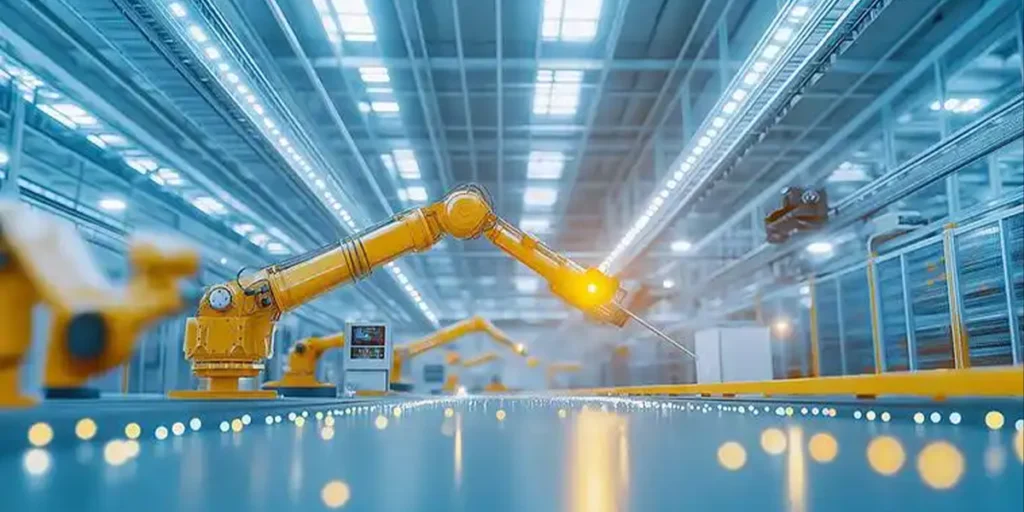
In articulated robotic arms, most critical structural components rely on CNC machining, especially in areas involving strength, precision, and assembly stability.
From a practical application perspective, robot components can be broadly categorized into the following types.
Structural components
Structural components form the basic framework of a robotic arm, connecting the various joints and bearing the overall load. Common structural components include:
- Link
- Brackets
- Frames
These types of parts are usually large in size, and strength and weight control must be taken into account at the same time.
In industrial robots, many structural components are made of aluminum alloy, which reduces the overall weight of the machine and decreases inertia, thereby improving motion efficiency.
In terms of manufacturing, these types of parts typically have the following characteristics:
- Wide size range, requiring high equipment stroke.
- Contains complex cavities or weight-reduction structures
- It is necessary to ensure overall rigidity and dimensional stability.
At the same time, it is also necessary to control:
- Flatness
- Parallelism
- Precision of key mounting surfaces
This is to ensure the stability of subsequent joint installation.
In actual manufacturing, these structural components are usually completed by multi-axis CNC milling to achieve integrated machining of complex structures, reduce assembly errors, and improve overall strength.
Joints and actuator housings
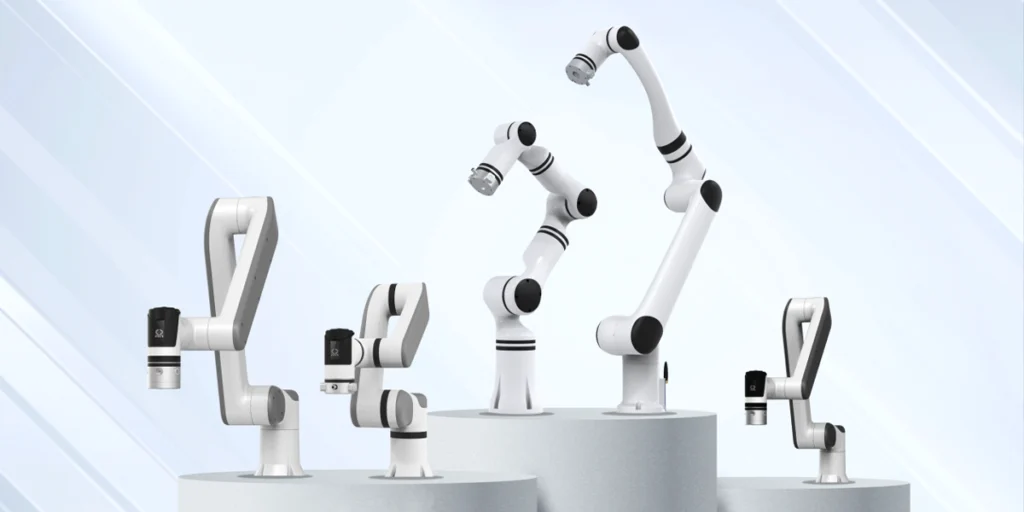
The joint housing is one of the most critical structures in a robotic arm. It is used to house the motor, reducer, and bearing system, and also serves as a transmission and support mechanism.
Common parts include:
- Shoulder joint shell
- Elbow joint structural components
- Wrist component housing
These types of parts typically have complex structures, containing multiple mounting positions and mating surfaces, and require high machining accuracy.
In terms of processing, the main features are:
- Multi-faceted processing, irregular structure
- There are multiple bearing positions and mounting holes.
- Complex internal cavities
Key control points include:
- Coaxiality (fitting of bearings and output shaft)
- Hole position accuracy
- Flatness and perpendicularity of the mounting surface
These precision levels directly affect:
- Is the joint rotation smooth?
- Does the transmission system experience off-center loading?
- Does the overall operation produce vibration or noise?
These types of parts typically require 3-axis + 4-axis or 5-axis CNC machining to ensure the consistency of multi-faceted features and reduce errors caused by repeated clamping.
In practical applications, the machining quality of the joint housing directly affects the repeatability and service life of the robotic arm, thus requiring high machining capabilities and quality control.
Gears and transmission components
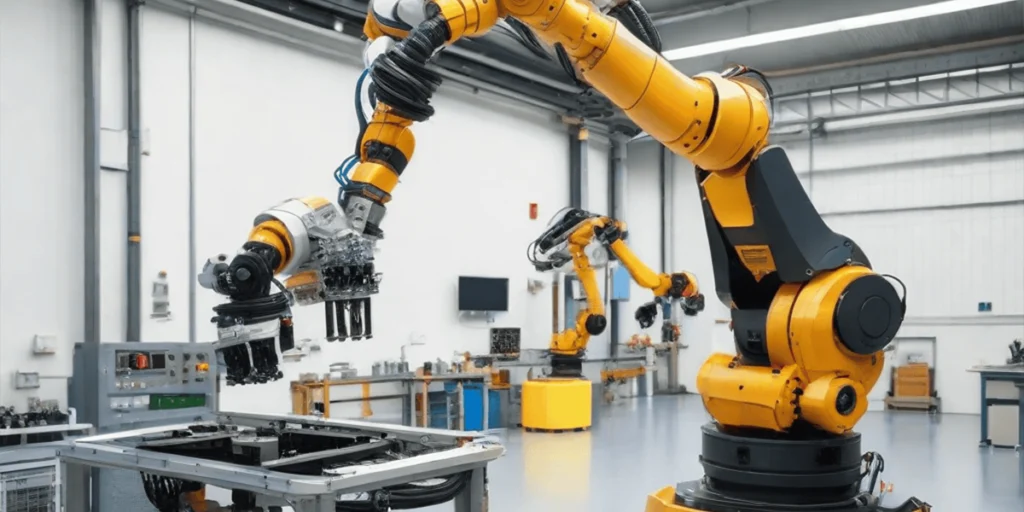
Gears and transmission components are the core of the robotic arm’s power system, used to achieve torque transmission and motion control, and directly affect accuracy and stability.
Common parts include:
- Precision gears
- Planetary gear structural components
- Drive shaft and related mating parts
The characteristics of this type of part are:
- High dimensional accuracy requirements
- Strict surface quality requirements
- Operating under high load and high frequency conditions for extended periods
Key control points include:
- Tooth profile accuracy
- Coaxiality and roundness
- Gap control
- Surface roughness
Even the slightest deviation will have a direct impact:
- Transmission efficiency
- Noise and vibration
- Service life
During the manufacturing process, these types of parts typically require a combination of multiple processes:
- CNC precision machining (shafts, datum surfaces)
- Heat treatment (to improve hardness and wear resistance)
- Finishing (grinding or precision dressing)
To ensure dimensional stability and long-term performance.
For robotic applications, gears and transmission components often need to achieve higher precision levels to meet the repeatability requirements of multi-joint systems.
End effector/gripper
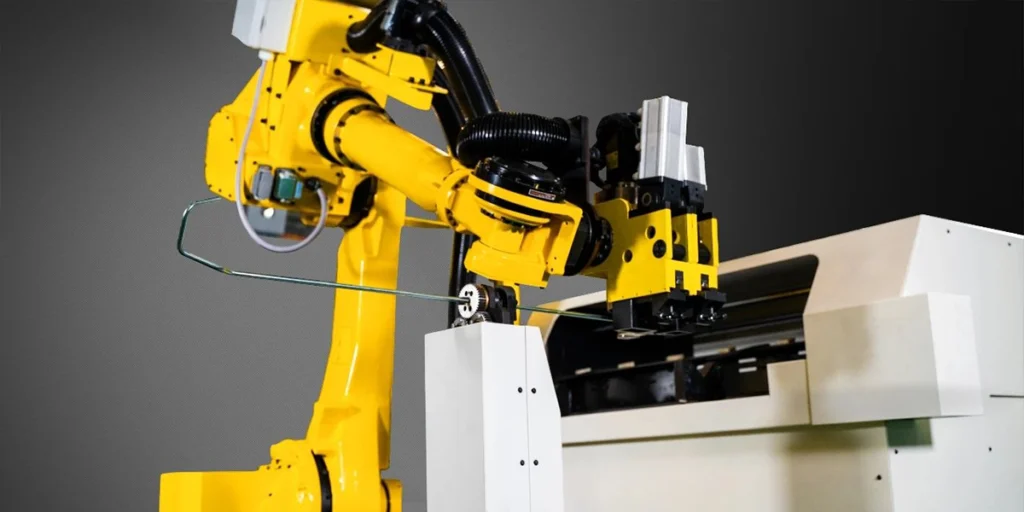
The end effector is the part of the robotic arm that directly contacts the workpiece and is used to perform specific actions such as gripping, assembling, handling, or processing.
Common forms include:
- Mechanical grippers
- Customized clamps
- Automation tool interface
These types of parts are usually designed according to specific applications and vary greatly in structure, but they generally have the following characteristics:
- High degree of customization
- Compact structure
- Highly matched to the actual workpiece
In terms of processing, the focus is on:
- Dimensional accuracy (ensuring stable clamping)
- Surface treatment (anti-slip or workpiece protection)
- Assembly and fit precision
For some precision assembly or electronics industry applications, it is also necessary to control:
- Flatness of the contact surface
- Consistency of clamping force
Unlike standard structural components, end effectors are typically produced in small batches or as single custom-made parts, requiring rapid response to design changes and ensuring machining accuracy.
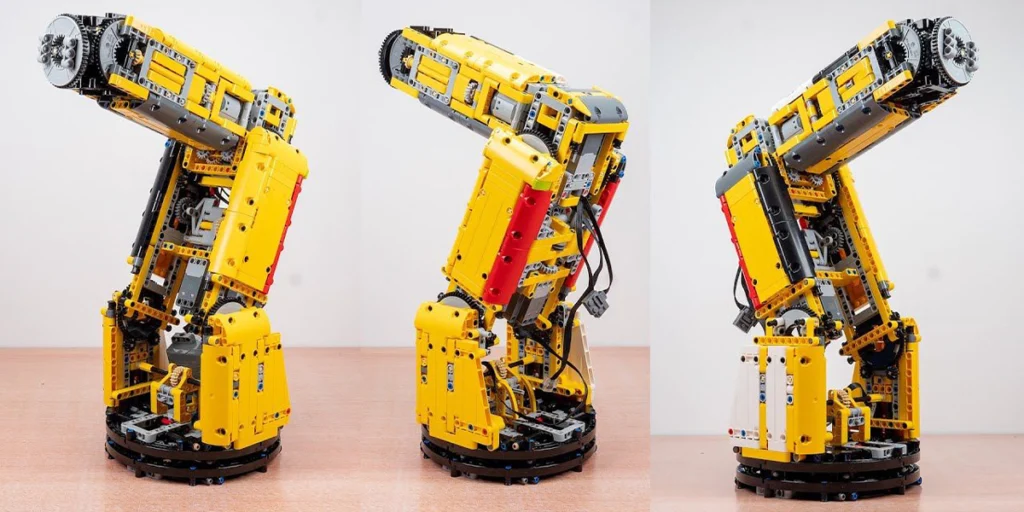
Sensor mounting base
Sensor mounting brackets are used to fix various detection and feedback devices and are an important auxiliary structure for achieving precise control of robotic arms.
Common parts include:
- Encoder bracket
- Camera mount
- Mounting supports for various sensors
These types of parts have relatively simple structures, but require high installation precision, mainly in the following aspects:
- Accuracy of installation location
- Relative positional relationship with joints or actuators
- Stability during long-term use
During the processing, the following key aspects typically require control:
- Hole position accuracy
- Flatness and perpendicularity
- Assembly datum consistency
Insufficient installation precision may result in:
- Position feedback error
- Visual system bias
- Inaccurate judgment by the control system
Ultimately, this affects the overall operational accuracy of the machine.
Therefore, these types of parts usually need to be machined by CNC to ensure the accuracy of the basic dimensions and to ensure that the sensor can work stably and accurately.
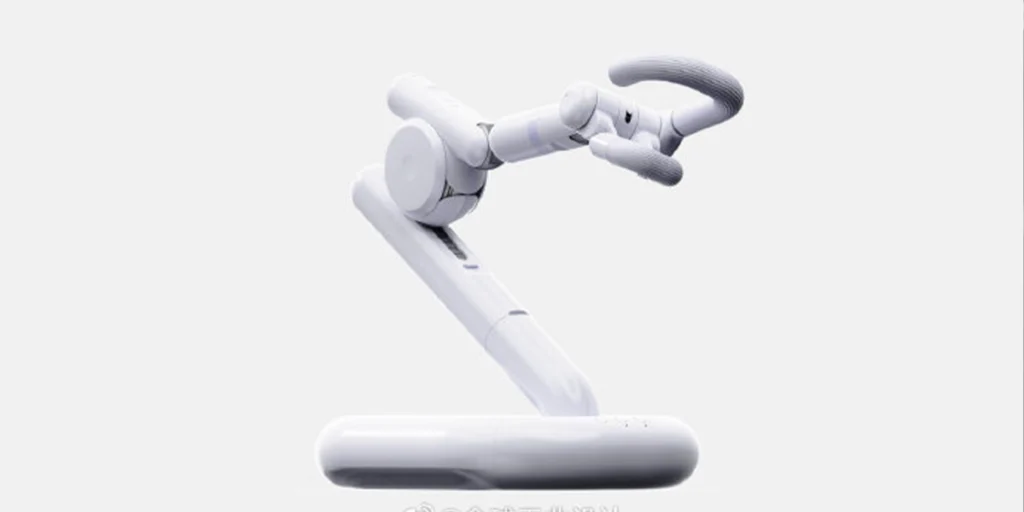
Fasteners and non-standard hardware
In the structure of a robotic arm, many details rely on various fasteners and custom hardware to complete the connection and fixation.
Commonly included:
- Custom threaded parts
- Special connectors
- Locating pins, bushings, and other mating parts
These types of parts are usually small in size, but they play a key role in the whole machine and directly affect the assembly accuracy and structural stability.
In terms of processing, the focus is on:
- Thread accuracy and fit stability
- Size consistency
- Repeatability of batch processing
For robot applications, the following also needs to be considered:
- Vibration resistance
- Reliability over long-term use
- Matching accuracy with other precision components
If the precision of these basic components is insufficient, it can easily lead to:
- Assembly deviation
- Loose structure
- Accuracy gradually decreases
Therefore, these non-standard hardware parts usually need to be processed by precision CNC turning and milling to ensure dimensional accuracy and batch consistency.
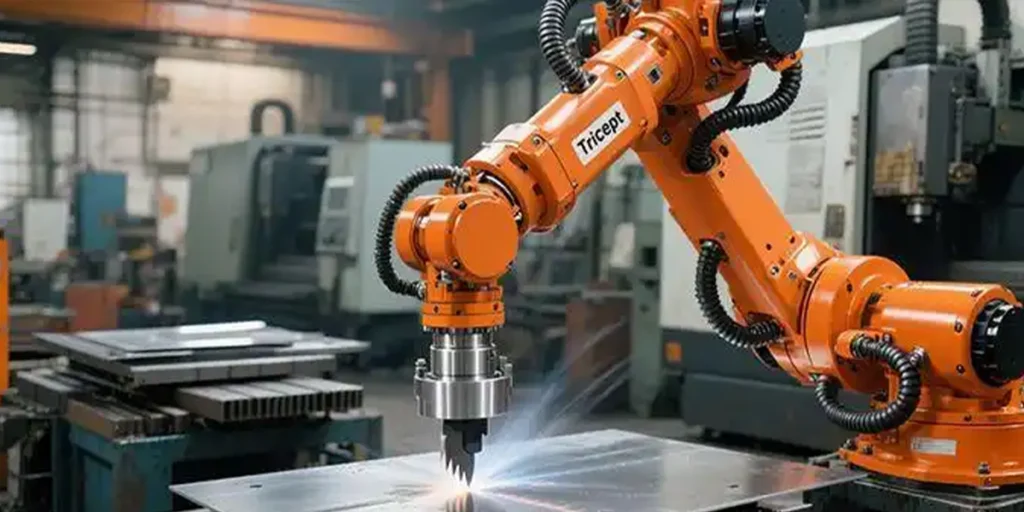
One-stop CNC precision machining service
If you have any needs for machining robot articulated arm parts, we can provide you with one-stop CNC precision machining services . We have extensive experience in manufacturing robot structural parts, joint components, and transmission parts, covering the machining of everything from simple connectors to complex multi-axis structural parts.
It supports a variety of materials such as aluminum , stainless steel , titanium alloy and engineering plastics , and the accuracy can reach ±0.02 mm, which can meet the requirements of the robot industry for structural strength and assembly precision.
From prototyping to mass production, we offer rapid response and stable delivery. Submit your drawings or requirements, and we will provide you with processing solutions and quotations.