


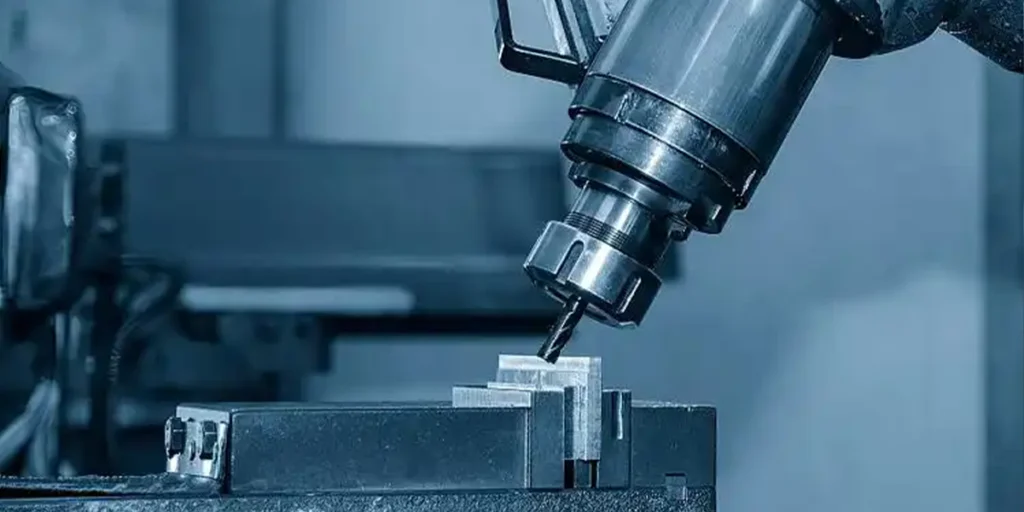
How long is the history of CNC milling?
CNC milling is not a technology that emerged in recent decades; its evolution has spanned the entire development of modern manufacturing. From the initial manual operation to today’s multi-axis linkage and digital manufacturing, the core logic has remained unchanged: to improve machining accuracy and efficiency in a more controllable way.
Development stage
1. Manual processing stage (before the mid-20th century)
The earliest milling relied on manually operated machine tools:
- The operator manually controls the feed.
- Accuracy is highly dependent on experience
- Low processing efficiency and poor repeatability
This stage is suitable for simple parts, but cannot meet the needs of industrial-scale production.
2. Early Stages of CNC Technology (1950s–1970s)
Numerical control (NC) technology began to emerge, using punched paper tape to control the movement of machine tools:
- Initial automation achieved
- Significantly improved accuracy and consistency
- However, the programming is complex and the flexibility is limited.
This marks the first shift from “human experience” to “program control”.
3. CNC systems matured (1980s–2000s)
With the development of computer technology, CNC (Computer Numerical Control) has gradually become more widespread.
- G-code programming becomes the standard.
- CAD/CAM systems begin to be used
- Multi-axis machining (3-axis → 5-axis) is gradually maturing.
During this stage, CNC milling became one of the core processes in industrial manufacturing and was widely used in:
- car
- Aerospace
- Mold manufacturing
4. High-precision and complex manufacturing stage (2000s to present)
The characteristics of the current stage are:
- Five-axis linkage becomes widespread
- High-speed machining
- High-precision control (micrometer level)
At the same time, manufacturing demands are also changing:
- More complex parts
- More flexible batch sizes (small batches, multiple product varieties)
- Shorter delivery time required
This has driven CNC milling to transform from a “machining tool” into a “manufacturing solution”.
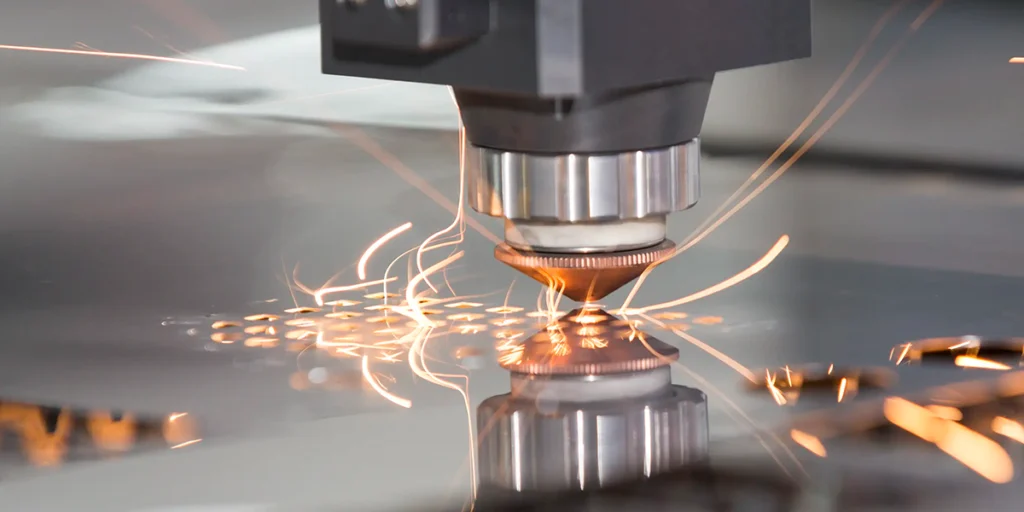
Evolution of CNC Technology
If early CNC machining addressed the question of “whether it could process materials stably,” the current focus of its evolution has shifted to: how to achieve higher efficiency and more stable quality with less human intervention.
Technological upgrades are no longer just about machine tools themselves, but rather revolve around the entire manufacturing system.
Automation
Automation is the primary focus of CNC development, and it has evolved from an “auxiliary” function to a “fundamental capability.”
The earliest automation was simply:
- Automatic Tool Changer (ATC)
- The program executes automatically
Now it has expanded to a more complete production process:
- Automated loading and unloading (robotic arm/pallet system)
- Multi-machine linkage (one operator manages multiple devices)
- Automatic detection and compensation
In a mass production environment, this change brings not a minor improvement, but a structural difference:
- Labor costs have decreased significantly
- More stable processing cycle
- Production can run continuously (even 24 hours a day).
But automation is not just about “equipment upgrades,” it also involves:
- Process standardization
- Procedural consistency
- Quality control process
If these fundamentals are not in place, automation will only amplify the problems instead of solving them.
Smart manufacturing
Compared to automation, intelligent manufacturing goes a step further, focusing on whether the system has the ability to self-optimize.
1. Data-driven processing
Modern CNC machining is beginning to rely on real-time data:
- Tool wear monitoring
- Spindle load analysis
- Vibration and temperature monitoring
This data can be used for:
- Automatic adjustment of cutting parameters
- Predict tool life
- Avoid processing abnormalities
From the results, the direct impact is:
- Stability (reducing batch fluctuations)
- Yield rate (reducing scrap)
2. Digital Manufacturing Process
The traditional process is linear: design → programming → manufacturing.
The current approach is gradually shifting towards a closed-loop system: CAD → CAM → CNC → Inspection → Data Feedback → Optimization
This means:
- Each batch of production is a process of “learning”.
- Subsequent processing will continue to be optimized.
3. Intelligence does not equal unmanned operation.
One real problem is that many people equate “intelligent manufacturing” with “complete automation”.
But at the current stage:
- Complex parts still rely on engineers’ experience.
- Process decisions still require human judgment.
- Abnormal handling still requires manual intervention.
In other words, technology is improving efficiency, but it has not yet replaced professional skills.
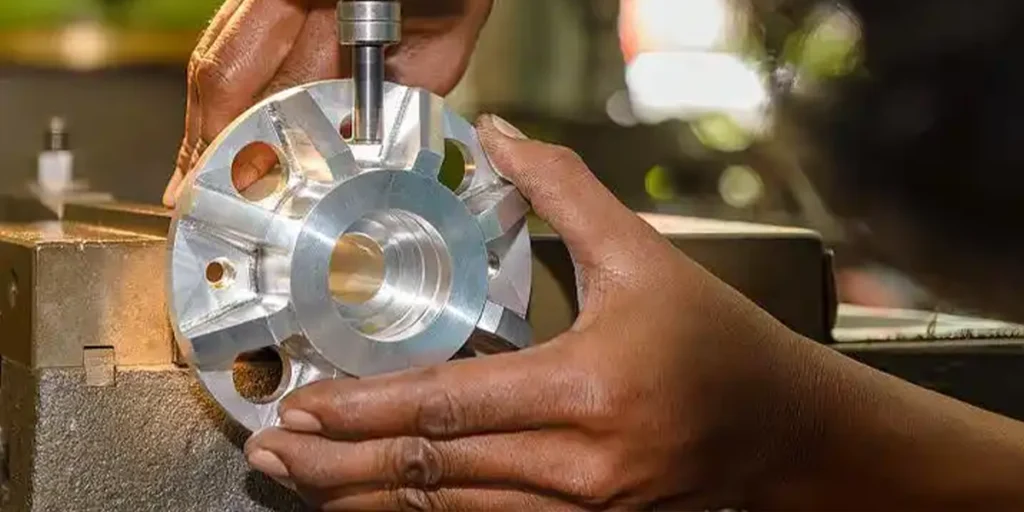
Will artificial intelligence replace CNC machining?
This issue has been repeatedly raised in recent years, but the premises are often inaccurate. Artificial intelligence is not about “replacing processing,” but rather about changing the way processing is done and the decision-making process.
A more realistic understanding is that AI is reshaping the efficiency boundaries of the CNC industry, rather than replacing physical manufacturing itself.
Reality Analysis
Looking at the current stage, AI has begun to intervene mainly in the “digital layer” rather than in the “cutting itself”.
1. Changes that have already occurred
In some mature manufacturing systems, AI or algorithms have already been used to:
- Automatic toolpath generation (CAM optimization)
- Recommended cutting parameters (based on material and tool database)
- Tool wear prediction
- Equipment malfunction warning
These capabilities share the common characteristic of reducing reliance on experience and increasing decision-making speed.
However, it’s important to note that these systems are based on the following premise:
- Supported by a large amount of historical data
- The process flow is relatively standardized
Otherwise, AI will have difficulty playing a stabilizing role.
2. The parts that are still irreplaceable
Despite advancements in AI, several key aspects still heavily rely on engineers:
- Process breakdown of complex structures
- Clamping scheme design
- Multi-process processing path planning
- Identification of abnormal situations (such as material problems, deformation)
What these problems have in common is that they involve uncertainty, not just computation.
In other words, AI excels at “optimizing known problems,” but its ability to “judge unknown problems” remains limited.
3. The irreplaceable nature of physical manufacturing
Regardless of how algorithms evolve, CNC machining always involves:
- Tool in contact with material
- Cutting force and thermal deformation
- Equipment rigidity and vibration
These are physical processes; AI can only optimize parameters, but it cannot perform cutting.
Future Trends
Judging from the trend, the change will not be “replacement” but “reconstruction”.
1. The barrier to entry for programming continues to decrease.
Future CAM systems will become increasingly automated:
- Automatically identify features (holes, slots, curved surfaces)
- Automatically generate processing strategies
- Automatic toolpath optimization
This leads to a situation where basic programming work is reduced, and advanced process capabilities become more important.
2. Data becomes a core asset.
The gap in future manufacturing capabilities will not only be about the number of machines, but also:
- Data accumulation
- Process Database
- Lessons learned from failures and optimizations
Manufacturers with a long history of data accumulation will continuously optimize their processing strategies, thus creating barriers to entry.
3. Human-machine collaboration is becoming the norm.
A more realistic model is:
- AI is responsible for computation and optimization.
- Engineers are responsible for decision-making and judgment.
This combination is more efficient than relying on either one alone.
4. Changes in supply chain structure
With the development of AI and automation:
- Small-scale manufacturers will be marginalized (due to a lack of systemic capabilities).
- Manufacturers with combined equipment, process, and data capabilities have a more significant advantage.
When choosing a supplier, customers will also pay more attention to:
Stability
- Response speed
- Technical support capabilities
- Not just price.
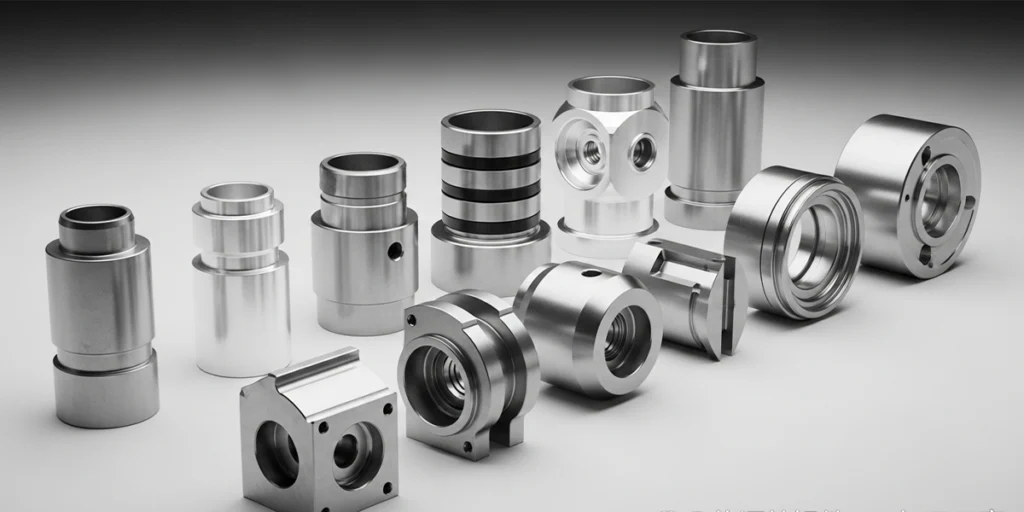
Future Manufacturing Trends and Supplier Selection
For procurement and engineering teams, the question has shifted from “can it be done?” to “is it stable, predictable, and scalable?” In the coming years, competition in CNC milling will not be limited to the equipment level, but will occur at the system capability level.
Future Manufacturing Trends
Trend 1: Higher complexity, shorter delivery time
Product design is becoming more complex:
- Multi-surface structure
- Lightweight (thin-walled, hollow)
- Multifunctional integration (reduced number of components)
At the same time, project cycles are being shortened:
- Faster prototyping
- More frequent iterations
- Smaller batch production
This means that suppliers need to possess the following:
- Multi-axis machining capability (e.g., 5-axis)
- Stable process system
- Rapid response capability
Otherwise, the design can be completed, but the manufacturing cannot keep up.
Trend 2: From “Processing Capacity” to “Engineering Support Capacity “
In the past, customers only looked at:
- Number of devices
- Machining accuracy
More and more projects are now having their success or failure determined in their early stages:
- Is the design manufacturable?
- Is there any cost redundancy?
- Is the process reasonable?
In other words, the value of suppliers is shifting upstream.
A mature manufacturer should be able to provide this before processing:
- DFM analysis (manufacturability recommendations)
- Cost optimization plan
- Recommended process route
Otherwise, the problems will erupt in a concentrated manner later, at a higher cost.
Trend 3: Quality and Consistency Become Core Indicators
As automation and datafication advance, customer focus is changing:
- It’s not just about “this batch being qualified,” but about “every batch being consistent.”
- It’s not just about “being able to do it,” but about “continuously doing it.”
This relies on:
- Standardized processes
- Process control capability
- Testing and Traceability System
This is especially crucial for industries such as healthcare, aviation, and robotics.
Trend 4: Supply chains are being re-evaluated.
Future suppliers will generally fall into two categories:
Category 1: Price-oriented (available in the short term)
- Low cost
- However, its stability and responsiveness are limited.
Another type: System capability-based (long-term cooperation)
- Possesses engineering support and manufacturing capabilities
- Sustainable optimization projects
- Capable of handling complex needs and changes
As project complexity increases, the latter’s value will become increasingly apparent.
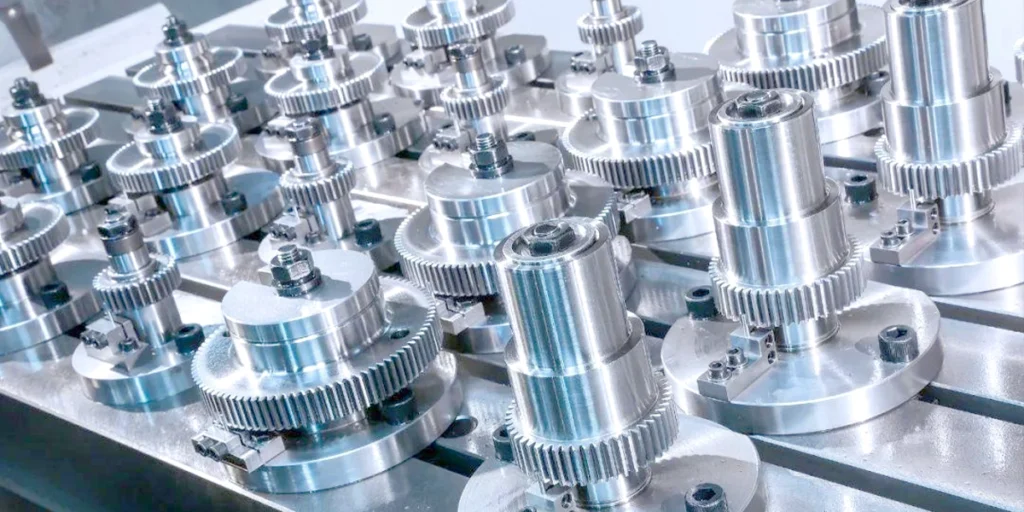
How to choose a suitable CNC milling supplier
In practical decision-making, several dimensions can be used to quickly determine the following:
1. Does it possess complete process capabilities?
It’s not just about “being able to process,” but whether it covers the area:
- 3-axis/5-axis machining capability
- Experience in processing multiple materials (aluminum, stainless steel, titanium, engineering plastics, etc.)
- Surface treatment supporting capabilities
2. Can you provide engineering support?
- Do you proactively provide DFM advice?
- Can we optimize the design instead of simply copying the drawings?
- Do you have experience handling complex structures?
3. Does it possess stable delivery capabilities?
- Is the delivery time controllable (rather than “as fast as possible”)?
- Batch consistency
- Does it have a quality testing system?
4. Does it have scalability?
When a project moves from the prototyping stage:
- Can the volume be increased quickly?
- Does it have sufficient equipment and production capacity?
- Is there a mature supply chain to support it?
If you are evaluating a new CNC milling supplier or looking to optimize the cost and stability of your current project, upload your CAD files to receive free DFM analysis and process optimization suggestions.