


What is CNC turning?
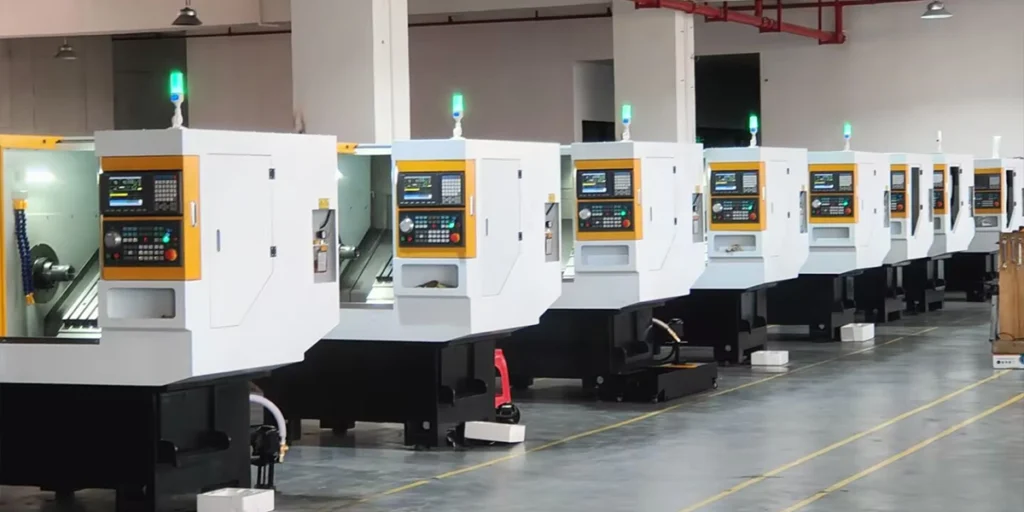
CNC turning is a manufacturing process that uses a computer program to control a lathe to cut and process rotating raw materials. During machining, the workpiece is usually clamped on the spindle chuck and rotates at high speed, while the cutting tool moves along a preset path to gradually remove excess material, ultimately forming a part with the required size, contour, and surface quality.
This is a very mature and efficient precision machining method, particularly suitable for manufacturing cylindrical, shaft, sleeve, threaded, and various rotationally symmetrical parts. Compared to traditional manual lathes, CNC turning offers higher consistency, more stable tolerance control, and is more suitable for mass production.
From a procurement perspective, if your parts have the following characteristics, they are generally suitable for CNC turning:
- Outer circle, inner hole, stepped shaft structure
- Detailed features such as threads, grooves, and chamfers
- Rotating parts requiring high concentricity
- From prototype to mass production for bulk orders
- Processing requirements for metal or engineering plastic materials
For example, drive shafts, joints, and bushings commonly found in the automotive industry; precision connectors in the medical industry; valve bodies and bushings in industrial equipment; and metal housings and connectors in the electronics industry are often manufactured using CNC turning.
For modern manufacturing enterprises, CNC turning is not only a machining method, but also a solution that balances precision, cost, and delivery time.
At Zhuohua Hardware, we have long provided professional CNC turning services, with approximately 100 CNC turning machines, supporting:
- Maximum turning diameter: 431mm
- Maximum machining length: 990mm
- Accuracy up to: ±0.02mm
- Supports the transition from prototyping to mass production
- 50+ metal and plastic materials available
This means that whether you need a small number of samples to validate your design or stable, high-volume deliveries, we can provide reliable manufacturing support.
How does CNC turning work?
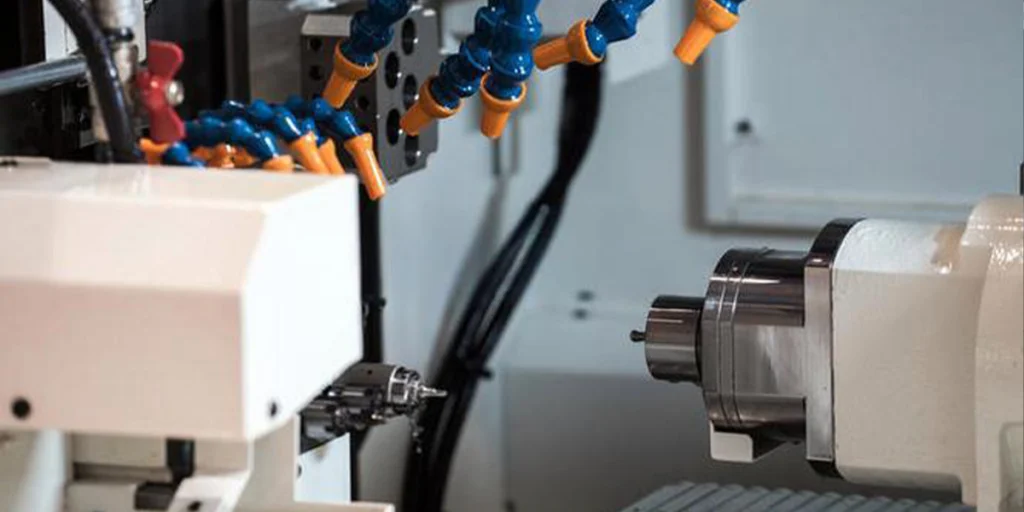
Understanding the working principle of CNC turning is not complicated. Essentially, it can be summarized in one sentence: the workpiece rotates, the tool feeds, and the material is gradually removed.
The entire processing flow is generally divided into the following steps:
1. Read CAD drawings and program them.
After the customer provides 2D drawings or 3D models, the engineer will write a CNC machining program (G-code) based on dimensions, tolerances, surface requirements, and material properties, defining:
- Spindle speed
- Toolpath
- Depth of cut
- Feed rate
- Processing sequence
This step determines the efficiency and stability of subsequent processing.
2. Raw material clamping
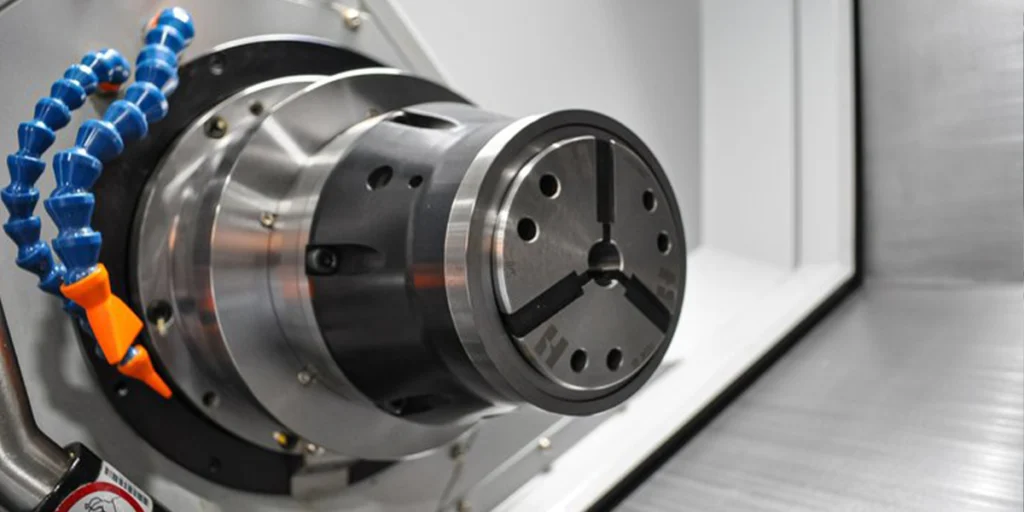
Bar stock, round stock, or pre-machined blanks are fixed in a lathe chuck or automatic feeding system to ensure stable concentricity during rotation.
For high-precision parts, the clamping method directly affects the final dimensional consistency.
3. Automated cutting machining
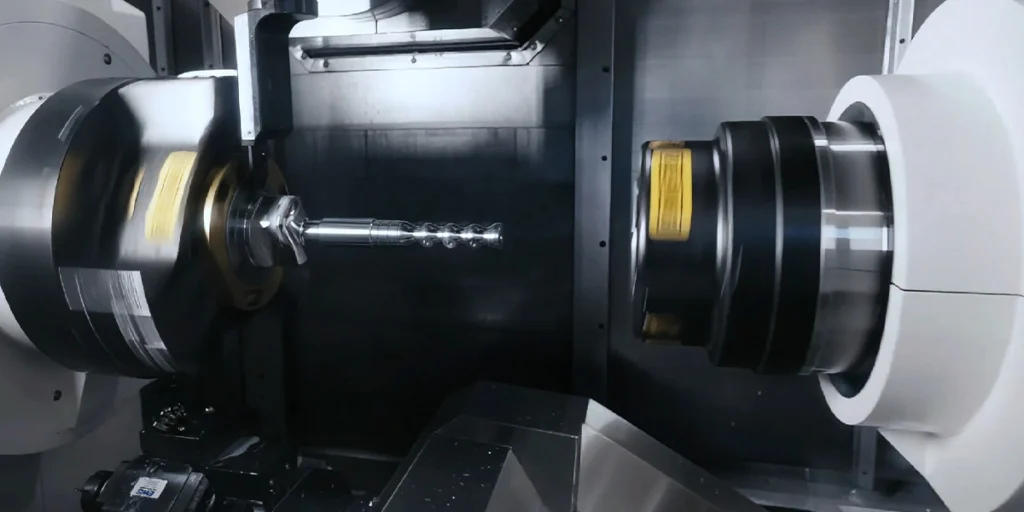
After the equipment is started, the spindle drives the workpiece to rotate at high speed, and the cutting tool moves according to the program and completes the following:
- External turning
- Internal boring
- End face processing
- Grooving
- Thread machining
- Chamfer
- Cut off
If a power turret or milling-turning machine is used, milling of planes, drilling, and side holes can be completed simultaneously, reducing the need for secondary clamping.
4. Testing and Quality Control
After machining, the parts will undergo dimensional inspection, visual inspection, and confirmation of critical tolerances. For projects with high requirements, inspection reports can be provided.
At Zhuohua Hardware, we implement rigorous quality processes and provide comprehensive inspection support based on customer needs, helping overseas customers reduce procurement risks.
What parts can CNC turning manufacture?
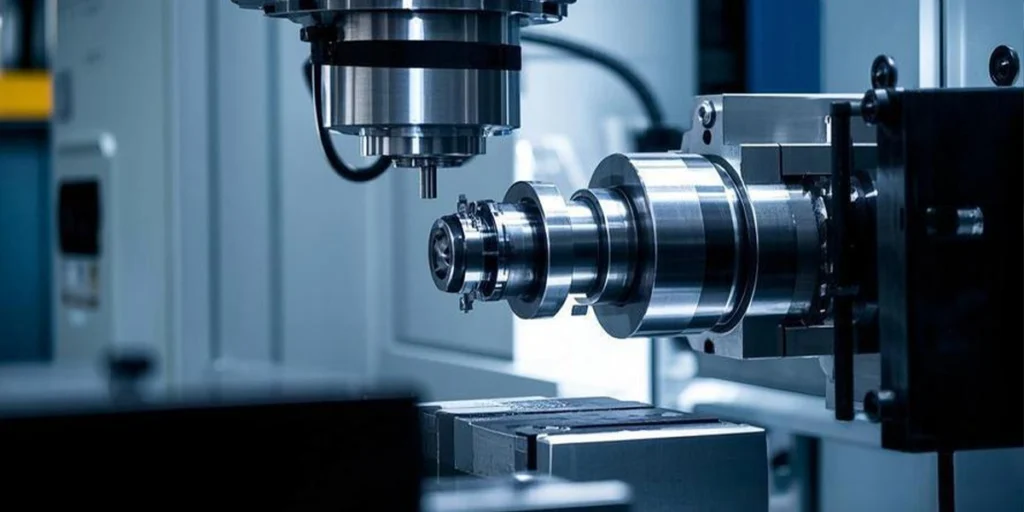
CNC turning excels at manufacturing parts that are rotationally symmetrical about a central axis. As long as the part structure revolves around the center, or its main dimensions depend on features such as outer diameter, inner hole, length, thread, and concentricity, it is generally very suitable for CNC turning.
Compared to other manufacturing methods, CNC turning has significant advantages in production efficiency, dimensional consistency, and surface quality, and is therefore widely used in industries such as automotive, medical, electronics, robotics, industrial equipment, and aerospace.
1. Shaft-type parts
Shaft-type parts are the most typical turned products, for example:
- Motor shaft
- Drive shaft
- Positioning axis
- Roller shaft core
- Precision guide shaft
These types of parts typically require:
- Stable outer diameter
- High concentricity
- Good surface finish
- High wear resistance
For mass production of shaft parts, CNC turning is usually the most economical and efficient option.
2. Sleeves and bushings
Commonly found in mechanical equipment, automotive systems, and automated structures, for example:
- Bearing sleeve
- Spacer sleeve
- Bushing
- Guide sleeve
- Coupling kit
These types of parts typically have both an outer diameter and an inner hole structure, requiring high coaxiality between the inner and outer diameters. CNC turning can reliably achieve high consistency in production.
3. Threads and connectors
include:
- Nuts
- Threaded connector
- Pipe fittings
- Sensor connector
- Hydraulic joint
CNC turning can process:
- Metric thread
- Imperial threads
- Pipe threads
- Custom-made threads
For export projects, accurate thread standards are especially crucial.
4. Outer shell and circular structural components
For example:
- Aluminum electronic casing
- Lamp housing
- Camera housing
- Instrument component housing
- Communication connector housing
In addition to size requirements, these types of parts often require good appearance quality, and are usually followed up with surface treatments such as anodizing, sandblasting, and polishing.
5. Medical and high-precision components
For example:
- Medical connectors
- Surgical instrument components
- Testing equipment parts
- Precision miniature bushings
These types of products focus more on:
- Dimensional tolerances
- Surface cleanliness
- Material stability
- Batch consistency
Common materials for CNC turning
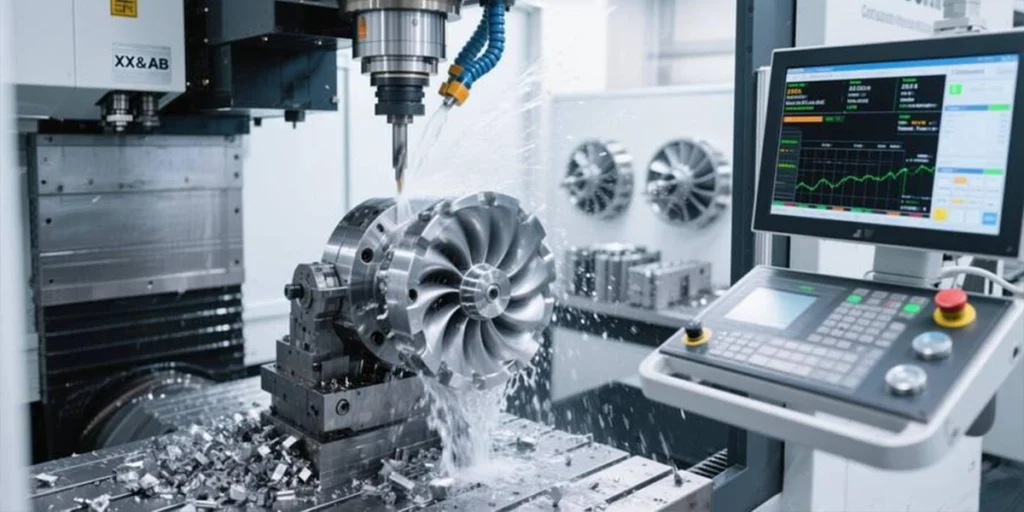
One of the advantages of CNC turning is its wide range of machinable materials. Whether it’s metal or engineering plastic, as long as the material has reasonable machinability, high-quality parts can be manufactured through CNC turning.
1. Aluminum alloy (most common)
Aluminum is one of the world’s most popular turning materials, suitable for:
- Housing components
- Lightweight structural components
- Communication components
- Consumer electronics components
Advantages:
- Lightweight
- Easy to process
- Reasonable cost
- Can be anodized
- Good surface finish
Commonly used brands:
- 6061
- 6082
- 7075
For export customers, the demand for aluminum machined parts is usually very stable.
2. Stainless steel
Stainless steel is suitable for:
- Medical parts
- Food processing equipment parts
- Marine environmental components
- High-strength structural components
Advantages:
- Corrosion resistant
- High strength
- Good appearance and texture
Common brands:
- SUS303 (easy to process)
- SUS304 (General Purpose)
- SUS316 (High corrosion resistance)
3. Brass and Copper Materials
Brass and copper are commonly used for:
- Electrical connectors
- Valve parts
- Precision connectors
- Decorative hardware
Advantages:
- Good electrical conductivity
- Easy to process
- Beautiful surface
- Dimensional stability
Brass is one of the most efficient turning materials, and is especially suitable for bulk orders.
4. Low- carbon steel and alloy steel
Low carbon steel and alloy steel are suitable for:
- High-strength mechanical parts
- Industrial shaft components
- Wear-resistant parts
Advantages:
- Costs are controllable
- High strength
- High adaptability to heat treatment
5. Engineering plastics
include:
- POM
- Nylon
- ABS
- PTFE
- PVC
- PE
- PC
Suitable:
- Insulating parts
- Lightweight structural components
- Corrosion-resistant parts
- Low-noise moving parts
We support processing 50+ metal and plastic materials, including: aluminum alloys , stainless steel , brass , copper , low carbon steel , alloy steel , titanium alloys , nickel alloys , POM / Nylon / ABS / PTFE and other engineering plastics . We can also provide more suitable alternative material suggestions based on your application scenario to help customers achieve a balance between performance and cost.
Why does global manufacturing rely on CNC turning?
Despite the continuous upgrading of manufacturing technology and the rapid development of processes such as 3D printing, stamping, die casting, and automated assembly, CNC turning remains one of the irreplaceable core processes in global manufacturing.
The reason is straightforward: many key components still require high precision, high efficiency, and stable mass production, and CNC turning is the most mature solution.
From automobiles to medical devices, from robotics to aerospace, a wide range of products contain machined parts, but consumers typically don’t see them.
1. Suitable for mass production of high-precision circular parts
Many industrial parts are naturally suited for turning, for example:
- Motor shaft
- Connector components
- Threaded fasteners
- Valve core
- Sleeve
- Bearing components
These parts typically require:
- Precise outer diameter
- Inner hole stability
- High concentricity
- Strong batch consistency
CNC turning has natural advantages in these dimensions, and therefore has been adopted by the global manufacturing industry for a long time.
2. High processing efficiency, suitable for continuous production.
Compared to some complex processes, CNC turning typically has a faster cycle time per piece, making it particularly suitable for continuous bar processing and automated feeding production.
This means that businesses can obtain:
- Lower unit cost
- More stable delivery time
- Faster replenishment speed
- More suitable for long-term orders
For the purchasing side, this is more important than simply offering a low price.
3. Wide range of material applications
The global manufacturing industry has very complex material requirements, and CNC turning can cover a wide range of materials:
- Aluminum alloy (lightweight)
- Stainless steel (corrosion resistant)
- Brass (conductive/connector)
- Carbon steel (structural strength)
- Titanium alloys (high-end applications)
- Engineering plastics (insulating/low friction)
This allows CNC turning to serve multiple industries, rather than being limited to a single market.
4. Stable tolerances, suitable for global supply chain collaboration.
International procurement is increasingly emphasizing standardization and consistency. Customers often require:
- The first batch of samples passed the test.
- The second batch is consistent with the first batch.
- The tenth batch remains stable.
CNC turning, through programmed machining, reduces human error and ensures the repeatability of batch orders. This is one of the key reasons why European and American customers have long purchased precision-machined parts from China.
5. Can quickly transition from prototyping to mass production.
Many projects initially require only 10 or 50 samples, but after successful verification, they can quickly expand to:
- 1,000 pieces
- 10,000 pieces
- Continuous annual orders
CNC turning eliminates the need to redevelop expensive molds, allowing for a direct transition from prototype to mass production, which is fast and low-risk.
6. Highly compatible with other processes
Global manufacturing rarely uses only a single process. CNC turning is often combined with the following processes:
- CNC milling
- Surface treatment
- Heat treatment
- Welding
- Assembly
- Detection
This makes it a core link in the modern manufacturing chain, rather than an isolated process.
How can professional CNC turning service providers help projects get off the ground?
Many procurement projects fail not because of design flaws, but because of insufficient execution capabilities on the manufacturing side.
Common situations include:
- Low price, but delivery time is constantly delayed.
- The first batch of samples passed, but mass production is unstable.
- Slow communication and lack of resolution of engineering problems.
- Material substitutions have not been confirmed.
- Dimensional deviations occur frequently
This is why the value of a professional CNC turning service provider goes far beyond simply “machining parts.” A mature supplier should help clients truly bring their projects to fruition.
1. Identifying manufacturing risks during the quotation stage
Experienced engineering teams can identify potential problems during the quotation stage, such as:
- Excessively tight tolerance requirements lead to excessively high costs.
- A certain structure is not suitable for turning.
- Inappropriate material selection
- Dimensions may change after surface treatment.
- Insufficient cycle time for mass production
If these problems are only discovered after production, the costs will be much higher. At Zhuohua Hardware, we typically provide Design for Manufacturing (DFM) advice during the quotation stage to help clients optimize their solutions in advance.
2. Provide a more reasonable process route
The same part may be manufactured in multiple ways:
- Pure turning
- Turning + Secondary Milling
- Milling and turning can be completed in one operation.
- Changing the material reduces processing difficulty
Professional suppliers will base their decisions on:
- Quantity
- Accuracy
- Budget
- Delivery time
Provide a more reasonable solution, rather than mechanically following the drawings.
3. Ensure sample processing speed
In the early stages of project development, time is usually the most critical factor. If the sample is delayed by two weeks, the client’s overall project may be delayed by two months.
We support a fast prototyping process to help customers complete their projects faster:
- Structural verification
- Assembly testing
- Market validation
- Small-batch trial production
4. Maintain consistency after entering mass production.
Many factories make samples, but problems frequently occur during the mass production stage.
Professional suppliers should possess the following qualities:
- Stabilize equipment production capacity
- Tooling and fixture experience
- Incoming material control
- Process inspection
- Outbound inspection
This will give customers the confidence to increase their orders.
5. Reduce procurement management costs
If a project requires finding:
- Turning factory
- Milling factory
- Surface treatment plant
- Assembly plant
Procurement management costs will increase rapidly, while one-stop suppliers can significantly reduce communication costs and delivery risks.
Zhuohua Hardware can provide project implementation support.
We not only process parts, but also help our clients advance their projects:
- CNC turning (approximately 100 machines)
- CNC milling (300+ machines)
- 3-axis/5-axis machining capability
- ±0.02mm accuracy control
- Delivery in as little as 5 business days
- From prototype to mass production
- 50+ supporting materials
- Surface treatment supporting services
If you already have drawings, samples, or parts projects under development, Zhuohua Hardware can assist in assessing manufacturing feasibility and provide quotations, process suggestions, and delivery schedules.