


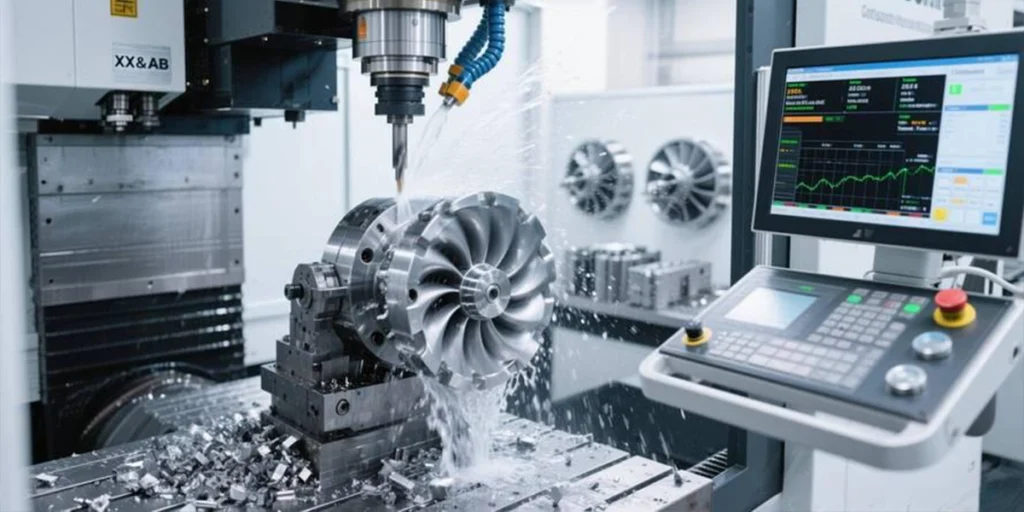
Overview of CNC Turning Process
CNC turning is a manufacturing process that uses computer programs to control a lathe to cut and process rotating workpieces. Its core principle is: the workpiece rotates, the cutting tool moves, and material is gradually removed to ultimately form the target part.
This technology is widely used in the manufacture of various round, shaft, sleeve, threaded and highly concentric parts, and is one of the most important basic technologies in modern precision manufacturing.
For procurement personnel, understanding the CNC turning process helps in assessing supplier capabilities, delivery feasibility, cost structure, and quality risks.
Which parts are suitable for CNC turning?
Parts that typically have the following characteristics are suitable for CNC turning:
- Outer circular structural components
- Internal structural components
- Stepped shaft parts
- Threaded connectors
- High concentricity parts
- Metal casing parts
- Precision connector components
For example:
- Automotive bushings
- Medical connectors
- Hydraulic joint
- Robot drive shaft
- Aluminum electronic casing
- Stainless steel precision components
Main technological characteristics of CNC turning
Compared to traditional machining methods, CNC turning has the following advantages:
1. Stable accuracy
By controlling repeated processing through programming, we can reliably achieve strict tolerance requirements. At Zhuohua Hardware, our standard machining accuracy can reach ±0.02mm.
2. High production efficiency
Suitable for processing from samples to mass production, especially for continuous processing of bars with significantly improved efficiency.
3. Wide material adaptability
support:
- Aluminum alloy
- Stainless steel
- Brass
- Low carbon steel
- Alloy steel
- Titanium alloy
- Plastics such as POM, Nylon, and ABS
4. Strong consistency
For repeat orders and multiple batches of orders, the turning process can maintain a stable output.
The core components of CNC turning process
A complete CNC turning project typically includes the following steps:
- Drawing evaluation
- Process Analysis
- programming
- Material preparation
- Clamping and positioning
- Rough machining
- Finishing
- Inspection
- Surface treatment (if required)
- Packaging and shipping
Many customers think that turning is just “machine processing”, but in reality, what really determines the result is the preliminary engineering capabilities and process control.
Why is the process flow important?
The same blueprint can yield completely different results from different suppliers, usually not because of the equipment, but because of their process management capabilities.
For example:
- Should the rough parts be started first and then refined?
- Whether thermal deformation is controlled
- Should a second deburring procedure be arranged?
- Is a surface treatment allowance reserved?
- Are there any critical dimensions inspected?
These details determine whether the final part is stable and qualified.
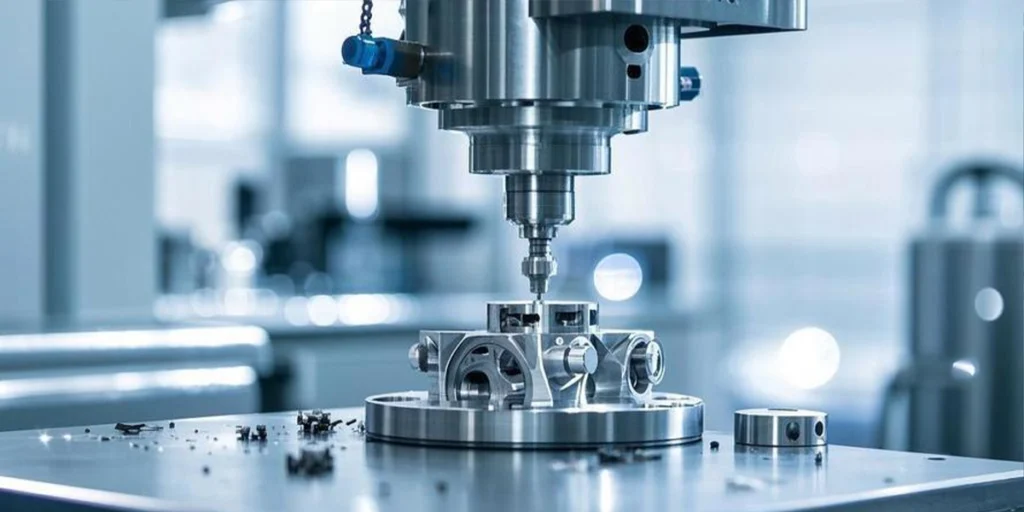
Complete process from drawings to finished product
What customers see are finished parts, but from an engineering perspective, transforming a part from a drawing into a deliverable product requires several key steps. If each step is executed correctly, the project will proceed smoothly; if any link is weak, delays, rework, or budget overruns may occur.
The following is the complete workflow of a standard CNC turning project:
Step 1: Receive drawings and confirm requirements
Customers typically provide:
- 2D drawings (PDF)
- 3D models (STEP / STP / IGS)
- Sample
- Material requirements
- Surface treatment requirements
- Quantity requirements
- Delivery time target
The most important thing at this stage is confirmation:
- Which dimensions are critical dimensions?
- What are tolerance standards?
- Are there any requirements regarding the appearance?
- What is the purpose of the part?
Experienced suppliers will offer optimization suggestions at this stage, rather than providing a direct quote.
Step 2: Project Evaluation and Quotation
The engineering team will analyze:
- Is it suitable for turning?
- Is a mill-turn machining center required?
- Are the materials easy to procure?
- Are the tolerances reasonable?
- Does production capacity match delivery schedule?
Then a formal quote is generated, including:
- Unit price
- Proofing fee (if applicable)
- Delivery time
- Process Description
At Zhuohua Hardware, we also provide manufacturability advice (DFM) to help customers reduce subsequent problems.
Step 3: Programming and Process Design
After confirming the order, the engineer began to develop a processing plan:
- Which device to use
- Which knives to use?
- How should the processing sequence be arranged?
- Was the clamping completed in one go?
- Is a secondary process required?
The CNC program (G-code) is then generated and first-piece verification is performed.
Step 4: Material preparation and production setup
Prepare raw materials according to the drawing requirements, for example:
- Aluminum rods
- Stainless steel round bar
- Brass rods
- Engineering plastic rods
Simultaneously prepare:
- Chuck clamp
- Specialized fixtures (if required)
- Measuring instruments
Step 5: Formal Processing
The equipment begins mass production; common processes include:
- External turning
- End face processing
- Drilling
- Boring hole
- Grooving
- Thread machining
- Cut off
If a power turret is used, it can also complete composite processes such as milling planes and side holes.
Step 6: Post-processing and deburring
After machining, the parts are usually:
- Deburring
- Cleaning
- Chamfering and finishing
- Preparation before surface treatment
If the client requests it, we can also arrange:
- Anodizing
- Electroplating
- Sandblasting
- Polishing
- Heat treatment
Step 7: Final Inspection and Packaging for Shipment
Before shipment:
- Size inspection
- Visual inspection
- Quantity confirmed
- Packaging protection
- Tag Management
Export projects typically place particular emphasis on rust prevention, impact protection, and batch traceability.
How Zhuohua Hardware Improves Project Success Rate
We help our clients reduce risk through standardized processes:
- Quick quote response
- Preliminary engineering drawings
- Stabilize equipment production capacity
- Rigorous process inspection
- Collaborative management of surface treatment
- Global delivery support
For clients, what truly matters is not a quote, but whether the project can be completed on time and to a high standard.
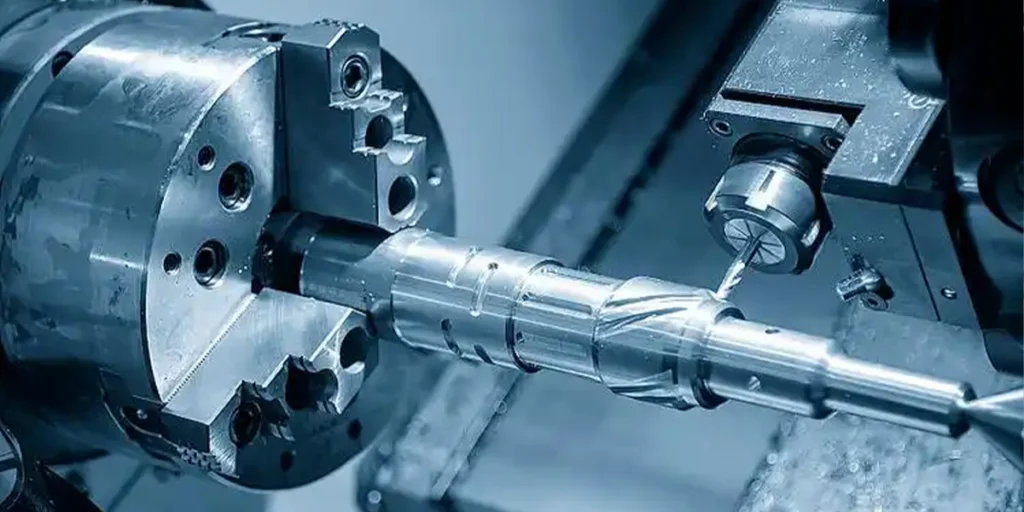
Roughing and finishing in turning
When customers see finished parts, they only focus on whether the final dimensions are up to standard. However, from a manufacturing perspective, a high-quality machined part is usually not completed in one cut, but goes through two core stages: roughing and finishing.
These two stages have different goals, and only through proper coordination can both be achieved:
- Processing efficiency
- Dimensional accuracy
- Surface quality
- Tool life
- Batch stability
If the process is not arranged properly, common results include: low efficiency, dimensional drift, rough surface, and even rework and scrap.
What is rough processing?
The goal of roughing is clear: to quickly remove excess material and bring the part close to its final shape.
For example, if a bar with a diameter of 50mm needs to have a final part with an outer diameter of 32mm, then a large amount of allowance in the early stage is usually completed through rough machining.
Characteristics of rough machining:
- Large cutting volume
- Fast feed rate
- High processing efficiency
- Surface roughness requirements are not high
- Allowance for finishing
Common processes include:
- Rapid turning of external diameter
- Initial processing of end face
- Pre-drilling of large holes
- The outline of the steps has been initially formed
Why can’t rough machining directly achieve the final dimensions?
Because large cutting processes are prone to the following:
- Material expands when heated
- Workpiece stress relief
- Accelerated tool wear
- High surface roughness
- Increased size fluctuations
If rough machining is performed directly to the finished product size, batch stability is usually insufficient. Therefore, professional factories will leave a reasonable margin before proceeding to the finishing stage.
What is finishing?
The core objective of finishing is to achieve the final dimensions, tolerances, and surface requirements.
After roughing is completed, the tool will be finished with a smaller depth of cut and more stable parameters.
Key control points for finishing:
- Final outer diameter dimension
- Inner hole size
- Concentricity
- Circular jumping
- Surface roughness
- Chamfer details
This step directly determines the quality of the parts received by the customer.
Common application scenarios of finishing
For example:
- Shaft-type parts require ±0.02mm
- The mating holes need to be assembled stably.
- Exterior parts require a good surface finish.
- Precise thread leader dimensions are required.
- Medical components require high consistency.
These projects all rely on stable finishing capabilities.
How do roughing and finishing processes affect pricing?
Customers often ask: Why is this part, with its simple structure, not cheap? The reason is often due to the high precision requirements of the machining process, rather than the complexity of the structure.
For example:
- The tighter the tolerance, the longer the finishing time.
- The finer the surface, the more passes are required.
- High coaxiality requirements necessitate more careful manufacturing processes.
- High batch consistency requirements necessitate higher testing frequency
Therefore, what truly affects cost is not just appearance, but quality standards.
Testing and Quality Control
The completion of processing does not mean the end of the project. For professional manufacturing projects, the true delivery standard is: parts meet dimensional and appearance standards, batch production is stable, and parts can be assembled normally.
This requires a complete testing and quality control system, rather than just randomly checking a few dimensions.
Many procurement problems are not due to insufficient processing capacity, but rather to inadequate quality control.
- The first batch was OK, but subsequent batches had issues.
- Exterior scratches
- Poor thread fit
- Aperture deviation
- Coaxiality is unstable
What are the typical inspection items for turning operations?
Depending on the intended use of the parts, common testing items include:
- Size inspection
- Outer diameter
- Inner diameter
- length
- Step dimensions
- Slot width
Geometric tolerance inspection
- Concentricity
- Circular jumping
- Verticality
- Parallelism
Thread inspection
- Inspection of go/no-go gauges
- Collaboration testing
Appearance inspection
- Burrs
- Scratches
- Indentation
- Oxidation color difference
In which stages does the detection typically occur?
Professional suppliers typically don’t just “finish and then check,” but rather control the entire process.
- First Article Inspection
After the first piece is produced, the dimensions are confirmed to be correct before mass production begins. - Process Inspection
Regular spot checks are conducted during batch processing to prevent dimensional drift caused by tool wear. - Final shipment inspection
Before shipment, the quantity, size, and appearance are comprehensively confirmed.
Why is quality control even more important for bulk orders?
Making 10 samples is easy; true capability lies in consistently producing 10,000 qualified samples in mass production. Common risks in batch projects:
- Night shift size fluctuations
- Differences between different devices
- Material batch changes
- Tool life affects dimensions
Therefore, it is necessary to rely on standardized quality processes rather than personal experience.
Zhuohua Hardware’s Quality Control Methods
We implement rigorous quality processes in CNC turning projects and can provide inspection support according to project requirements.
Key points include:
- First item confirmed
- Process inspection
- Final inspection
- Key dimensions and tolerances are closely monitored.
- Packaging inspection before shipment
For projects with high requirements, we can assist clients by providing dimensional reports or quality documents.
How to shorten delivery time and control costs
For most procurement projects, customers typically focus on two core issues: How long will it take to deliver? And can the price be more reasonable?
In reality, delivery time and cost often influence each other. Rushing the delivery time usually increases costs; extreme price pressure, on the other hand, can easily affect stable delivery.
A truly professional supplier does not simply offer the lowest price or promise an extremely short delivery time, but rather improves both within a reasonable range through engineering optimization and production management.
1. Optimize part structure during the design phase.
Many parts are expensive not because the materials are expensive, but because their structure makes them difficult to process.
Frequently asked questions include:
- Tolerances are excessively tightened
- The hole is too deep
- Unnecessarily complex outlines
- Multiple special threads
- Chamfer dimensions are too diverse
These factors all increase processing time and inspection costs. If DFM (Manufacturability Optimization) is implemented early in the project, it can often significantly reduce unit price and shorten production cycle time.
2. Choose suitable materials, not just the most expensive ones.
Material selection has a direct impact on:
- Raw material costs
- Processing efficiency
- Tool wear
- Surface treatment cost
3. Batch planning can significantly reduce unit price.
Common customer situations:
- Make 50 items today.
- 300 more items will be added next month
- 500 more items will be added next month
Such decentralized procurement usually results in higher total costs.
Reasons include:
- Multiple cable changes
- Multiple programming preparations
- Multiple material preparations
- Multiple logistics costs
Suppliers can allocate production capacity more efficiently by planning annual or quarterly demand in advance, thereby reducing unit costs.
4. Choose a factory with stable production capacity.
Some factories offer low prices, but they have limited equipment and full production schedules, resulting in repeated delays in delivery dates.
The key factor that truly affects delivery time is:
- Number of devices
- Schedule capacity
- Technological maturity
- Material response speed
- Internal collaboration efficiency
Zhuohua Hardware has the following features:
- Approximately 100 CNC turning machines
- 300+ CNC milling machines
- Ability to conduct both prototyping and mass production in parallel
- Delivery support within 5 business days
This type of production capacity structure is more suitable for long-term customer cooperation.
5. Reduce supply chain nodes
If the parts need to be located separately:
- Turning plant
- Milling plant
- Surface treatment plant
- Assembly plant
Delivery time will be extended, and communication costs will increase.
One-stop suppliers can typically reduce:
- Round-trip transportation time
- Errors in communication among multiple parties
- Queue waiting time
It also facilitates unified management of responsibilities.
6. Communicate your true needs in advance.
Many projects are delayed not because of manufacturing capacity, but because of incomplete demand information:
- The drawing version was revised repeatedly.
- Temporary addition of surface treatment
- Temporary changes in quantity
- Packaging requirements should be submitted later.
We recommend that customers clarify their needs at the time of inquiry, which can significantly shorten the overall cycle.
How Zhuohua Hardware Helps Customers Reduce Costs and Increase Efficiency
We have long helped our clients achieve the following through our engineering and supply chain capabilities:
- More reasonable processing scheme
- Faster sample delivery
- More stable bulk unit price
- Multi-process integrated manufacturing
- Global delivery support
If you already have drawings, we can directly assess the potential for cost optimization and the feasibility of delivery.