


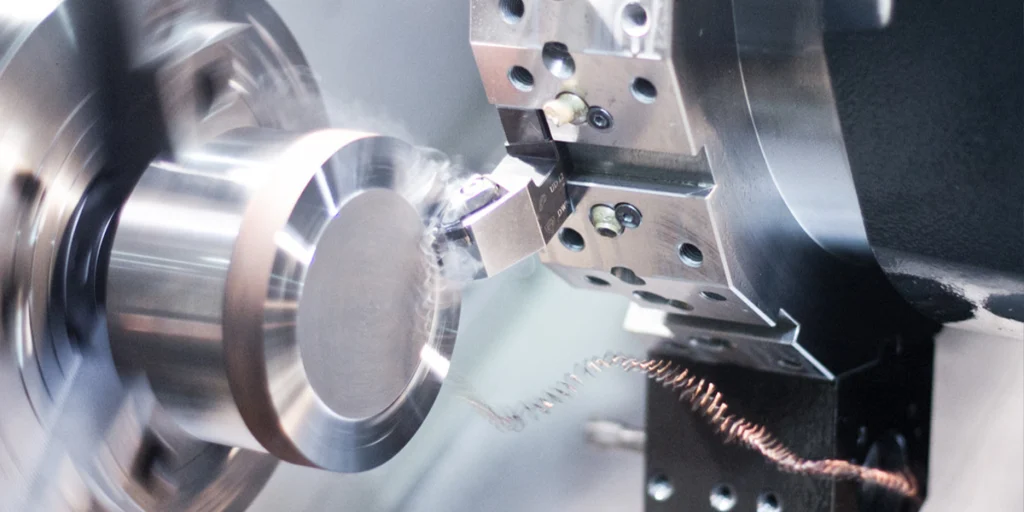
Industrial equipment demands extremely high stability, corrosion resistance, and long-term operational capability from its parts. This is why more and more industrial manufacturers are starting to use stainless steel CNC machined parts to replace ordinary steel parts or die-cast parts.
From pump and valve systems to automated equipment, from fluid control to mechanical transmission, stainless steel parts have been widely used in core aspects of industrial manufacturing.
As a professional stainless steel CNC machining service provider, Zhuohua Hardware has long provided high-precision stainless steel parts machining services to industrial equipment customers , including:
- CNC milling
- CNC turning
- Multi-axis complex machining
- Small-batch trial production
- Mass production
We support a variety of stainless steel materials, including 303, 304, 316, and 416, and provide surface treatment, dimensional inspection, and DFM optimization support.
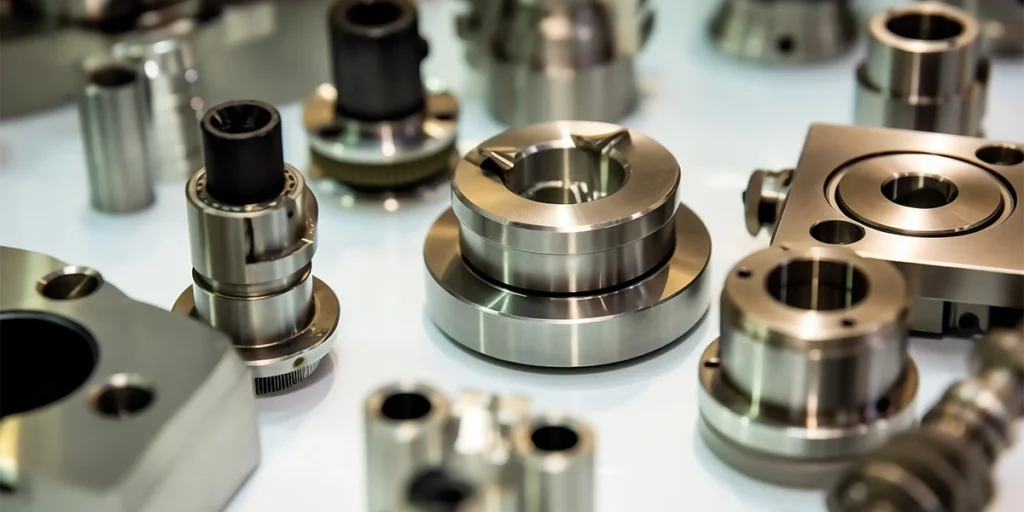
Pump and valve parts
Pump and valve systems are one of the most typical industrial applications of stainless steel CNC parts.
Due to prolonged contact with these types of equipment:
- Water
- Chemical media
- High-pressure fluid
- Corrosive environments
Therefore, ordinary metal materials often cannot meet the requirements for long-term stable operation.
In contrast, stainless steel has:
- Enhanced corrosion resistance
- Higher mechanical strength
- More stable size performance
- Longer service life
Especially in the chemical, food, energy and water treatment industries, stainless steel has almost become the standard material for pump and valve parts.
Common stainless steel parts for pumps and valves
Valve Bodies
Valve bodies typically need to withstand high pressures while maintaining long-term sealing stability. For complex flow channel structures, CNC machining can achieve higher dimensional consistency and machining accuracy.
Pump Shafts
The pump shaft needs to have the following features:
- Intensity
- Abrasion resistance
- Coaxiality stability
This places high demands on turning accuracy and surface roughness control.
Zhuohua Hardware offers high-precision CNC turning services with a maximum turning diameter of 431mm, meeting the processing needs of industrial shaft parts.
Sealing Components
Sealing components typically have high requirements:
- Surface smoothness
- Dimensional tolerances
- Fitting accuracy
Especially in the machining of 316 stainless steel, the control of tool wear and thermal deformation is crucial.
Why do industrial pumps and valves prefer 316 stainless steel?
316 stainless steel has better corrosion resistance due to the presence of molybdenum.
Therefore, it is widely used in:
- Marine environment
- Chemical equipment
- Medical fluid systems
- High humidity industrial environment
Although the processing cost of 316 is higher than that of 304, its long-term maintenance cost is lower, making it more suitable for high-reliability industrial equipment.
What do industrial customers care about most?
For industrial equipment manufacturers, they are not only concerned with the price of parts, but also with:
- Long-term stable supply
- Batch consistency
- Quality traceability
- Delivery time stability
This is why more and more OEM companies are choosing to cooperate with stainless steel CNC machining factories that have mature manufacturing experience.
Zhuohua Hardware Support:
- Prototype development
- Small batch verification
- Mass production
- Global export delivery
It can help customers shorten supply chain cycles and reduce overall procurement costs.
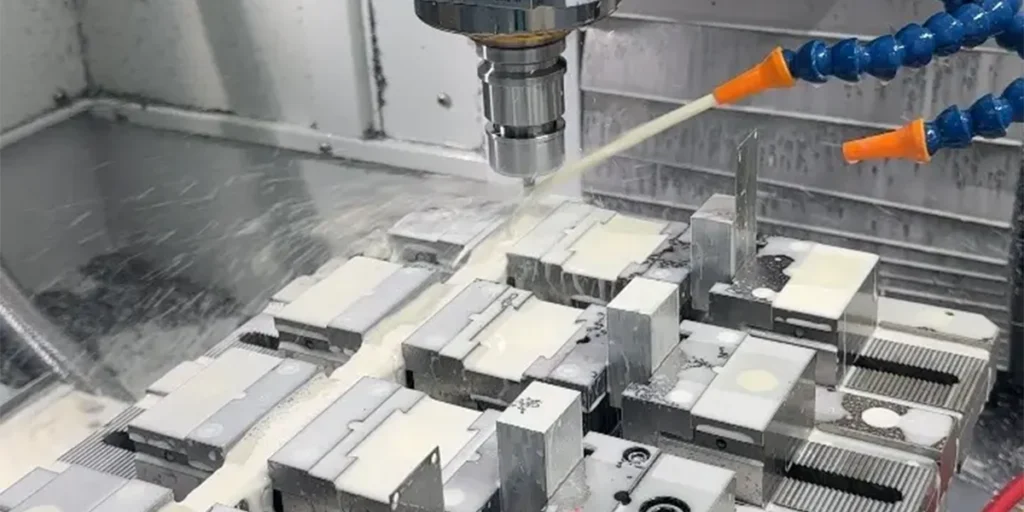
Automated equipment parts
With the rapid development of industrial automation, stainless steel CNC parts are being used more and more widely in automated equipment. Especially in:
- Robotic systems
- Automated assembly line
- Precision transmission mechanism
- Industrial testing equipment
Stainless steel parts not only need to have high precision, but also need to maintain long-term operational stability.
Why are stainless steel used in automated equipment?
Compared to ordinary carbon steel, stainless steel is more suitable for long-term continuous operation environments. Its main advantages include:
- Corrosion resistant
- Antioxidant
- Higher structural stability
- Lower maintenance requirements
This is especially important for automated equipment that needs to run 24 hours a day.
Common Stainless Steel Parts for Automation
Precision Shafts
Precision shaft parts are widely used in:
- Linear motion system
- Robotic joints
- Conveying equipment
These parts typically require:
- High coaxiality
- Low bounce
- High wear resistance
Therefore, a stable CNC turning process is required.
Mounting Blocks
Mounting structural components are typically machined using CNC milling. This is especially true for structures with multiple holes and complex mounting surfaces, which significantly impact equipment accuracy. We support 3-axis and 5-axis CNC machining, enabling the fabrication of complex automated structural components.
Sensor Housings
Sensor housings typically require:
- High dimensional accuracy
- Good surface treatment
- Stable assembly tolerances
Some high-end equipment also employs post-processing techniques such as anodizing, sandblasting, or electropolishing.
New requirements for suppliers in the automation industry
The modern automation industry is paying increasing attention to:
- Rapid prototyping
- Small-batch flexible production
- Engineering support capabilities
- Multi-process integration capability
This means that suppliers not only need to be able to process the materials, but also need to possess the following qualities:
- DFM optimization capabilities
- Process recommendation capability
- Stable delivery capability
Zhuohua Hardware supports the entire manufacturing process from drawing evaluation to mass delivery and provides services to customers in the automation industry:
- CNC machining
- 3D printed prototype
- Surface treatment
- Precision testing
Help customers complete product development and mass production faster.
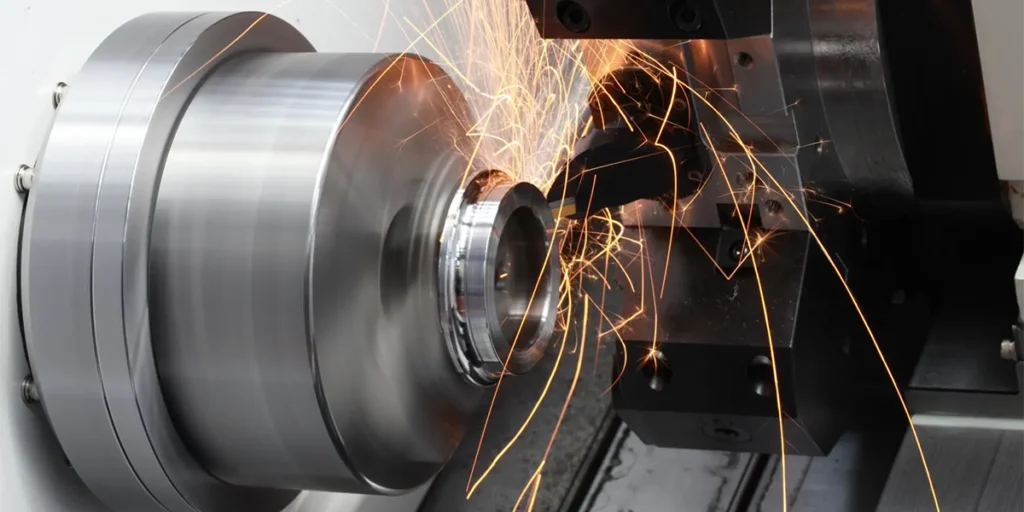
Connectors and structural components
CNC machining of stainless steel is also very common in the manufacturing of industrial connectors and structural components. Compared with die casting or stamping, CNC machining can provide higher dimensional accuracy, more stable assembly consistency, and more complex structural design capabilities, and is therefore widely used in industrial equipment, automation systems, energy equipment, and high-end mechanical assembly.
Industrial connectors typically need to simultaneously meet requirements for mechanical strength, electrical stability, and long-term corrosion resistance; therefore, 304 and 316 stainless steel are widely used.
- Industrial connectors
- Flange connectors
- Electrical connectors
- Pipeline interfaces
- Sensor connection components
Especially in high humidity, chemical environments, or outdoor equipment, stainless steel can effectively extend the life of parts and reduce the frequency of maintenance.
For structural parts, customers are usually more concerned with:
- Dimensional stability
- Assembly accuracy
- Long-term load capacity
- Batch consistency
For example, mounting brackets, mechanical fixing seats, guide rail structures, and equipment frame components in automated equipment often require multi-faceted machining, complex hole positions, and high flatness control, which places high demands on CNC milling capabilities.
Zhuohua Hardware supports 3-axis, 3+2-axis, and 5-axis CNC machining, enabling the fabrication of complex stainless steel structural parts and supporting the production of everything from small precision components to large industrial assemblies. For some complex structures, we also conduct DFM analysis in advance to help customers optimize machining paths, reduce machining difficulty, and minimize unnecessary costs.
In addition to processing capabilities, industrial customers are increasingly valuing supply chain stability. Many connector and structural component projects are not one-off orders but rather long-term bulk purchases. Therefore, stable delivery capabilities, consistent quality, and rapid response capabilities are often more important than simply offering the lowest price.
Complex parts machining challenges
Although stainless steel possesses excellent mechanical properties and corrosion resistance, it is also recognized as one of the more difficult metal materials to machine. Especially in the machining of complex structural parts, stainless steel is prone to problems such as rapid tool wear, concentrated heat, machining deformation, and unstable surface quality.
Compared to aluminum alloys, stainless steel generates more heat during machining and has poorer heat dissipation. If the machining strategy is inappropriate, it can easily lead to:
- Decreased tool life
- Surface burns
- Dimensional deviation
- Increased burrs
Especially in the machining of deep cavity structures, thin-walled parts, and complex curved surfaces, machining stability directly affects the quality of the final part.
For example, many industrial equipment parts not only require high precision, but also include:
- Deep hole structure
- Multi-axis linkage surface
- High coaxiality requirement
- Small size features
- Complex assembly surfaces
These all place higher demands on equipment rigidity, programming experience, and toolpath optimization.
For high-toughness stainless steel materials such as 316, the processing difficulty increases further. This is because the material is more prone to work hardening during cutting, and if the cutting parameters are not properly controlled, subsequent processing will become even more difficult.
Therefore, professional stainless steel CNC machining is not just about “being able to machine,” but more importantly, about how to machine stably.
In actual production, we usually develop corresponding process plans based on the different structures of parts, including:
- Selection of cutting tool materials
- Layered cutting strategy
- Cooling control
- Clamping scheme optimization
- Adjustment of processing sequence
machining services for stainless steel parts for the industrial equipment, automation, and high-precision machinery industries , and can support:
- Multi-axis complex machining
- Precision turning
- Small-batch trial production
- Stable mass production
At the same time, we will also assist customers in DFM optimization at the beginning of the project to identify problems that may affect processing stability in advance, and help customers reduce later production risks and overall manufacturing costs.