
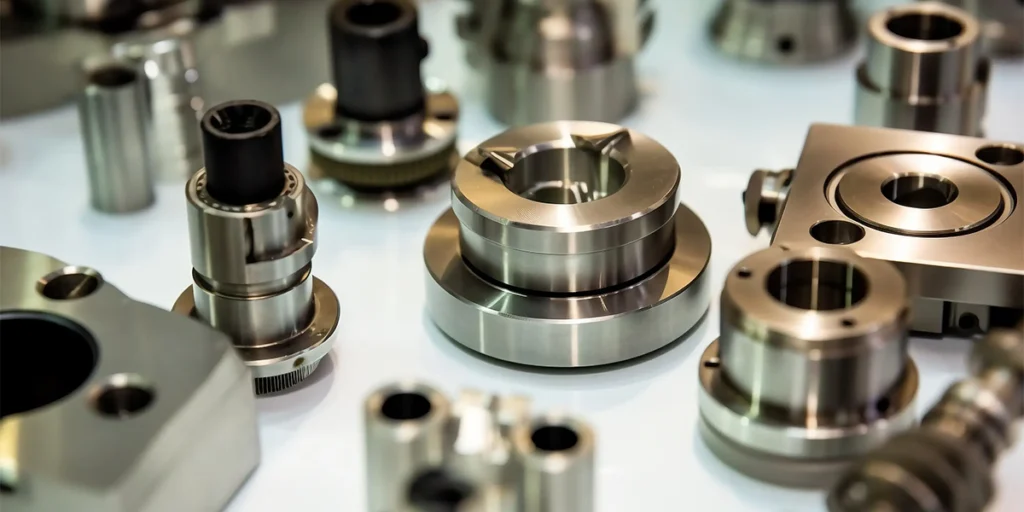
What are custom stainless steel parts?
Custom stainless steel CNC machining parts are non-standard metal parts manufactured using CNC machining processes based on customer drawings, 3D models, or functional requirements.
These types of parts are typically not made from off-the-shelf standard parts, but rather customized according to specific application scenarios:
- Custom sizes
- Customized structure
- Customized materials
- Customized surface treatment
- Tolerance customization
Custom manufacturing has become the mainstream manufacturing method for industries such as industrial equipment, medical, automation, robotics, aerospace, and high-end electronics.
Why are more and more companies choosing customized processing?
While standard parts are cheaper, many projects have the following problems:
- Limited installation space
- Special structural design
- Higher strength requirements
- Strict corrosion resistance requirements
- Higher assembly precision is required
Especially in the fields of automated equipment and precision machinery, many core functional components must be manufactured through custom machining. This is why more and more OEM companies are starting to look for long-term, stable stainless steel CNC machining partners.
Why stainless steel is suitable for custom parts manufacturing
Stainless steel also has the following properties:
- Intensity
- Corrosion resistance
- Dimensional stability
- Long-term durability
Therefore, it is ideal for complex custom parts.
Compared to ordinary carbon steel, stainless steel parts can adapt to:
- Humid environment
- Chemical environment
- High-temperature environment
- Outdoor working conditions
- High-frequency operating environment
Especially in the food processing equipment, medical equipment, marine equipment, and industrial automation industries, stainless steel has almost become one of the core materials.
Common Custom Stainless Steel Materials
303 Stainless Steel
Easier to cut, suitable for high-efficiency production and machining of complex structures. Commonly used in:
- Precision mechanical parts
- Connectors
304 Stainless Steel
The most common stainless steel material.
- Corrosion resistance
- Cost
- Intensity
Widely used in:
- Automated equipment
- Industrial structural components
- Electronic product casings
316 Stainless Steel
It has stronger corrosion resistance. Suitable for:
- Medical equipment
- Marine equipment
- Food processing equipment
- Chemical industry
416 Stainless Steel
It has better cutting performance and is suitable for:
- High-precision machining parts
- Shaft-type parts
- High-efficiency batch processing
Common types of custom stainless steel parts
We often process:
- Precision shaft parts
- Flanges and connectors
- Sensor housings
- Automation structural components
- Medical equipment components
- Valve parts
- Robot parts
- Precision brackets
- Stainless steel housings
- Industrial clamps
Zhuohua Hardware Support:
- CNC milling
- CNC turning
- 3-axis and 5-axis machining
- Small batch prototyping
- Mass production
We can also provide different surface treatment and precision testing solutions according to customer needs.
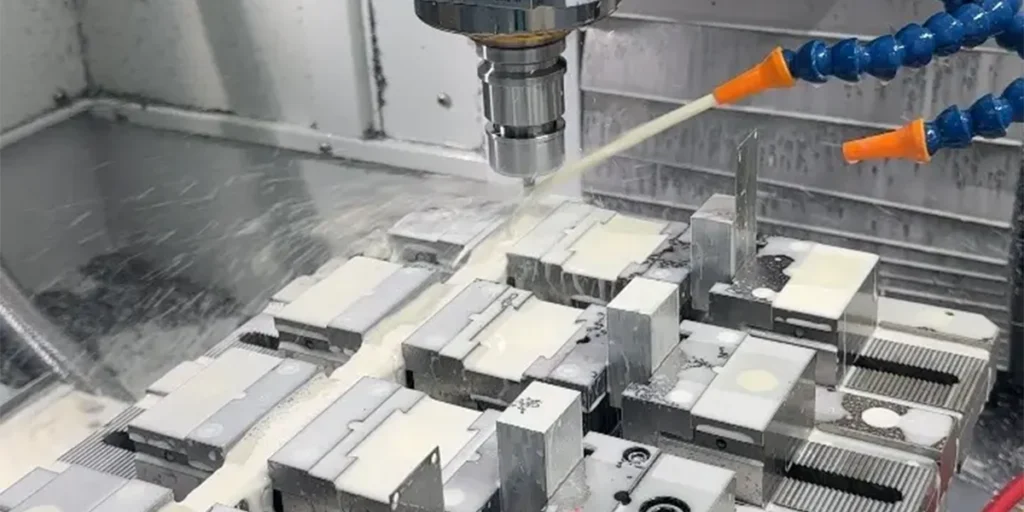
Customized processing flow
For many procurement and engineering teams, the real concern isn’t just “whether it can be manufactured,” but rather:
- How long is the development cycle?
- Is the communication efficient?
- Is the quality stable?
- Are the batch sizes consistent?
- Is it easy to expand production in the later stages?
A mature stainless steel CNC machining supplier will typically establish a complete project management process, rather than simply machining parts.
Drawing evaluation
Projects typically begin with CAD files.
Common file formats include:
- STEP
- STP
- IGS
- X_T
- DWG
After receiving the drawings, we usually do the following:
- Structural manufacturability analysis (DFM)
- Material confirmation
- Tolerance assessment
- Surface treatment confirmation
- Processing risk analysis
This step is crucial. Many problems that arise later in a project are not in the manufacturing stage, but rather because the initial design failed to consider actual manufacturing limitations.
Process planning
After confirming the drawings, the engineering team will develop a processing plan.
- Choosing between turning and milling
- Is 5-axis machining required?
- How to reduce the number of clamping operations
- How to reduce the risk of deformation
- How to improve processing efficiency
For complex stainless steel parts, process planning has a direct impact:
- Machining accuracy
- Surface quality
- Cost
- Delivery time
CNC machining production
Once production begins, the selection will be based on the part’s structure:
CNC Milling
- Complex surfaces
- Multifaceted structure
- Precision cavity
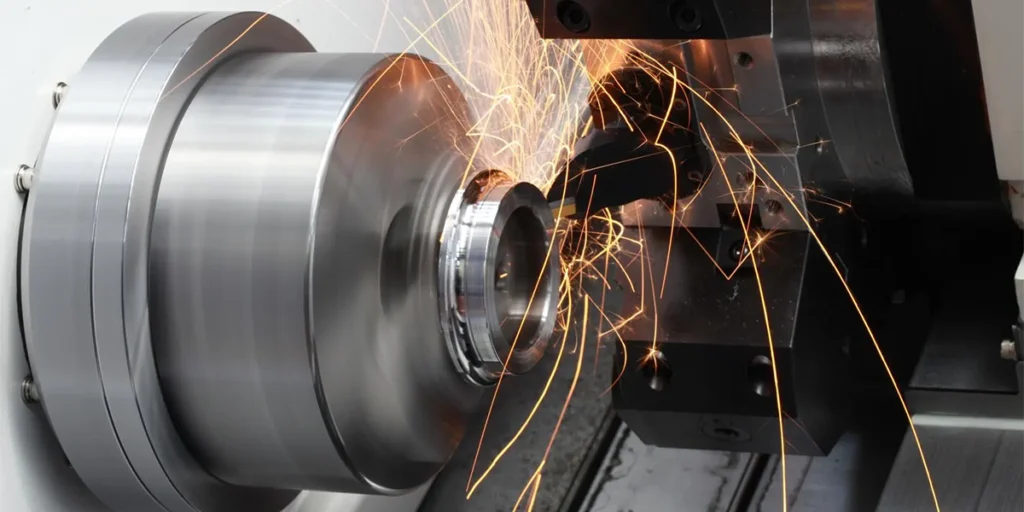
CNC Turning
- Cylindrical structure
- Precision shafts
- Threaded parts
Zhuohua Hardware currently owns:
- 300+ CNC milling machines
- 100+ CNC turning equipment
Supports everything from rapid prototyping to mass production.
Surface treatment
Depending on the application requirements, stainless steel parts usually also require surface treatment.
- Polishing
- Sandblasting
- Wire drawing
- Electropolishing
- Passivation treatment
Different surfaces will have a direct impact:
- Appearance
- Corrosion resistance
- Friction properties
- Cleanliness
Especially in the medical and food industries, surface treatment standards are usually very strict.
Quality Inspection
The final stage is quality control.
Common testing items include:
- Size inspection
- Tolerance inspection
- Surface roughness
- Thread inspection
- Visual inspection
For high-precision projects, we are able to achieve:
- Machining accuracy ±0.02mm
- Batch consistency control
- Complete quality documentation support
This is crucial for long-term stable mass production.
From sample to mass production
For most custom stainless steel parts projects, the real challenge is not “making a prototype,” but rather getting that prototype into stable mass production.
Many suppliers can complete the sampling process, but problems often arise during mass production:
- Decreased dimensional consistency
- Unstable surface quality
- Delivery time fluctuations
- Processing costs out of control
- Decreased batch yield
Therefore, a mature stainless steel CNC machining supplier must have the complete capability from prototype development to mass production.
Rapid prototyping stage
In the early stages of a project, small-batch sample validation is typically conducted first, for the purpose of:
- Product structure confirmed
- Assembly testing
- Functional testing
- Market validation
The most important thing at this stage is:
- Rapid response
- Engineering communication
- DFM optimization capabilities
Especially with stainless steel, due to its high processing difficulty, if the process is not optimized in the early stages, problems such as low processing efficiency, short tool life, or unstable dimensions are likely to occur in mass production later.
Zhuohua Hardware supports rapid stainless steel sample processing, with production completed in as little as 5 business days, and assists clients with optimization at the early stages of a project.
- Rounded corner structure
- Hole design
- Wall thickness
- Clamping method
- Tolerance scheme
Help customers reduce subsequent mass production risks.
Small-batch trial production
After sample confirmation, many customers will enter the trial production stage.
The focus at this stage is no longer just on “processing” it, but on verification:
- Process stability
- Batch consistency
- Processing cycle time
- Surface treatment stability
- Assembly compatibility
For complex stainless steel parts, small-batch trial production can identify many potential problems in advance, such as:
- Heat distortion
- Burr control
- Tool wear
- Thread consistency
This is why specialized factories typically establish standardized process parameters before mass production.
Mass production stage
Once mass production begins, the supplier’s core competitiveness will become:
- Production capacity stability
- Quality control capability
- Supply chain management
- Delivery capability
Especially for long-term projects, clients are usually more concerned about:
- Whether stable delivery is possible
- Whether quality can be continuously controlled
- Does it have the capacity to expand production?
Zhuohua Hardware currently supports production from small batches to large-scale production and has:
- 300+ CNC milling machines
- 100+ CNC turning equipment
- A variety of stainless steel materials are available in stock.
- Global export experience
It can meet the long-term mass production needs of industries such as medical, automation, robotics, and industrial equipment.
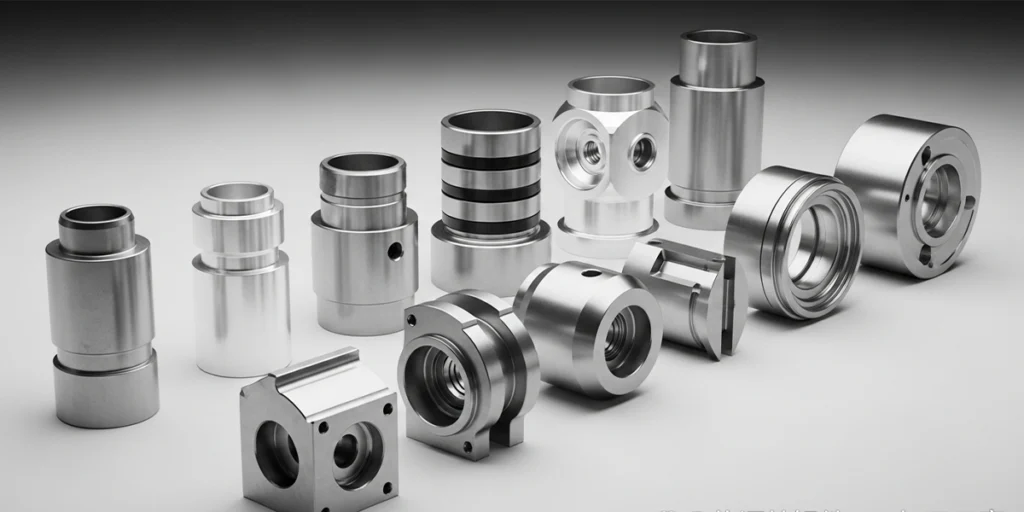
How to improve development efficiency
In the development of custom stainless steel parts, what truly affects the project cycle is often not simply the processing time, but rather the early communication, the rationality of the design, and the efficiency of supply chain collaboration.
Many projects are delayed not because of insufficient equipment, but because:
- The drawings were revised repeatedly
- Inappropriate process design
- Over-definition of tolerances
- Low efficiency in supplier communication
Therefore, in addition to manufacturing capabilities, an experienced stainless steel CNC machining team should also have strong engineering support capabilities.
Consider manufacturability during the design phase
Many complex parts can actually have their manufacturing efficiency significantly improved through optimized design.
- Reduce deep cavity structure
- Avoid excessively small rounded corners
- Optimize hole depth ratio
- Reduce unnecessary high-precision areas
These optimizations not only reduce processing costs but also significantly shorten production cycles. For stainless steel, where machining is more challenging, proper DFM optimization is particularly important.
Determine materials and surface treatment in advance
Many projects are delayed because the materials or surface treatment solutions are repeatedly adjusted during the production process.
- 304 changed to 316
- Converting ordinary wire drawing to electropolishing
- Temporary escalation of tolerance
These changes will directly affect:
- Process route
- Tooling solutions
- Processing time
- Testing standards
Therefore, clearly defining material and surface requirements at the beginning of a project can effectively reduce development risks.
Choose suppliers with engineering capabilities.
A truly mature stainless steel CNC machining supplier does more than just “machine according to drawings.” More importantly, it assists its clients in:
- Optimize structure
- Reduce costs
- Improve mass production stability
- Shorten the development cycle
Zhuohua Hardware has long served global industrial clients and has accumulated extensive experience in precision machining of stainless steel . Support:
- 3-axis and 5-axis CNC machining
- CNC Turning and CNC Milling
- Rapid prototyping
- Mass production
- Surface treatment
- Quality Inspection
For complex stainless steel projects, we focus not only on the parts themselves, but also on the long-term manufacturability and mass production stability of the entire project.