


6061 aluminum alloy is one of the most widely used aluminum materials in CNC machining . Whether in industrial equipment, automation systems, robot structural components, or the automotive and medical industries, 6061 is almost always the standard material preferred by engineers. It balances machinability, mechanical strength, corrosion resistance, and cost control, making it ideal for rapid prototyping and mass production.
For many product development projects, the choice of 6061 is not because it is the “strongest”, but because it provides a very good balance between performance, processing efficiency and supply chain stability.
In actual manufacturing, we have also found that most customers are not really concerned about the materials themselves, but rather:
- Is 6061 easy to process?
- Is it suitable for high-precision parts?
- How is the surface treatment effect?
- How should I choose between the 7075 and the 7075?
- Is it suitable for mass production?
This article will analyze the CNC machining characteristics of 6061 aluminum alloy from an engineering and manufacturing perspective.
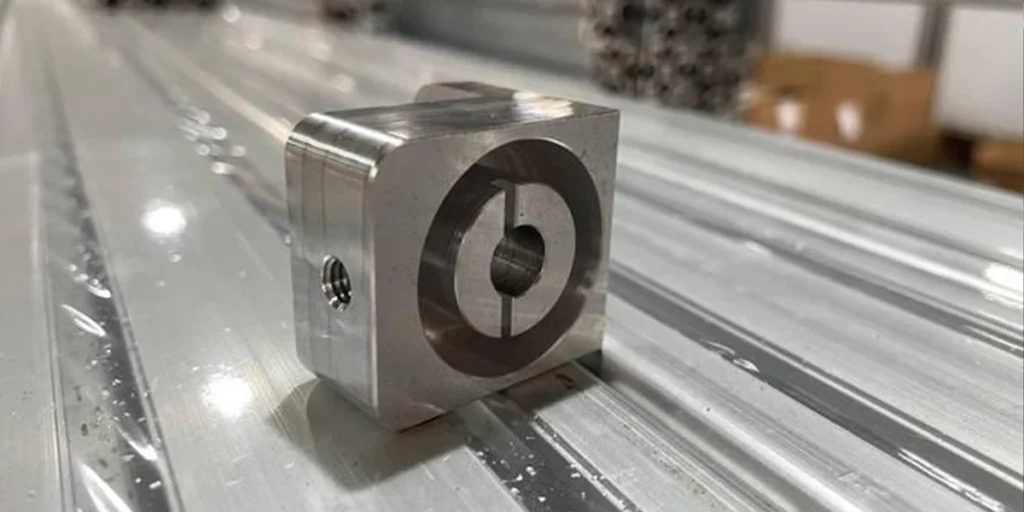
Machining properties of 6061 aluminum
6061 is a heat-treatable aluminum alloy, mainly composed of magnesium and silicon, therefore it possesses the following properties:
- Good mechanical strength
- Excellent machinability
- Stable corrosion resistance
- Good weldability
In the field of CNC machining, 6061 has almost no obvious shortcomings. Compared with some high-strength aluminum materials, 6061 is easier to cut and has higher machining stability, making it very suitable for manufacturing complex parts.
Main material characteristics of 6061
| performance | Performance |
| Processing performance | excellent |
| strength | Medium to high strength |
| weight | Lightweight |
| Corrosion resistance | good |
| Welding performance | good |
| Anodizing effect | excellent |
T6 indicates that the material has undergone solution heat treatment and artificial aging treatment, which can achieve better strength and stability. Therefore, it is also the most commonly used specification in industrial CNC machining.
Why is 6061 suitable for high-precision CNC machining?
From a machining perspective, 6061 exhibits very stable cutting performance. During high-speed machining, it maintains:
- Lower tool wear
- More stable dimensional consistency
- Less processing vibration
- Better surface finish
This means:
- More suitable for complex structures
- More suitable for deep cavity processing
- More suitable for thin-walled parts
- More suitable for batch consistency control
This is crucial for customers in Europe and America.
The real problem in the later stages of many projects isn’t whether the parts can be manufactured, but rather whether the precision can be maintained during mass production. 6061 typically outperforms many other aluminum materials in this regard.
Differences between 6061 and other aluminum materials
Many customers compare the 6061 with the 7075.
| Material | Features | More suitable |
| 6061 | Overall performance balance | General industrial parts |
| 7075 | Higher strength | Aerospace high-load components |
| 5052 | Stronger corrosion resistance | Marine environment |
| 5083 | Better welding performance | Ships and structural components |
For most industrial projects, 6061 is sufficient to meet strength requirements while also reducing processing costs. This is why many automated equipment, robots, electronic devices, and industrial enclosures prioritize 6061.
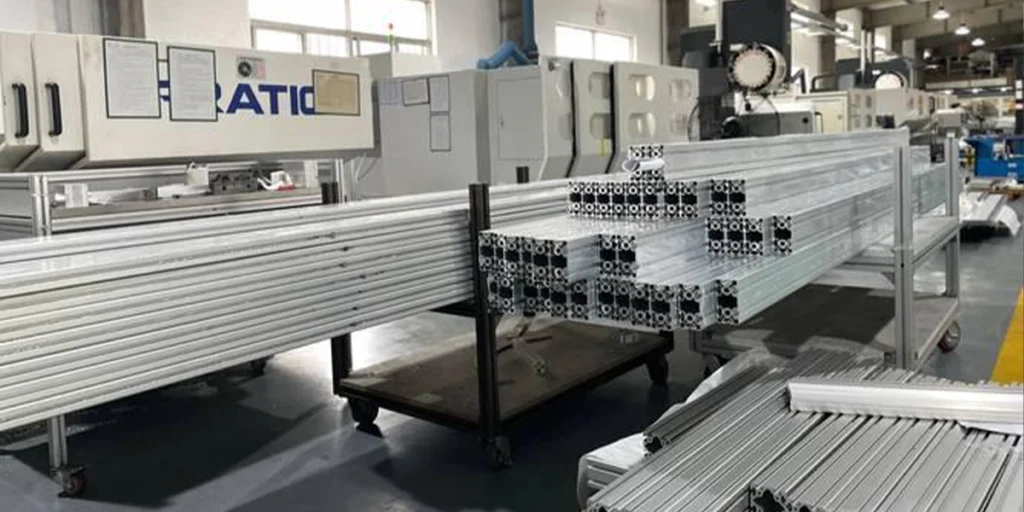
Why is 6061 most commonly used in CNC machining?
Among all aluminum alloys, 6061 has almost become the “standard CNC machining material.” This is not only due to the material itself, but more importantly, its comprehensive advantages in the entire manufacturing system.
More stable processing efficiency
6061 has very stable machinability, making it ideal for high-speed CNC machining. Compared to some high-hardness metals, 6061 can achieve:
- Faster cutting speed
- Shorter processing time
- Longer tool life
- Lower device load
For the processing plant, this means:
- Higher productivity
- More stable delivery time
- Lower manufacturing costs
For customers, this means more competitive parts prices. The cost advantage of 6061 is particularly pronounced in medium to large-volume projects.
More suitable for complex structural parts
Modern industrial products are becoming increasingly complex. Many parts are no longer simply two-dimensional structures, but rather contain:
- Deep cavity
- Curved surface
- Thin wall
- Multi -faceted machining
- High-precision assembly surface
6061 is well-suited to these complex machining requirements.
Especially in five-axis CNC machining, 6061 maintains good stability and surface quality, and is therefore widely used in:
- Automated equipment
- Drones
- Robots
- Medical equipment
- Precision electronic housings
It is easier to achieve excellent surface finish
Many customers not only focus on dimensional accuracy but also pay close attention to appearance quality. 6061 has a significant advantage in surface treatment. It is ideally suited for:
- Anodizing
- Sandblasting
- Wire drawing
- Colored anodizing
- Fine polishing
Therefore, a large number of consumer electronics, industrial equipment, and medical products use 6061 to manufacture exterior parts. In actual production, we usually adjust the toolpath, cutting parameters, and surface treatment scheme in advance according to the application of the part to ensure the consistency of the final appearance.
Mature global supply chain
6061 has established a very mature global supply system. This means:
- Stable material procurement
- Smaller cost fluctuations
- International standardization
- More suitable for long-term projects
For European and American customers, supply chain stability is often more important than simply offering low prices. Especially during mass production, a stable supply of materials directly impacts project delivery risks.
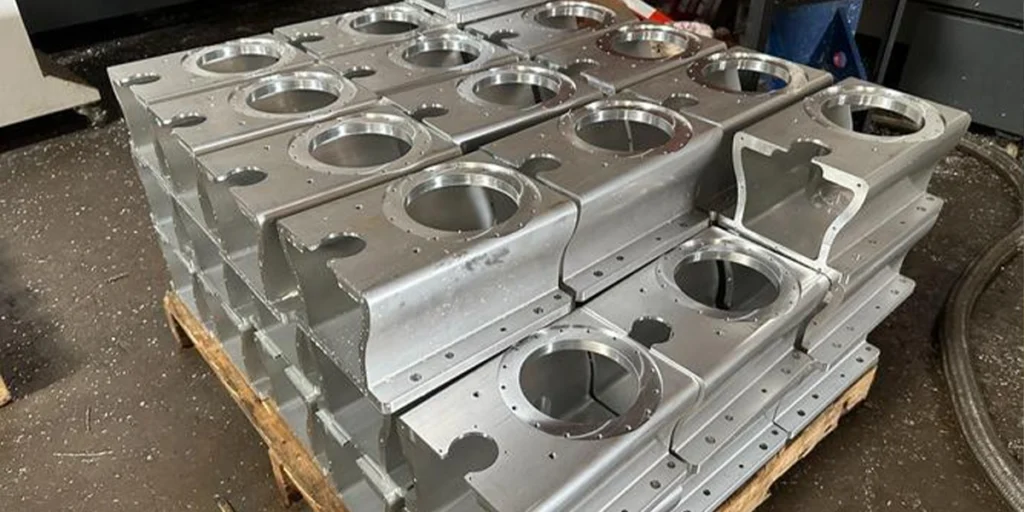
Which parts are suitable for 6061?
The reason why 6061 aluminum alloy is widely used in the CNC machining industry is largely because it can simultaneously meet the requirements of both “structural performance” and “machining efficiency”. For most industrial products, 6061 is sufficient to cover most scenarios from prototype development to mass production.
The most commonly machined parts using 6061 currently include:
- Industrial equipment structural components
- Automation equipment components
- Robot frames and chassis
- Electronic device housings
- Heat sinks
- Medical device parts
- Lightweight automotive components
- Unmanned aerial vehicle (UAV) structural components
In the robotics and automation industry, 6061 is frequently used to manufacture robotic arm connectors, mounting brackets, and moving parts. Because of its lightweight nature, it effectively reduces equipment load while maintaining sufficient structural strength.
For electronic devices and industrial control systems, 6061 aluminum is also very suitable for machining aluminum housings. It not only easily achieves good surface quality but also has excellent heat dissipation performance, so a large number of communication devices, LED systems, and automation control boxes use 6061 aluminum.
In the automotive industry, 6061 is commonly used in manufacturing:
- Radiator assembly
- Electric vehicle structural components
- Battery casing
- Chassis connectors
- Aftermarket parts
Compared to traditional steel components, 6061 can help automobiles achieve better weight reduction while reducing processing complexity.
Although the aerospace industry uses a large amount of higher strength aluminum materials such as 7075, 6061 is still widely used in some non-high load structural parts and auxiliary components because it is easier to achieve a balance between cost, processing efficiency and corrosion resistance.
For many customers, the greatest value of the 6061 is not its “ultimate performance,” but rather its ability to achieve stable and high-quality mass production at a more reasonable cost.
This is why many European and American equipment manufacturers have long used 6061 as a standard engineering material.
6061 Surface Treatment Solution
Not only does 6061 exhibit stable processing performance, but it also offers significant advantages in surface treatment. Compared to some high-silicon or high-copper aluminum alloys, 6061 is more likely to achieve a uniform and stable surface finish, making it ideal for appearance parts and high-end industrial components.
The most common surface treatment options for 6061 include:
| Surface treatment | Main function |
| Anodizing (most common) | Improve corrosion resistance and hardness |
| Sandblasting | Enhance surface texture |
| Brushed | Achieve metallic texture effect |
| polishing | Improve smoothness |
| Powder coating | Enhanced wear resistance |
| plating | Improve electrical conductivity and decorative properties |
6061 typically exhibits good color uniformity after anodizing, making it particularly suitable for industrial-style components with black, silver, and gray finishes. Therefore, it is a preferred choice for many consumer electronics, automation equipment, and robotic products.
For projects with high aesthetic requirements, toolpaths and cutting parameters are typically optimized during the CNC machining stage to reduce surface defects later. For example:
- Reduce knife marks
- Controlling burrs
- Reduce vibration ripples
- Optimize edge transitions
Because often, what truly affects the final appearance quality is not just the surface treatment itself, but the quality of the initial processing.
In actual production, we typically recommend different processing solutions based on the intended use of the customer’s product. For example:
- Industrial equipment places greater emphasis on wear resistance.
- Consumer electronics are paying more attention to appearance consistency .
- Medical devices place greater emphasis on surface cleanliness.
- Outdoor products place greater emphasis on corrosion resistance.
Zhuohua Hardware currently supports a variety of aluminum post-processing services, including anodizing, sandblasting, wire drawing, electropolishing, and powder coating, and can provide a complete one-stop solution for processing and surface treatment according to different project needs .
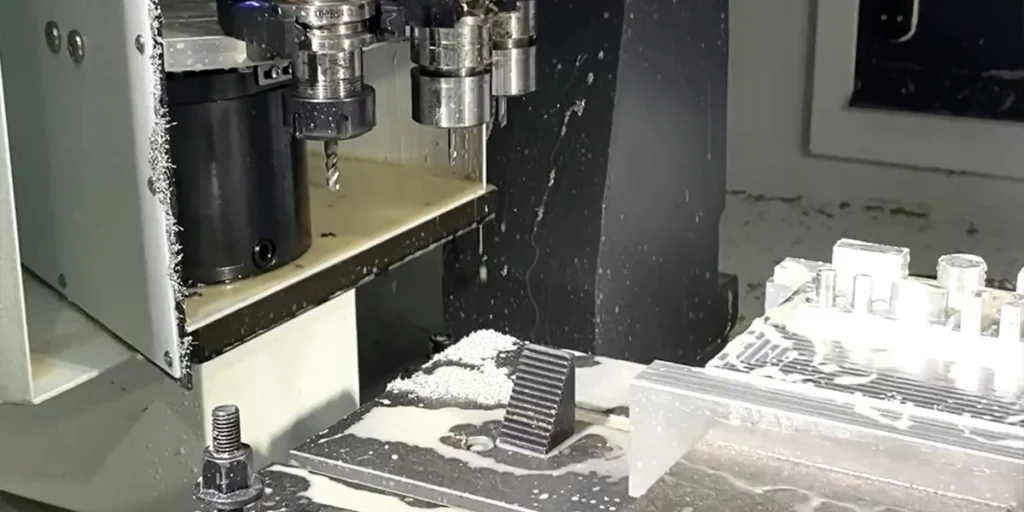
Precautions for milling 6061 aluminum
Although 6061 is a relatively easy aluminum alloy to machine, many process details still directly affect the final quality in high-precision or complex structure machining. The first is the control of cutting parameters.
6061 is suitable for high-speed machining, but if the spindle speed, feed rate, or depth of cut is not set properly, the following problems may still occur:
- Built -up edge
- Surface grooves
- Burrs
- Dimensional instability
Especially when machining deep cavities or thin-walled structures, insufficient rigidity can easily cause vibration, which can affect surface quality and dimensional accuracy.
Therefore, when machining complex 6061 parts, it is usually necessary to combine:
- Tool length
- Clamping method
- Material removal rate
- Cooling strategy
The goal is to optimize the overall process, rather than simply increasing the cutting speed.
Another common problem is thin-wall deformation. Because aluminum is relatively soft, uneven stress release in the material during the machining of large, thin-walled parts can lead to:
- Planar deformation
- Warping
- Assembly deviation
Professional processing plants typically use:
- Staged roughing and finishing
- Symmetrical material removal
- Secondary correction
- Allow reasonable margin .
To reduce the risk of deformation, while the 6061 offers greater machining freedom in five-axis machining, toolpath optimization is still crucial. An improper toolpath can result in noticeable tool marks on complex curved surfaces.
Furthermore, many customers underestimate the importance of fixtures. In fact, in high-precision 6061 machining, fixture stability often directly determines the performance.
- Repeatability
- Processing consistency
- Batch stability
Especially in medium to high-volume production, a stable tooling system can significantly reduce dimensional fluctuations. For professional aluminum CNC machining projects, machining equipment is only the foundation; more importantly, it is whether the supplier has mature process experience.
This is why many European and American customers prefer to choose long-term cooperative suppliers with experience in mass production, rather than simply looking for the lowest price.