
CNC machining of brass is one of the most widely used precision machining processes in modern manufacturing, especially suitable for parts that require high dimensional stability, excellent conductivity and good surface quality.
From electronic connectors to industrial valves, and even medical and automotive components, brass has consistently been a key material of focus for engineers and procurement teams. The reason is simple: it is not only easy to process, but also offers a good balance between cost, performance, and production efficiency.
For OEM customers seeking a stable supply chain, brass CNC machining is more than just “cutting out the material”; more importantly:
- Can it maintain dimensional consistency over a long period of time?
- Can the surface quality be stably controlled?
- Does it have the capability for mass delivery?
- Can it support the fabrication of complex structures?
This is also an important reason why more and more European and American manufacturing companies are starting to cooperate with professional Chinese CNC machining plants.
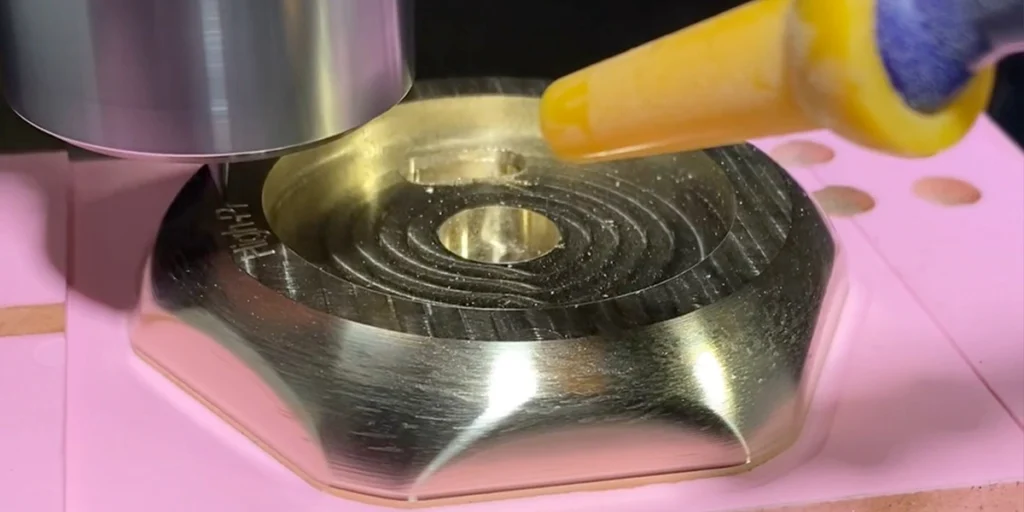
What is CNC machining of brass?
Brass CNC Machining Definition
Brass CNC machining refers to a manufacturing method that uses computer numerical control (CNC) machines to perform high-precision cutting and machining of brass materials.
The entire process typically includes:
- CNC turning
- CNC milling
- Drilling
- Tapping
- Precision Gutter
- Multi-axis composite machining
The processing equipment will automatically control the movement of the cutting tool according to the preset program, thereby achieving high repeatability and stable production.
Compared to manual machining, CNC machining can significantly improve:
- Size consistency
- Processing efficiency
- Surface smoothness
- Complex structure processing capability
In practical projects, CNC machining of brass is particularly suitable for the following types of parts:
- Precision connectors
- Threaded joints
- Valve assemblies
- Sensor housings
- Electrical terminals
- Small parts for medical devices
For industrial projects that require long-term and stable supply, CNC machining is also one of the most reliable production methods currently available.
Difference between brass processing and traditional processing
Traditional brass machining typically relies on manual labor or conventional machining equipment. While this method is suitable for simple parts, it is increasingly difficult to meet the demands of modern industrial manufacturing.
- High precision requirements
- Large-volume consistency
- Complex structure processing
- Rapid delivery requirements
The biggest advantage of CNC brass machining lies in its repeatability. Once the program is finalized, the same batch of parts can maintain stable dimensions and machining quality over a long period. This is why the automotive, medical, electronics, and industrial automation industries are increasingly relying on CNC manufacturing.
The following are the key differences between the two processing methods:
| Comparison Projects | Traditional processing | Brass CNC Machining |
| Accuracy and stability | lower | high |
| Batch Consistency | Relying on manual labor | Automated stability |
| Complex structure processing | limited | powerful |
| Production efficiency | lower | high |
| Human error | obvious | Extremely low |
| Delivery cycle | Longer | Faster |
For precision brass parts, especially:
- Miniature connectors
- Precision threaded components
- Medical components
- Electrical assemblies
Traditional processing methods often struggle to maintain consistent quality over the long term.
Professional CNC machining factories typically use the following methods:
- Multi-axis equipment
- Online inspection
- Standardized processes
- Automated production processes
This ensures consistency in dimensions, tolerances, and appearance of the parts. This is the true value of professional brass CNC machining services.
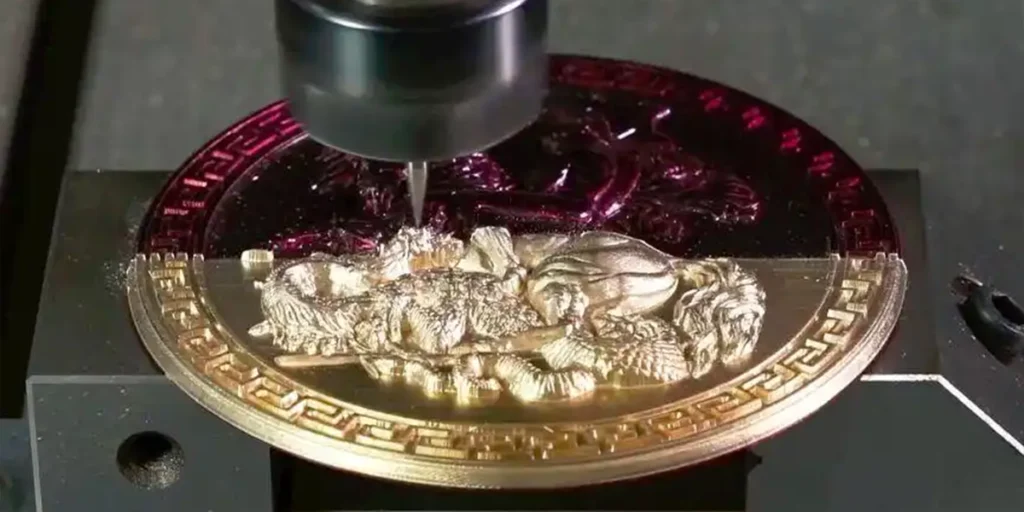
Why is brass easy to work?
Cutting performance advantages
Brass is widely considered one of the easiest metals to CNC machine. Compared to materials such as stainless steel and titanium alloys, brass maintains a more stable machining state during cutting, which means:
- Lower tool wear
- Faster processing speed
- More stable surface quality
- Processing costs are easier to control
For processing plants, this type of material can significantly improve production efficiency.
For the purchasing party, this means:
- Shorter delivery time
- Lower manufacturing costs
- More stable batch quality
The excellent machinability of brass mainly comes from its material structure.
It produces smaller, more easily broken chips during the cutting process, thus reducing the likelihood of:
- Tool adhesion
- Severe burrs
- Surface tear
- Heat distortion
This is why brass is particularly suitable for:
- High-speed CNC turning
- Precision tapping
- Machining of tiny parts
- Multi-axis composite machining
Especially in mass production, brass can effectively reduce equipment downtime and tool change frequency. For professional brass processing suppliers, this material is also easier to automate production.
In actual projects, we often use:
- High-speed CNC turning center
- Multi-axis automatic lathe
- Precision clamping system
This improves the production efficiency and consistency of brass parts. This is also an important reason why brass has long dominated the electronics, automotive, and industrial component markets.
Electrical conductivity and corrosion resistance
In addition to its excellent machinability, brass also possesses very stable electrical conductivity and corrosion resistance. This makes it not only “easy to machine” but also “suitable for long-term use.” Brass’s good electrical conductivity makes it a commonly used material for the following parts:
- Electrical terminals
- Connectors
- Switching assemblies
- Communication equipment parts
Compared to ordinary steel, brass offers more stable performance in conductive applications. Brass also possesses natural corrosion resistance. In humid, high-temperature, or chemically-containing environments, brass typically has a longer service life than ordinary carbon steel.
Therefore, it is widely used in:
- Industrial valves
- Pipe fittings
- Fluid control components
- Automotive braking systems
- Medical equipment parts
For export-oriented products, corrosion resistance is especially important.
Because European and American customers typically pay more attention to:
- Long-term stability
- Environmental adaptability
- Product Lifecycle
Professional brass CNC machining suppliers typically go further by:
- Precision polishing
- Electroplating
- Nickel plating
- Passivation treatment
To improve the appearance and durability of the parts.
In Zhuohua Hardware’s brass machining projects, we not only provide precision CNC machining , but also support a variety of surface treatment solutions to meet the needs of different industrial scenarios.
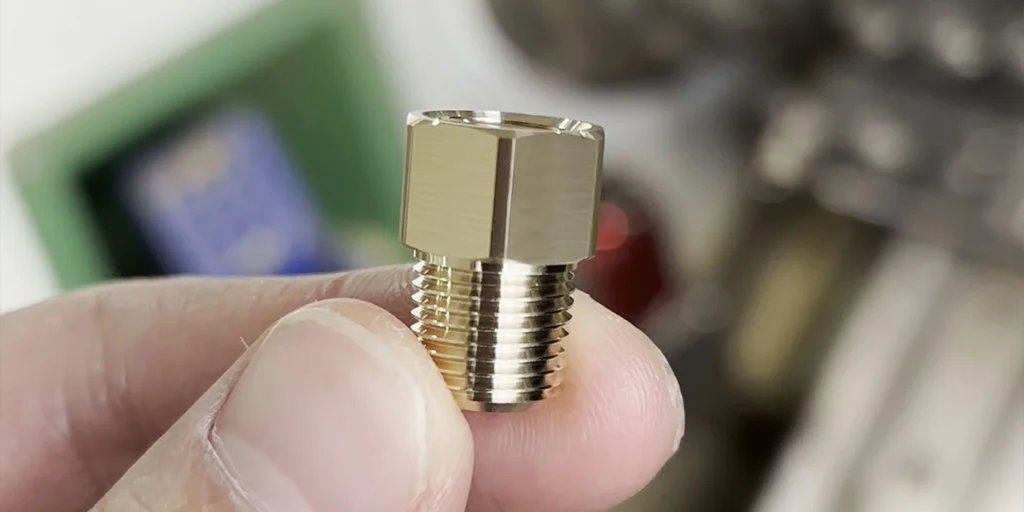
Which parts are suitable for CNC machining of brass?
Connector
Connectors are among the most common products manufactured using CNC machining of brass. Due to brass’s excellent conductivity, stable mechanical strength, and good machinability, it is widely used in the electronics, electrical, and communications industries.
Compared to other metals, brass is easier to machine into high-precision threads, micro-holes, and complex details, which is especially important for connector components. Many connectors are not only small in size, but also have high requirements for coaxiality, surface finish, and assembly accuracy.
Common brass connectors include:
- Electrical connection terminals
- RF connectors
- Communication connectors
- Sensor interfaces
- Industrial automation connectors
In mass production, brass can also effectively reduce tool wear and improve processing efficiency, making it very suitable for long-term OEM projects.
For professional brass machining suppliers, connector processing not only tests equipment precision but also batch stability. This is especially true for European and American customers, who typically place greater emphasis on:
- Thread consistency
- Dimensional stability after electroplating
- Long-term supply capability
- Burr-free surface control
Professional CNC machining factories like Zhuohua Hardware typically combine multi-axis CNC turning with precision inspection systems to ensure consistency in the mass production of complex brass connectors.
Valve
Brass is also one of the most common materials used in industrial valves and fluid control components. Due to its natural corrosion resistance and ability to withstand prolonged contact with water, oil, and some chemical media, brass is widely used in:
- Piping systems
- Fluid control equipment
- Industrial valves
- Pneumatic components
- HVAC systems
Compared to ordinary steel, brass is less prone to rust and has higher processing efficiency, thus enjoying very stable demand in the industrial sector.
Brass valve parts typically involve:
- Precision internal hole machining
- Thread machining
- Sealing surface machining
- Multi-station composite machining
These structures have high requirements for dimensional accuracy and surface quality. Burrs, deformation, or coaxiality deviations during processing will directly affect the sealing performance.
Therefore, professional brass CNC machining factories typically adopt:
CNC turning and milling machining
- Automated turning
- Online size inspection
- Precision deburring process
This is to ensure the stability of valve components.
For long-term industrial projects, a supplier’s ability to deliver on time is also crucial. Many European and American buyers, when selecting brass valve processing suppliers, consider not only price but also:
- Batch consistency
- Long-term supply stability
- Processing experience
- Surface treatment capability
This is why more and more customers are starting to cooperate with Chinese CNC factories that have complete manufacturing capabilities.
Electronic components
The electronics industry is one of the fastest-growing application areas for CNC machining of brass. As electronic devices become increasingly miniaturized, the requirements for precision machining of internal components are also increasing. Brass, with its excellent electrical conductivity, stable machining performance, and high dimensional accuracy control capabilities, is widely used in the manufacture of various electronic components.
Common brass electronic components include:
- Precision terminals
- Conductive pins
- Switching components
- Relay assemblies
- Power interfaces
- Communication equipment components
These types of products are typically characterized by being “small, sophisticated, and produced in large batches,” thus requiring high equipment capabilities from processing suppliers.
For example, many electronic components not only require micro-sized machining, but also:
- High-precision threads
- Microhole fabrication
- Mirror surface quality
- Electroplating compatibility
If machining accuracy is inconsistent, it can easily lead to assembly problems or a decrease in electrical conductivity. Therefore, established brass CNC machining suppliers typically employ high-speed automatic lathes, multi-axis CNC equipment, and complete inspection processes to ensure consistency in every batch of parts.
In electronics industry projects, delivery time is equally critical. Especially for European and American clients, supply chain responsiveness often directly impacts product launch cycles. Currently, Zhuohua Hardware supports:
- Precision turning of brass
- Brass CNC milling
- Micro-parts machining
- Mass OEM production
- Multiple surface treatments
It can meet the needs of the electronics, industrial automation and communications industries for precision brass parts.
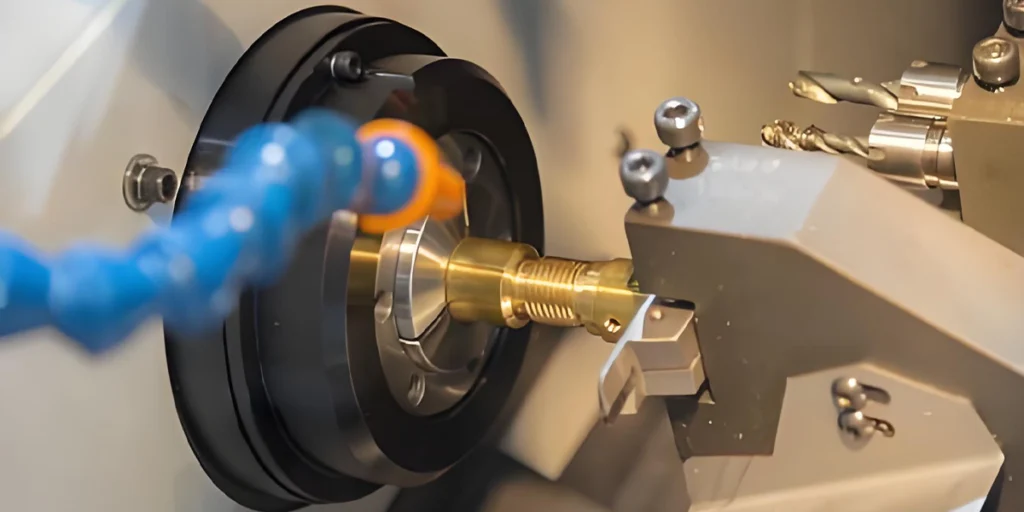
Overview of Brass Processing Industry Applications
Car
The automotive industry is one of the most important application markets for CNC machining of brass. Although modern cars use a lot of aluminum and engineering plastics, brass still plays an important role in fluid control, electrical systems, and sensor components.
Common automotive brass parts include:
- Brake pipe connectors
- Sensor components
- Electrical connectors
- Cooling system components
- Fuel system parts
These parts typically need to have the following features:
- Good corrosion resistance
- Stable mechanical strength
- Long-term dimensional stability
Because the automotive industry has extremely high requirements for batch consistency, processing plants not only need to have high-precision equipment, but also need to establish standardized production processes.
For long-term automotive OEM projects, the core competitiveness of suppliers usually lies in:
- Stable volume delivery
- Process consistency
- Rapid response capability
- Cost control capability
This is also the biggest difference between a professional brass processing factory and an ordinary machining workshop.
Medical
The medical industry ‘s demand for precision brass parts is mainly concentrated in small structural components, connecting assemblies, and internal parts of equipment.
Medical programs typically focus more on:
- Accuracy and stability
- Surface quality
- Cleanliness
- Long-term consistency
Many medical brass parts have very small structures but very strict tolerance requirements, especially when it involves micro-holes, precision threads and complex details, which requires a high level of machining experience.
At the same time, the healthcare industry is highly sensitive to supply chain stability. Customers typically prefer to work with specialized processing suppliers who have long-term production capabilities rather than simply looking for low-priced factories.
Therefore, established brass CNC machining service providers typically offer the following:
- Precision testing
- Processing standardization
- Surface treatment
- Batch Management
More resources will be invested in this area.
Aerospace
While the aerospace industry more commonly uses titanium alloys, stainless steel, and high-performance aluminum, brass is still widely used in some conductive, instrumentation, and auxiliary system components.
Brass parts in the aerospace industry typically emphasize:
- High reliability
- Long lifespan
- High stability
- Precision assembly capability
These types of projects are usually small in batches, but have very high requirements for processing quality.
Many aerospace brass parts need to pass the following tests:
- Multi-axis precision machining
- High-precision detection
- Surface defect control
- Material traceability management
To ensure the final quality.
For processing suppliers, these types of projects not only test equipment capabilities, but also engineering experience and quality management systems.
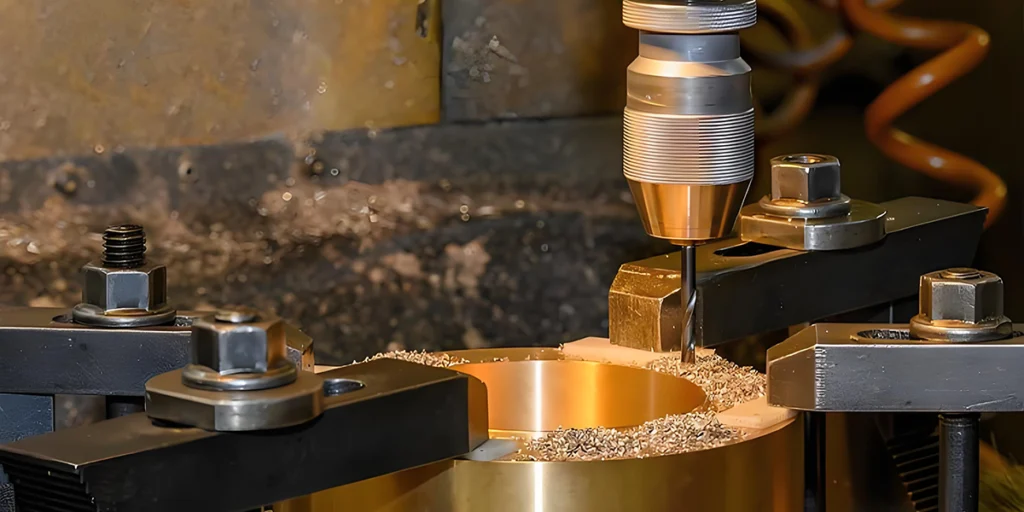
Why Choose a Professional Brass CNC Machining Service Provider
Precision control
While brass is easy to machine, this doesn’t mean all machining plants can consistently produce high-precision parts. Many brass parts are relatively small in structure and include:
- Precision threads
- Micropores
- Thin-walled structure
- High coaxiality requirement
If the equipment is not stable enough or the process control is not in place, dimensional deviations may still occur even if the material itself is easy to cut.
Professional brass processing suppliers typically use the following methods:
- Multi-axis CNC equipment
- Precision fixtures
- Online testing
- Standardized tool management
To ensure processing stability.
Currently, Zhuohua Hardware can achieve a machining accuracy of ±0.02mm and supports mass production of complex brass parts.
Material stability
Brass itself has different grades, and different materials have the following characteristics:
- Intensity
- Electrical conductivity
- Machining performance
- Corrosion resistance
There will be differences in all aspects.
Professional processing plants typically not only provide processing services, but also help customers with material matching and process optimization.
For European and American customers, a stable source of materials is very important because it directly affects:
- Product lifespan
- Assembly stability
- Batch consistency in later stages
Therefore, established suppliers typically build long-term material supply systems and conduct incoming material inspection and material traceability management.
Batch Consistency
For OEM projects, the real challenge is often not “making a sample,” but rather consistently producing thousands of identical parts over a long period.
Batch consistency typically involves:
- Equipment stability
- Process standardization
- Quality Inspection Process
- Production management capabilities
This is why more and more international clients are starting to focus on the overall manufacturing capabilities of a processing plant, rather than just a single quote.
Professional brass CNC machining factories typically go through the following processes:
- Automated production
- Standardized process
- Online quality inspection
- Batch data management
This ensures long-term supply stability. For long-term cooperative projects, this is more important than simply offering low prices.