


Brass has always been one of the most stable and easily manufactured materials in the field of CNC machining. Due to its excellent machinability, corrosion resistance, and good electrical conductivity, brass is widely used in the manufacture of automotive, electronics, medical, industrial equipment, and aerospace parts.
But for buyers and engineers, what truly determines the success of a project is not just “whether brass is easy to process,” but rather:
- How to control processing consistency
- How to reduce burrs and dimensional deviations
- How to reduce mass production costs
- How to choose a supplier with genuine brass processing experience
In actual production, CNC machining of brass involves more than just simple cutting; it also includes process planning, tooling strategy, equipment capabilities, and post-processing control.
This article will provide a detailed introduction to the core processes and techniques of CNC machining of brass from a practical manufacturing perspective, as well as how professional factories can improve production efficiency.
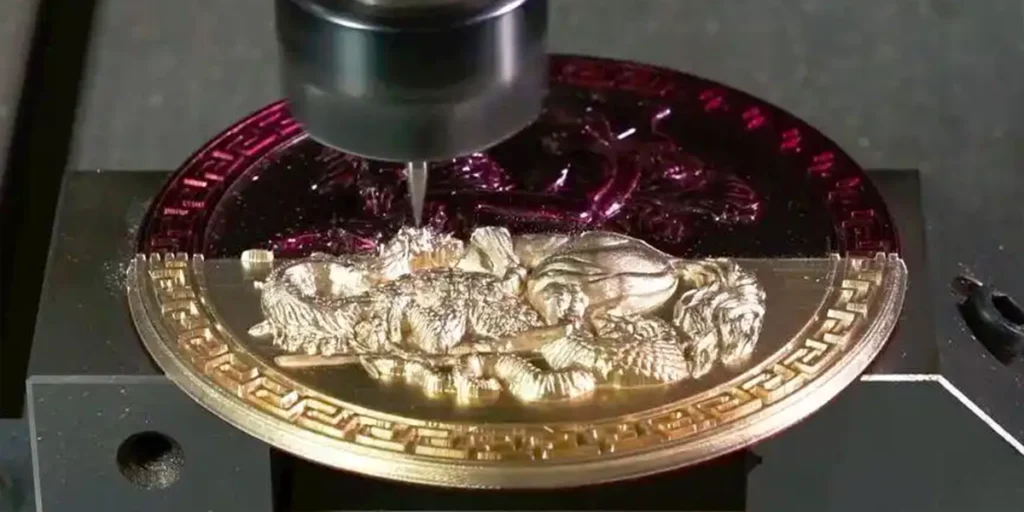
Brass CNC Machining Process Flow
The machining quality of brass parts largely depends on the rationality of the initial process planning. Experienced brass machining suppliers typically complete a comprehensive process assessment before formal production, rather than simply starting cutting directly.
For high-precision brass parts, a stable machining process can significantly reduce dimensional fluctuations, surface defects, and batch inconsistencies.
CAD and Programming
CNC machining of brass typically begins with a CAD model. Engineers will create a machining plan based on the 2D drawings or 3D files provided by the client, and select the appropriate machining method based on the part’s structure.
- Processing path
- Tooling strategy
- Clamping method
- Tolerance control scheme
For complex brass parts, the CAM programming stage is particularly important.
Because brass has low cutting resistance, improper toolpaths can easily lead to the following problems:
- Overcut
- Edge deformation
- Small-sized features are unstable
- High-speed machining vibration
Therefore, experienced processing plants typically conduct DFM (Design for Manufacturing) analysis in advance to help customers optimize:
- Deep hole structure
- Thin-walled region
- Small thread design
- Sharp corner position
In Zhuohua Hardware’s brass machining projects, we conduct process verification before mass production to ensure:
- Stable toolpath
- Tolerances can be repeated
- Controllable consistency in mass production
This is especially important for high-precision brass parts such as connectors, valves, and electronic components.
Turning and milling processes
Brass parts machining typically includes turning, milling, or a combination of turning and milling.
Different processes are suitable for different structures:
| Processing method | Suitable parts |
| CNC turning | Shafts, joints, threaded parts |
| CNC milling | Planar, slot, irregular structure |
| Milling and turning | Complex multifaceted parts |
For cylindrical brass parts, turning is generally more efficient. And for:
- Hexagonal structure
- Eccentric hole
- Complex outline
- Multifaceted characteristics
This requires combining milling to complete.
More and more brass parts are now being machined using multi-axis composite machining because it can:
- Reduce the need for secondary clamping
- Improve coaxiality
- Shorten production cycle
- Reduce human error
For example, automotive brass fittings and industrial valve parts often require multiple workstations to be processed in a single setup to ensure sealing performance and dimensional stability.
Zhuohua Hardware currently supports:
- 3-axis machining
- 3+2 axis machining
- 5-axis CNC milling
- Precision CNC turning
It can cover different needs from rapid prototyping to mass production.
Detection and post-processing
Many buyers focus on processing speed, but in reality, inspection and post-processing also determine the quality of the final parts.
Common post-processing treatments for brass parts include:
- Polishing
- Electroplating
- Deburring
- Sandblasting
- Cleaning
Precision connectors and medical brass parts, in particular, have very high requirements for surface quality.
If post-processing control is inadequate, the following may occur:
- Uneven electroplating
- Surface scratches
- Dimensions out of tolerance
- Damaged threads
Therefore, professional brass processing plants typically establish complete quality control processes, including:
- First article inspection
- Sampling inspection during the process
- Final size inspection
- Surface defect inspection
For high-precision brass parts, many projects also require:
- Coaxiality testing
- Circular runout detection
- Roughness inspection
Zhuohua Hardware currently supports machining accuracy of ±0.02mm and can provide dimensional inspection and quality documentation support according to project requirements to ensure the stability of brass parts in batch delivery.
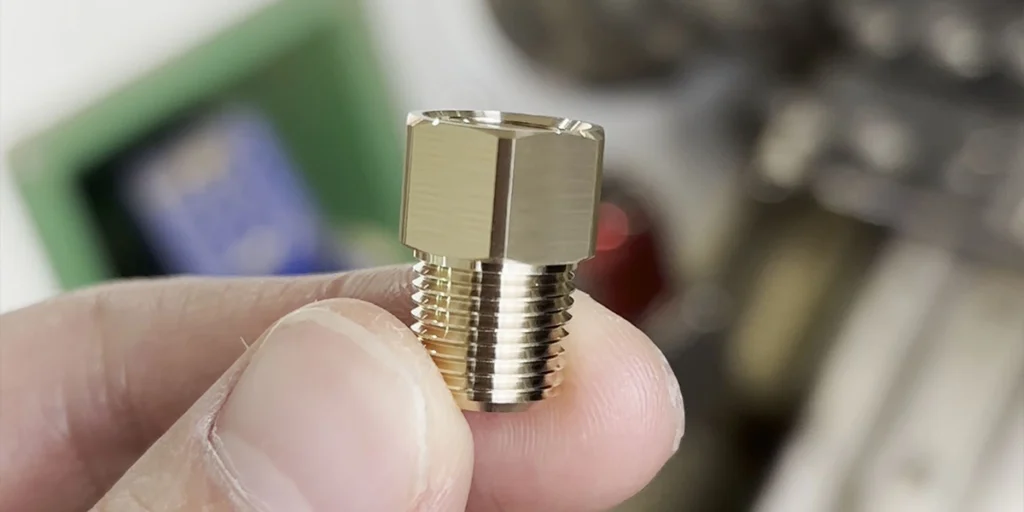
Brass processing techniques
Although brass is considered an “easy-to-work” material, to truly achieve:
- High precision
- High surface quality
- Long-term stable mass production
Mature process experience is still required. Especially in the production of precision brass parts, processing strategies are often more important than the equipment itself.
Tool Selection
Brass machining causes relatively little tool wear, but tool geometry still has a direct impact:
- Surface smoothness
- Dimensional stability
- Burr control
In most brass machining projects, the following is commonly used:
- Carbide cutting tools
- Coated cutting tools
- High-sharpness finishing tools
For tiny brass parts, the sharpness of the cutting tool is especially critical.
If the knife is too dull, it can easily lead to:
- Material extrusion
- Edge turning
- Deformation of small holes
For high-volume projects, stable tool life management is also crucial. Experienced brass machining suppliers typically establish tool life monitoring mechanisms to prevent batch dimensional drift caused by tool wear.
Cutting speed optimization
Brass allows for higher cutting speeds, which is one of the key reasons for its high machining efficiency. However, high speed does not mean that faster is always better.
If the cutting parameters are not set properly, the following may still occur:
- Surface vibration marks
- Size instability
- Localized overheating
- Tool vibration
In actual production, engineers typically base their decisions on:
- Brass grade
- Component structure
- Tool diameter
- Surface requirements
Dynamic adjustment:
- Spindle speed
- Feed rate
- Depth of cut
For complex brass parts, a reasonable processing rhythm can not only improve efficiency, but also reduce subsequent polishing and finishing costs.
Methods to reduce burrs
Burr control is one of the most easily underestimated issues in brass processing.
Especially in:
- Small hole
- Thread
- Slot
- Miniature connectors
In certain areas, burrs can directly affect assembly quality.
Common methods for reducing burrs include:
- Optimize blade sharpness
- Adjust the cutting direction
- Use appropriate feed parameters
- Add chamfer design
- Employs a two-stage deburring process
For high-precision electronic brass parts, many customers require:
- No obvious burrs
- No sharp edges
- Maintain stable conductive contacts
Therefore, established suppliers typically control burrs during the processing stage rather than relying entirely on post-processing finishing.
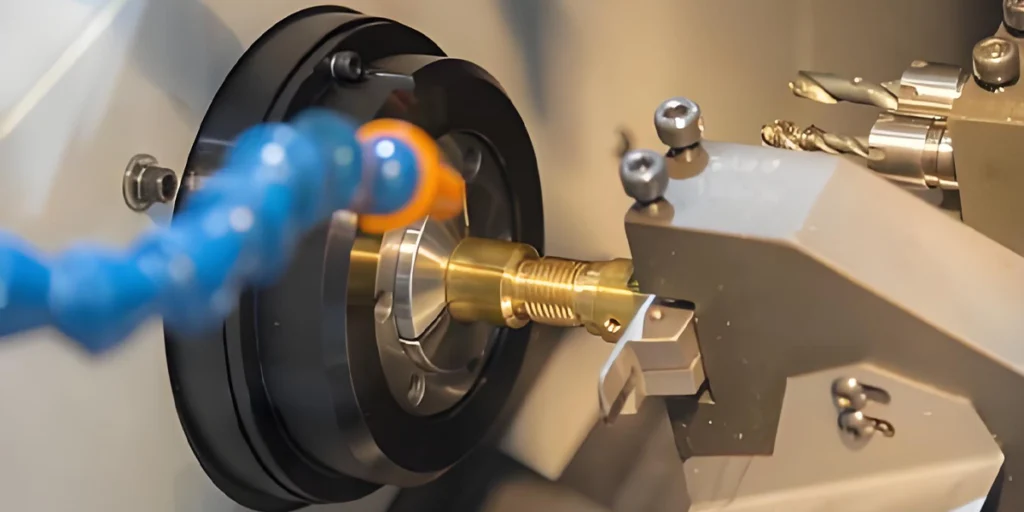
How to improve the efficiency of CNC machining of brass
As brass parts become increasingly complex, traditional single-process machining is no longer sufficient to meet the demands of modern manufacturing. Today, efficiency means not only faster machining speeds, but also fewer clamping operations, more stable dimensional control, and lower overall manufacturing costs.
For long-term, high-volume projects, what truly affects costs is often not the processing time per unit, but whether the entire production process is stable and efficient.
Multi-axis machining
Multi-axis CNC machining is becoming an important trend in the manufacturing of brass parts, especially in the automotive, electronic connector, industrial valve and aerospace parts industries.
Compared to traditional 3-axis machining, multi-axis machining can complete the machining of multiple surfaces in a single setup, thereby reducing errors caused by repeated positioning. This is especially important for brass parts, as many brass components have the following characteristics:
- Multifaceted structure
- Eccentric hole
- Complex slots
- Precision threads
- Small size features
Frequent clamping not only increases machining time but may also lead to instability in coaxiality and positional accuracy.
For example, in the processing of brass connectors, multi-axis equipment can simultaneously complete the processing of outer diameters, inner holes, side holes, and complex contours, greatly improving processing consistency while reducing manual intervention.
For high-precision brass parts, multi-axis machining has another important advantage: it can shorten the tool path and optimize the cutting angle, thereby improving surface quality and reducing tool wear.
Currently, more and more European and American buyers are focusing on whether a factory has the following capabilities when selecting brass processing suppliers:
- 3+2 axis machining capability
- 5-axis linkage capability
- Milling and turning capabilities
Because these capabilities typically mean that suppliers can handle more complex, higher value-added projects.
Zhuohua Hardware currently supports 3-axis, 3+2-axis, and 5-axis CNC machining, which can be used for the manufacturing of complex brass parts, irregularly shaped structural parts, and high-precision components, while also supporting the transition from sample development to mass production.
Automated processing
Automation is transforming the brass CNC machining industry, especially in the mass production of parts. Automation is no longer just about improving efficiency, but also a core means of ensuring consistency.
While traditional manual loading and unloading is flexible, it is prone to problems during long production runs.
- Size fluctuation
- Clamping error
- Unstable production rhythm
- Labor costs continue to rise
Automated processing can significantly reduce these problems.
Common automation solutions currently include:
- Automated feeding system
- Robotic arm loading and unloading
- Online detection system
- Automatic tool changer system
- Integrated production unit
For standardized products such as brass machined parts, including connectors, valves, and electronic components, automation can maintain a stable cycle time, thereby improving batch consistency.
At the same time, automation can reduce equipment downtime and improve spindle utilization, which is crucial for controlling the cost of long-term projects.
In actual production, many established brass processing plants combine automation with multi-axis equipment to achieve:
- Continuous processing
- No production at night
- Stable delivery in large quantities
- Shorter delivery time
For overseas customers, this means more stable supply capabilities and lower long-term procurement risks.
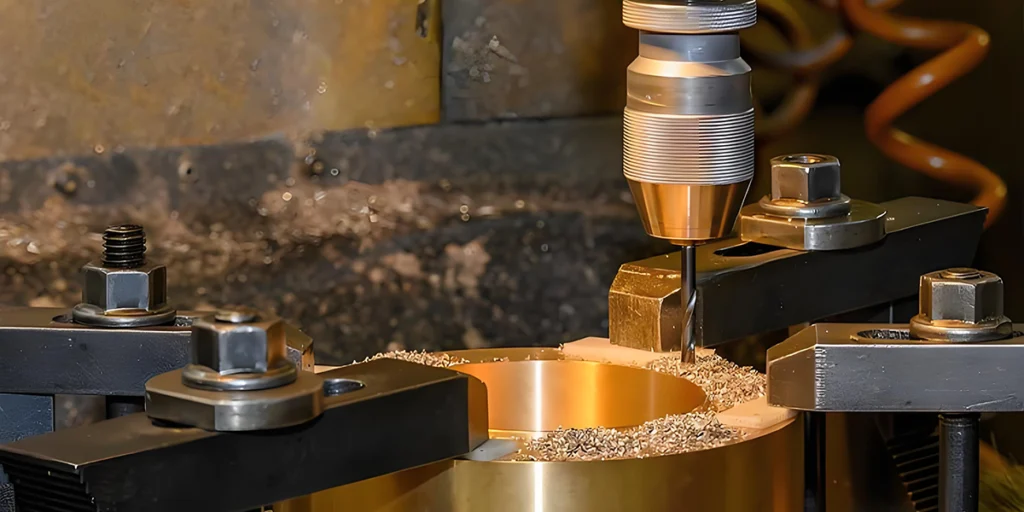
Advanced Brass Processing Technology Trends
As the manufacturing industry moves towards higher precision and complexity, brass CNC machining technology is also constantly being upgraded. In the past, customers were more concerned with “whether it can be machined,” but now they are more focused on:
- Can it achieve stable mass production?
- Can overall costs be reduced?
- Can the development cycle be shortened?
- Can it handle complex structures?
Therefore, advanced processing technology has become an important part of the competitiveness of brass processing suppliers.
High-speed machining
High-speed machining has been widely used in the manufacture of precision brass parts, especially in the electronics, automotive, and communications industries. Brass is well-suited for high-speed machining environments due to its low cutting resistance. Proper high-speed machining not only improves production efficiency but also enhances surface finish.
Compared to traditional machining methods, high-speed machining typically has the following advantages:
- Shorter processing cycle
- Higher surface finish
- Less cutting deformation
- Lower tool pressure
However, high-speed machining is not simply about increasing the spindle speed.
Truly stable high-speed machining requires comprehensive consideration:
- Spindle stability
- Tool balancing
- Cutting parameters
- Cooling method
- Equipment rigidity
Insufficient process control can actually lead to high-speed machining problems such as oscillation, dimensional drift, and localized overheating. For high-precision brass parts, established suppliers typically develop specialized cutting databases for different structures to achieve a balance between efficiency and stability.
Composite processing
Composite machining is one of the fastest-growing areas in brass parts manufacturing. Traditional production typically requires:
- Turn first
- Remilling
- Finally, drill or tap the hole.
This method is not only lengthy but also increases clamping errors. In contrast, milling and turning machines can complete multiple processes in a single setup, thus significantly improving machining efficiency and precision control.
For complex brass parts, such as:
- Industrial valves
- Medical connectors
- Aviation parts
- Precision sensor components
Composite processing can effectively reduce:
- Coaxiality error
- Positional deviation
- Errors due to manual handling
It can also shorten the overall delivery time.
More and more European and American customers are now prioritizing suppliers with composite processing capabilities because this means:
- Fewer supply chain links
- More stable quality
- Faster project response time
For complex brass projects, composite processing has gradually shifted from a “high-end capability” to a “basic capability”.
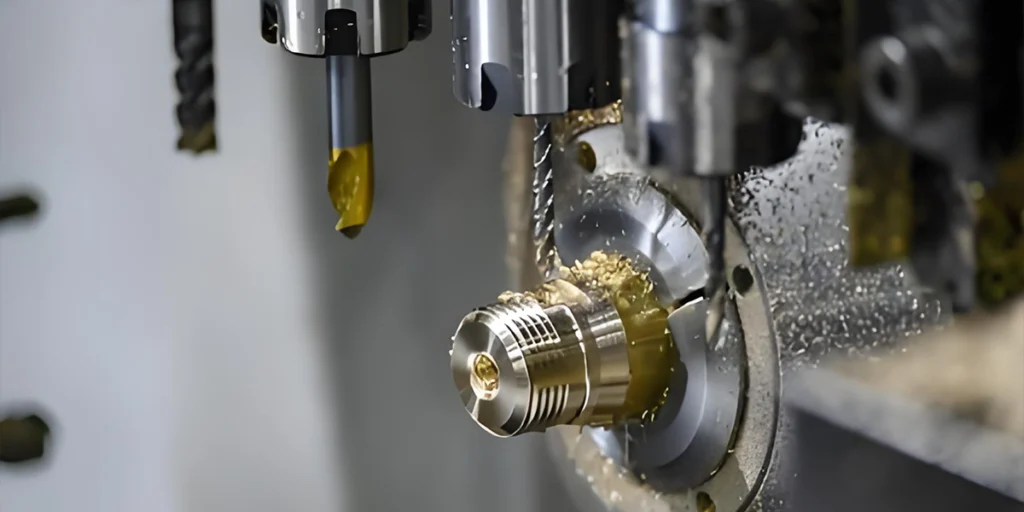
How can professional brass processing suppliers reduce production costs?
Many buyers believe that the most direct way to reduce the cost of brass parts is to find suppliers with lower prices. However, in actual manufacturing, what truly determines long-term costs is often the supplier’s technological capabilities and production stability.
Low-cost processing often leads to:
- Inconsistent batch sizes
- Higher scrap rate
- Delayed delivery
- Rework in the later stages
- Assembly issues
These hidden costs often far exceed the initial savings in processing costs.
Professional brass processing suppliers typically reduce overall manufacturing costs through process optimization, rather than simply lowering unit prices.
The first step is DFM optimization. An experienced engineering team will help customers optimize the structure before production, for example:
- Reduce unnecessary deep holes
- Adjust the sharp corner structure
- Optimize thread design
- Relax non-critical tolerances
These adjustments typically do not affect product functionality, but can significantly improve processing efficiency.
Secondly, it’s crucial to select the appropriate processing method. For high-volume brass parts, established factories will automatically match the processing method based on the structure.
- CNC turning
- Multi-axis milling
- Milling and turning
- Automated processing
This reduces processes and manual intervention.
Furthermore, a stable supply chain directly impacts costs. Professional brass processing plants typically have long-term, stable material supply systems, which not only reduce fluctuations in material procurement but also ensure material consistency.
At Zhuohua Hardware, we offer different processing strategies based on the stage of our clients’ projects, for example:
- The rapid prototyping stage emphasizes flexibility.
- Small batch production emphasizes delivery time
- In the high-volume production stage, emphasis is placed on stable cost control.
At the same time, by combining multi-axis machining, automated production and DFM optimization, we help customers reduce overall manufacturing costs while ensuring quality.