


Brass is widely used in electronics, automotive parts, medical parts, industrial equipment, and fluid control systems due to its excellent machinability, stable dimensional performance, and good electrical conductivity and corrosion resistance.
However, for high-end industrial parts, “being able to process brass” does not mean “being able to stably achieve high-precision brass processing”.
True high-precision CNC machining of brass involves more than just the equipment itself; it also includes machining processes, tooling strategies, inspection procedures, and long-term batch stability. For purchasing teams and engineers, choosing a machining supplier with proven experience is often more important than simply comparing prices.
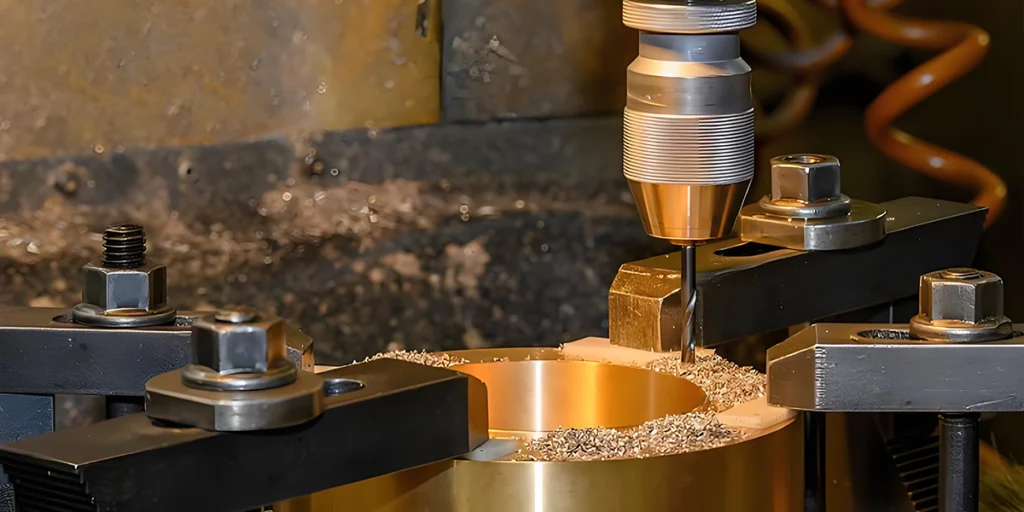
What is high-precision brass machining?
High-precision brass machining typically refers to the process of manufacturing complex brass parts within strict tolerances through CNC turning, CNC milling, or multi-axis composite machining.
These types of parts are typically used for:
- Precision brass connectors
- Brass electronic components
- Brass industrial valves
- Medical equipment components
- Automotive fluid systems
- Aerospace instrument components
Compared to ordinary machining, high-precision brass machining places greater emphasis on:
- Size consistency
- Surface quality
- Batch stability
- Long-term assembly reliability
For many European and American industrial customers, whether a part is truly “high-precision” is not just about whether a single dimension is up to standard, but about whether the supplier can maintain stable quality in long-term mass production.
Tolerance Standards
Tolerance is one of the core indicators for measuring the precision of brass parts. Ordinary brass machining typically uses standard industrial tolerances, while high-precision brass parts often require stricter dimensional control, especially in the following scenarios:
- Brass threaded connectors
- Brass sealing structures
- Microelectronic components
- High -speed rotating parts
- Medical fluid systems
In practical projects, common tolerance ranges for high-precision brass machining include:
- ±0.05 mm: standard industrial parts
- ±0.02 mm: Precision industrial parts
- Higher precision: for specialized medical or aerospace applications
Many factors affect tolerance stability, including:
- Equipment rigidity
- Tool wear
- Thermal deformation control
- Processing path
- Workpiece clamping method
Therefore, truly professional brass processing suppliers usually conduct DFM analysis in advance during the process evaluation stage, rather than simply producing directly according to drawings.
Zhuohua Hardware currently supports high-precision CNC machining capabilities, with standard accuracy controllable within ±0.02mm, and supports small-batch and mass production of complex brass structural parts.
Surface quality requirements
For brass parts, surface quality not only affects appearance but also directly impacts product performance. For example:
- The roughness of the sealing surface affects airtightness.
- Electrical connections can be affected by surface oxidation.
- Medical components require reduced microburrs.
- Decorative brass parts require a high degree of consistency in polishing.
In high-precision brass machining, customers typically focus on:
- Surface roughness (Ra)
- Burr control
- Consistency of tool marks
- Chamfer quality
- Surface condition before electroplating
Because brass is relatively soft, improper processing parameters can easily lead to the following problems:
- Surface scratches
- Edge burrs
- Minor indentations
- Size offset
Therefore, high-quality brass processing usually requires the following combination:
- Sharp knives
- Reasonable cutting parameters
- Stable cooling control
- Refined post-processing technology
In many high-end projects, post-processing techniques such as polishing, electroplating, sandblasting, or wire drawing can directly affect the quality of the final product.
Zhuohua Hardware offers one-stop surface treatment support for brass parts, including:
- Precision polishing
- Sandblasting
- Electroplating
- Anode-compatible component processing
- Customized surface solutions
This can help customers reduce quality risks and delivery issues caused by multi-supply chain collaboration.
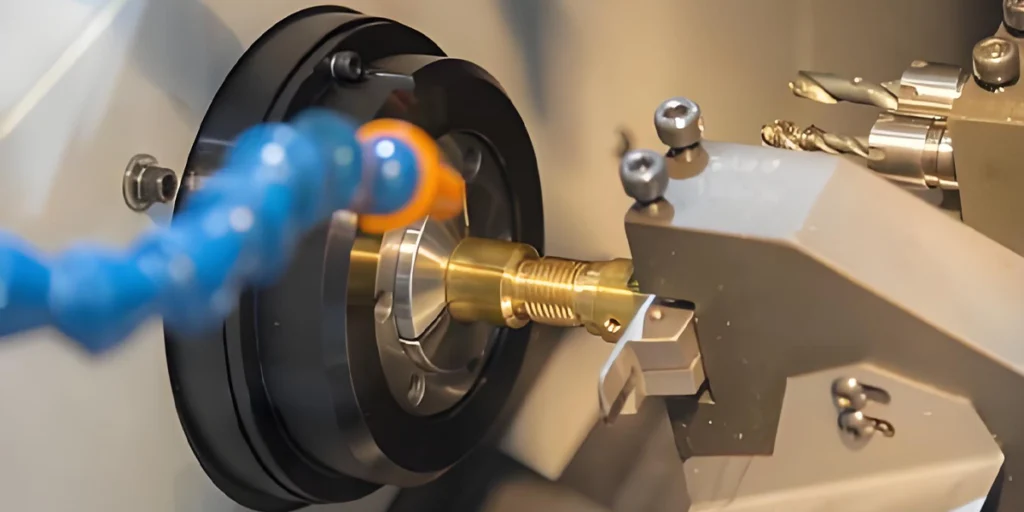
How to achieve precision brass CNC machining
Achieving stable, high-precision brass machining does not solely rely on “high-end equipment.” What truly determines machining quality is the overall coordination between equipment, cutting tools, processes, testing, and experience.
Especially in the manufacturing of complex brass parts, many dimensional problems are not caused by the equipment itself, but rather by:
- Inappropriate toolpath
- Heat accumulation
- Clamping deformation
- Incomplete testing process
- Tool wear during batch processing
Therefore, professional brass CNC machining suppliers usually establish a complete process control system, rather than simply relying on operational experience.
CNC machining equipment
High-precision brass machining relies first and foremost on a stable CNC equipment platform. For complex brass parts, the rigidity of the equipment, the stability of the spindle, and the repeatability of positioning all directly affect the final machining result.
Different types of equipment are suitable for different parts:
- CNC lathes: suitable for shafts, connectors, and joints.
- CNC milling machines: suitable for complex and irregular structures
- Multi-axis equipment: suitable for complex curved surfaces and composite machining.
- Milling and turning composite equipment: Reduces secondary clamping errors
In actual production, the advantages of multi-axis equipment are particularly evident because it can:
- Reduce the number of clamping operations
- Improve coaxiality
- Improve the processing efficiency of complex structures
- Reduce human error
Zhuohua Hardware currently possesses large-scale CNC machining capacity and supports:
- 3-axis, 3+2-axis and 5-axis machining
- Precision CNC turning
- Mass production of complex brass parts
- Prototype to mass production projects
For industrial customers who require high consistency, stable equipment capability is often more important than single-shot processing accuracy.
CNC machining tools
Although brass is a relatively easy material to machine, the choice of cutting tools still has a direct impact:
- Surface smoothness
- Dimensional stability
- Burr control
- Processing efficiency
Common strategies in high-precision brass machining include:
- Use sharp carbide knives
- Reduces the formation of fibroids
- Employs high-speed, light-cutting
- Control the tool wear cycle
For miniature brass parts, the cutting tool can even affect the final assembly performance.
- Micro thread machining
- Deep hole machining
- Precision internal groove machining
- Small-size connector processing
If tool wear control is unstable, even if the first few parts are qualified, subsequent batches of products may experience dimensional drift.
Therefore, established suppliers typically establish:
- Tool life management
- Processing compensation mechanism
- Batch processing monitoring system
Instead of relying solely on adjustments based on human experience.
Detection system
High-precision brass machining is not only about “machining capability,” but also about “inspection capability.” Many suppliers can machine high-precision parts, but they cannot consistently verify dimensional consistency over a long period.
Professional testing systems typically include:
- Coordinate Measuring Machine (CMM)
- Altimeter
- Roughness inspection
- Thread inspection
- Optical inspection
For complex brass parts, inspection not only occurs in the final shipment stage, but also throughout the entire process:
- First item confirmed
- In-process spot checks
- Batch inspection
- Final quality verification
This process control capability determines whether a supplier is truly suitable for long-term OEM projects.
In high-precision parts projects, Zhuohua Hardware establishes corresponding inspection plans based on the part’s structure and tolerance requirements to ensure:
- Stable batch size
- Key dimensions are traceable
- Consistent surface quality
- Compliant with global customer quality standards
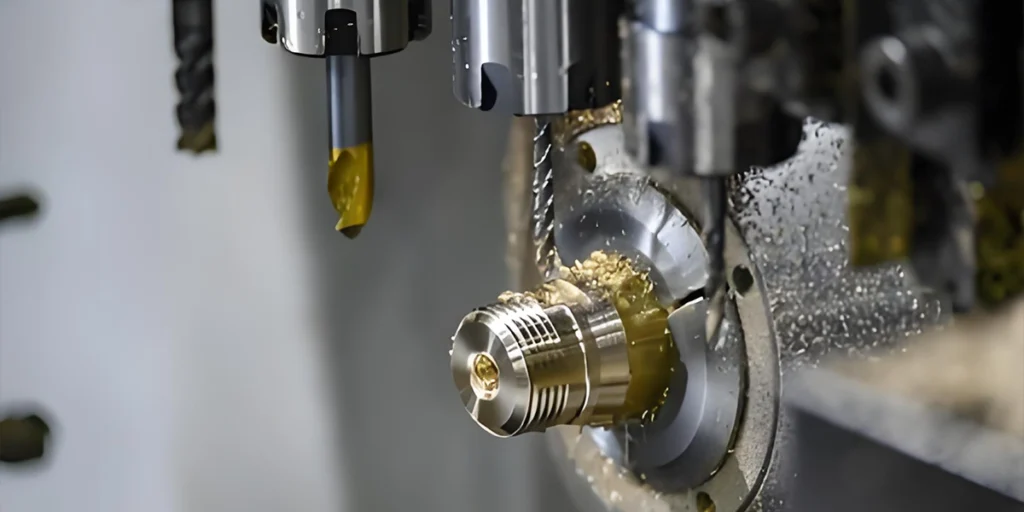
Key factors affecting the machining precision of brass
Many customers believe that using high-end CNC equipment guarantees stable, high-precision brass machining. However, in actual production, the real factor affecting machining quality is often the control of process details.
While brass boasts excellent machinability, it is still susceptible to damage from factors such as heat, clamping method, tool wear, and machining path in high-precision machining scenarios. Especially in the machining of complex structures, thin-walled parts, or miniature precision components, even minute errors can lead to assembly problems or functional failures.
For long-term, high-volume projects, consistency is often more important than single-piece precision. A mature brass machining supplier needs to maintain consistent quality across different batches and processing cycles, rather than just producing a single acceptable sample.
Heat deformation of brass
Although the thermal deformation of brass is easier to control than that of some steels, heat accumulation can still affect dimensional stability during high-speed machining or long-term continuous production.
- The spindle generates temperature rise during prolonged operation.
- High-speed cutting by the tool leads to localized heat concentration.
- Small, precision parts have limited heat dissipation capabilities.
- Thin-walled structures are prone to slight deformation.
These issues may have a limited impact on ordinary industrial parts, but in high-precision brass connectors, medical parts, or precision valve assemblies, they can directly lead to dimensional deviations.
Therefore, professional brass machining typically controls thermal deformation through the following methods:
- Optimize cutting parameters
- Control cutting load
- Use a stable cooling system
- Reduce continuous high-heat processing
- Arrange the processing sequence reasonably
For demanding projects, experienced engineering teams typically consider thermal deformation compensation during the programming phase, rather than correcting problems after they occur.
Clamping method
Clamping method is often overlooked by customers, but it is actually a very critical machining factor. In precision brass machining, if the clamping force is unreasonable, even with high-precision equipment, the following problems may occur:
- Roundness deviation
- Coaxiality issue
- Surface indentation
- Size drift
- Thin-walled deformation
Especially for small-sized brass parts or long shaft parts, the requirements for clamping stability are very high.
For example, in the machining of brass connectors, excessive clamping force may directly affect the thread accuracy; while in the machining of complex brass valve components, multiple clamping may also lead to cumulative errors.
Therefore, specialized suppliers typically design dedicated fixtures based on the part’s structure, and combine them with:
- Soft claw processing
- Positioning reference optimization
- Multi-station clamping
- One-time clamping composite machining
To reduce sources of error.
In complex brass parts projects, Zhuohua Hardware develops corresponding clamping solutions based on the part’s structure and tolerance requirements. This is particularly effective in projects with high coaxiality, high surface finish requirements, and batch consistency, as it can effectively reduce quality risks caused by clamping errors.
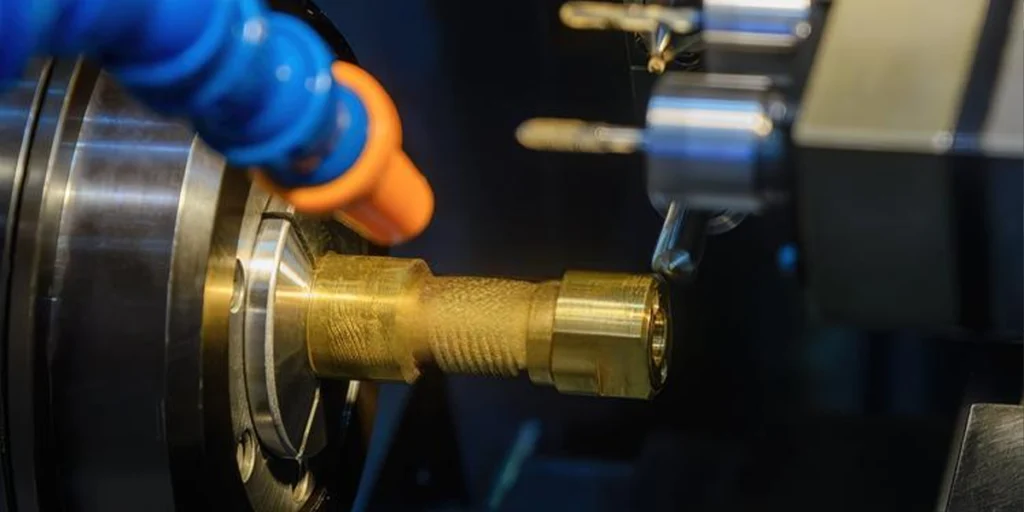
Standards for high-quality brass CNC machining
For industrial clients in Europe and America, high-quality brass machining is not simply about “measuring dimensions correctly.” Truly mature brass CNC machining services typically need to meet the following criteria simultaneously:
- Stable tolerance control
- Consistent surface quality
- Long-term batch stability
- Traceable quality system
- On-time delivery capability
- Engineering communication efficiency
Many projects perform well in the sample stage, but once they enter mass production, problems such as dimensional fluctuations, increased burrs, or inconsistent surface finishes often arise. This is why more and more purchasing teams are focusing on a supplier’s overall manufacturing capabilities, rather than just their quoted price.
A reliable brass machining manufacturer typically possesses:
- Full DFM analysis capabilities
- Multi-axis complex machining capability
- Stable tool management system
- Standardized testing procedures
- Post-processing integration capabilities
At the same time, it is also necessary to be able to respond quickly to engineering modifications and project iterations.
For long-term OEM projects, whether the supplier has engineering support capabilities often directly affects the efficiency of subsequent product development.
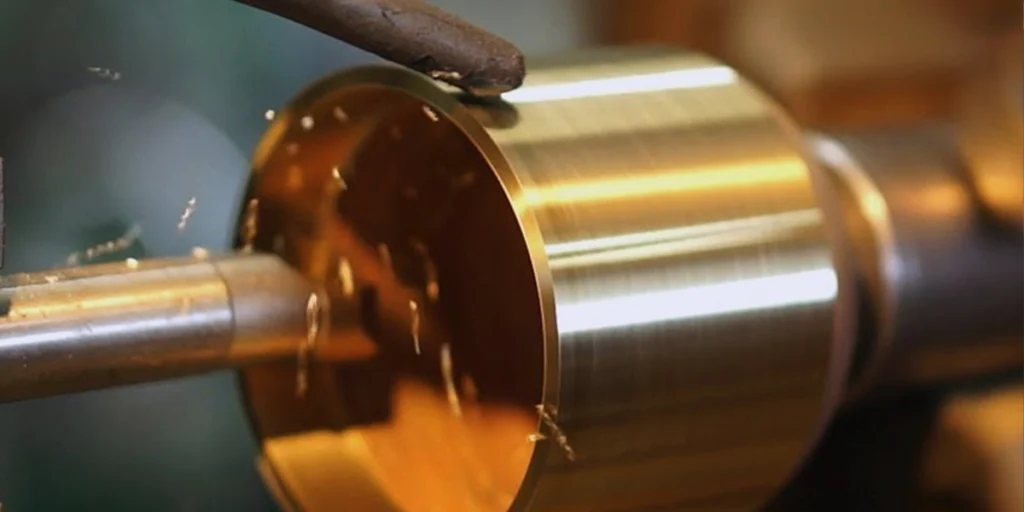
Our high-precision brass processing capabilities
As a professional CNC machining supplier , Zhuohua Hardware has long provided high-precision brass CNC machining services to industrial customers worldwide , supporting complete manufacturing needs from rapid prototyping to mass production.
Our current material support includes:
- CNC turning
- CNC milling
- 3-axis, 3+2-axis and 5-axis machining
- Machining of complex brass structural components
- Manufacturing of small precision parts
- Multi-process composite processing
Regarding brass materials, we support a variety of common brass grades, including:
- C220
- C230
- 353 Brass
- Custom brass materials
provide customized surface treatment solutions based on project requirements :
- Precision polishing
- Electroplating
- Sandblasting
- Wire drawing
Our standard machining accuracy can be controlled within ±0.02mm, while supporting the manufacturing of complex structures, precision threads, micro-holes, and high surface quality parts.
For European and American OEM clients, we pay more attention to the stability and delivery efficiency of long-term projects, therefore we focus on controlling these aspects during the production process.
- Batch consistency
- Tool life management
- Process quality inspection
- Clamping stability
- Quality verification before shipment
Currently, Zhuohua Hardware’s brass machining services are widely used in:
- Automotive parts
- Industrial valves
- Medical equipment
- Electronic connectors
- Automated equipment
- Precision industrial components
For projects requiring the machining of complex brass parts, we can also provide DFM (Design for Manufacturing) advice during the quotation stage to help customers optimize structural design, reduce machining costs, and improve the stability of mass production.