


Brass has consistently been one of the most stable and easiest-to-machine metals in industrial manufacturing. From electronic connectors and valve assemblies to automotive parts and precision instruments, a growing number of companies are using custom brass parts to replace traditional steel or die-cast components for better machining efficiency, corrosion resistance, and dimensional stability.
For buyers and product engineers, what truly matters is not just “whether they can process brass,” but whether the supplier can:
- Stable control of dimensional accuracy
- Understanding the structure of complex parts
- Provide DFM optimization suggestions
- Supports everything from prototyping to mass production
- Ensure consistent long-term delivery
This is also the core value of professional brass CNC machining services.
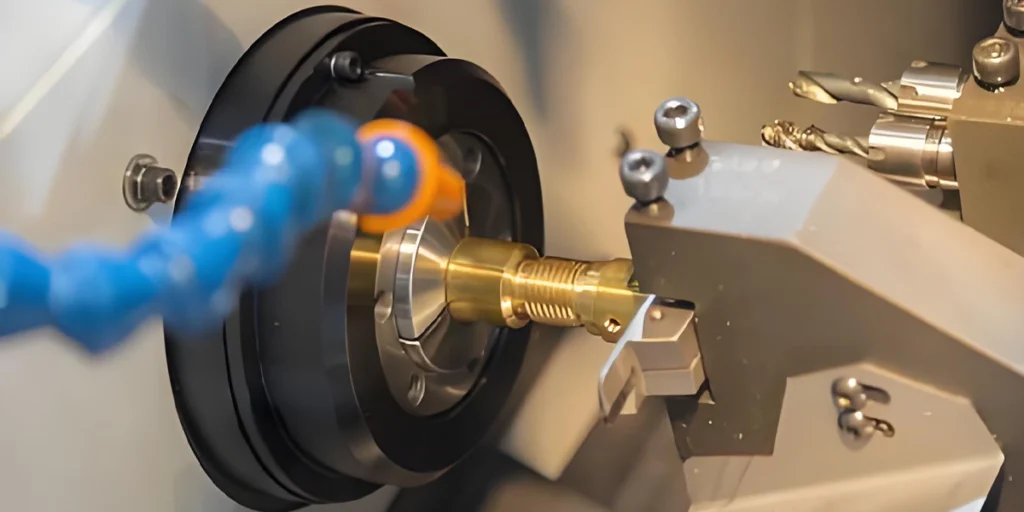
What is custom brass CNC machining?
Custom brass CNC machining refers to the process of manufacturing specialized brass parts based on 2D drawings, 3D models, or functional requirements provided by customers, using CNC turning, CNC milling, or multi-axis composite machining methods.
Unlike standard parts, custom manufacturing places more emphasis on:
- Component function matching
- Dimensional and tolerance control
- Special structure processing
- Surface treatment requirements
- Batch consistency
These types of parts are usually not purchased directly from inventory, but are produced according to the actual needs of the project.
Common custom brass parts include:
- Brass connectors
- Brass valve assembly
- Sensor housing
- Precision threaded parts
- Electrically conductive components
- Fluid control accessories
One key reason why brass is widely used in CNC machining is its excellent cutting performance.
Compared to stainless steel or titanium alloys, brass:
- Easier to process
- Lower tool wear
- Easier to achieve high surface finish
- More suitable for high-speed machining
- Easier to control tiny sizes
Therefore, brass is often a very efficient choice in the field of high-precision, small and complex parts.
For industrial customers, custom brass machining is not just about “producing parts,” but more importantly, ensuring that the parts are truly suitable for the end application environment.
- The automotive industry focuses on pressure resistance and corrosion resistance.
- Medical devices prioritize dimensional stability
- The electronics industry focuses on conductivity.
- Industrial equipment prioritizes long-term wear resistance.
Therefore, professional brass processing suppliers usually participate in engineering assessments before processing, rather than simply producing according to drawings.
At Zhuohua Hardware, we have a long history of providing custom brass CNC machining services for automotive parts , industrial equipment components , electronic devices , and medical equipment . Our capabilities include:
- CNC turning and CNC milling
- Machining of multi-axis complex structures
- ±0.02mm accuracy control
- Small-batch prototyping and mass production
- Supported by a variety of brass materials
- Surface treatment and post-processing support
For complex , high-precision brass parts projects, we typically provide DFM (Design for Manufacturing) advice before formal production to help customers reduce costs and improve manufacturability.
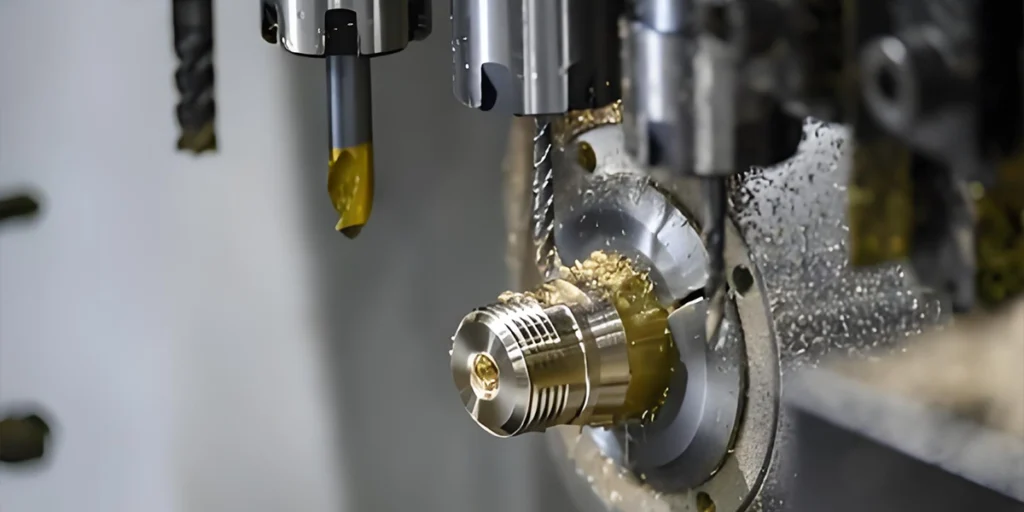
Custom Brass Parts Manufacturing Process
High-quality brass parts do not solely depend on equipment. What truly determines the final quality is usually the rationality of the entire manufacturing process.
For industrial custom projects, a typical brass processing flow includes:
- Drawing Analysis
- DFM Optimization
- Sample Production
- Batch processing
- Quality Inspection
- Surface treatment and delivery
Professional suppliers identify potential risks before formal production begins, rather than discovering problems only after mass production has started.
Drawing Analysis
Drawing analysis is the first step in the entire brass processing project. Many buyers believe that as long as STEP files or PDF drawings are provided, the factory can start production directly.
However, in reality, the engineering evaluation stage often determines the subsequent steps:
- Processing costs
- Production efficiency
- Product stability
- Yield
- Delivery time
Professional brass processing suppliers typically focus on the following aspects:
- Are there any difficult-to-machine structures?
- Are the tolerances too strict?
- Are there any deep holes or thin-walled areas?
- Is the thread design reasonable?
- Is it suitable for mass production?
- Does surface treatment affect dimensions?
Some clients specify excessively high precision requirements in non-critical locations. This can lead to:
- Increased processing time
- Increased testing costs
- Prices have risen significantly
Experienced engineering teams typically offer optimization suggestions at this stage.
At Zhuohua Hardware, we conduct an initial Design & Manufacturing Facilitation (DFM) assessment concurrently with the quotation stage. For complex brass parts, our engineering team will perform an analysis in advance.
- Processing feasibility
- Cost risk
- Process route
- Batch stability
This can help clients avoid many subsequent problems in the early stages of a project.
DFM optimization
Design for Manufacturing (DFM) optimization is a crucial step in custom brass machining. Many parts can theoretically be machined, but are not suitable for efficient production.
If the design does not consider the processing logic, the following will usually occur:
- Processing time is too long
- Reduced tool life
- Size instability
- Excessive cost
- Yield rate decreased
Although brass is easy to work with, complex structures still require careful design.
Professional DFM optimization typically includes:
- Simplify complex structures
- Optimize fillets and chamfers
- Adjust the hole depth ratio
- Reduce the need for secondary clamping
- Optimize thread structure
- Reduce unnecessary tolerances
For example:
- Excessively deep holes may cause difficulties in chip removal;
- Ultra-thin wall structures may lead to processing deformation;
- An unreasonable internal angle design may increase tool limitations.
These issues may not be apparent during the prototyping stage, but they will significantly impact costs and stability during mass production. For industrial customers in Europe and America, an increasing number of companies want suppliers who are not merely “manufacturers,” but partners capable of participating in engineering optimization.
This is why many long-term collaborative projects prioritize manufacturing plants with DFM (Device Manufacturing Facilities) capabilities. At Zhuohua Hardware, we consider the following:
- Component structure
- Annual demand
- Application industries
- Material type
- Surface treatment requirements
We provide clients with targeted processing optimization suggestions.
In many cases, proper DFM optimization can:
- Reduce processing costs by 10% to 30%
- Shorten production cycle
- Improve batch consistency
- Reduce subsequent assembly issues
Sample production
Before entering mass production, most industrial projects will first undergo sample production. The sample stage is not only used to verify dimensions, but more importantly, to verify:
- Processing technology
- Assembly compatibility
- Surface quality
- Functional reliability
- Material properties
For complex brass parts, the prototyping stage is especially important.
Because many problems only become apparent after actual processing, for example:
- Thin-walled deformation
- Thread fit issues
- Surface treatment dimensional changes
- Small burrs
- Assembly interference
Professional suppliers typically optimize process parameters during the sample stage to establish a stable processing solution for subsequent mass production.
At Zhuohua Hardware, we support:
- Rapid prototyping of brass parts
- Small-batch trial production
- Verification of multiple versions of samples
- Surface treatment test
- Size Inspection Report
For industrial projects that require export, we can also provide services according to customer requirements:
- Supporting documents
- Test report
- Size report
- Surface treatment verification
This can help customers accelerate subsequent project verification and bulk purchasing.
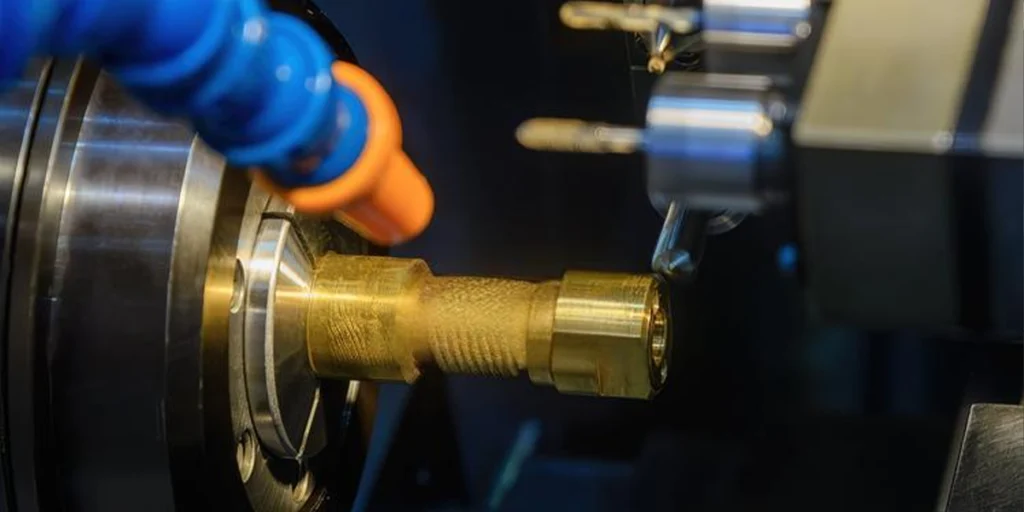
OEM brass CNC machining services
OEM brass CNC machining typically refers to a process where the customer provides complete drawings, technical standards, and brand requirements, and the processing supplier is responsible for production and manufacturing.
This collaborative model is very common in the automotive, electronics, industrial equipment, and medical industries because most companies do not build their own complete machining production lines, but instead choose to cooperate with stable processing plants in the long term.
For OEM projects, what customers are really concerned about is not “single-time processing,” but rather long-term supply capabilities, including:
- Product consistency
- Batch stability
- Delivery cycle
- Quality traceability
- Engineering coordination capabilities
Especially for brass parts, stability during mass production is crucial due to the small size and intricate structure of many products. If suppliers lack experience, issues such as dimensional drift, unstable threads, increased burrs, or surface quality fluctuations can easily occur during mass production.
Professional OEM brass machining services typically include:
- CNC turning
- CNC milling
- Milling and turning machining
- Precision thread machining
- Surface treatment
- Assembly support
- Testing and Quality Documents
For industrial clients in Europe and America, an increasing number of procurement teams prefer to choose suppliers that can provide “one-stop delivery” rather than managing multiple factories separately. This not only reduces communication costs but also mitigates supply chain risks.
At Zhuohua Hardware, we have a long history of supporting OEM brass parts projects and can provide customized solutions based on customer needs.
- Prototype prototyping
- Small-batch trial production
- Medium to large-scale production
- Supported by multiple materials
- Surface treatment integration
- Long-term supply management
Our machined brass parts are widely used in:
- Brass industrial connectors
- Brass valve assemblies
- Electronic brass components
- Automotive fluid systems
- Precision instrument components
For projects requiring long-term export, we can also support dimensional reports, material certifications, and customized packaging requirements to meet the supply chain standards of overseas customers.
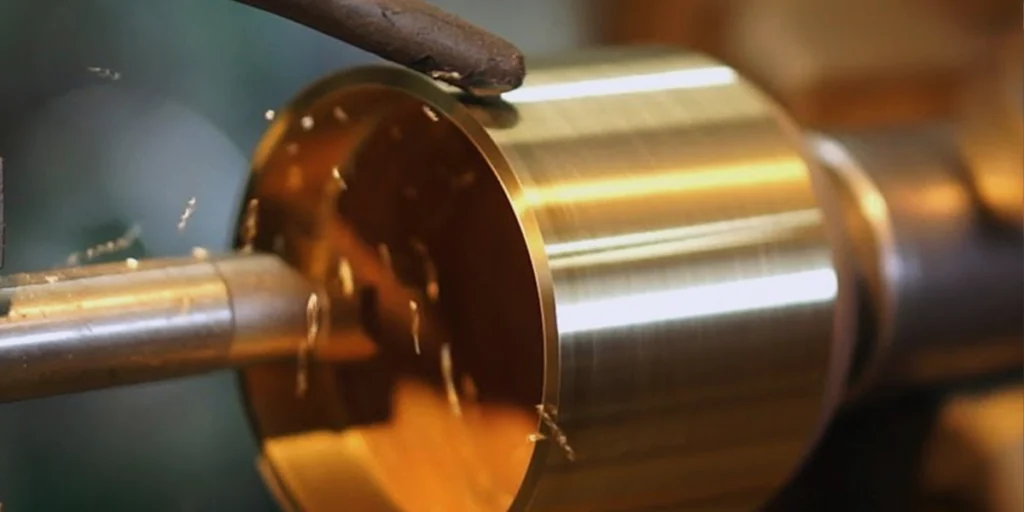
ODM Brass Machining Solutions
Unlike OEM, ODM places greater emphasis on the supplier’s engineering involvement. In many projects, clients do not provide complete manufacturing solutions, but only preliminary concepts, functional requirements, or sample references. In these cases, the manufacturing supplier is not only responsible for production, but also needs to participate in structural optimization, process design, and even material recommendations.
This model is becoming increasingly common in industrial equipment, consumer electronics, and some automotive projects. Some clients may only have:
- Hand-drawn sketches
- Simple 3D model
- Existing samples
- Functional Requirements Description
Professional brass processing plants need to help customers complete subsequent manufacturing solutions based on the actual application environment.
For ODM projects, what really matters is not just the equipment, but the engineering experience.
Because many brass parts, although not structurally complex, involve:
- Assembly Relationship
- Electrical conductivity
- Sealing performance
- Thread standard
- Surface treatment compatibility
Without practical manufacturing experience, assembly problems or mass production issues can easily arise later on.
Professional ODM brass machining solutions typically include:
- Structural optimization
- DFM Analysis
- Material Recommendations
- Process route design
- Prototyping and verification
- Small-batch trial production
- Mass production support
At Zhuohua Hardware, we frequently participate in the early stages of our clients’ product development. For complex brass components, we leverage our processing experience to help clients optimize their projects.
- Wall thickness design
- Hole structure
- Thread type
- Tolerance range
- Surface treatment solutions
In many cases, these optimizations not only reduce costs but also significantly improve the stability of subsequent mass production.
For overseas customers, a brass processing supplier that can provide engineering support is often more valuable in the long run than a supplier that simply offers the lowest price.
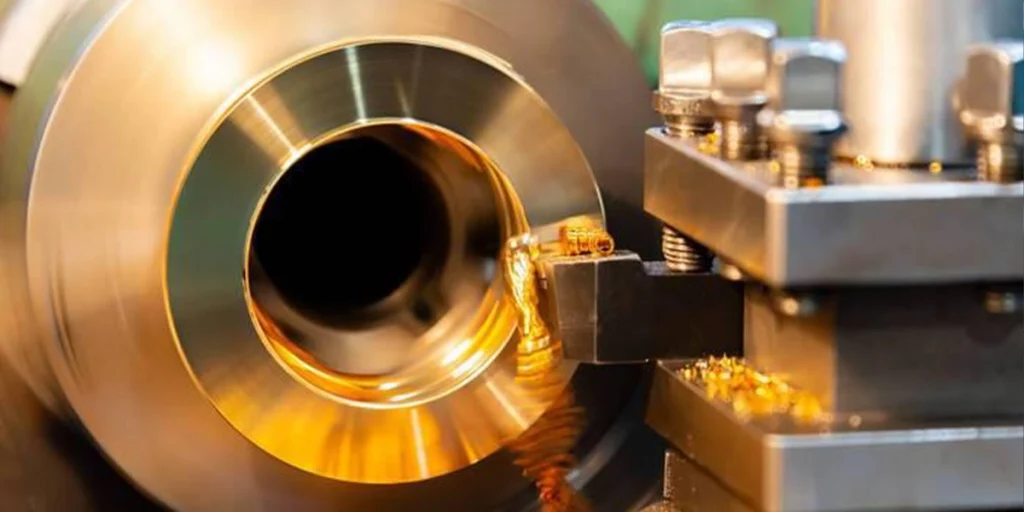
How to reduce the cost of custom brass parts
Many buyers believe that because brass is expensive, brass parts must also be costly. However, in many projects, the real factor affecting cost is not the material itself, but rather the design and manufacturing process.
Because of its excellent machinability, brass is generally more efficient to machine than materials such as stainless steel and titanium alloys. With proper design, brass parts can achieve a high cost-performance ratio.
The main factors affecting the cost of brass processing include:
- Complexity of component structure
- Processing time
- Tolerance requirements
- Surface treatment
- Order quantity
- Material utilization rate
Complex structures are often the most significant cause of increased costs. For example:
- Deep hole structure
- Ultra-thin wall region
- Micro threads
- Multiple clamping structure
- High-precision irregular curved surfaces
These factors will significantly increase processing time and testing costs.
Therefore, many professional suppliers will help customers with DFM optimization at the beginning of the project to reduce unnecessary manufacturing costs.
Common cost reduction methods include:
- Reduce unnecessary high tolerances
- Optimize hole depth ratio
- Simplify complex surfaces
- Standardize thread specifications
- Reduce secondary processing
- Improve material utilization
Besides design optimization, production methods also directly affect costs.
For example, small-batch projects are usually better suited to flexible processing, while medium- to large-batch projects are better suited to automated production and specialized fixture solutions.
At Zhuohua Hardware, we select appropriate processing solutions based on the specific characteristics of each client’s project, rather than simply adopting a uniform process. For long-term OEM projects, we also offer the following services:
- Process optimization
- Tool optimization
- Automated processing
- Production scheduling optimization
Helping customers continuously reduce procurement costs.
For European and American customers, the truly valuable supplier is not the one with the lowest price, but the one who can maintain a long-term relationship with them.
- Stable quality
- Reasonable cost
- On-time delivery
- Engineering support capabilities
This is why many industrial customers continue to seek long-term brass processing partners.