


In CNC copper machining projects, many purchasing personnel assume that “copper” and “brass” are the same material. However, in actual manufacturing, there are significant differences between the two in terms of processing performance, conductivity, cost, and batch stability.
For projects in electronics, thermal management, industrial equipment, and precision components, material selection not only affects component performance but also directly impacts:
- Processing difficulty
- Surface quality
- Delivery cycle
- Project Costs
- Batch consistency
Therefore, understanding the difference between brass and pure copper at the beginning of a project is crucial for optimizing design and controlling supply chain risks.
At Zhuohua Hardware, we have long provided CNC machining services for brass , pure copper , and copper alloys , including precision copper milling , copper turning , and the manufacture of complex copper components. Below, we will analyze the core differences between the two materials from an engineering and manufacturing perspective.
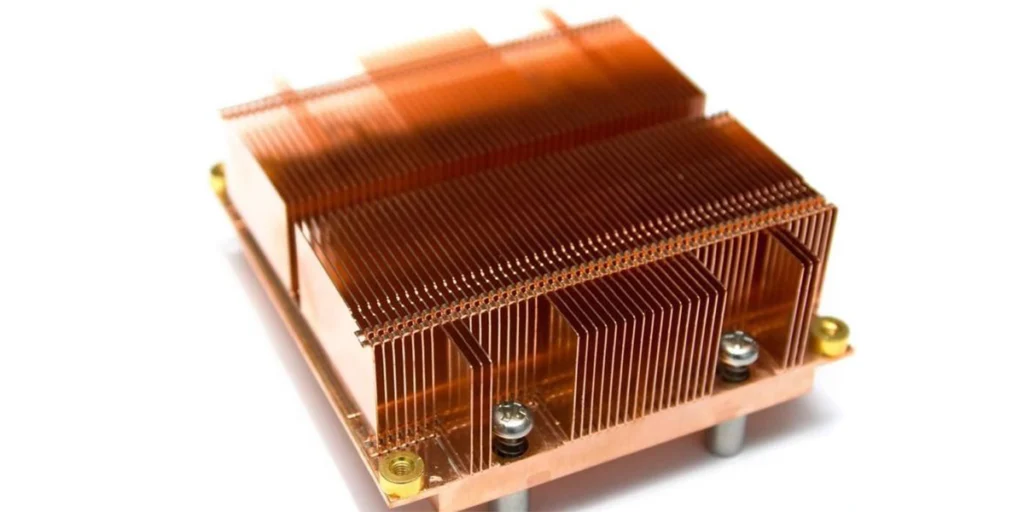
What is the difference between brass and pure copper?
Although both brass and pure copper are copper-based materials, their mechanical properties and processing behavior are completely different.
For engineers, selecting materials cannot be based solely on whether it is copper; further analysis is required.
- Conductivity requirements
- Strength requirements
- Processing complexity
- Surface requirements
- Mass production stability
The priority of materials varies greatly depending on the application scenario.
Compositional differences
Pure copper usually refers to materials with a high copper content, such as:
- C101
- C102
- C110
These materials typically contain more than 99% copper.
The most distinctive feature of pure copper is:
- Extremely high conductivity
- Extremely high thermal conductivity
- The material is relatively soft
Therefore, it is widely used for:
- Busbar
- Electrical connectors
- PCB terminals
- High-frequency conductive components
- Heat exchange system
Brass, on the other hand, is a copper-zinc alloy.
By adding different proportions of zinc, brass can be obtained as follows:
- Higher intensity
- Better cutting performance
- More stable size performance
Common brass materials include:
| Material | Features | Common Applications |
| C360 | Excellent cutting performance | Precision turned parts |
| C260 | Good ductility | Electronic components |
| C464 | Corrosion resistant | Marine equipment |
Brass is generally more suitable than pure copper:
- High-speed machining
- Mass production
- Precision thread structure
- Complex machined parts
This is why many industrial parts, although they look like “copper parts”, are actually made of brass.
In actual OEM projects, we often help clients re-evaluate material options. Some parts were originally designed for pure copper, but after functional analysis, switching to brass not only reduces costs but also significantly improves processing stability.
Difference in electrical conductivity
Conductivity is one of the biggest differences between pure copper and brass. Pure copper conducts much better electricity than brass, and is therefore more commonly used in high-current and high-frequency applications.
- Power system
- AI server bus
- Battery connection assembly
- High-power electronic devices
These applications typically focus on:
- Resistance
- Heat accumulation
- Conductivity
Therefore, high-purity copper materials will be given priority.
However, high conductivity also means that pure copper is more difficult to process. Because the material is relatively soft, it is easier to process:
- Burrs are produced
- Surface tearing occurs
- Slight deformation occurred
While brass has relatively low electrical conductivity, it is perfectly adequate for many industrial applications.
For example:
- Sensor components
- Valve assembly
- Precision connectors
- Automated equipment accessories
These projects focus more on:
- Processing efficiency
- Dimensional stability
- Batch consistency
Therefore, brass is often a more balanced choice.
A common misconception among procurement teams is that the higher the conductivity, the better.
But in reality, what many projects truly need is:
- Stable mass production
- Controllable costs
- Lower scrap rate
- Shorter delivery time
Rather than pursuing the theoretically highest conductivity.
Therefore, in actual copper CNC machining projects, material selection is usually a balance between “performance” and “manufacturing feasibility”.
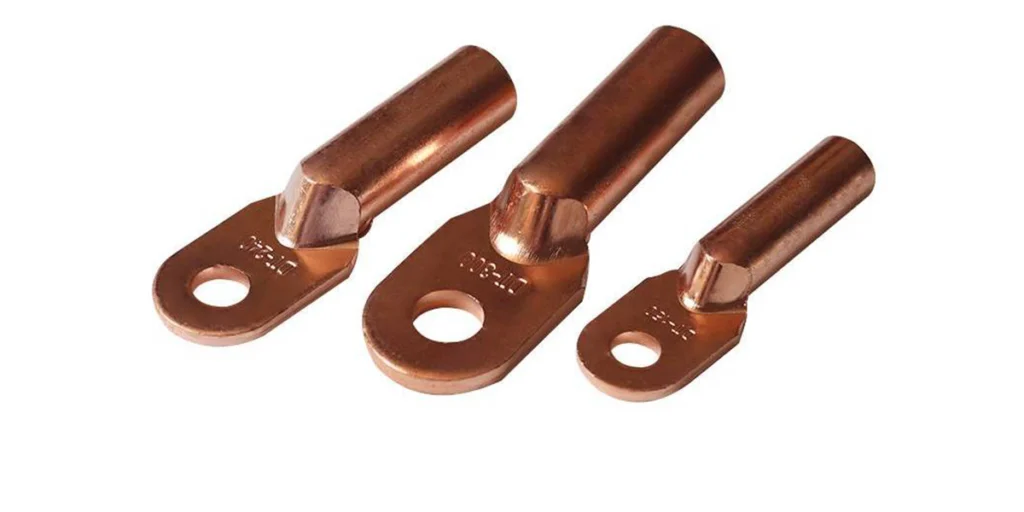
Why is brass easier to work?
Of all copper-based materials, brass is generally considered one of the most suitable for CNC machining.
Compared to pure copper, brass has the following advantages:
- Cutting stability
- Chip removal capability
- Size control
- Tool life
It has advantages in all aspects.
This is why brass is the preferred material for many precision-machined parts, connectors, and automated components.
For mass production projects, this kind of processing stability is crucial.
Cutting performance
One of the biggest advantages of brass is its excellent machinability. C360 brass, in particular, has long been considered one of the easiest metals to machine.
In actual processing, brass typically possesses the following characteristics:
- More stable cutting conditions
- Smoother dander removal
- Lower vibration risk
- Less burrs
This means:
- Higher cutting speeds can be used
- Easier to maintain surface consistency
- More suitable for long-term continuous production
Pure copper, being softer and more viscous, is more prone to this problem during high-speed processing:
- Drag the knife
- Sticky surface
- Uneven machining texture
This difference is even more pronounced for parts with minute structures.
Therefore, in some complex and precision parts projects, we usually advise customers to prioritize brass solutions if the conductivity requirements are not at the extreme level. This not only improves processing stability but also reduces overall manufacturing costs.
Tool life
Brass is more tool-friendly. Due to more stable cutting and smoother chip removal, tool wear rates are typically lower when machining with brass than with pure copper. This is very important for mass production.
Because tool life directly affects:
- Processing costs
- Downtime
- Size consistency
- Batch stability
When machining pure copper, built-up edge is easily formed, and copper material will gradually adhere to the surface of the cutting edge.
As processing time increases, it may lead to:
- Surface roughness deterioration
- Increased dimensional deviation
- Increased burrs
- Tool failure
Therefore, pure copper processing typically requires:
- More frequent blade changes
- More stringent tool monitoring
- More conservative cutting parameters
Brass is clearly more stable in this respect.
For high-volume OEM projects, this stability means:
- Lower unit cost
- More stable delivery time
- Lower scrap rate
This is why many high-capacity copper CNC machining plants prioritize brass for complex batch parts.
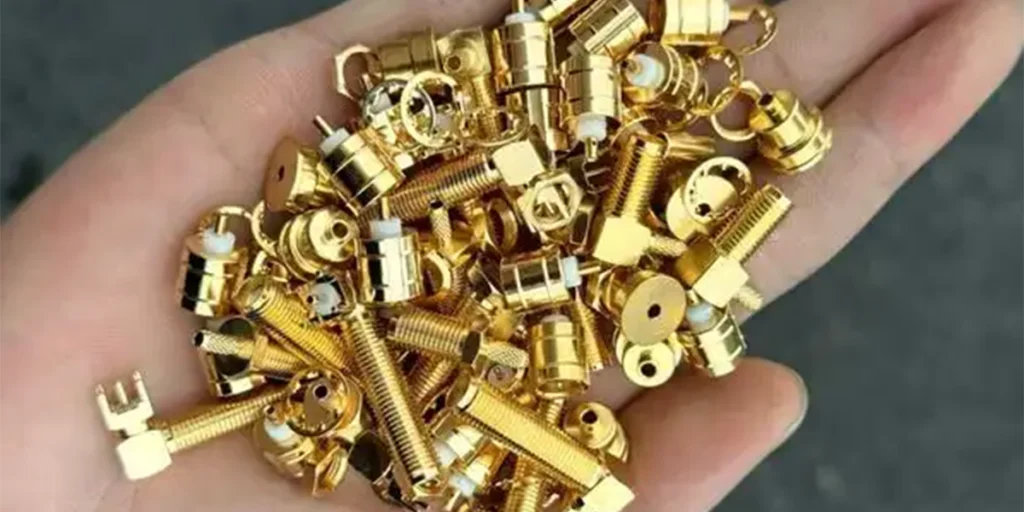
The main challenges of pure copper processing
Although pure copper has excellent electrical and thermal conductivity, it is more difficult to machine than brass from a manufacturing perspective. Especially in high-precision, miniaturized, and complex structural parts, pure copper often places higher demands on equipment rigidity, tool condition, and machining experience.
Many clients focus solely on material properties at the initial stages of a project. However, once mass production begins, they often find that pure copper parts are more prone to surface defects, dimensional fluctuations, and processing instability. Therefore, for high-requirement copper parts projects, it is crucial that the supplier possesses mature copper processing experience.
The sticky nature of pure copper
One of the biggest challenges in machining pure copper is the material’s tendency to adhere to the tool surface. Because copper is relatively soft and has high ductility, it easily forms a built-up edge during cutting. As copper chips gradually accumulate on the cutting edge, the actual cutting angle changes, thus affecting machining stability.
This usually leads to:
- Surface roughness decreases
- Increased dimensional deviation
- Significantly increased burrs
- Microstructural deformation
This problem is particularly pronounced in the machining of deep cavities, narrow slots, and tiny copper parts.
To reduce the risk of tool sticking, copper CNC machining typically requires the following:
- Sharper blade geometry
- More reasonable cutting parameters
- Stable cooling method
- High-frequency tool monitoring
In Zhuohua Hardware’s copper machining projects, we typically adjust the machining strategy based on the material grade and part structure, rather than directly replicating the parameters of aluminum or steel parts. This allows for more consistent control of surface quality and reduces abnormal fluctuations in mass production.
Pure copper is prone to surface scratches
Copper surfaces are more prone to scratches and indentations than many other metals. This is especially true for high-purity copper parts, where the material’s softness means even slight contact can leave noticeable marks. This is a very common problem for electrical contacts, decorative components, and high-end electronic parts.
Surface scratches usually come from:
- Drag the knife
- Secondary friction of copper shavings
- Excessive clamping pressure
- Collisions during manual handling
Therefore, pure copper machining is not only a cutting issue, but also a matter of controlling the entire manufacturing process.
For projects with high aesthetic requirements, many professional copper processing factories will pay extra attention:
- Seamless clamping
- Chip removal direction
- Scratch-resistant packaging
- Independent workstation turnover
Especially in precision conductive components, certain scratches can even affect the adhesion and contact stability of subsequent coatings.
Therefore, high-quality copper CNC machining is not just about “meeting size standards”, but also includes surface integrity control.
Dimensional stability
Pure copper is more susceptible to heat and clamping pressure during processing, therefore its dimensional stability is generally lower than that of brass. This is especially true in the following structures:
- Thin-walled parts
- Long parts
- Microstructure
- High-precision mating area
The material may undergo slight deformation during processing.
Many less experienced suppliers can produce acceptable parts during the prototyping stage, but once mass production begins, dimensional fluctuations gradually increase. This is why the real challenge for many copper parts projects is not “making” them, but “stabilizing mass production.”
To improve dimensional stability, comprehensive control is usually required:
- Machine tool rigidity
- Processing sequence
- Cutting heat
- Clamping method
- Finishing allowance
For high-precision copper parts, we usually adopt a more stable multi-process machining strategy to reduce the material stress changes caused by a single heavy cutting.
For long-term OEM projects, this stability is often more important than simply having a low price, because it directly impacts:
- Assembly yield
- Subsequent test pass rate
- Supply chain stability
- Customer return risk
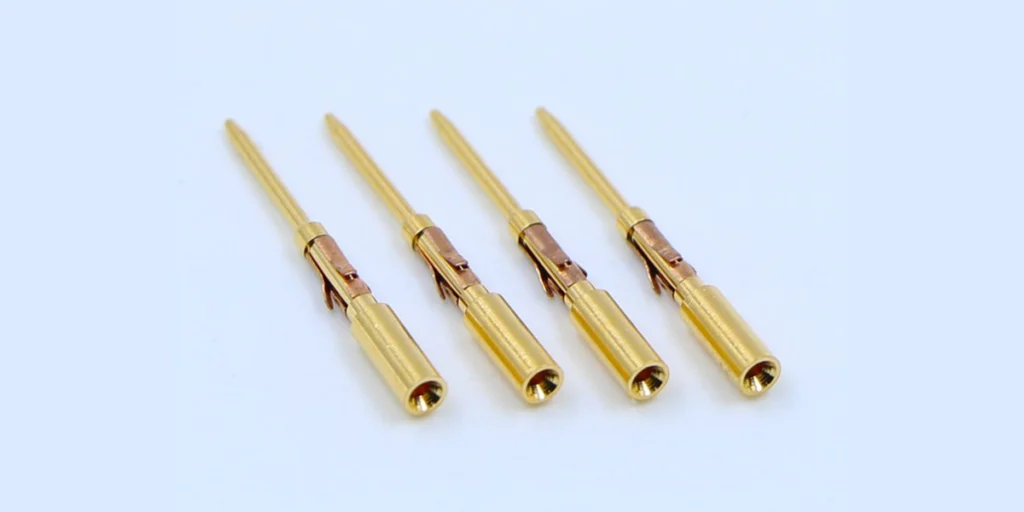
How to select suitable copper materials for a project
In actual CNC copper machining projects, no single material is suitable for all applications. Many engineers prioritize performance parameters during the design phase, but for mass production, it’s also necessary to consider:
- Processing stability
- Procurement costs
- Delivery cycle
- Surface treatment compatibility
- Long-term mass production risks
Therefore, a reasonable choice of materials usually involves finding a balance between “performance” and “manufacturing feasibility”.
If the project focus is:
- High conductivity
- High thermal conductivity
- Current transfer efficiency
Pure copper is usually more suitable, for example:
- Pure copper busbars
- Electrical connectors
- PCB terminals
- AI server cooling components
But if the project focuses more on:
- Processing efficiency
- Dimensional stability
- Mass production
- Precision thread structure
Brass is usually a more cost-effective option.
For example, brass can often be used in automation equipment, industrial connectors, and sensor assemblies, offering a range of advantages:
- Sufficient performance
- Lower processing difficulty
- More stable mass production capabilities
For OEM customers, material selection not only affects the cost of individual parts, but also the stability of the entire supply chain.
At Zhuohua Hardware, we typically assist clients with material evaluation at the early stages of a project, including:
- Functional Requirements Analysis
- Processing risk assessment
- Tolerances and surface requirements
- Feasibility of mass production
- Cost optimization recommendations
This kind of upfront engineering support helps clients reduce later modifications while improving overall project productivity. For long-term collaborative projects, this kind of Design for Manufacturing (DFM) and material optimization is often more valuable than simply lowering the price.