


Copper excels in electrical and thermal conductivity and corrosion resistance, making it widely used in electronics, electrical engineering, thermal management, and industrial equipment. However, from a manufacturing perspective, copper is not one of the easiest materials to process.
Many procurement teams encounter similar problems at the beginning of a project:
- Why are copper parts priced higher than aluminum parts?
- Why does pure copper have a longer processing cycle?
- Why is there such a large difference in surface quality between different suppliers?
- Why are burrs and deformations common in copper parts?
These problems are essentially related to the “processability” of copper.
Although copper is a soft metal overall, its high thermal conductivity, material viscosity, and special effects on cutting tools make CNC machining of copper more complex than many engineers imagine.
At Zhuohua Hardware, we have long provided high-precision copper CNC machining services to customers in the consumer electronics, mechanical automation, medical, and industrial equipment sectors , including copper milling, copper turning, and the manufacturing of complex copper components.
The following analysis will examine the true processing characteristics of copper materials from an engineering and manufacturing perspective.
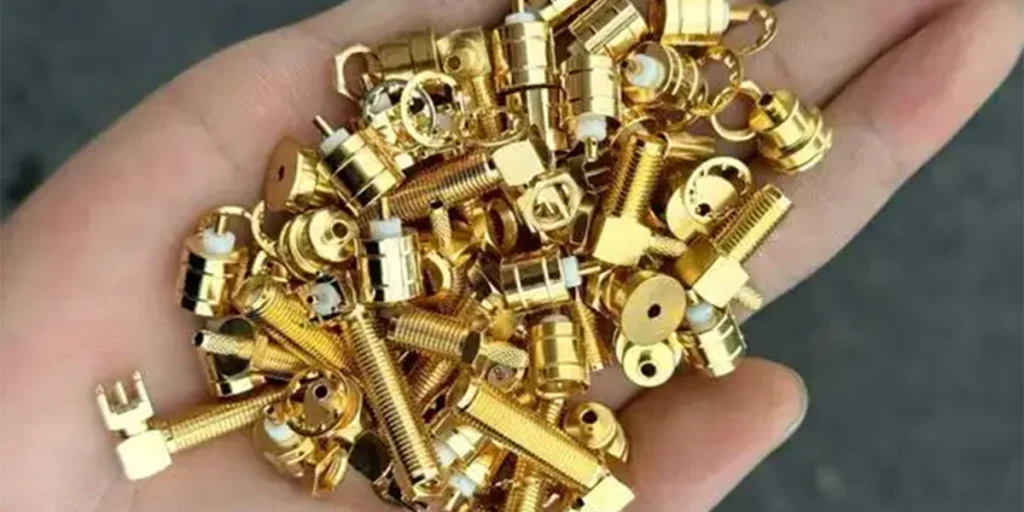
How machinable is copper?
Copper is not a material with “uniform properties”.
Different bronze medal numbers are:
- Conductivity
- Intensity
- Hardness
- Flexibility
- Machining performance
The differences are very obvious.
Therefore, in actual CNC machining, whether copper is easy to machine largely depends on the material itself.
Comparison of different bronze medal numbers
Many customers use the name “copper” directly, but in the manufacturing field, the processing behavior of different copper materials varies greatly.
The following are typical characteristics of common copper materials:
| Material | electrical conductivity | Machinability | Common Applications |
| C101 pure copper | Extremely high | lower | High-end electronics |
| C110 copper | Very high | medium | busbars, connectors |
| brass | medium | very good | Valves, joints |
| beryllium copper | Medium and high | medium | Precision elastic components |
| Tellurium copper | high | excellent | Precision turned parts |
For many OEM projects, the highest conductivity does not necessarily mean the highest manufacturing efficiency.
While pure copper has excellent electrical conductivity, it is also more prone to:
- Sticky knife
- Burrs are produced
- Surface scratches
- Size fluctuations occurred
Brass or tellurium are often more suitable due to their more stable machinability.
- Mass production
- Tiny parts
- High-frequency precision turning
Therefore, professional copper CNC machining suppliers typically help clients evaluate projects at the beginning of the project:
- Is it necessary to use pure copper?
- Is it possible to use alternative copper alloys?
- Are there more stable mass production solutions?
This not only affects processing costs, but also directly impacts delivery time and long-term yield.
Introduction to Free Cutting Copper
In the field of copper processing, “free-cutting copper” is a very important concept. It usually refers to copper alloys whose cutting stability is improved by adding special elements.
The most typical example is:
- Tellurium Copper
- Some brass materials
Compared to pure copper, this type of material has significant advantages:
- Fewer fibroids
- Lower tool wear
- More stable cutting
- Less burrs
- Higher processing efficiency
For high-precision CNC turning projects, free-cutting copper can significantly improve:
- Size consistency
- Surface roughness
- Batch stability
Therefore, it is very common in the following industries:
- Communication connector
- Precision Electronics
- Automated equipment
- High-frequency PIN pins
- Micro-conductive components
However, free-cutting copper also has certain limitations: although some materials have excellent machinability, their electrical conductivity is slightly lower than that of pure copper.
Therefore, in actual projects, it is necessary to:
- Electrical conductivity
- Processing efficiency
- Cost control
- Batch stability
To strike a balance between them.
At Zhuohua Hardware, we typically assist our clients in selecting copper materials that are more suitable for long-term production, based on their application scenarios, rather than simply choosing the “most expensive” or “most conductive” option.
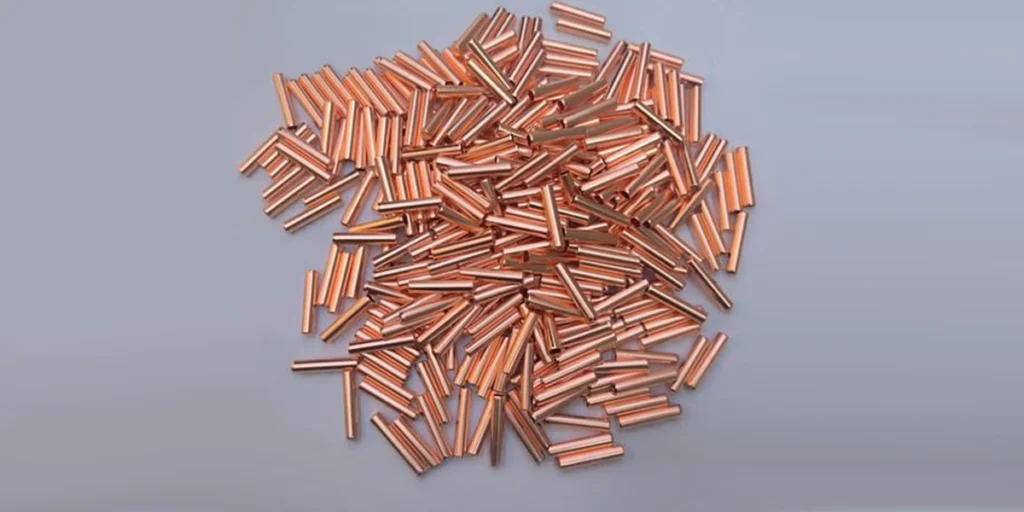
What are some techniques for processing copper?
Many manufacturers believe that copper is relatively soft and therefore should be easy to process. In reality, the real problem lies precisely in its “too softness”.
Copper is prone to the following problems during the cutting process:
- Material tension
- Tool adhesion
- Surface scratches
- Burrs
- Heat distortion
Therefore, copper processing relies more on process experience than on the equipment itself.
Tool Selection
Copper machining places very high demands on tool geometry. Because copper is a highly ductile material, insufficient tool sharpness can easily lead to:
- Material extrusion
- Surface tearing
- Plastygium
- Obvious knife marks
Therefore, CNC machining of copper is usually the preferred choice:
- Ultra-sharp blade edge
- Large rake angle cutting tools
- High-polish tool groove
- Specialized non-ferrous metal cutting tools
For tiny copper parts, the tool overhang length also needs to be strictly controlled.
Excessively long cutting tools can lead to:
- Vibrating knife
- Concentricity deviation
- Unstable micropore size
In high-precision projects, we typically base our decisions on:
- Copper material types
- Component structure
- Surface requirements
- Batch size
Optimize the tooling scheme separately, instead of directly applying the machining parameters for aluminum parts.
Coolant control
Cooling in copper machining is not just about lowering the temperature. More importantly, it’s about stabilizing the cutting process and reducing material adhesion.
Improper cooling methods can easily lead to:
- Surface is dark
- Tool chip buildup
- Uneven machining texture
- Finishing instability
For high thermal conductivity copper materials, the coolant also needs to take into account:
- Chip removal efficiency
- Antioxidant
- Surface cleanliness
Especially in the electronics industry, many customers have strict requirements regarding surface contamination of copper parts.
Therefore, professional copper processing typically employs the following methods:
- Directional high-pressure cooling
- Stable flow control
- Clean-type coolant
- Independent filtration system
This is to ensure surface quality and long-term dimensional stability.
Cutting speed optimization
Copper machining is not a case of “the faster the better.” Because copper is sensitive to cutting, improper cutting speed can lead to the following problems:
- Surface vibration marks
- Size drift
- Increased burrs
- Decreased tool life
The optimal parameters for different copper materials also vary significantly.
For example:
- Brass typically allows for higher speeds.
- Pure copper requires more stable cutting.
- Small parts require a low-vibration environment.
Therefore, in mass production, established suppliers typically build their own database of copper processing parameters.
At Zhuohua Hardware, we will base our decisions on:
- Copper material grades
- Structural complexity
- Surface requirements
- Tolerance grade
Continuous optimization:
- Rotational speed
- Feed
- Cut depth
- Finishing allowance
This is crucial for the large-scale, stable production of high-precision copper components.
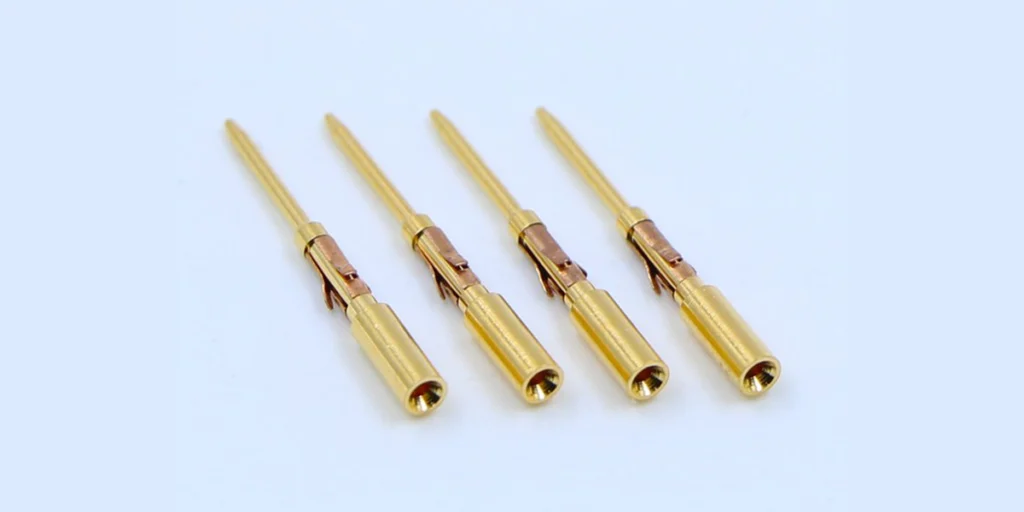
How to avoid burrs and deformation on copper parts
Although copper is relatively soft, this does not mean that it is easy to achieve consistent machining quality. On the contrary, due to its high ductility, copper is more prone to problems such as material stretching, edge curling, and localized deformation during machining, especially in thin-walled structures, small holes, and precision conductive areas, where these problems are more pronounced.
Controlling burr formation
Burrs are one of the most common problems in copper CNC machining. In electronic connectors, PCB terminals, and precision contacts, even very small burrs can affect assembly accuracy and even conductivity.
Burrs usually come from the following reasons:
- The knife is not sharp enough.
- Unstable cutting parameters
- Insufficient support from its export position
- Inappropriate finishing allowance
Many factories still use the same processing strategies as those used for aluminum or steel parts when machining copper parts, which often leads to more severe edge tearing.
To reduce burrs, professional copper machining typically focuses on optimization:
- Finishing toolpath
- Direction of blade strike
- Cutting layer thickness
- Cutting edge condition
For high-precision copper parts, we usually add small chamfers to critical edges or control the cutting exit position to reduce material stretching.
In batch projects, tool life management is also crucial. Because copper is prone to built-up edge formation, the number of burrs typically increases significantly when slight adhesion begins to appear on the cutting edge.
Reduce the risk of part deformation
Another typical problem with copper is that it is prone to slight deformation after processing, especially:
- Thin-walled structure
- Large-area grooving
- Long parts
- Miniature precision components
Because copper is relatively soft, even a slight increase in clamping force can leave indentations or cause localized deformation. Therefore, in high-precision copper machining, fixture design is itself an integral part of the process.
Professional factories typically use:
- Customized soft clamps
- Regional clamping
- Reduce the need for secondary clamping
- Symmetrical machining path
To reduce stress concentration.
For complex copper parts, multi-axis machining can effectively reduce repeated positioning errors and lower the risk of deformation caused by clamping.
At Zhuohua Hardware, we give priority to projects involving precision copper machining:
- Cutting stability
- Thermal deformation control
- Clamping pressure
- Finishing allowance
For long-term mass production, stability is often more important than the speed of a single processing run.
Surface protection and post-treatment
Copper surfaces are very easily scratched and oxidized, so many high-end projects not only focus on dimensional accuracy but also pay close attention to surface integrity.
Especially in the following areas:
- Electrical connectors
- AI Server Cooling System
- Medical electronics
- High-frequency conductive components
Surface defects can directly affect product performance.
Therefore, after the copper parts are machined, the following increases are usually added:
- Ultrasonic cleaning
- Anti-oxidation treatment
- Deburring
- Precision polishing
- Surface stabilization before coating
For export-oriented OEM projects, a stable post-processing procedure can significantly improve the consistency of subsequent assembly.
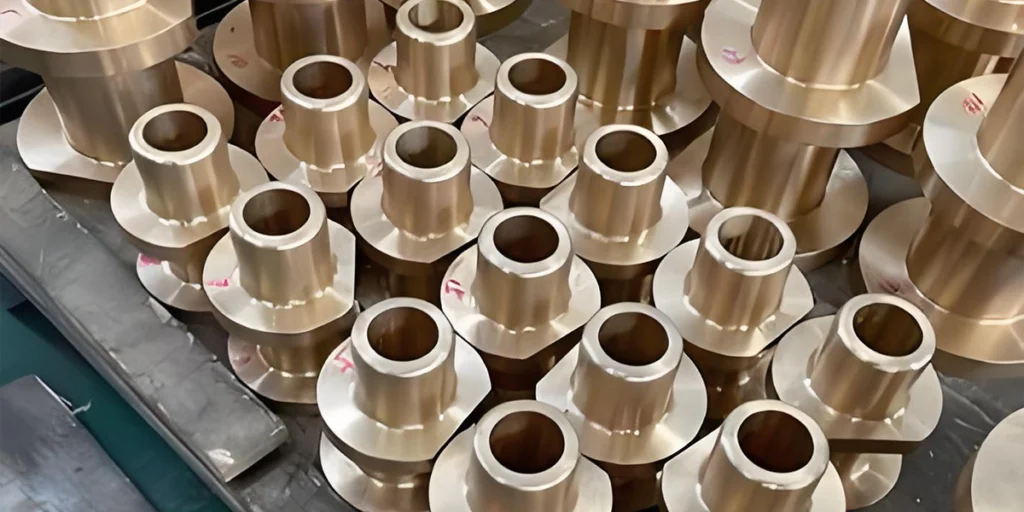
Recommendations for high-precision copper parts machining
With the development of electronic devices, miniaturized components, and high-power heat dissipation systems, more and more copper parts are entering the field of high-precision manufacturing.
These types of projects typically require not only accurate dimensions, but also attention to:
- Electrical conductivity
- Surface roughness
- Concentricity
- Flatness
- Microstructure stability
Therefore, high-precision copper machining is more like “process control” than just ordinary cutting.
Choose suitable processing equipment
High-precision copper parts place extremely high demands on equipment rigidity. If the spindle stability is insufficient or there is even slight vibration in the equipment, the following issues can easily arise:
- Surface ripples
- Tiny size drift
- Hole position deviation
- Increased edge burrs
Therefore, high-precision copper machining is generally more suitable for:
- High-speed CNC equipment
- Multi-axis machining center
- Precision milling and turning equipment
For complex copper components, 5-axis machining can also reduce repeated clamping, thereby improving positional accuracy and batch consistency.
At Zhuohua Hardware, we select appropriate machining solutions based on the part structure, including 3-axis, 3+2-axis, and 5-axis milling , as well as precision CNC turning , to ensure the stability of complex copper parts in mass production.
Consider DFM optimization in advance
Many problems with copper parts are actually determined during the design phase. For example:
- Excessively deep narrow groove
- Ultra-thin walls
- Acute-angle structure
- Minimal aperture
All of these factors significantly increase the risk of manufacturing defects. Therefore, DFM (Manufacturability Analysis) is crucial in high-precision projects.
An experienced copper processing supplier will typically help clients optimize before production begins:
- Wall thickness design
- Tool accessibility
- Clamping reference
- Finishing area
- Tolerance allocation
This not only improves yield but also significantly reduces processing costs.
Establish a stable quality control process
The biggest challenge for high-precision copper parts is not “making a qualified part”, but rather: continuously and stably producing a large number of qualified parts.
Therefore, established factories typically establish a complete quality control system, including:
- First article inspection
- In-process spot checks
- Online size monitoring
- Tool life management
- Full inspection before shipment
For electronic and conductive copper components, many customers also pay additional attention to:
- Contact surface integrity
- Surface oxidation state
- Coating compatibility
Therefore, stable quality management capabilities are often more important than simply offering a low price.
For long-term OEM projects, this is also an important reason why customers choose professional copper CNC machining suppliers .