


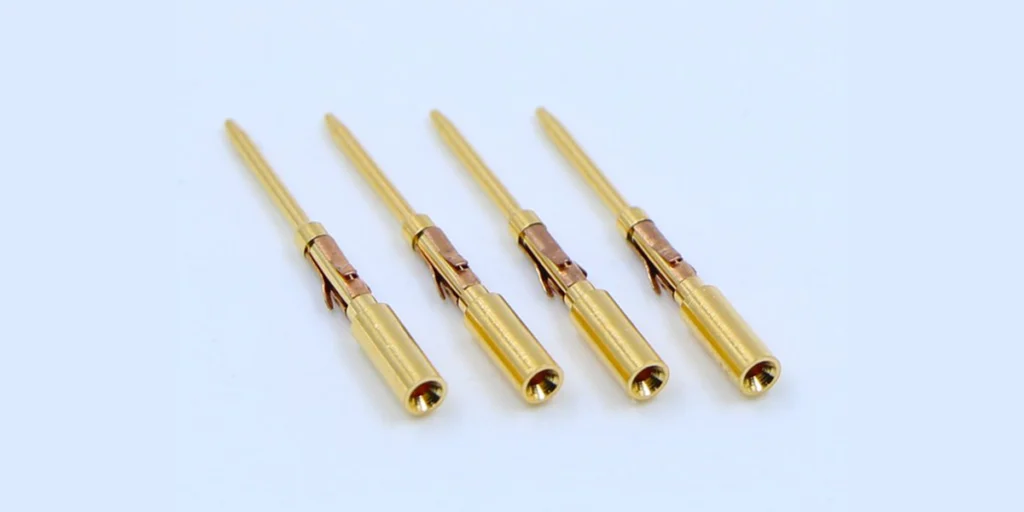
Copper has excellent electrical and thermal conductivity, making it widely used in electronics, thermal management, and industrial systems. However, for most copper CNC parts, the completion of machining does not mean the end of the project.
Without proper surface treatment, copper parts may develop defects in a short period of time.
- Oxidation discoloration
- Decreased electrical conductivity
- Surface contamination
- Unstable contact
- Poor appearance consistency
Especially in electronic connectors, busbars, heat dissipation components, and precision industrial equipment, surface condition often directly affects product performance and lifespan. Therefore, surface treatment is not only about “appearance optimization,” but also a key process in the manufacturing of copper parts.
At Zhuohua Hardware, we offer a variety of surface treatment options for copper CNC machining projects, including polishing, nickel plating, gold plating, and industrial-grade anti-oxidation treatments, to meet different requirements for conductivity, corrosion resistance, and appearance.
Why do copper parts need surface treatment?
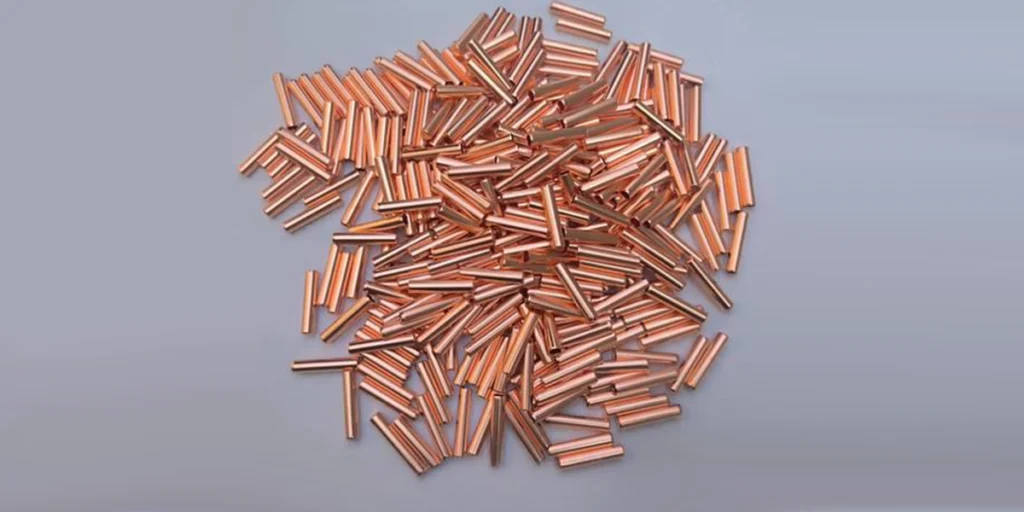
Copper is an excellent engineering material, but it also has a significant drawback: its surface is highly susceptible to chemical changes. Even if a part is freshly manufactured, its surface condition will gradually alter once exposed to air.
For high-precision electronic and industrial parts, this change could have a direct impact:
- Conductivity stability
- Contact reliability
- Thermal conductivity
- Product lifespan
- Consistency in appearance
Therefore, most copper CNC parts eventually require surface treatment suitable for their application.
Oxidation problem
When copper comes into contact with air, it gradually undergoes an oxidation reaction. The most common phenomena include:
- Surface color darkens
- Oxide layer appears
- Localized blackening
- Over time, verdigris forms.
For ordinary structural components, this may simply be a cosmetic issue.
However, for electronic and conductive components, oxidation directly affects contact performance.
- Increased contact resistance in connectors
- Decreased conductivity stability of PCB terminals
- High-frequency electronic signal transmission is affected.
- Deterioration in weldability
In high humidity environments, this oxidation rate will be significantly accelerated.
Therefore, many copper parts will have increased weight after processing:
- Anti-oxidation treatment
- Coating protection
- Surface sealing treatment
Especially in long-term use environments, the importance of surface protection is often no less than that of the machining accuracy itself.
For export-oriented projects, clients usually pay special attention to the following:
- Salt spray performance
- Long-term corrosion resistance
- Warehouse stability
This is why professional copper CNC machining factories usually have complete post-processing capabilities, not just machining capabilities.
Electrical conductivity and aesthetic requirements
Different copper parts have completely different surface requirements. Some projects focus more on conductivity, while others focus more on:
- Consistency in appearance
- Surface smoothness
- High-end product visual effects
- Long-term stability
Conductive parts
- Pure copper busbar
- Pure copper contact pins
- Pure copper connectors
- PCB terminals
Usually, we pay more attention to:
- Low contact resistance
- Stable electrical conductivity
- Antioxidant capacity
These types of parts often use:
- Gold plating
- Silver plated
- Nickel plating undercoat
To improve long-term electrical conductivity stability.
Appearance parts
Copper components in some consumer electronics or high-end industrial equipment will also emphasize:
- Metallic texture
- Surface uniformity
- Visual consistency
For example:
- High-end heat dissipation components
- Visualized copper casing
- Industrial decorative parts
These types of parts typically require:
- Fine polishing
- Wire drawing
- Mirror finish
It even requires that the direction of the processing lines be consistent.
Functional parts
There is another type of copper parts that we are more concerned about:
- Abrasion resistance
- Corrosion resistant
- Subsequent welding performance
For example, in industrial equipment:
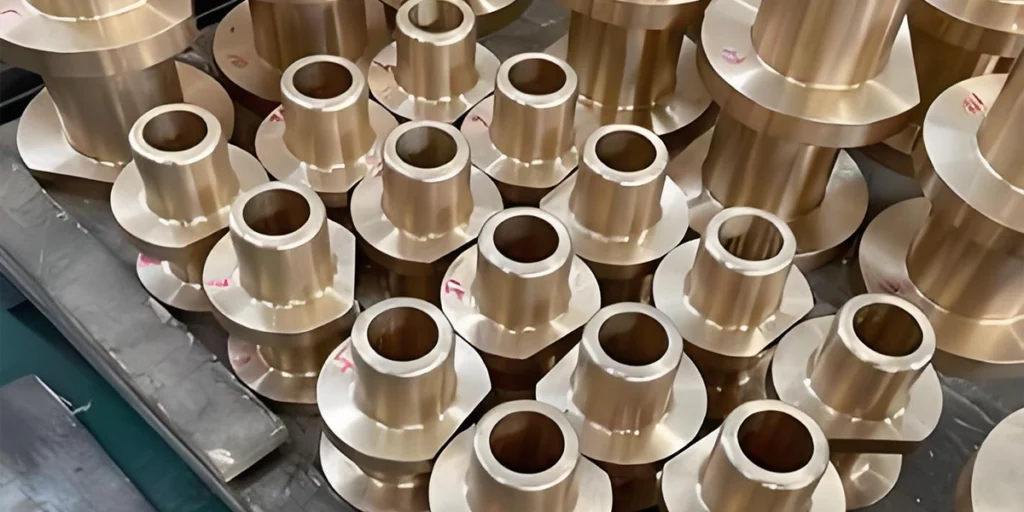
- Copper bushings
- Conductive structural components
- Special contact assemblies
These projects typically require customized surface solutions based on the usage environment.
In real-world projects, we typically base our decisions on:
- Work environment
- Current requirements
- Contact frequency
- Service life
- Appearance Standards
We help customers choose more suitable surface treatment methods, rather than simply pursuing the “most expensive process”.
Common copper surface treatment processes
Different copper parts require different surface treatments. A truly suitable surface treatment not only affects the appearance but also:
- Electrical conductivity
- Corrosion resistance
- Thermal conductivity
- Assembly stability
- Product lifespan
Therefore, in copper CNC machining projects, surface treatment usually needs to be considered in advance during the design phase.
Polishing
Polishing is one of the most common surface treatments for copper. Its main functions include:
- Reduce surface roughness
- Improve gloss
- Improve visual effects
- Reduce machining lines
Polishing can also improve the quality of surface contact for heat sinks, decorative parts, and some conductive components.
Copper polishing is generally divided into:
- Mechanical polishing
- Fine mirror polishing
- Wire drawing process
Different processes are suitable for different products.
For example:
Mirror polishing
Applicable to:
- High-end electronic products
- Exterior components
- Display-type copper components
Wire drawing process
Applicable to:
- Industrial equipment
- Visualized metal structure
- Anti-fingerprint requirements
However, without further protection, the polished copper surface will still gradually oxidize.
Therefore, many projects continue after polishing:
- Anti-oxidation treatment
- Electroplating
- Sealed treatment
Nickel plating
Nickel plating is one of the most common industrial-grade surface treatments for copper parts. Its advantages include:
- Improves corrosion resistance
- Slows down oxidation
- Enhance surface hardness
- Improves wear resistance
In electronic and industrial equipment, nickel plating is also frequently used as an undercoat.
For example:
- Base layer before gold plating
- Multi-layer electroplating structure
- High-frequency connector bottom layer
Nickel-plated copper parts typically exhibit more stable long-term performance.
For copper components in industrial environments, such as:
- Conductive structural components
- Electrical connections
- Automated equipment components
Nickel plating can significantly extend service life.
However, it should be noted that controlling the coating thickness is crucial.
Uneven coating may have the following effects:
- Fitting dimensions
- Electrical conductivity
- Assembly accuracy
Therefore, high-precision copper parts usually need to have electroplating tolerances reserved in advance during the processing stage.
This is why established copper CNC machining suppliers typically participate in the same process:
- Process planning
- Electroplating tolerance analysis
- Post-processing control
It’s not just about “processing according to the drawings”.
Surface treatment options for different applications
There is no single “best-in-class” surface treatment for copper parts. The truly appropriate choice typically depends on the part’s operating environment, conductivity requirements, corrosion resistance needs, and product lifespan goals. For OEM projects, many later failures are not due to machining precision, but rather to a mismatch between the surface treatment and the actual application scenario.
Electronics industry
The electronics industry is one of the most common application areas for copper CNC parts, and also one of the areas with the highest requirements for surface finish. Components such as connectors, contact pins, PCB terminals, busbars, and high-frequency communication components not only require high conductivity but also long-term contact stability.
The most common problems in this type of project include:
- Oxidation of contact surfaces
- Increased contact resistance
- High-frequency signals are unstable
- Decreased weldability
Therefore, most electronic copper components are plated with nickel or gold. Nickel plating is usually used as a basic protective layer to improve oxidation resistance and wear resistance, while gold plating is more often used in high-reliability electronic connection areas because the gold layer can maintain a stable low contact resistance over a long period of time.
For precision electronic components, surface uniformity is also crucial. Uneven local plating thickness can directly affect assembly accuracy and conductivity. Therefore, the electronics industry typically prefers suppliers with integrated precision machining and post-processing capabilities, rather than simply low-priced processing plants.
In actual projects, we will assess suitable plating solutions in advance based on the operating current, contact frequency and usage environment of the customer’s products, and reserve post-processing dimensional tolerances during the processing stage to avoid assembly problems later.
Cooling system
With the rapid development of AI servers, high-performance computing devices, and power electronic systems, the demand for copper heat dissipation components has increased significantly. Compared to aluminum, copper has a higher thermal conductivity, and is therefore widely used in cooling plates, heat exchangers, and high-power heat dissipation modules.
The focus for these types of parts is usually not on their “appearance,” but rather on:
- Thermal conductivity
- Surface contact quality
- Long-term antioxidant capacity
- Cooling medium compatibility
For heat dissipation systems, many customers choose polishing or chemical anti-oxidation treatment to maintain the thermal conductivity of the copper surface. Some liquid cooling systems also employ nickel plating, as it not only reduces the risk of oxidation but also improves corrosion resistance in the coolant environment.
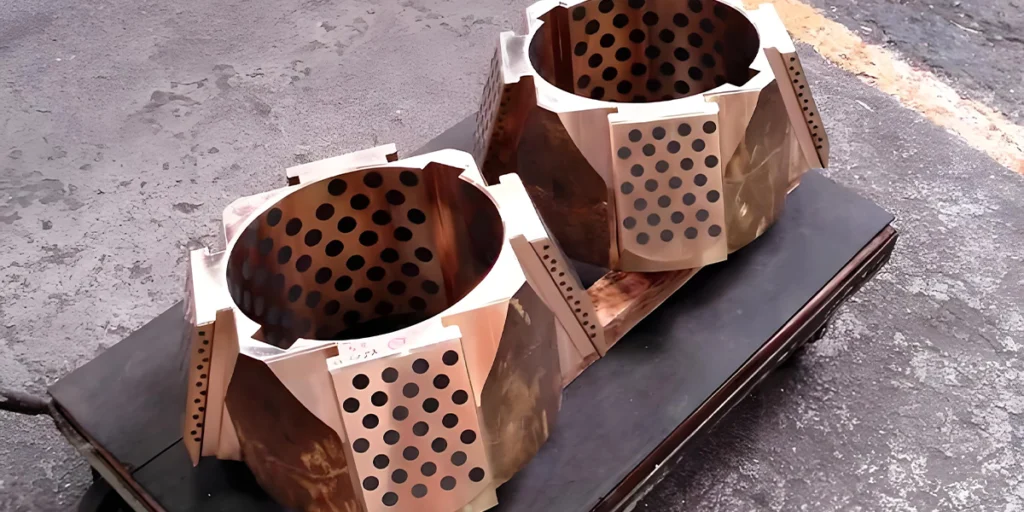
However, heat dissipation copper components usually have complex structures, for example:
- Deep flow channel
- Microchannel
- Thin-walled heat dissipation fins
- Large contact area
This means that post-processing must not compromise the original machining accuracy, otherwise it may affect thermal contact efficiency or fluid performance. Therefore, heat dissipation copper parts not only test CNC machining capabilities but also post-processing control capabilities.
For these types of projects, we usually prioritize control:
- Surface flatness
- Contact area roughness
- Coating uniformity
- Microstructural integrity
To ensure stable thermal management performance in the future.
Industrial equipment
industrial equipment , copper parts typically require a focus on durability and long-term stable operation. For example, conductive structural components, copper bushings, mechanical contact assemblies, and electrical modules in automated equipment often operate under conditions requiring sustained exposure to high levels of stress.
- High temperature
- Damp
- Dust
- High-frequency vibration
In complex environments.
Therefore, these types of projects usually place more emphasis on:
- Corrosion resistance
- Abrasion resistance
- Long-term dimensional stability
Compared to the high-end electronics industry, industrial equipment may not have such high requirements for mirror appearance, but it will pay more attention to the consistency and reliability of surface treatment.
Nickel plating is one of the most common solutions for industrial copper parts because it can improve overall durability while controlling costs. For some high-wear areas, special functional coatings are also added according to the actual working conditions.
Many industrial customers focus on unit price in the early stages, but once they enter long-term mass production, the factors that often affect the total cost are:
- Scrap rate
- Service life
- Assembly stability
- After-sales issues
Therefore, a stable copper CNC machining and surface treatment solution is usually more important than simply lowering the initial quote.
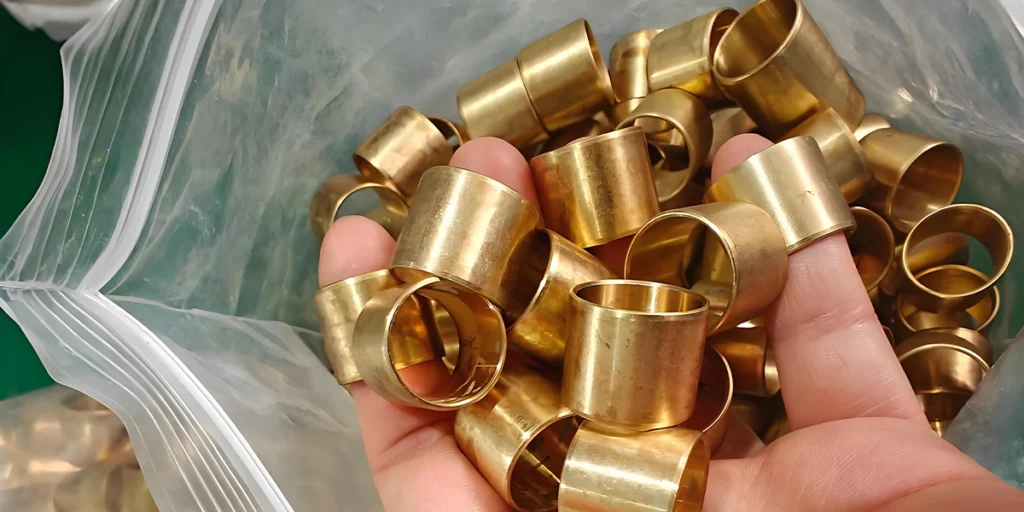
How to ensure the surface uniformity of copper parts
For copper CNC parts, the real challenge is often not “making a sample,” but rather how to maintain a stable and consistent surface quality during long-term mass production.
Many copper parts projects perform well in the prototyping stage, but tend to encounter problems after entering mass production:
- Color deviation
- Uneven coating thickness
- Localized oxidation
- Inconsistent surface texture
- Gloss variation
These issues are particularly sensitive in electronics, medical, and high-end industrial equipment, as customers often focus on both functional performance and aesthetic consistency.
Consistent surface treatment quality essentially depends on the coordinated control of the entire manufacturing process, not just the final post-processing step.
Professional copper processing plants typically control consistency in the following ways:
Front-end processing stability
If obvious tool marks, burrs, or dimensional fluctuations already exist during the CNC machining stage, subsequent polishing and electroplating are unlikely to completely repair them. Therefore, the foundation of high-quality surface treatment is actually stable machining quality.
Material consistency
The compositional differences between different batches of copper material may directly affect:
- Polishing effect
- Coating adhesion
- Oxidation rate
- Surface color
Therefore, long-term OEM projects typically control fixed material sources to reduce batch fluctuations.
Post-process control.
For example, during electroplating, the state of the plating solution, current density, temperature, and time all affect the final surface quality. For high-precision copper parts, additional control is required.
- Coating thickness tolerance
- Contact area protection
- Local masking treatment
At Zhuohua Hardware, we plan ahead based on the different uses of copper parts:
- Machining allowance
- Post-processing tolerances
- Surface roughness target
- Assembly and mating area
This reduces the risk of rework and improves batch consistency.
For long-term cooperative projects, we are more concerned with how to ensure that our customers can obtain stable and consistent quality of copper parts in the next batch, the next year, and even in long-term mass production.
This is also one of the biggest differences between professional copper CNC machining suppliers and ordinary machining workshops.