


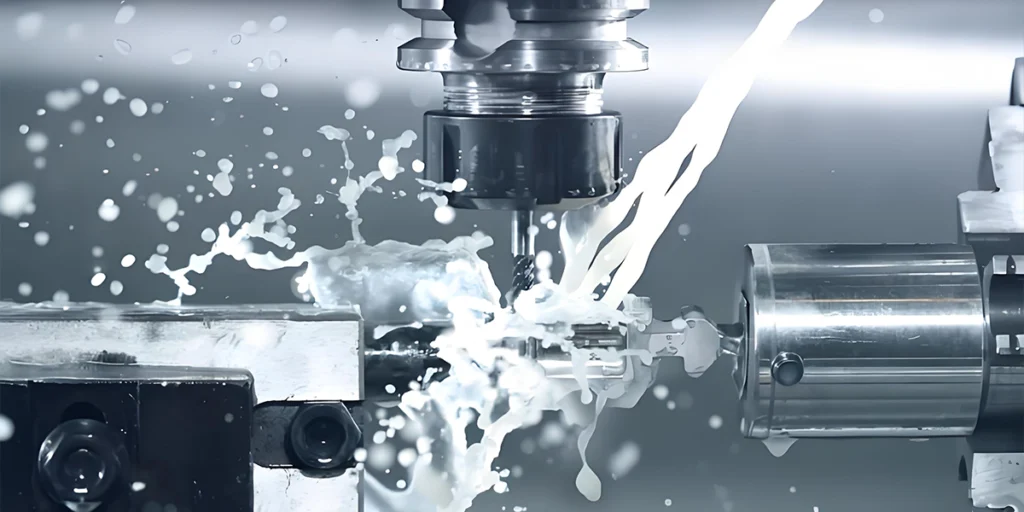
In the manufacture of high-strength industrial parts, CNC machining of alloy steel has become an important manufacturing method in the aerospace, oil and gas, heavy equipment, and automation industries. Compared with ordinary carbon steel, alloy steel has higher strength, wear resistance, and corrosion resistance, but it is also more difficult to machine.
For engineers and procurement teams, the real question isn’t just “can it be manufactured?”, but rather:
- Whether dimensional accuracy can be stably controlled
- Can processing deformation be reduced?
- Can batch consistency be guaranteed?
- Can delivery time and processing costs be controlled?
This is why more and more companies are choosing professional alloy steel CNC machining service providers instead of ordinary machining workshops.
In this article, we will provide a comprehensive introduction to CNC machining of alloy steel from the perspectives of material properties, CNC machining processes, and industry applications.
What is alloy steel?
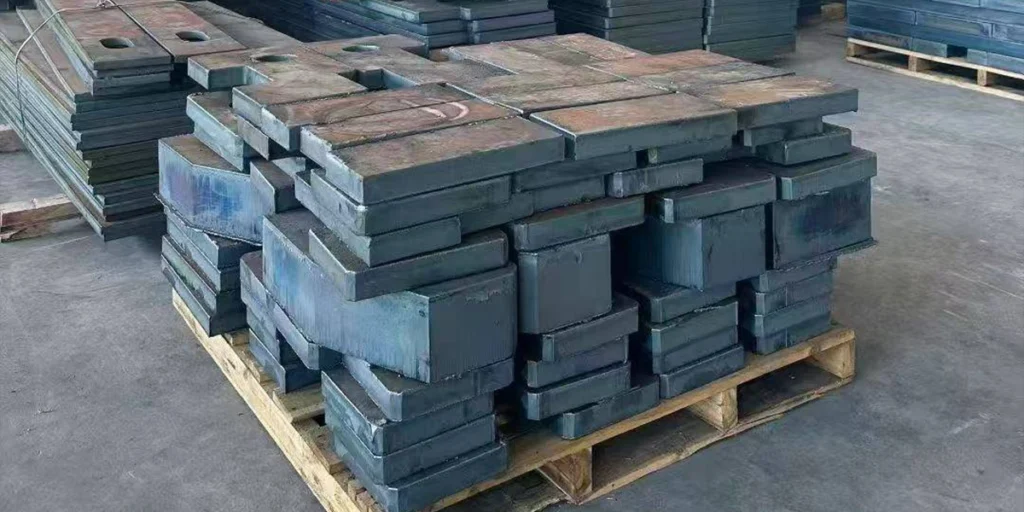
Alloy steel is a type of engineering material that improves mechanical properties, heat resistance, or corrosion resistance by adding different alloying elements to a carbon steel base.
In industrial manufacturing, alloy steel is often used for critical parts that need to withstand high loads, high pressures, or complex operating conditions, such as drive shafts, flanges, structural supports, hydraulic components, and high-precision mechanical parts.
Compared to ordinary steel, alloy steel is more suitable for manufacturing high-performance parts, but it also places higher demands on processing equipment, cutting tools, and processing experience.
Difference between alloy steel and ordinary carbon steel
Ordinary carbon steel relies primarily on its carbon content to increase strength, thus its performance is relatively limited. Alloy steel, on the other hand, incorporates elements such as chromium (Cr), molybdenum (Mo), nickel (Ni), and vanadium (V) to improve its material properties.
Alloy steel typically has the following advantages:
- Higher tensile strength
- Better wear resistance
- Enhanced fatigue resistance
- Higher heat resistance
- Better corrosion resistance
For example, in oil and gas equipment, ordinary carbon steel may not be able to withstand high temperature and high pressure environments for a long time, while alloy steels such as 4140 and 4340 can maintain more stable mechanical properties.
However, alloy steel also presents greater processing challenges, including:
- Tools wear out faster
- Higher cutting heat
- More prone to generating processing stress
- More prone to deformation after heat treatment
Therefore, alloy steel parts usually require specialized CNC machining capabilities to ensure final quality.
Common alloying elements (Cr, Mo, Ni, etc.)
Different alloying elements directly affect the properties of materials, which is why different industrial sectors choose different types of alloy steel.
Common alloying elements include:
Chromium (Cr)
Chromium can improve hardness, corrosion resistance and wear resistance, so it is widely used in high-strength mechanical parts and wear-resistant components.
Molybdenum (Mo)
Molybdenum can improve high-temperature strength and creep resistance, and is often used in high-temperature equipment and pressure system parts.
Nickel (Ni)
Nickel can improve toughness and impact resistance, and is widely used in aerospace and heavy-duty equipment.
Vanadium (V)
Vanadium is commonly used to improve the strength and grain stability of materials, making it suitable for parts subjected to high fatigue conditions.
Manganese (Mn)
Manganese can improve hardenability and wear resistance, while also improving the processing performance of materials.
In actual projects, engineers typically select appropriate materials based on the part’s working environment, load requirements, and budget.
For example:
- 4140 alloy steel is suitable for high-strength shaft parts.
- 4340 alloy steel is suitable for high-impact structural components.
- Tool steel is suitable for wear-resistant tooling parts.
Why is alloy steel widely used in industrial sectors?
Modern industrial equipment demands increasingly higher performance from its components, and ordinary materials can no longer meet the requirements for long-term stable operation. This is a key reason for the continued growth in demand for CNC machining of alloy steel.
Alloy steel is widely used in:
- Aerospace structural components
- Oil and gas equipment
- Heavy machinery systems
- Hydraulic equipment
- Automated equipment
- Defense industry parts
Compared to ordinary steel, alloy steel can help equipment achieve the following:
- Longer service life
- Higher load capacity
- More stable operating performance
- Lower maintenance frequency
Especially in high-precision equipment, material stability directly affects the reliability of the final product.
For professional alloy steel processing service providers, the focus is not only on completing the manufacturing of parts, but more importantly on ensuring that the material properties are not damaged during the processing.
What is CNC machining of alloy steel?
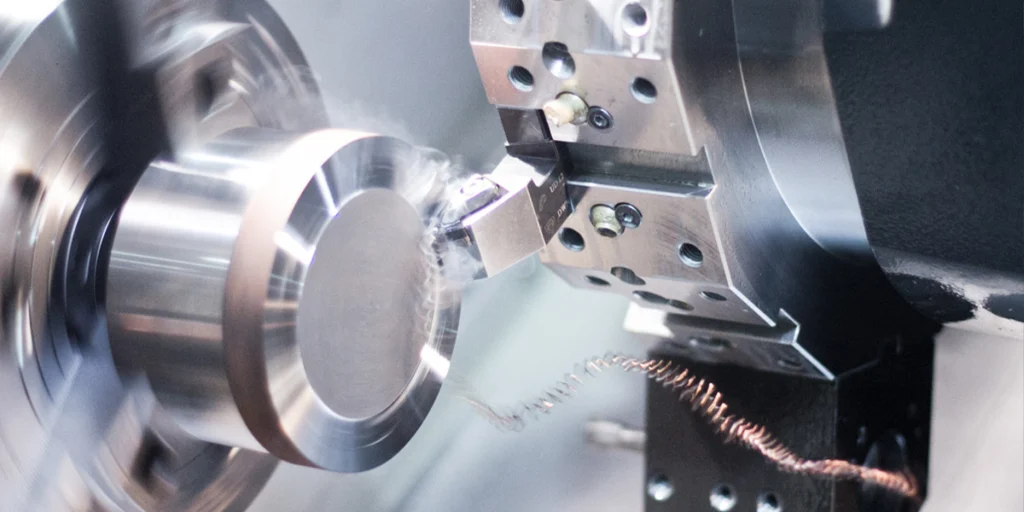
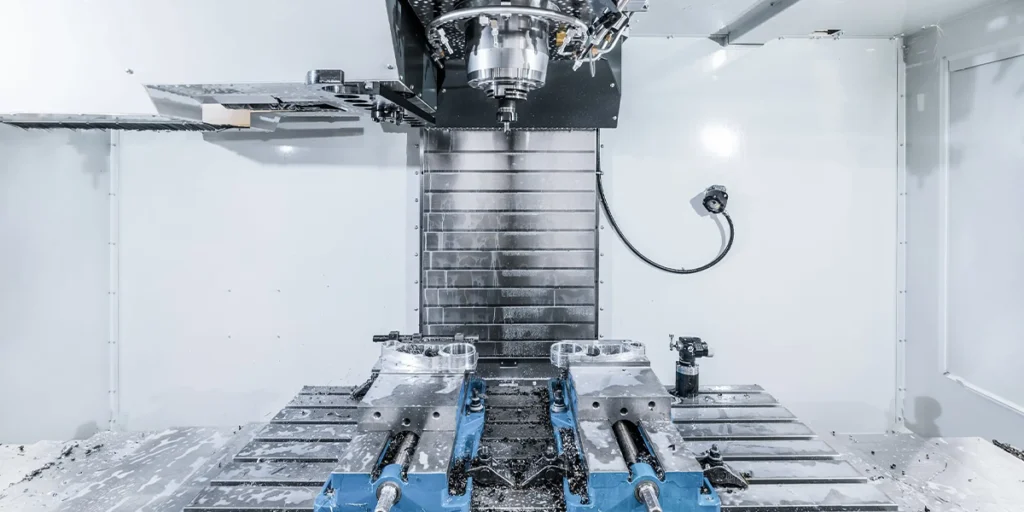
Alloy steel CNC machining is a processing method that uses CNC milling, CNC turning, and multi-axis precision machining equipment to manufacture alloy steel materials with high precision.
Because alloy steel has higher hardness, it generates greater cutting forces and heat during processing. Therefore, compared with ordinary steel, it requires higher equipment rigidity, tool life, and processing experience.
Professional CNC machining of alloy steel requires not only stable equipment capabilities, but also mature machining processes and engineering experience.
CNC milling of alloy steel
CNC milling is typically used for machining:
- Complex structural parts
- Cavity-type parts
- Flange
- Stent
- High-precision connectors
One of the biggest challenges in CNC milling of alloy steel is controlling cutting heat.
If the processing parameters are not appropriate, it may lead to:
- Rapid tool wear
- Surface burns
- Size drift
- Part deformation
Therefore, specialized processing plants typically adopt the following:
- High-rigidity multi-axis CNC equipment
- High-performance carbide cutting tools
- Optimize toolpath
- High-pressure cooling system
To improve processing stability.
At Zhuohua Hardware, we support 3-axis, 3+2-axis, and 5-axis CNC milling, capable of machining a variety of high-strength alloy steel parts, and can provide complete support from prototyping to mass production according to project requirements.
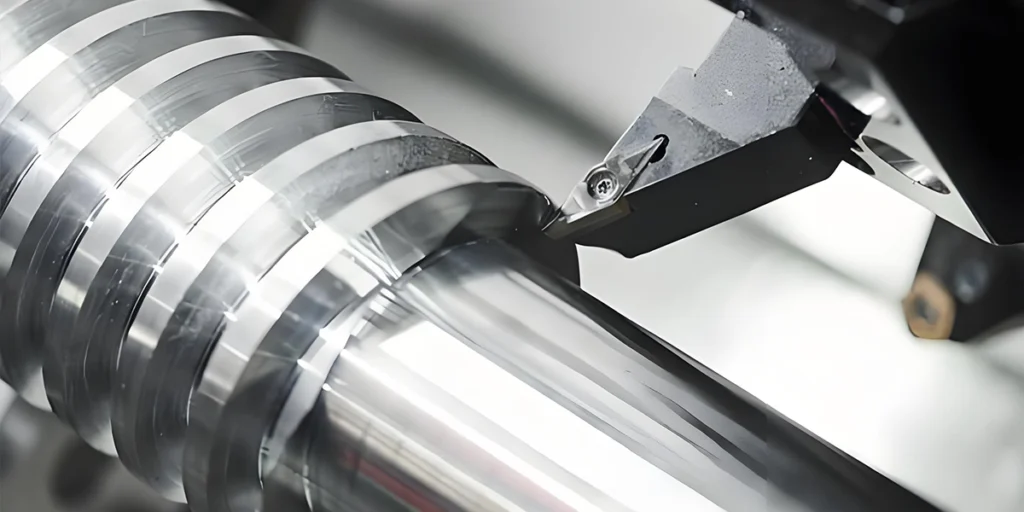
CNC turning of alloy steel
CNC turning is mainly used for machining:
- Shaft-type parts
- Sleeve
- Flange
- Threaded parts
- Hydraulic components
Compared to ordinary materials, turning alloy steel is more prone to tool wear and machining vibration problems.
Especially when turning hardened alloy steel or heat-treated materials, a lack of experience can easily lead to:
- Unstable surface roughness
- Roundness error
- Dimensions out of tolerance
- Tool breakage
Therefore, a stable turning process is crucial for the quality of alloy steel parts.
Our CNC turning capabilities support the machining of precision parts with a maximum diameter of 431mm and a length of 990mm, and also support the small-batch and mass production of complex alloy steel components.
High-strength material processing characteristics
While high-strength alloy steel offers better mechanical properties, it also significantly increases the difficulty of machining.
Common processing challenges include:
- High cutting temperature
- Significant work hardening
- Short tool life
- Difficulty in controlling internal stress
- Dimensional changes after heat treatment
Therefore, CNC machining of alloy steel usually requires more stringent process control.
Established processing suppliers typically focus on:
- Toolpath optimization
- Phased roughing and finishing
- Balance control before and after heat treatment
- Machining deformation compensation
- Online size inspection
These capabilities directly affect the final precision of parts and batch stability.
For high-performance industrial parts, the material itself is only the foundation. What truly determines the quality of the parts is often the supplier’s understanding and control over the alloy steel processing technology.
In which industries are alloy steel parts typically used?
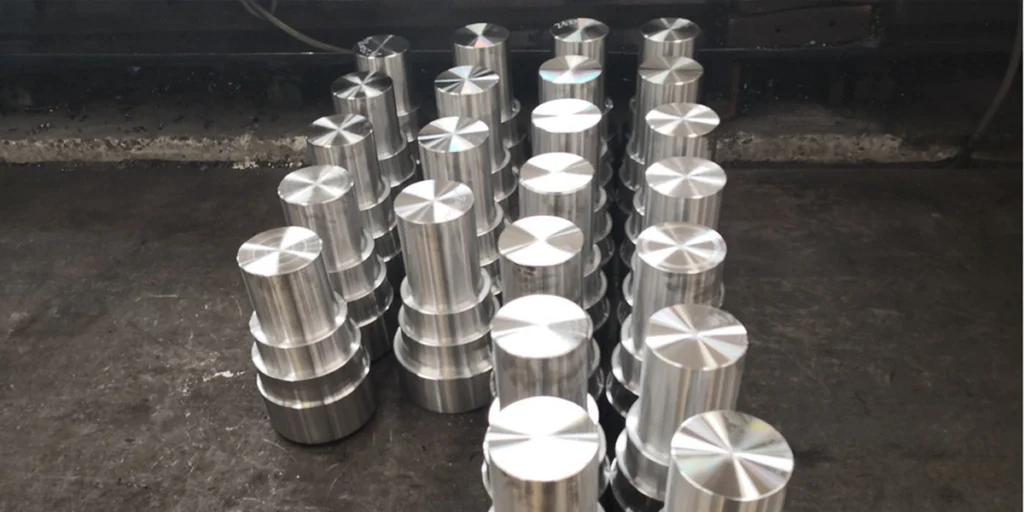
Because alloy steel combines high strength, wear resistance, and good fatigue properties, it is widely used in high-load, high-pressure, and complex working environments. Compared to ordinary steel, alloy steel parts can maintain more stable mechanical properties during long-term operation, which is an important reason why many industrial sectors continue to rely on alloy steel CNC machining.
For engineers, choosing the right alloy steel material is not only related to the lifespan of parts, but also directly affects the reliability of equipment, maintenance cycle and overall manufacturing cost.
Aerospace
The aerospace industry has extremely high requirements for material strength, weight control, and machining accuracy, and therefore uses a large number of high-performance alloy steel parts.
Common applications include:
- Aircraft structural connectors
- Landing gear assembly
- Engine support components
- High-strength shaft parts
- Hydraulic system components
These types of parts typically require complex contour machining and strict tolerance control, making multi-axis CNC machining capabilities particularly important. Furthermore, aerospace projects have far higher requirements for material traceability, machining stability, and batch consistency than ordinary industrial projects.
For professional alloy steel CNC machining service providers, it is not only necessary to have high-precision machining capabilities, but also to be able to stably control dimensional changes and surface quality after heat treatment.
Oil and gas
Equipment in the oil and gas industry is exposed to high temperature, high pressure and corrosive environment for a long time, so many key parts are made of 4140, 4130 and other high-strength alloy steel materials.
Typical parts include:
- High-pressure flange
- Valve body assembly
- Drilling equipment parts
- Pipe fittings
- Hydraulic system parts
These alloy steel parts are typically large in size and require high impact resistance and fatigue resistance, so it is essential to control material stress and processing deformation during the machining process.
In actual production, many oil equipment parts involve the following:
- CNC turning
- CNC milling
- Deep hole machining
- Heat treatment
- Surface treatment
Therefore, alloy steel processing suppliers with complete process chains usually have an advantage.
Heavy machinery
The heavy machinery industry has extremely high requirements for the strength and wear resistance of parts, and alloy steel can maintain stable performance under long-term high-load conditions, therefore it is widely used in:
- Construction machinery
- Mining equipment
- Automated equipment
- Hydraulic system
- Transmission system
Common parts include large shafts, gear housings, support structures, and high-strength connecting components.
Because heavy machinery parts are typically large, the requirements for equipment rigidity and clamping stability are very high. If vibration or thermal deformation occurs during processing, it can easily lead to dimensional errors or assembly problems.
Professional alloy steel CNC machining manufacturers typically employ multiple roughing and finishing processes, combined with online inspection, to ensure the precision of large parts.
Defense Industry
Parts for the defense industry typically need to meet the requirements of high strength, high reliability, and complex structure simultaneously, so alloy steel processing plays an important role in this field.
Typical applications include:
- Weapon system structural components
- High-strength support components
- Armor system parts
- Special vehicle parts
Compared to ordinary industrial parts, defense projects have much stricter requirements for material performance consistency and processing stability. Many parts not only require high-precision machining, but also need to control internal stress, heat treatment deformation, and long-term fatigue performance.
Therefore, for defense-related alloy steel parts, it is generally more advisable to choose to cooperate with experienced precision CNC machining suppliers.
Why professional alloy steel processing suppliers are important
When purchasing alloy steel parts, many customers initially focus on price. However, in actual projects, what truly affects project stability is often not the cost per unit, but rather the processing quality, delivery time stability, and batch consistency.
Compared to aluminum or ordinary steel parts, CNC machining of alloy steel requires significantly higher standards in terms of equipment, cutting tools, and engineering experience. If a supplier lacks relevant experience, even if a sample can be completed, problems such as dimensional drift, abnormal tool wear, or heat treatment deformation may occur during mass production.
Therefore, the importance of professional alloy steel processing suppliers lies not only in their ability to process, but also in their ability to process stably.
Tool wear control
Alloy steels have high hardness, especially after heat treatment, which significantly increases the load on cutting tools. If machining parameters are not appropriate, tool life may be greatly shortened, thus affecting machining stability and production costs.
Experienced CNC machining manufacturers of alloy steel typically select different tooling schemes based on the material type, for example:
- Carbide cutting tools
- Coated cutting tools
- Ceramic knives
- High heat-resistant cutting tools
It will also be optimized:
- Cutting speed
- Feed rate
- Depth of cut
- Cooling method
This reduces tool wear and improves surface quality.
Processing parameter experience
There is no fixed set of parameters for machining alloy steel; different material states, heat treatment hardness, and part structures all affect the machining method. For example:
- 4140 pre-hardened steel
- Conditioned 4340
- High-hardness alloy steel after quenching
Their processing parameters will be significantly different.
Professional suppliers typically accumulate mature process databases through long-term projects, which enables them to improve processing efficiency while ensuring accuracy and reducing the risk of parts scrap.
For complex parts, machining experience is even more important than the equipment itself.
Heat treatment and deformation control
Many alloy steel parts require heat treatment to improve their strength and wear resistance, but heat treatment can also lead to dimensional changes and stress release issues.
If the initial machining allowance is not properly controlled, the following may occur after heat treatment:
- Parts are bent
- Hole position offset
- Planar deformation
- Dimensions out of tolerance
Therefore, mature alloy steel processing technology typically employs the following methods:
- Allowance for heat treatment
- Staged roughing and finishing
- Stress relief treatment
- Secondary finishing
To improve the final dimensional stability.
For high-precision industrial parts, the ability to control dimensions after heat treatment is often an important criterion for evaluating a supplier’s technical level.
Our alloy steel CNC machining capabilities
As a professional CNC machining supplier , Zhuohua Hardware has long provided alloy steel CNC machining services to industrial customers worldwide , supporting complete manufacturing solutions from rapid prototyping to mass production.
We are capable of processing not only conventional alloy steel parts, but also of producing complex structures, high-strength materials, and high-precision parts.
Precision machining capability
Alloy steel parts typically require high dimensional stability, so we focus on controlling this during the machining process:
- Cutting heat
- Tool wear
- Processing stress
- Heat treatment deformation
Currently, we can achieve a machining accuracy of up to ±0.02mm and support the manufacturing of complex structural parts, flanges, shaft parts, and high-precision mechanical components.
We also support:
- Small batch prototyping
- Medium to large-scale production
- Customized processing solutions
- Test report support
To meet the needs of different industrial projects.
Multi-axis CNC equipment
We are equipped with 30+ CNC machining equipment, including:
This enables us to process complex geometries, high-strength alloy steel components, and multi-faceted precision parts, while reducing errors caused by multiple clamping operations.
For complex alloy steel parts, multi-axis machining can not only improve accuracy, but also effectively shorten the machining cycle.
Global customization support
We have long served:
- Aerospace
- Automated equipment
- Medical equipment
- Oil and natural gas
- Industrial machinery
We serve clients across multiple industries and support global project delivery.
From material selection and DFM analysis to mass production, we can provide corresponding processing suggestions based on customer project needs, helping customers optimize manufacturing costs while ensuring performance.
For projects requiring high strength, high precision, and stable batch delivery of alloy steel parts, professional CNC machining experience is often more important than simply offering the lowest price.