

Aluminum is one of the most widely used metal materials in modern CNC machining, and CNC milling of aluminum is one of the most important processes for manufacturing precision aluminum parts. From consumer electronics casings to robot structural components, from lightweight automotive parts to aerospace components, a large number of high-precision aluminum parts rely on CNC milling for production.
For product development teams, aluminum milling not only determines whether parts meet design requirements, but also directly impacts processing costs, production cycles, and final product performance. Therefore, understanding the characteristics and capabilities of CNC milling for aluminum is crucial for material selection and supplier evaluation.
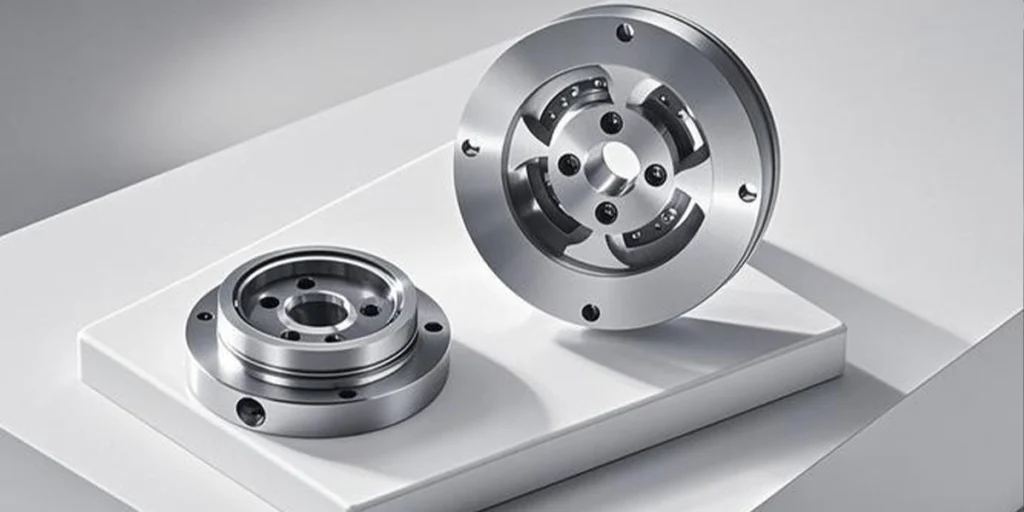
What is CNC milling of aluminum?
Aluminum CNC milling is a manufacturing process that uses a computer numerical control system to control a rotating cutting tool to cut aluminum alloy materials, thereby obtaining the target shape, size and surface quality.
Unlike turning, which is mainly suitable for rotating parts, milling can machine more complex geometries, including:
- Plane
- Curved surface
- Cavity
- Slots
- Thread
- 3D contour
Therefore, most complex aluminum parts are preferentially machined using CNC milling.
Which parts are suitable for CNC milling of aluminum?
Aluminum milling is widely used in the manufacture of various precision parts, such as:
- Aluminum casing
- heat sink
- Structural components of automated equipment
- Robot framework
- Lightweight automotive parts
- Medical device components
- Aerospace structural components
These products typically have complex contours, multiple assembly surfaces, or high-precision dimensional requirements, making them difficult to complete efficiently using traditional processing methods.
Why is aluminum particularly suitable for CNC milling?
Compared to materials such as steel and stainless steel, aluminum has better machinability.
Its main features include:
- The material has moderate hardness
- Low cutting resistance
- Excellent chip removal performance
- Less tool wear
These properties enable aluminum to achieve higher cutting speeds and shorter processing cycles.
For projects that require rapid prototyping and mass production, aluminum can often effectively reduce manufacturing costs while ensuring precision.
Typical machining process for CNC milling of aluminum materials
A complete aluminum milling project typically includes:
- CAD model design
- CAM Programming
- Material Preparation
- CNC rough machining
- CNC precision machining
- Testing and Quality Control
- Surface treatment
Professional suppliers typically conduct DFM analysis before processing to identify thin-walled areas, deep cavity structures, and critical assembly dimensions in advance, thereby reducing subsequent production risks.
At Zhuohua Hardware, we have long provided CNC milling services for aluminum profiles to customers in the robotics automation , industrial equipment , medical device , and aerospace industries . With over 30 CNC machines and 3-axis, 3+2-axis, and 5-axis machining capabilities, we can support a wide range of project needs, from rapid prototyping to mass production, achieving machining accuracy up to ±0.02mm.
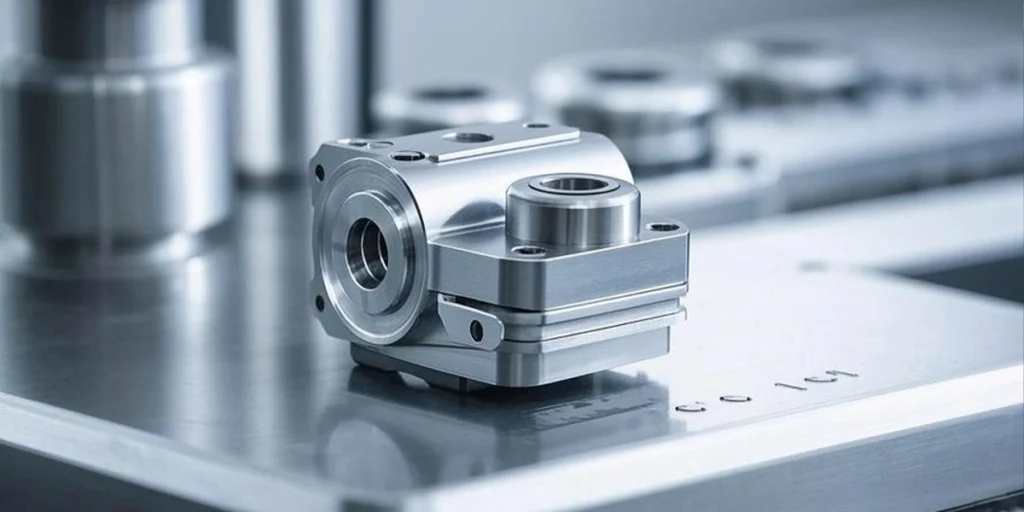
Why is milling aluminum so efficient?
Among all common metallic materials, aluminum has long been considered one of the most suitable for high-speed machining. For purchasing personnel, this means lower manufacturing costs; for engineers, it means greater design freedom and shorter development cycles.
One of the key reasons why aluminum has become a mainstream material in the CNC machining field is its excellent machining efficiency.
Higher cutting speed
Aluminum has significantly lower cutting resistance than most steels and stainless steels. Therefore, under the same equipment conditions, aluminum typically allows for higher spindle speeds and feed rates.
This means:
- Shorter processing time per piece
- Higher equipment utilization
- Faster delivery cycles
For mass production projects, shortening the processing time can often significantly reduce overall manufacturing costs.
Longer tool life
The lower cutting load on aluminum helps reduce tool wear. Compared to machining high-hardness steel, aluminum parts typically offer the following advantages during production:
- More stable tool life
- Fewer tool changes
- Better dimensional consistency
This advantage is particularly evident for projects that require continuous mass production.
It is easier to implement complex structures
Modern product design increasingly emphasizes lightweight design and functional integration. This means that components often exhibit the following characteristics:
- Deep cavity
- Thin-walled structure
- Multi-faceted processing
• Three-dimensional surface
Aluminum is not only easy to cut, but also has good adaptability to structural processing.
With proper design, even complex geometries can be efficiently machined using CNC milling. This is particularly true in the fields of robotics, drones, and medical devices, where numerous complex aluminum components have become standard solutions.
Shorten product development cycle
For many startups and R&D teams, speed to market is often more important than cost per unit.
Due to its high processing efficiency, short programming cycle, and simple post-processing, aluminum is ideally suited for:
- Proof of Concept
- Functional sample
- Small-batch trial production
- Product Iteration Development
Compared to casting or mold making, CNC milling allows design teams to obtain testable parts within days.
This is why more and more European and American manufacturing companies prioritize aluminum CNC machining in the early stages of product development, rather than directly investing in high mold costs.
For such projects, Zhuohua Hardware can complete aluminum part processing and delivery within 5 business days, while providing material advice, processing optimization and surface treatment support to help customers accelerate product validation and market entry.
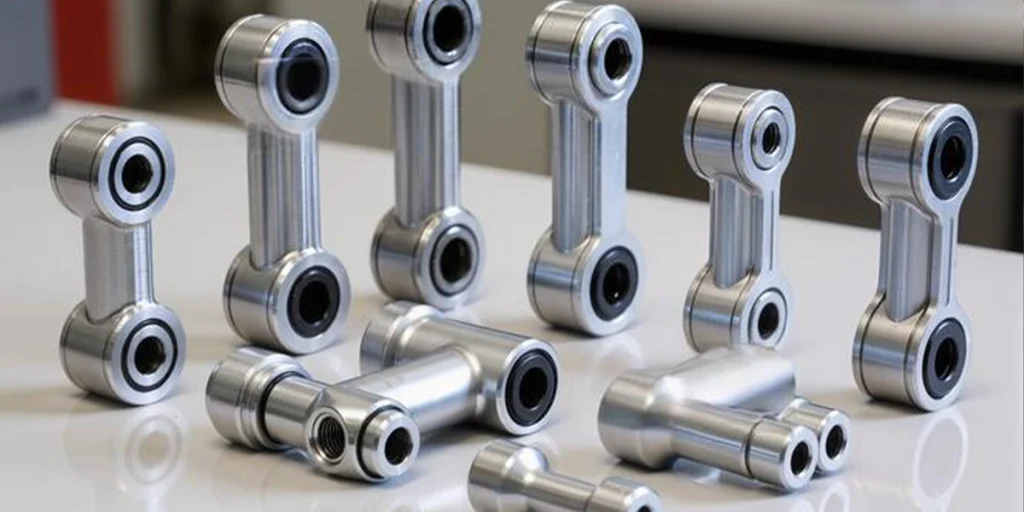
How to optimize the surface of cnc milled aluminum?
For many customers, whether the dimensions of the parts are up to standard is just a basic requirement, while surface quality often directly affects the product’s appearance, assembly performance, and final market performance.
Especially in the fields of consumer electronics, medical devices, robotics, and high-end industrial equipment, customers are not only concerned about whether the parts can be manufactured, but also about whether the parts look professional, whether the assembly is smooth, and whether the subsequent surface treatment effect is stable.
Aluminum itself has excellent machinability, so under the correct processing conditions, it can achieve very good surface quality. However, if the tool selection, cutting parameters, or clamping method are not appropriate, problems such as obvious tool marks, excessive burrs, vibration marks, and even dimensional deformation can occur.
Key factors affecting surface quality
The surface quality of milled aluminum is typically affected by the following factors:
- Tool geometry
- Spindle speed
- Feed rate
- Depth of cut
- Cooling method
- Clamping rigidity
High-speed cutting combined with specialized aluminum machining tools can typically achieve a finer surface finish.
For deep cavity structures, thin-walled parts, or large aluminum plates, vibration and material stress release must be controlled during processing; otherwise, even if the dimensions meet the requirements, the final appearance quality may be affected.
How to reduce burrs and tool marks
Burrs are one of the most common problems in aluminum parts machining. Especially in:
- Hole edge
- Groove area
- Thin-walled structure
- Small precision parts
If the process control is not in place, a lot of manual deburring will be required later, which will increase costs and delivery time.
Professional processing plants typically go through:
- Optimize toolpath
- Use high-sharpness knives
- Control cutting heat
- Rationally arrange rough and fine processing
This reduces the probability of burrs forming.
Meanwhile, by employing appropriate finishing processes, noticeable tool marks can be effectively reduced, improving the uniformity of the appearance after anodizing.
The impact of surface treatment on the final result
The final product appearance that many customers see actually depends not only on the processing quality, but also on the subsequent surface treatment process.
Common surface treatments for aluminum parts include:
- Anodizing
- Sandblasting
- Wire drawing
- Polishing
- Powder coating
High-quality machined surfaces can significantly improve the results of subsequent processing.
For example, the color uniformity after anodizing, the consistency of the brushed texture, and the fineness after sandblasting are all closely related to the quality of the previous processing.
surface treatment solutions such as sandblasting, anodizing, wire drawing, and electropolishing , helping customers obtain final products that balance functionality and aesthetic quality.
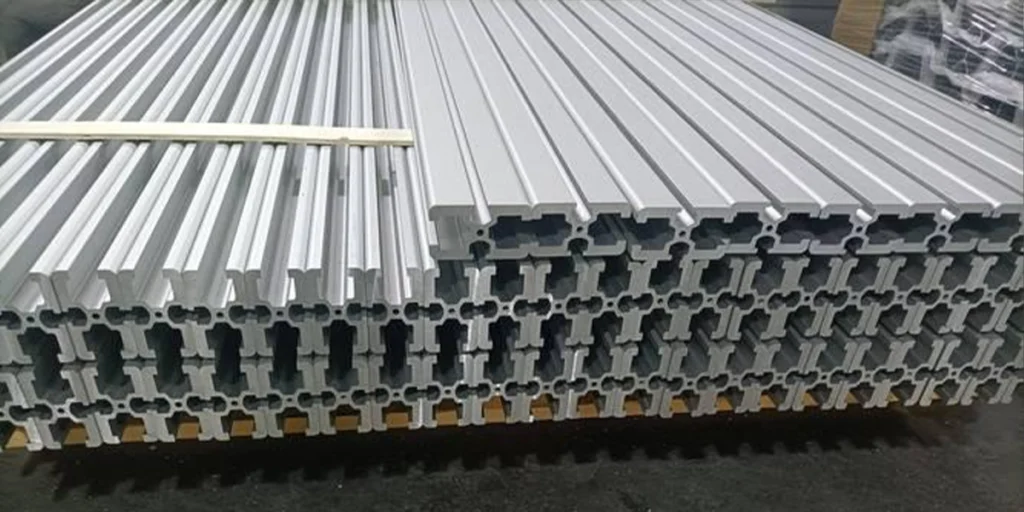
Customized CNC aluminum milling process
Every custom aluminum parts project has different design goals, performance requirements, and budget constraints, so professional aluminum CNC milling is not only a manufacturing process, but also an engineering collaboration process.
Excellent suppliers not only handle the manufacturing process, but also help clients optimize designs, reduce costs, and mitigate manufacturing risks from the early stages of a project.
Starting with drawing evaluation
Customized projects typically begin with the client providing the following information:
- 2D engineering drawings
- 3D model
- Technical Requirements
- Material Specifications
- Surface treatment requirements
After receiving the data, the engineering team will conduct a DFM (Design for Manufacturability) analysis.
Key assessment areas:
- Is the wall thickness reasonable?
- Is the deep cavity machinable?
- Is tolerance necessary?
- Is clamping feasible?
- Is there room for cost optimization?
This stage often helps clients avoid subsequent rework and design modifications.
Material and process selection
Different projects require different aluminum alloys. For example:
- 6061 is suitable for general structural components
- 7075 is suitable for high-intensity applications.
- 5052 is suitable for corrosive environments.
- 5083 is suitable for marine engineering
Depending on the complexity of the part, engineers will also decide on the following:
- 3-axis machining
- 3+2 axis machining
- Five-axis machining
- Combined milling and turning machining
A well-planned process can significantly improve processing efficiency.
Production and Quality Control
After formal production begins, it typically goes through the following stages:
- Raw material inspection
- First article inspection
- Process Inspection
- Final verification
- Surface treatment inspection
For high-precision projects, the following may also be available:
- Size report
- Supporting documents
- Detection documents
At Zhuohua Hardware, we support everything from single-piece prototyping to mass production, and provide complete quality documentation and testing support based on project requirements to ensure products can smoothly enter the customer’s assembly and production process.
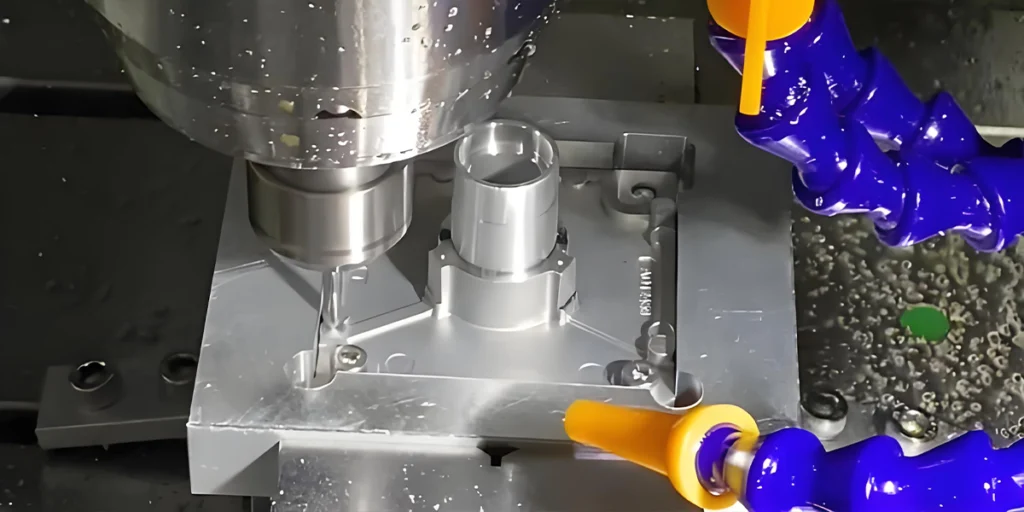
Advantages of 5-axis CNC milling of aluminum
As product structures become increasingly complex, traditional three-axis machining can no longer meet the manufacturing needs of many high-end parts. Especially in the aerospace, robotics, medical equipment, and high-end automation industries, more and more projects are beginning to adopt five-axis CNC milling technology.
For aluminum processing, the advantages of five-axis machining are particularly obvious.
Complex machining can be completed in one setup.
Traditional three-axis machining typically requires multiple flipping and repeated clamping. This not only increases machining time but also easily leads to cumulative errors.
Five-axis equipment allows the cutting tool to approach the workpiece from multiple angles, achieving:
- Multi-faceted processing
- Machining of complex curved surfaces
- Deep cavity machining
- Machining of inclined holes
This reduces the number of clamping operations and improves overall accuracy.
Improve surface quality
Complex curved surface parts often have high requirements for surface quality. Five-axis machining can maintain a more reasonable tool contact angle, making the cutting process smoother.
Compared to traditional processing methods, it is generally possible to obtain:
- More uniform surface texture
- Fewer knife marks
- Improved surface accuracy
This is especially important for aerospace components and robotic structures.
Shorten delivery time and reduce overall costs
Although five-axis equipment itself is expensive, for complex parts, five-axis machining can often reduce the overall manufacturing cost.
The reason is:
- Reduce the number of processes
- Reduce human intervention
- Shorten production cycle
- Improve the first-pass yield
Therefore, many projects involving highly complex aluminum components ultimately find that a five-axis solution is more economical.
Suitable for which aluminum parts
Five-axis aluminum machining is particularly suitable for:
- Aerospace aluminum components
- Unmanned aerial vehicle (UAV) structural components
- Robotic arm
- Medical device frame
- High-end electronic casing
- Complex structural components of automated equipment
As a supplier specializing in precision aluminum CNC machining , Zhuohua Hardware offers 3-axis, 3+2-axis, and 5-axis machining centers capable of processing over 50 types of metals and engineering plastics. For complex aluminum projects, we can select the most suitable machining strategy based on the structural characteristics, ensuring an accuracy of ±0.02mm while helping customers shorten development cycles and reduce overall manufacturing costs.