


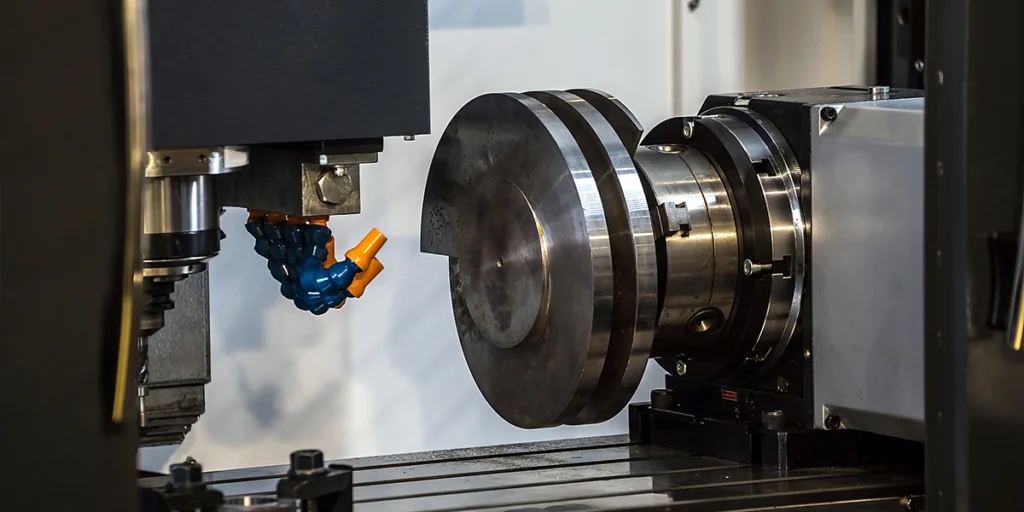
Application areas of CNC machine tools
Numerical control machine tools (CNC) are not equipment exclusive to any particular industry, but rather a general machining technology widely used in modern manufacturing. CNC machine tools can be used wherever products require precision, repeatability, structural complexity, or machining efficiency.
Compared to traditional machining methods, the core value of CNC machining lies not in “what industry it’s used in,” but in its ability to stably and controllably complete complex machining tasks. For this reason, CNC machine tools have gradually become fundamental equipment in various manufacturing industries, rather than specialized tools for a particular niche.
From mass production of industrial parts to high-precision, high-standard professional fields, and then to the manufacturing of products with strict requirements for appearance and dimensions, the application scenarios of CNC machine tools are constantly expanding. Different industries have different focuses regarding CNC machining, mainly reflected in the following aspects:
- Requirements for machining accuracy and consistency
- Requirements regarding the complexity of the component structure
- Requirements for material adaptability
- Requirements for production efficiency and stability
Next, this article will introduce the practical application of CNC machine tools in different industries from the perspective of typical industry applications, to help you determine whether your product or project is suitable for CNC machining.
Applications of CNC machine tools in industrial manufacturing
In the industrial manufacturing sector, CNC machine tools primarily serve as a basic processing capability. They do not directly determine which industry a product belongs to, but rather are responsible for solving the most critical and practical processing problem in industrial production—how to stably, efficiently, and reproducibly manufacture parts.
Common CNC machining requirements in industrial manufacturing
In actual production, the demand for CNC machining in industrial manufacturing is usually concentrated on the following types of parts:
1. Structural components
It is mainly used to support, fix or connect the overall structure of equipment, and has basic requirements for dimensional accuracy and strength.
2. Functional components
Those who directly participate in the operation or function realization of equipment need to ensure assembly accuracy and operational stability.
3. Standardized and non-standard parts
This includes both standard parts manufactured according to industry standards and non-standard parts customized according to equipment requirements.
Why does industrial manufacturing heavily rely on CNC machining?
Industrial manufacturing emphasizes long-term stable production, which is precisely where CNC machine tools excel.
1. Stability
The CNC machining process is controlled by a program, reducing fluctuations caused by human factors.
2. Repeatability
The same part can maintain consistent size and quality across different batches.
3. Batch consistency
Suitable for continuous production, ensuring consistency of parts throughout the batch during assembly and use.
Common industrial manufacturing application scenarios
In the industrial sector, CNC machine tools are widely used in the following scenarios:
1. Automated equipment
Used for processing equipment frames, mounting parts, and key structural components.
2. Mechanical equipment
We process various mechanical parts to meet the accuracy requirements for assembly and operation.
3. Tooling and Fixtures
To create specialized tools for positioning, clamping, and assisting in production.
Overall, industrial manufacturing is the most fundamental and important application area for CNC machine tools. It is in this field that the stability and reliability of CNC machining are most fully demonstrated.
Applications of CNC machine tools in the aerospace field
The aerospace industry’s requirements for component manufacturing represent some of the most stringent processing standards in modern manufacturing. In this industry, CNC machine tools are not an “optional solution,” but rather an essential processing method to ensure the quality and safety of parts.
Special requirements for processing in the aerospace industry
Aerospace components typically need to operate stably for extended periods in extreme environments, which places extremely high demands on the manufacturing process.
1. Extremely high precision
Part dimensional errors must be strictly controlled, as even slight deviations can affect overall assembly and performance.
2. Complex curved surface structures
Many parts have complex geometries and require precise machining from multiple angles and through multiple processes.
3. Strict quality control
There are clear and strict standard requirements for the processing, results, and consistency.
Why must CNC machining be used in aerospace?
Compared with other machining methods, CNC machine tools have irreplaceable advantages in the aerospace field:
1. Manual processing is uncontrollable.
Manual operation makes it difficult to maintain consistent processing accuracy and stability over a long period of time.
2. Insufficient precision of ordinary machine tools
Traditional machine tools are unable to meet the comprehensive requirements of aerospace for complex structures and high precision.
Typical applications of CNC in aerospace
In aerospace manufacturing, CNC machine tools are commonly used to process the following types of parts:
1. Structural components
Used to bear and support the overall structure, it has extremely high requirements for strength and dimensional stability.
2. Connectors
Responsible for connecting key components, with strict requirements for assembly accuracy and reliability.
3. High-strength metal parts
High-performance materials are often used, which makes them difficult to process and requires high levels of process control.
CNC machining enables the aerospace industry to reliably control the quality of components under demanding and high-standard conditions. This is one of the key reasons why CNC machine tools are considered core equipment in high-end manufacturing.
Applications of CNC machine tools in the medical field
The core requirements for component manufacturing in the medical industry focus on precision, safety, and controllability. Compared to other industries, medical products are often directly related to safety in use, thus demanding higher stability and reliability in processing methods.
The core needs of the medical industry for CNC machining
In medical manufacturing, CNC machine tools mainly meet the following key requirements:
1. High precision
Medical components are typically small in size and require strict precision in fitting and control of details.
2. High consistency
Different batches of products need to maintain consistent dimensions and quality to avoid assembly or usage risks.
3. Materials are controllable
There are clear requirements regarding the source, performance, and processing procedures of the materials being processed to ensure safe use.
Advantages of CNC in the Medical Industry
The widespread adoption of CNC machining in the medical field is mainly due to the following advantages:
1. Stable precision machining capabilities
It can continuously meet the stringent requirements of medical products in terms of size and structure.
2. Suitable for small-batch customized production
It allows for flexible processing and adjustment according to different needs.
3. Stable processing quality
It helps reduce product risk and improve overall manufacturing reliability.
Common CNC Medical Applications
In practical applications, CNC machine tools are widely used in the following medical-related manufacturing processes:
1. Medical device components
This includes various functional small parts that require high precision and reliability.
2. Precision housing and structural components
It is used to protect internal components while meeting structural strength and dimensional accuracy requirements.
It is precisely because of these characteristics that CNC machine tools have become one of the most widely trusted processing methods in medical manufacturing, further demonstrating the reliability of CNC machining in high-standard industries.
Applications of CNC machine tools in the electronics and consumer goods sectors
The electronics and consumer goods industry features rapid product updates and stringent aesthetic requirements, placing dual demands on the precision and efficiency of manufacturing processes. In this field, CNC machine tools primarily serve the role of quickly and reliably translating designs into physical products.
Processing characteristics of the electronics and consumer goods industry
This industry typically exhibits the following distinct characteristics in parts processing:
1. High appearance requirements
The surface quality of parts directly affects the overall texture of the product and the user experience.
2. Fine dimensions
Many of the components have a compact structure and require strict dimensional accuracy and assembly fit.
3. Fast update cycle
Frequent product iterations necessitate processing methods with high responsiveness.
Advantages of CNC compared to other machining processes
In the manufacturing of electronics and consumer goods, CNC machining has the following distinct advantages:
1. Stable surface quality
It helps to meet the requirements in terms of appearance and feel.
2. Good processing consistency
This helps maintain consistent quality across different batches of products.
3. Suitable for rapid prototyping and small-batch production.
It can complete the transition from sample to production in a relatively short time.
Common applications of CNC in this field
In the manufacturing of electronics and consumer goods, CNC machine tools are mainly used to process the following types of parts:
1. Outer shell
Used to realize product appearance design while ensuring dimensional accuracy and structural strength.
2. Internal structural components
It supports and secures internal components, requiring high assembly precision.
3. Functional parts
Direct involvement in product functionality requires stable and controllable processing quality.
Because it balances appearance, precision, and efficiency, CNC machine tools have become a widely adopted processing method in the electronics and consumer goods sector.
The core value of CNC machine tool applications
The application of CNC machine tools is not limited to a specific industry; their true value lies in meeting the comprehensive needs for precision, stability, and efficiency in different manufacturing scenarios. Whether in basic industrial manufacturing or in professional fields with extremely high requirements for precision and standards, CNC machining, with its controllable and reliable characteristics, has become an indispensable part of the modern manufacturing system.
To determine whether CNC machine tools are suitable, instead of focusing on industry labels, it’s better to return to the product’s own machining needs—this is the fundamental reason why CNC machining can be widely used.