


CNC machining of stainless steel is generally more expensive than machining aluminum alloys or ordinary steel. For purchasing personnel and product engineers, understanding the logic behind stainless steel parts pricing helps to control project budgets more effectively and avoid quality or delivery issues caused by low-priced suppliers.
In reality, two stainless steel parts that look similar can have prices that differ by several times. The price is influenced not only by the material itself, but also by processing time, structural complexity, tolerance requirements, surface treatment, and production volume.
As a professional stainless steel CNC machining service provider, Zhuohua Hardware has long provided global customers with machining services for stainless steel parts such as 304, 316, 303, and 416, supporting everything from rapid prototyping to mass production, and helping customers reduce manufacturing costs through DFM optimization.
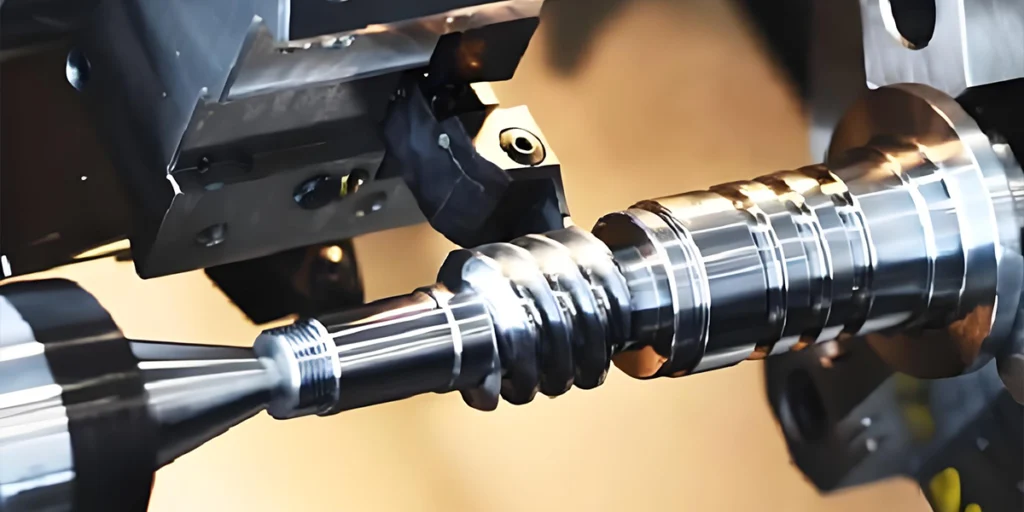
CNC machining stainless steel parts pricing logic
Quotation is not just about material prices
Many customers, when purchasing stainless steel parts for the first time, believe that “the price of the parts mainly depends on the weight of the material.”
However, in reality, the core factors that truly determine the price in stainless steel CNC machining are usually:
- Processing time
- Tool wear
- Accuracy requirements
- Clamping complexity
- Testing requirements
In particular, stainless steel is inherently harder and more difficult to cut, so its processing cost is usually significantly higher than that of aluminum parts.
For complex parts, material costs may only account for a small portion of the total cost.
Core components of CNC machining quotes
A complete quote for stainless steel parts typically consists of the following parts:
Raw material costs
- Stainless steel grades
- Material dimensions
- Material procurement costs
- Material utilization rate
Processing time
This is one of the most critical sources of cost. The longer the machine tool runs, the higher the processing cost.
Factors affecting processing time include:
- Complexity of component structure
- Processing path
- Deep cavity structure
- Small size features
- High precision requirements
In stainless steel machining, the cutting speed is usually lower than that of aluminum parts, so the overall machining cycle is also longer.
Tool wear
Stainless steel is prone to work hardening and has a high cutting temperature.
- Tools wear out faster
- Higher tool change frequency
- Higher requirements for processing stability
Especially in the machining of 316 stainless steel or high-strength stainless steel, the cost of cutting tools will increase significantly.
Surface treatment and post-processing
Many stainless steel parts also require:
- Polishing
- Sandblasting
- Wire drawing
- Electropolishing
- Passivation treatment
These factors all increase overall manufacturing costs. For medical, food, or high-end industrial equipment parts, surface quality requirements are typically even higher.
Testing and Quality Control
High-precision stainless steel parts often require:
CMM testing
- Size report
- Materials certification
- Surface roughness inspection
For the aerospace, medical, and automation industries, this cost is not negligible.
Zhuohua Hardware supports a variety of quality inspection and dimensional verification solutions and can provide complete quality documentation support according to project requirements.
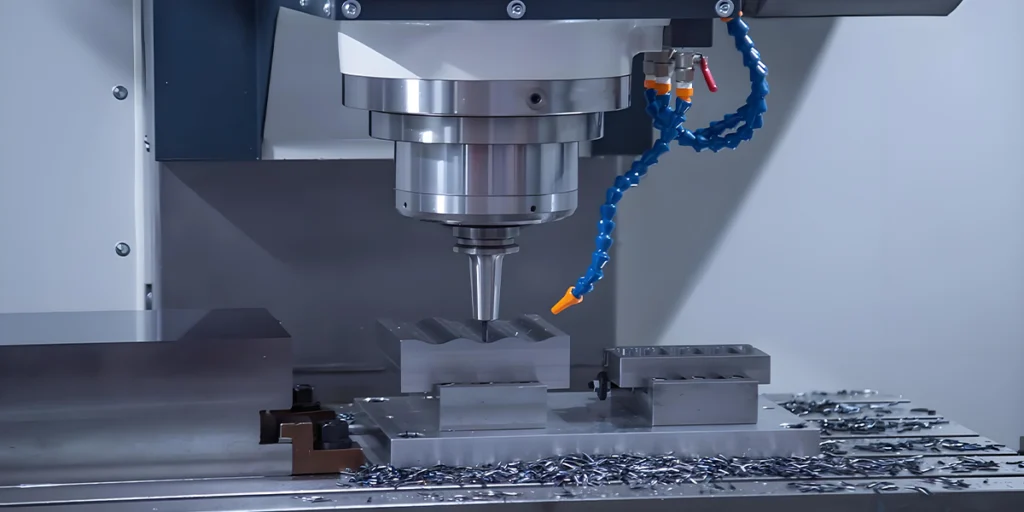
Key factors affecting prices
Stainless steel material type
The processing costs vary greatly depending on the type of stainless steel.
- 303 stainless steel: has better machinability and higher processing efficiency.
- 304 stainless steel: the most widely used, but more difficult to process than 303.
- 316 stainless steel: It has stronger corrosion resistance, but it is more difficult to process and has higher processing costs.
- 17-4PH stainless steel: High strength, commonly used in aerospace and industrial fields, with higher requirements for equipment and cutting tools.
Therefore, even if the parts have the same structure, different materials can lead to significant price differences.
Tolerance requirements
High precision means higher cost; different tolerance grades correspond to:
- Slower processing speed
- More testing procedures
- More stringent machine tool stability requirements
For ultra-high precision parts, the processing time often increases significantly.
Zhuohua Hardware can achieve a machining accuracy of ±0.02mm and helps customers define tolerances reasonably according to the functional requirements of parts, avoiding unnecessary manufacturing costs.
Production quantity
Batch size directly affects the cost per unit.
Small batch production
- High proportion of programming costs
- High percentage of clamping time
- Higher unit cost
Mass production
- Optimize tooling
- Improve tool change efficiency
- Reduce unit cost
Therefore, for the same part, different manufacturing quantities will result in completely different price structures.
Machine tools and processing methods
The cost varies greatly depending on the equipment.
- 3-axis machining: suitable for simple structures and has a lower cost.
- 5-axis machining: suitable for complex parts, but the machine tool cost is higher.
- Milling and turning: can reduce the number of clamping operations, but requires higher equipment investment.
Professional suppliers typically select the most suitable processing solution based on the part’s structure, rather than simply “being able to do it”.
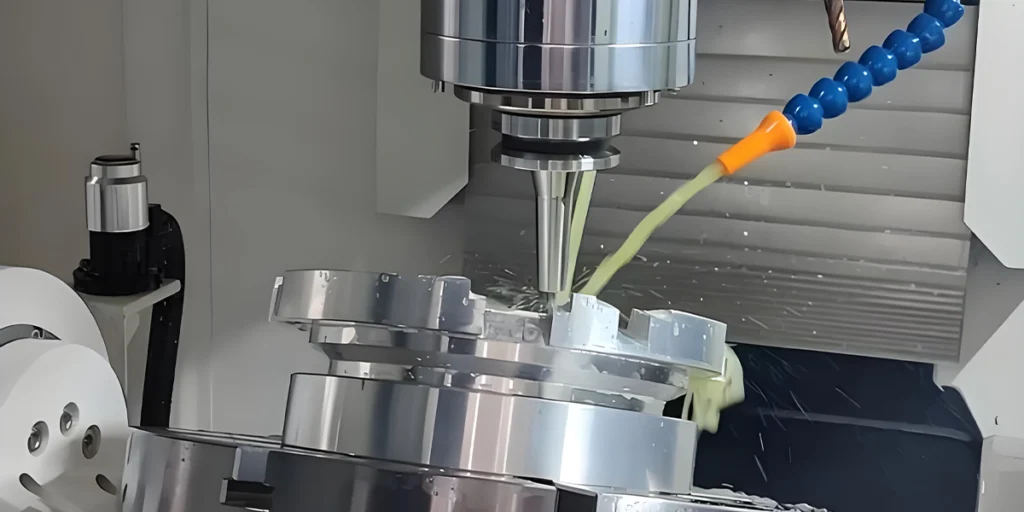
Impact of material costs
Cost differences between different stainless steel grades
In stainless steel CNC machining, the material itself directly affects the overall manufacturing cost, but many customers underestimate the price difference between different grades.
For example, 303 stainless steel has better machinability and higher processing efficiency, so its overall manufacturing cost is usually lower than that of 304. While 316 stainless steel has stronger corrosion resistance, its material price is higher and it is more difficult to process, so the final price of the parts is usually significantly higher than that of 304.
For high-strength applications, precipitation-hardening stainless steels such as 17-4PH further increase the processing difficulty, requiring higher standards for tool and equipment stability and cutting parameters.
Therefore, choosing the right stainless steel material at the beginning of a project is not only related to the performance of the parts, but also directly affects the procurement budget.
Material utilization rate affects the final price
Many stainless steel parts are not priced according to the amount of material used.
In actual processing, material utilization rate significantly impacts costs. For example:
- Deep cavity structures generate a large amount of cutting waste.
- Thick plate processing increases material waste
- Large blanks may weigh significantly more than the finished product.
For complex structural components, the final amount of material removed may exceed 70%. This is why specialized suppliers typically optimize blank dimensions based on the part’s structure, rather than simply purchasing standard materials.
At Zhuohua Hardware, we take into account the component structure, processing method, and batch requirements during the quotation stage to optimize material utilization as much as possible and help customers reduce overall manufacturing costs.
Raw material market fluctuations
Stainless steel is a material whose price is heavily influenced by the international metals market. The following factors all affect its purchase price:
Nickel price fluctuations
- Price changes of molybdenum
- Global supply chain situation
- Material inventory cycle
Especially for 316 stainless steel, due to its molybdenum content, its price fluctuations are typically more pronounced than those of 304. Therefore, for long-term projects or bulk orders, a stable supply chain and long-term cooperative suppliers are even more important.
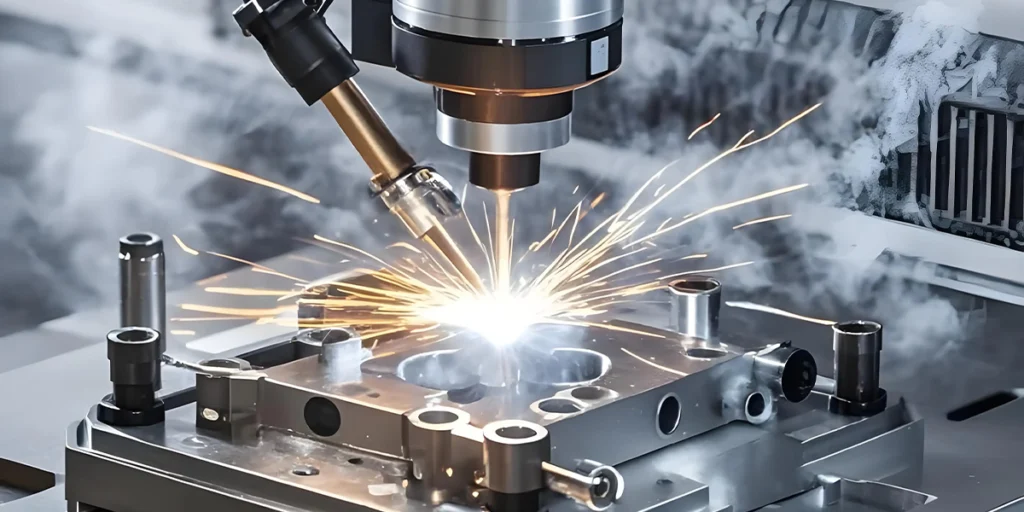
How do complex structures increase costs?
Complex geometry significantly increases processing time.
In CNC machining, complex structures usually mean longer machine tool runtime.
- Deep cavity structure
- Narrow slot
- Thin-wall design
- Minor features
- Multi-angle curved surfaces
These factors all reduce cutting efficiency and increase the risk of tool wear. Stainless steel, in particular, is inherently difficult to cut, and the increase in machining time is even more pronounced when the structure is complex.
Multiple clamping operations increase manufacturing costs
If a part cannot be machined in one go, it requires multiple clamping and repositioning operations. Each additional clamping operation introduces the following challenges:
- More human time
- Higher risk of positioning error
- More complex processing procedures
This is why many complex parts are better suited for 5-axis CNC machining. Although 5-axis equipment has a higher cost per hour, it can reduce the number of setups, improve machining efficiency, and enhance overall dimensional consistency.
For complex stainless steel parts, Zhuohua Hardware selects 3-axis, 3+2-axis, or 5-axis machining solutions based on the structural characteristics, finding a more reasonable balance between cost and precision.
High surface finish requirements will increase post-processing costs.
Many customers not only focus on dimensional accuracy, but also require:
- Ra surface roughness
- Mirror polishing
- Brushed texture
- Surface without knife marks
For stainless steel, high surface quality typically means:
- Slower cutting parameters
- More finishing steps
- Additional manual processing
- More stringent testing
In particular, the medical, food, and high-end consumer electronics industries typically have even higher requirements for appearance and surface consistency.
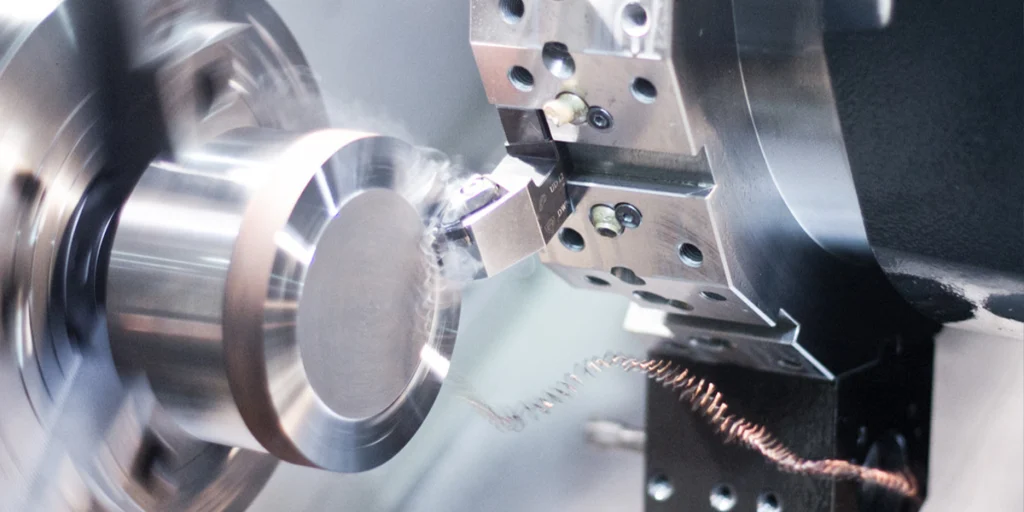
How to reduce stainless steel processing costs
Optimize part design
Many processing costs actually come from designs that are “unsuitable for manufacturing”.
- Excessively deep cavity
- Too thin wall thickness
- Unnecessary small rounded corners
- Ultra-high precision tolerance
- Difficult-to-clamp structure
These factors significantly increase the difficulty of manufacturing. Therefore, conducting DFM (Manufacturability Analysis) early in the project can usually effectively reduce manufacturing costs while improving production stability.
Choose materials appropriately
Not all projects require the use of 316 stainless steel.
- In typical industrial environments, 304 stainless steel is usually sufficient.
- For high-efficiency processing projects, 303 can be considered.
- More economical materials can be used in non-corrosive environments.
Properly matching material properties with practical applications can often save a significant amount of budget.
Controlling unnecessary high-precision requirements
Many drawings will specify very strict tolerances by default, but in reality, some dimensions do not affect assembly or function.
Excessive precision can lead to:
- Slower processing speed
- Higher testing costs
- Higher risk of obsolescence
Professional machining suppliers typically help customers identify “critical dimensions” and “normal dimensions” to avoid unnecessary increases in manufacturing costs.
Choose an experienced processing supplier
A low price does not necessarily mean a lower total cost. Suppliers lacking experience in stainless steel processing often encounter the following problems:
- Unstable tool control
- Surface quality issues
- Poor dimensional consistency
- Delivery delay
These issues will ultimately increase the overall procurement risk.
Zhuohua Hardware has long provided stainless steel CNC machining services to global customers , supporting:
- 303, 304, 316 and 416 stainless steel
- One-stop machining service for CNC milling and CNC turning
- ±0.02mm accuracy control
- From prototype to mass production
- Surface treatment and quality inspection support
For complex stainless steel parts projects, we not only provide processing services, but also help customers optimize costs and production efficiency from a manufacturing perspective.