
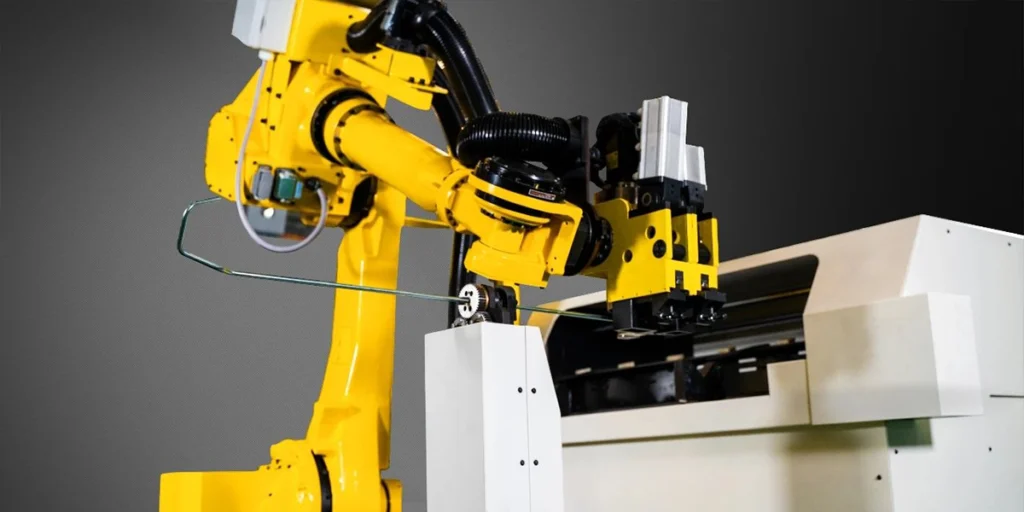
In robotic arms, precision is not a single metric, but rather the result of multiple components working together. Every joint, every mating surface, and every transmission structure affects the final performance.
For articulated robotic arms, machining accuracy is directly related to:
- Is the trajectory of motion stable?
- Are the duplicate locations consistent?
- Is it reliable in long-term operation?
The practical significance of ±0.02 mm in robotic arms
In precision machining, ±0.02 mm is within the standard range of high precision, but in the structure of a robotic arm, this value has significance far beyond just dimensional control.
Taking a typical joint structure as an example:
- Fit error between shaft and bearing
- Flatness of the gearbox mounting surface
- Coaxiality of the joint housing
If these critical components are controlled within ±0.02 mm, it can effectively guarantee:
- The joints move smoothly without any obvious jamming or loosening.
- Stable transmission system, reducing vibration and noise
- Maintain consistency when multiple joints are linked.
More importantly, in multi-degree-of-freedom robotic arms, this precision control can significantly reduce the amplification effect of error accumulation.
Our processing capacity
In the machining of robot parts, we have consistently maintained the accuracy of critical dimensions within ±0.02 mm, focusing on:
- Joint housing and mounting structure
- Shafts and mating parts
- High-precision connection surface and positioning structure
Through multi-axis CNC machining and stable process control, we ensure that each batch of parts is consistent in size and geometric tolerances, providing a reliable foundation for the assembly of the robotic arm.
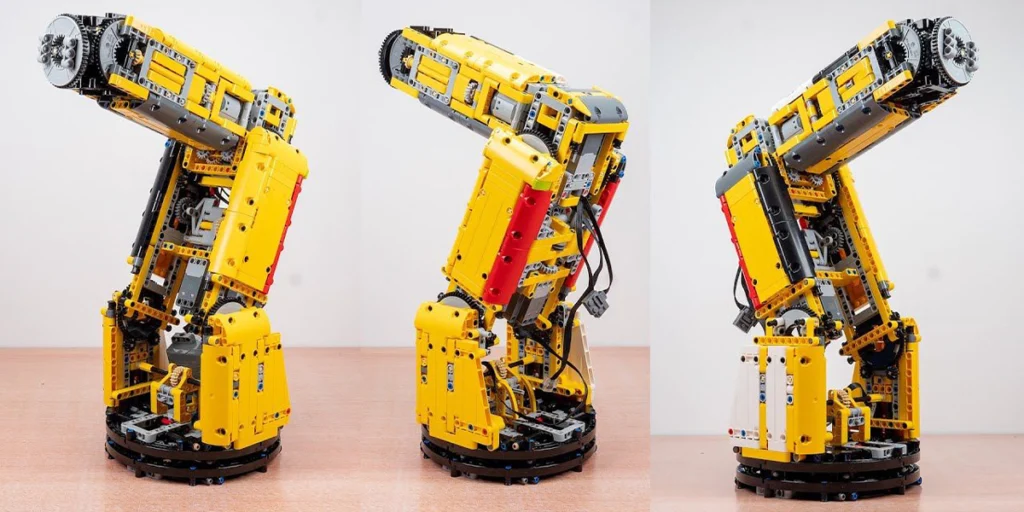
The impact of cumulative error on the accuracy of robotic arms
In articulated robotic arms, accuracy issues are usually not caused by a single part, but rather by the cumulative errors of multiple components.
Every machined part will have certain tolerances, for example:
- Fit error between shaft and bearing
- Flatness deviation of joint mounting surface
- Positional error between structural components
These errors may be small in a single part, but they are propagated and amplified step by step in a multi-joint structure.
In practical structures, the error propagation path is typically:
- Starting from the base
- Passing through the shoulder joint and elbow joint
- Then to the wrist
- Ultimately, it acts on the end effector.
As the number of joints increases, the errors accumulate, eventually manifesting as follows:
- End position offset
- Decreased repeatability
- Unstable trajectory
Taking a common 6-axis robotic arm as an example, even if each key component is controlled within ±0.02 mm, insufficient assembly consistency or local precision fluctuations may amplify into more obvious errors at the end.
This is why, in robot manufacturing, not only is the precision of individual parts required, but also the following must be guaranteed:
- Batch consistency
- Critical dimensional stability
- Assembly matching accuracy
In actual production, error control is usually focused on critical parts:
- Joint-fitting structure
- Gearbox mounting interface
- Multi-faceted positioning reference
- Long structural components
If these positions deviate, it will directly affect the overall performance of the machine, and it will be difficult to completely correct them through the control system later.
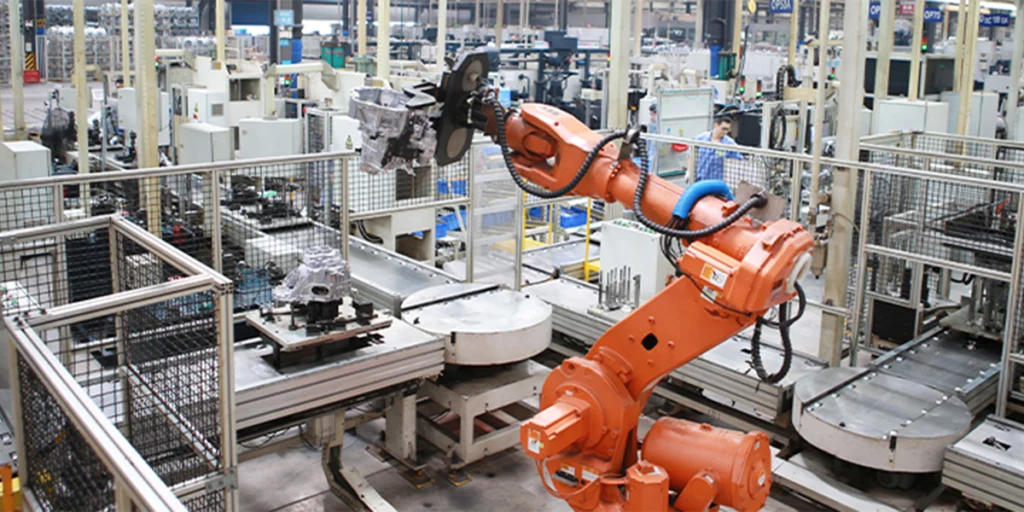
How to ensure the consistency of robot parts
In robot manufacturing, achieving the required precision for individual parts is only the foundation; the more crucial aspect is consistency control during mass production.
If there are variations among parts in the same batch, even if the accuracy of an individual part is acceptable, these variations will still occur after assembly.
- Inconsistent fit and tightness
- Changes in joint movement resistance
- Fluctuation in repeatability
Therefore, consistency control is one of the key factors affecting the performance of robotic arms.
In actual processing, consistency mainly comes from the following aspects:
- Machining process stability: Fixed machining parameters and toolpaths reduce human error fluctuations.
- Equipment precision control: Long-term precision stability of multi-axis CNC equipment
- Standardized datum: Critical dimensions are machined using a unified positioning datum.
- Consistent testing standards: Key dimensions and geometric tolerances are monitored throughout the entire process.
For key components of robots, special attention is usually required for control:
- Consistency of joint fit dimensions
- Relative positional accuracy of multiple mounting surfaces
- Coaxiality and roundness of shaft parts
- Dimensional variation range between batches of parts
These indicators directly affect the overall performance after assembly.
How do we ensure processing consistency?
In the manufacturing of robot parts, we ensure stable batch production through standardized processes and quality control:
- Critical dimensions are controlled within ±0.02 mm.
- Maintain consistent process parameters across multiple batches of processing.
- Standardized machining to reduce assembly errors
- Full-process quality inspection to ensure stable output for each batch.
Applicable to:
- Joint structural components
- Transmission and mating components
- High-precision mounting structure
High-precision robot parts machining
If you have a need for machining robot articulated arm parts, we can provide you with stable and consistent CNC precision manufacturing services. We have extensive experience in machining robot structural parts and transmission components, and our key dimensions can be stably controlled within ±0.02 mm.
It supports everything from prototyping to mass production, ensuring reliable performance in terms of accuracy and consistency for every batch of parts.
If you are working on a robotics project, you can submit your drawings or requirements directly, and we will provide you with a processing plan and quotation.