


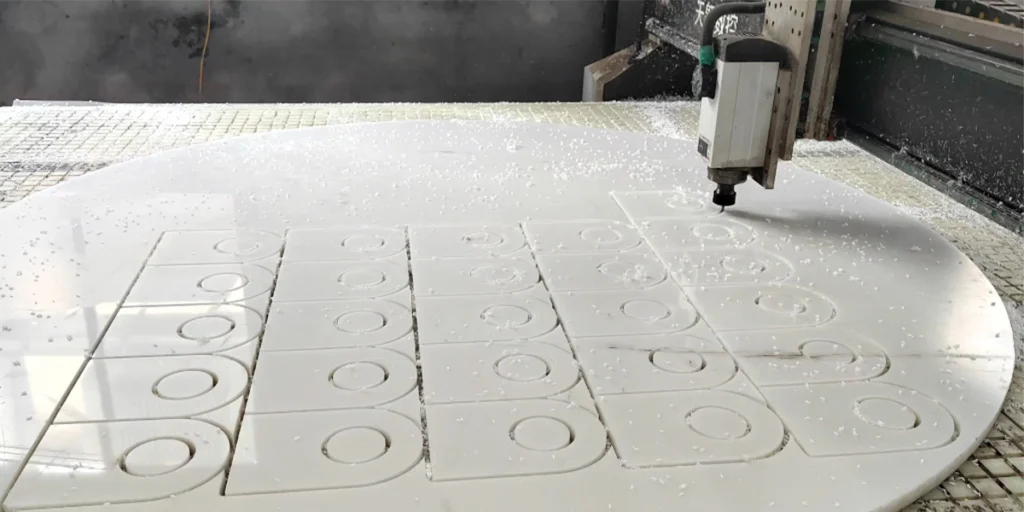
ABS CNC turning
When discussing CNC-machined plastic parts, ABS is often one of the first materials many customers encounter. The reasons are simple: reasonable cost, stable processing, and wide applicability. ABS is a very practical choice for projects requiring lightweight, insulating, aesthetically pleasing, or medium-strength structural components.
ABS (Acrylonitrile Butadiene Styrene) combines a certain degree of rigidity, impact resistance, and processability, making it not only common in the injection molding industry but also very suitable for manufacturing small-batch custom parts using CNC turning.
Why is ABS suitable for CNC turning?
From a processing perspective, ABS has several distinct advantages:
- The material is relatively lightweight, making it suitable for lightweight design.
- Low cutting resistance and high machining efficiency
- Lower cost than most engineering plastics
- Good dimensional stability
- Easy to assemble and bond
- Surface treatment is relatively easy.
If the parts do not require the strength of metal, but require fast delivery and low cost, ABS is often a cost-effective solution.
Common types of parts machined by ABS CNC turning
ABS machined parts are typically used in non-high-load structures; common products include:
- Instrument knob
- Electronic housing internal kit
- Sensor support components
- Small rollers
- Positioning ring
- Threaded plastic connectors
- Insulating sleeve
- Internal structural components of consumer electronics
Many customers use ABS for sample verification during the product development stage before deciding whether to upgrade the material.
Precautions in ABS processing
Although ABS is easy to process, the following points should still be noted:
1. Thermal deformation control
ABS has lower heat resistance than metals during cutting. If the tool is too dull or the rotation speed is too high, it is prone to the following problems:
- Melted edge
- Burrs
- Surface is whitish
- Size drift
2. Clamping deformation
Plastics are less rigid than metals, and excessive clamping pressure may cause roundness distortion.
3. Thread structure design
Plastic threads have limited strength. If repeated disassembly and assembly are required, it is recommended to add copper nuts or metal inserts.
Zhuohua Hardware’s ABS turning capabilities
We have long been processing various engineering plastic parts for overseas clients, with ABS projects commonly seen in:
- Electronic product development samples
- Insulating parts for automated equipment
- Medical peripheral structural components
- Small-batch consumer electronics components
We can provide:
- CNC turning + CNC milling combined machining
- Small batch rapid prototyping
- Size detection support
- Recommendations for various plastic material alternatives
- Surface treatment and assembly support
If customers are unsure whether ABS is suitable for a project, we can recommend better materials based on strength, temperature, and budget requirements.
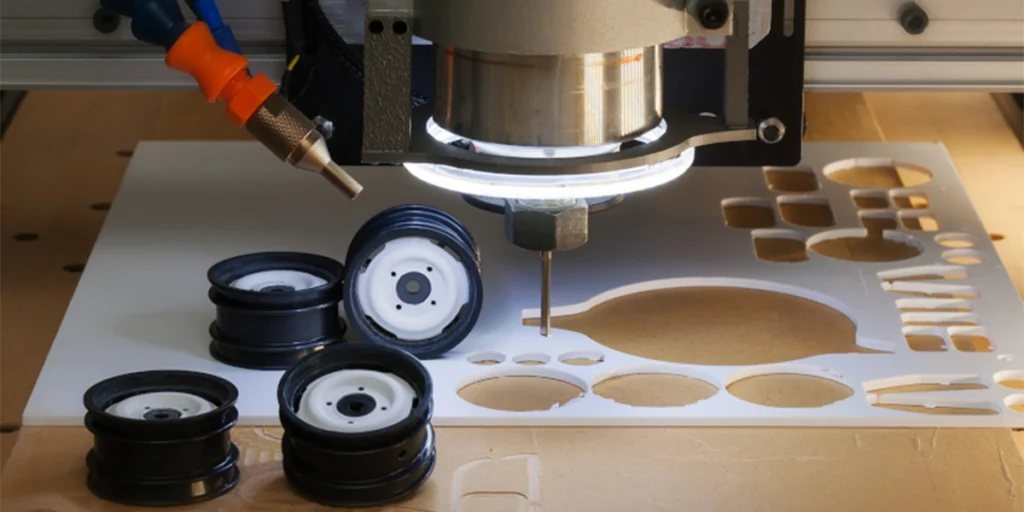
POM / PTFE / Nylon turning
If ABS leans more towards general-purpose plastics, then POM, PTFE, and nylon (PA) are more commonly found in industrial manufacturing as functional engineering plastics. They are superior in terms of wear resistance, self-lubrication, chemical resistance, or mechanical properties, and are therefore widely used in equipment parts and industrial components.
For parts that require long-term operation, frictional motion, and environmental resistance, these three types of materials are often more suitable than ABS.
1. POM CNC turning (Delrin/Delrin)
POM is one of the most popular plastic turning materials in the machinery industry.
Advantages:
- High rigidity
- Good dimensional stability
- Low coefficient of friction
- High wear resistance
- Easy to process, with good surface quality
Common applications:
- Gears
- Slider
- Guide sleeve
- Bushing
- Rollers
- Positioning structural components
POM is commonly used for projects that require the replacement of some metal parts, or to reduce noise and weight.
2. CNC turning of PTFE (Teflon)
The core value of PTFE lies in its excellent chemical stability and low friction properties.
Advantages:
- Extremely strong corrosion resistance
- Ultra-low coefficient of friction
- Good resistance to high and low temperatures
- Excellent insulation performance
Common applications:
- Sealing ring
- Valve seat
- Chemical equipment parts
- Electrical insulation components
- Food-grade equipment components
3. Nylon (PA) CNC Turning
Nylon strikes a good balance between strength and toughness, making it suitable for structural functional components.
Advantages:
- Higher strength than most general-purpose plastics
- Good impact resistance
- Wear-resistant
- Suitable for dynamic components
Common applications:
- Rollers
- Coupling components
- Wear-resistant washers
- Conveying system parts
- Automated equipment components
Zhuohua Hardware’s Engineering Plastic Turning Support
We support a variety of engineering plastic CNC turning, including:
- ABS
- POM
- Nylon
- PTFE
- PVC
- PE
- PP
- PC
And can provide according to customer needs:
- Material substitution recommendations
- Small batch prototyping
- Complex structure processing
- Tolerance control scheme
- Export Packaging and Global Delivery
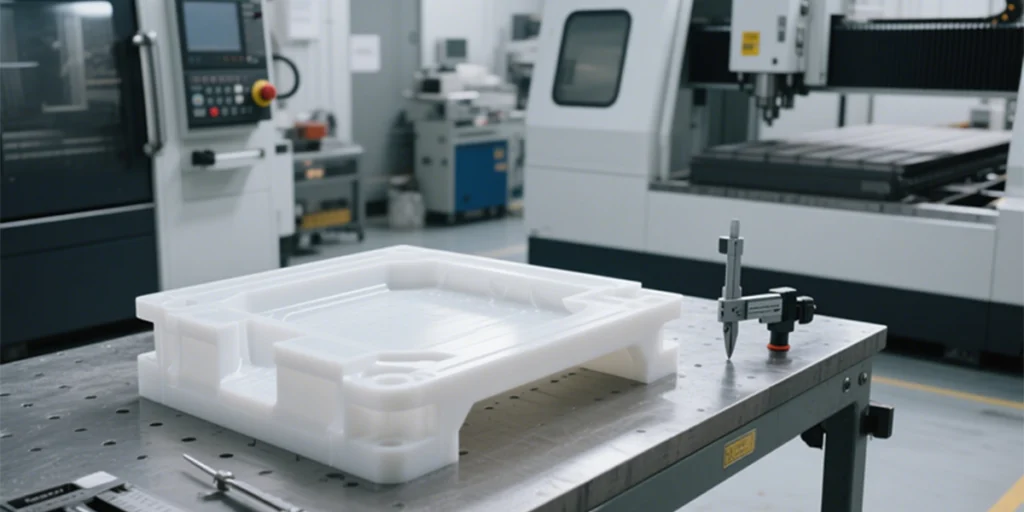
Tolerance control of plastic parts
One of the most common questions that customers ask when purchasing CNC machined plastic parts is: Can plastic parts achieve the same precision as metal parts?
Compared to metals, plastic materials are more susceptible to the effects of temperature, clamping force, internal stress, and ambient humidity during processing. Therefore, tolerance control of plastic parts is not only a matter of equipment precision, but also a matter of material behavior management.
This is why experienced suppliers can significantly improve the pass rate and consistency of plastic parts.
Why are tolerances harder to control for plastic parts?
Plastics are not as stable as metals, and common challenges include:
1. Higher coefficient of thermal expansion
The plastic dimensions may temporarily change due to heat generated during the cutting process. Measurements may be correct during processing, but deviations may occur after cooling.
2. Low rigidity
Over-tight clamping can easily cause:
- Elliptical deformation
- Inner hole shrinkage
- Outer diameter indentation
- Concentricity offset
3. Significant rebound effect
In particular, materials such as PTFE and nylon may spring back slightly after processing, affecting the final dimensions.
4. Moisture absorption affects dimensions (common in nylon)
Some plastics undergo slight changes in size after absorbing moisture from the air.
What tolerances are typically achievable for plastic parts?
This depends on the materials, structure, and size/location.
General experience range:
- Standard plastic structural components: ±0.05mm ~ ±0.10mm
- Medium to high precision parts: ±0.02mm ~ ±0.05mm
- Key mating dimensions (local): can be further optimized.
However, if the customer requires all dimensions of the entire part to be executed to metal-grade ultra-high tolerances, the cost will usually rise rapidly and it is unnecessary.
A more reasonable approach is to strictly control critical dimensions while relaxing restrictions on non-critical dimensions. This ensures functionality while controlling procurement costs.
Which dimensions deserve the most attention and control?
We recommend prioritizing the following:
- Matching outer diameter
- Shaft hole size
- Coaxiality position
- Sealing surface dimensions
- Assembly positioning surface
- Threaded connection location
Requirements for decorative edges, non-functional lengths, and transition surfaces can be appropriately relaxed.
How do we control the precision of plastic turning?
At Zhuohua Hardware, we typically use the following methods for plastic parts:
- Material pretreatment: Reduce internal stress and improve dimensional stability.
- Reasonable tool parameters: Reduces heat generation, stringing, burrs, and deformation.
- Low clamping force clamping: Avoid pinching and elliptical deformation.
- Phased Refining: After rough machining to release stress, the critical dimensions are then precision machined.
- Constant detection process: Key dimensions are fully inspected or sampled to ensure batch consistency.
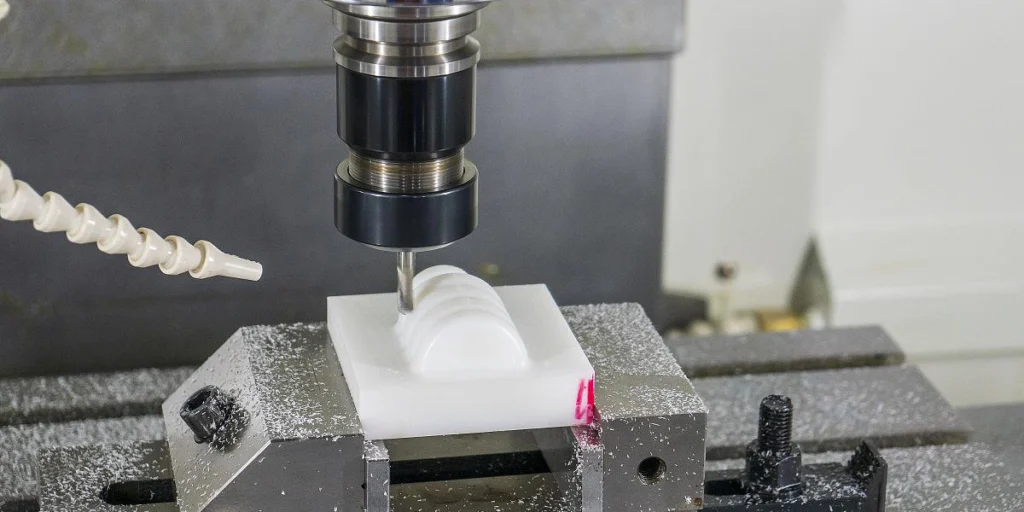
Medical and Electronics Industry Applications
The stable market for CNC-machined plastic parts is largely due to their long-term demand in the medical and electronics industries. Many parts require small-batch, multi-specification, and rapid delivery, which is precisely where CNC turning excels.
Applications of plastic machined parts in the medical industry
The medical industry has high requirements for the cleanliness, stability, and consistency of materials. Many parts are unsuitable for metal, for reasons including:
- Insulation required
- Lightweight design is required
- Requires corrosion resistance
- Avoid metal interference with equipment signals
- Reduce the cost of disposable consumables
Common Medical Plastic Turned Parts
- Medical connector kit
- Internal bushings of the testing instrument
- Disposable equipment structural components
- Guide ring
- Sealing seat
- Insulating parts for surgical equipment
Common materials
- POM (Dimensionally Stable)
- PTFE (chemical resistant)
- Nylon (abrasion resistant)
- PC (for transparent or high-toughness applications)
- ABS (shell and structural components)
What does the healthcare industry focus on most?
When purchasing medical parts, customers typically place the following emphasis on:
- Size consistency
- Surface cleanliness
- Material traceability
- Burr-free
- Stable delivery
This requires suppliers not only to be able to process the materials, but also to understand industry standards.
Applications of plastic machined parts in the electronics industry
The electronics industry uses a large number of plastic parts, especially:
- Insulating structural components
- Small connectors
- Sensor components
- Communication equipment parts
- Precision housing internal components
Why does the electronics industry favor plastic parts?
Because plastic possesses:
- Insulation performance
- Lightweight
- Costs are controllable
- Easy to assemble
- Not prone to rust
- Capable of creating complex small structures
Common electronic plastic turning parts
- Camera inner ring
- Sensor mounting bracket
- Insulating sleeve for communication connectors
- PCB support pillars
- Small knob structure
Why do these industries choose CNC turning instead of mold making?
Many medical and electronics customer orders have the following characteristics:
- Multiple models
- Small to medium batch quantity
- Rapid product iteration
- Short development cycle
For these types of projects, directly creating molds often results in high costs, long lead times, and difficulties in making modifications.
The advantages of CNC Turning are:
- No mold cost
- Rapid prototyping
- Quick design modifications
- Suitable for orders ranging from 100 to 5000 pieces.
How Zhuohua Hardware Supports Medical and Electronic Clients
We have long provided precision plastic parts machining services to overseas clients, and support the following:
- Materials such as ABS , POM , PTFE , Nylon , PVC , and PP .
- CNC turning + CNC milling composite machining
- Manufacturing of small precision structural components
- Batch consistency control
- Rapid prototyping and stable delivery
For projects requiring assembly, we can also assist in integrating multiple processes to reduce supply chain pressure on our clients. If you provide drawings or application scenarios, we can help determine: whether turning manufacturing is suitable, what materials to choose, and whether the cost is reasonable.