


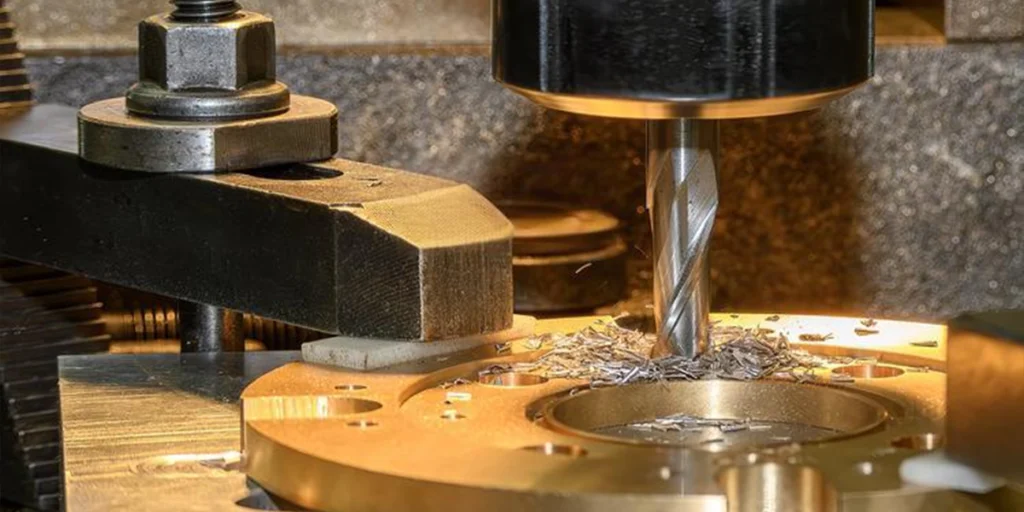
Advantages of brass materials
Brass has always been one of the most consistently in-demand materials in the CNC turning industry. Whether in electronics, electrical engineering, fluid control, automotive parts, or industrial equipment, brass turned parts have long held an important position.
Brass combines good machinability, stable mechanical properties, excellent corrosion resistance, and high economic efficiency. For buyers, this means brass is easy to manufacture and easy to control in terms of quality, while also offering a long service life in many applications.
1. Excellent cutting performance
Brass is considered one of the most suitable metal materials for CNC turning.
Compared to stainless steel, titanium alloys, or high-strength steel, brass has the following advantages during processing:
- Low cutting resistance
- Minimal tool wear
- Smooth chip removal
- Stable surface quality
- Fast processing time
This gives brass parts a significant efficiency advantage in mass production. For parts with the same structure, brass typically has a lower manufacturing cost than materials that are difficult to machine.
2. Good dimensional stability
Many precision parts require:
- Thread accuracy
- Outer diameter stability
- Consistent inner diameter
- Reliable fit tolerances
Brass has a low tendency to deform during processing and good dimensional stability, making it very suitable for:
- Connector components
- Threaded parts
- Sealing mating parts
- Precision instrument parts
This is also a major reason why brass has long been used for high-repeat orders.
3. Excellent corrosion resistance
Brass exhibits good corrosion resistance in ordinary air, water, and most industrial environments, and is therefore widely used in:
- Waterway system
- Pneumatic system
- Valve system
- Outdoor equipment accessories
Compared to ordinary carbon steel, brass does not require additional rust prevention treatment to achieve a better service life.
4. Good electrical and thermal conductivity
Brass possesses both good electrical and thermal conductivity, resulting in consistently stable demand in the electronics and electrical industries, for example:
- Electrical terminals
- Connector components
- Conductive contacts
- Communication equipment parts
If a project requires both mechanical strength and a certain level of electrical conductivity, brass is usually a very balanced choice.
5. Good appearance quality
Brass naturally possesses a metallic luster, resulting in a superior appearance after processing, and can be further refined:
- Polishing
- Nickel plating
- Chrome plating
- Brushed finish
Therefore, it is also commonly used in decorative hardware, instrument exterior parts, and high-end accessories.
Common brass grades
Different projects may use different brass materials, for example:
- C360 / H59: High cutting performance, suitable for batch turning
- H62: Balanced overall performance
- C260: Good formability
- Special environmentally friendly brass: suitable for export requirements.
The choice of specific materials usually depends on mechanical properties, processing efficiency, environmental regulations, and budget.
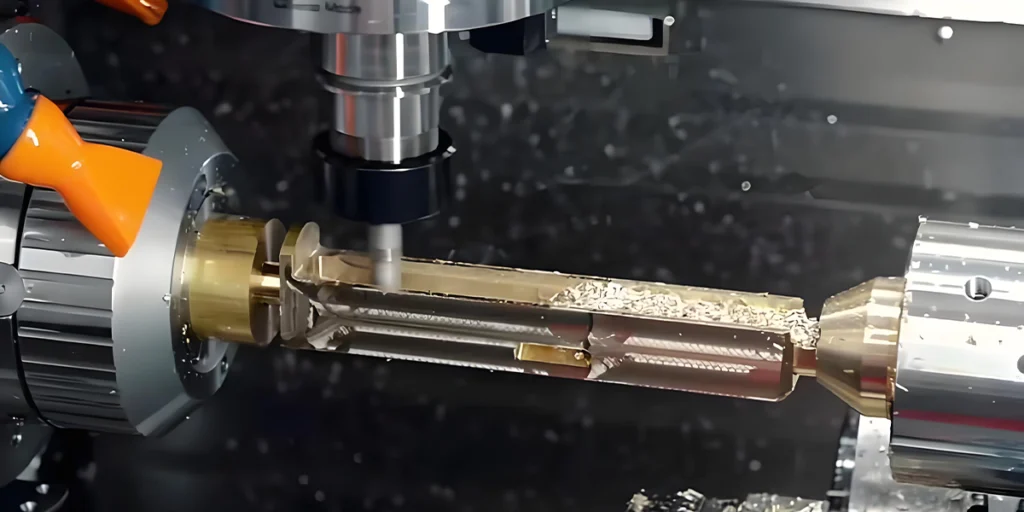
Electrical connectors and valve applications
The stable demand for brass CNC turning parts is largely due to two persistent markets: the electrical connection market and the fluid control market.
These two industries cover a wide range of sectors, from household appliances to industrial automation, from building systems to new energy vehicles, and will continue to use brass precision parts.
1. Application of electrical connectors
Brass has good electrical conductivity, dimensional stability and processing efficiency, so it is widely used in various electrical connectors.
Typical products include:
- Terminal blocks
- Pins and sockets
- Connector housing
- Cable connector
- Communication equipment interface components
- Power connection components
These types of parts typically require:
- Precise dimensions ensure stable connection.
- Smooth surface reduces contact resistance
- Reliable threads, easy to assemble
- High batch consistency
CNC turning can reliably meet these requirements, and is especially suitable for high-repetition orders.
2. Valve and Fluid Control Applications
Brass is also one of the most common materials in the valve industry, and is widely used in:
- Internal parts of the water valve
- Pneumatic connector
- Pipe joints
- Pressure control components
- Hydraulic auxiliary components
- Household bathroom valves
These types of parts typically require:
- Precision thread seal
- Corrosion resistant
- Long-term stable use
- Sufficient structural strength
Brass performs reliably and successfully in both water and gas environments, and is therefore widely used globally.
3. Why is demand stable in both markets?
Because they belong to “basic industrial needs,” they will not disappear easily:
- Continuous construction of the power system
- Continuous demand for building water supply and drainage
- Industrial automation continues to upgrade
- New energy equipment continues to expand
- Consumer electronics are constantly being updated.
This means that there are stable orders for brass electrical components and valves over the long term.
If you already have drawings for brass fittings, valves, or connectors, Zhuohua Hardware can assist in evaluating processing methods, material grades, and bulk pricing options.
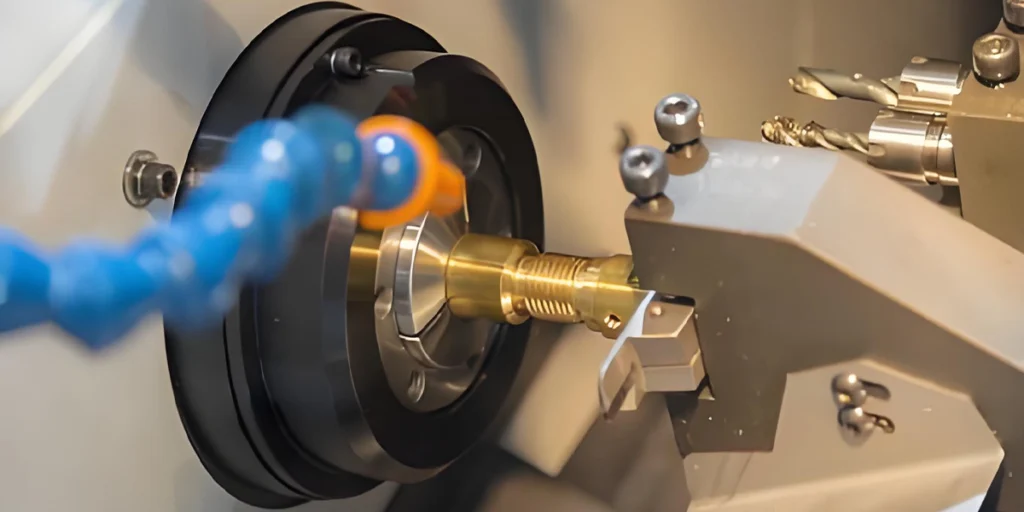
Reasons for the high efficiency of brass processing
The reason why brass CNC turning parts have been popular in the market for a long time is not only because of the stable material properties, but also because of its very high processing efficiency in the manufacturing process.
For purchasing customers, processing efficiency typically directly affects three things:
- Unit cost
- Delivery cycle
- Stability of bulk supply
This is why many structural components, connectors, and valves prioritize brass materials, provided they meet performance requirements.
1. Low cutting resistance
Compared to high-strength materials such as stainless steel and alloy steel, brass offers lower cutting resistance, smoother tool entry, and more stable spindle load.
This means:
- Higher cutting speeds can be used
- Faster processing cycle
- Less vibration
- More stable dimensional consistency
For bulk orders, this efficiency advantage will be amplified.
2. Relatively little wear on cutting tools
Many customers only focus on the unit price of materials, but ignore the manufacturing costs caused by tool wear.
Tool wear is relatively low during brass machining, which can result in:
- Reduced tool change frequency
- Reduced downtime
- Reduced tool procurement costs
- Improved stability in mass production
Especially in orders involving tens of thousands of pieces, differences in tool life can significantly affect the final price.
3. Suitable for continuous production
Brass materials typically have smoother chip removal after cutting, and are less prone to long, tangled chips.
This is crucial for automated production because it means:
- More stable automatic feeding
- Continuous production at night is more reliable.
- Reduce the frequency of manual intervention
- Reduce abnormal equipment downtime
Therefore, brass is very suitable for long-term repeat orders and automated lathe production models.
4. Surface quality is easier to control.
Brass typically achieves a good surface finish after machining. Many parts meet usage requirements immediately after machining, or require only minor post-processing.
Common benefits include:
- Reduce rework and polishing
- Reduce post-processing time
- Appearance components are easier to meet standards
- Improve yield
This is especially important for exposed parts, connectors, and decorative parts.
5. High thread processing efficiency
Brass is widely used in a variety of joints and connectors, and these parts often contain a large number of threaded structures.
Brass exhibits stability in thread turning, tapping, and thread rolling processes, enabling the following:
- Consistent thread dimensions
- Clear tooth shape
- Fast processing speed
- Good assembly performance
This is also an important reason why the demand for brass in the connector market remains stable.
How Zhuohua Hardware Leverages the Advantages of Brass
We have a long history of handling orders for precision brass parts and are able to help our clients control costs through our mature processes.
- Automated feeding bar production
- Batch turning cycle time optimization
- Multi-axis equipment improves efficiency.
- Stable mass production of threaded parts
- Accuracy up to ±0.02mm
For repeat procurement projects, we can also continuously optimize the process path to further reduce the unit cost.
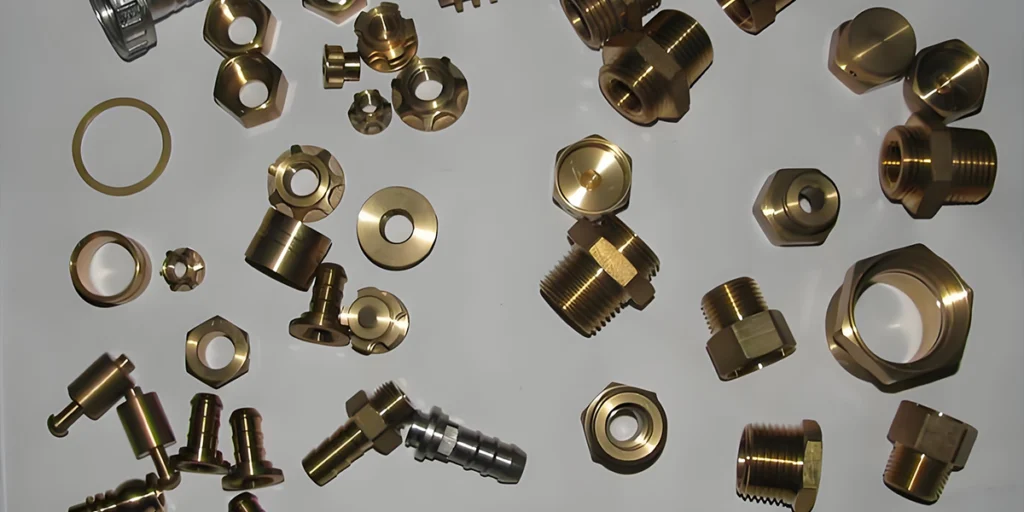
Advantages of Chinese Brass Parts Manufacturers
It is no coincidence that a large number of global orders for CNC-machined brass parts have long been concentrated in the Chinese supply chain.
The reason is not just “cheap price”. More importantly, China has a complete brass material supply system, mature precision processing capabilities, and stable large-scale delivery capabilities.
For overseas buyers, this means higher efficiency, lower total costs, and stronger supply security.
1. Mature and stable raw material supply
China has a well-established supply system for copper and brass bars, and can sustainably provide materials in various specifications, such as:
- Round bar
- Hexagonal rod
- Custom-made bar stock
- Environmentally friendly brass material
This means that customer orders can be initiated faster and material delivery times are more controllable, making it especially suitable for projects involving continuous procurement of multiple models.
2. Concentrated precision machining capacity
China has a large concentration of mature CNC machining capacity in manufacturing regions such as the Pearl River Delta and the Yangtze River Delta, which can quickly undertake:
- Small batch prototyping
- Medium-batch trial production
- Large-volume, long-term orders
Compared to the limited capacity of individual factories in many regions, China’s supply chain makes it easier to expand production capacity.
3. More competitive cost structure
The advantage of Chinese brass parts usually comes from overall cost control, not just processing fees:
- High efficiency in raw material procurement
- High equipment utilization rate
- Mature technological experience
- Supporting surface treatment center
- Mature logistics export
Therefore, many international customers, even those who value quality, continue to choose Chinese suppliers.
4. Rich experience in process technology
Brass parts typically involve:
- Precision threads
- Sealed structure
- Connector size fit
- Surface plating requirements
- High consistency mass production
China’s manufacturing industry has accumulated rich experience in these projects through long-term exports, enabling it to understand customer standards more quickly.
5. Strong one-stop supporting capabilities
When customers purchase brass parts, they often require not only machining but also:
- Polishing
- Nickel plating
- Chrome plating
- Laser marking
- Assembly
- Customized packaging
China’s supply chain can usually complete the matching in the same region, reducing the cost of coordinating multiple suppliers.
Zhuohua Hardware’s Supply Chain Value
As a manufacturer with a long-term focus on overseas markets, we can offer:
- Manufacturing of precision-machined brass parts
- Rapid procurement of materials in multiple specifications
- CNC turning + milling combined machining
- Integrated surface treatment services
- From prototype to mass delivery
- Global export support
We understand the core requirements of international procurement projects: stable quality, on-time delivery, and continuous responsiveness.
If you are looking for a manufacturer of CNC-machined brass parts in China, Zhuohua Hardware can provide quick quotes and manufacturing advice based on drawings, samples, or required specifications.