


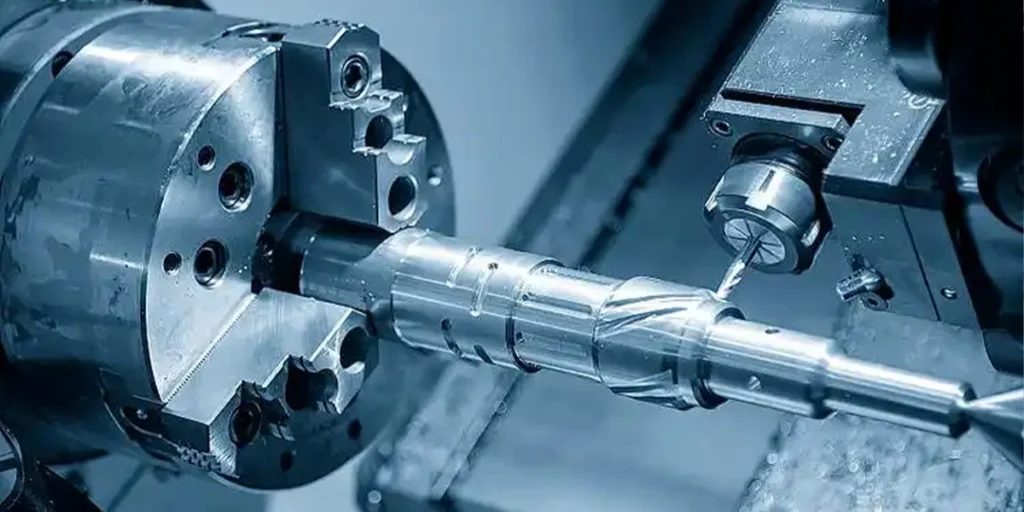
Difficulties in machining stainless steel
Stainless steel is one of the most common engineering materials used in CNC turning, and is widely used in medical devices , food processing equipment, automotive parts , industrial connectors , valve systems, and marine components. It possesses excellent corrosion resistance, mechanical strength, and long-term stability, thus ensuring consistent demand in high-requirement projects.
However, from a manufacturing perspective, stainless steel is not an “easy-to-process” material.
Many buyers only see the performance of finished stainless steel products, but ignore the difficulty of processing them. This is why there are often significant differences in the price, delivery time, and quality of stainless steel parts between different suppliers.
1. Significant work hardening
Stainless steel is prone to work hardening during machining. Simply put, when the cutting tool does not cut sufficiently, the parameters are unreasonable, or the surface is repeatedly rubbed, the surface layer of the material will harden, making it more difficult for subsequent cutting tools to penetrate.
This will lead to:
- Accelerated tool wear
- Increased size fluctuations
- Surface roughness deteriorates
- Increased processing time
- Increased unit cost
This is especially noticeable in thin-walled parts, small precision parts, or deep hole structures.
2. Poor thermal conductivity, prone to heat accumulation.
Compared to aluminum and brass, stainless steel has lower thermal conductivity. Heat generated during cutting is more likely to concentrate in the cutting area of the tool rather than be quickly conducted away.
The result is usually:
- Blade tip temperature rises
- Shortened tool life
- Increased risk of surface burns
- Decreased stability during finishing
Therefore, stainless steel turning usually requires more reasonable cooling solutions, cutting fluid management, and tool selection.
3. The cutting tool wears out quickly.
In particular, austenitic stainless steel (such as 304 and 316) has high toughness, which makes it easy to form continuous chips and pull on the cutting tool during cutting.
If process control is insufficient, common problems include:
- Chipped edge of the knife
- Increased burrs
- Size drift
- Surface tear
This is why stainless steel parts should not be compared solely on unit price, but rather on overall stable delivery capability.
4. Prone to burrs and surface scratches
Stainless steel has high toughness, making it prone to burr formation when machining threads, grooves, holes, and end faces. Inadequate post-processing can affect:
- Assembly accuracy
- Sealing performance
- Appearance quality
- Safety of use (especially important for medical devices)
Therefore, stainless steel processing usually requires additional deburring, polishing, or secondary finishing processes.
5. Tolerance control is more difficult.
For high-precision stainless steel parts, such as:
- Shaft-type components
- Connector components
- Medical connectors
- Precision sleeve
Customers typically require:
- ±0.02mm or even tighter tolerance
- Concentricity control
- Stable thread fit
- Surface roughness meets standards
Due to the high cutting resistance of the material, such requirements necessitate that equipment, cutting tools, processes, and testing be in place simultaneously.
How to reduce the risks in stainless steel processing?
Professional suppliers typically control quality in the following ways:
- Choose appropriate tool materials and coatings
- Optimize speed and feed parameters
- Use a stable cooling system
- Differentiated Roughing and Finishing Strategies
- Online inspection of key dimensions
- Enhance deburring and surface treatment processes
304 vs 316 comparison
304 and 316 are the two most common materials used in CNC turning of stainless steel. Many customers ask during inquiries: Should I choose 304 or 316 for this part?
The answer depends on the environment in which it will be used, the budget, corrosion resistance requirements, and industry standards, not simply on price. Although both are austenitic stainless steels with good corrosion resistance and machinability, they are positioned differently.
1. 304 stainless steel: the most common choice
304 is the most widely used stainless steel grade on the market and is suitable for most conventional industrial environments.
Common applications:
- General mechanical parts
- Exterior components
- Fasteners
- Food processing equipment parts
- Instrument casing
- Industrial connectors
Key advantages:
- Lower cost
- Stable material supply
- Balanced overall performance
- Good processing adaptability
If the parts are not exposed to a highly corrosive environment for a long period of time, 304 is usually a cost-effective choice.
2. 316 stainless steel: Enhanced corrosion resistance
316 stainless steel has added molybdenum compared to 304, resulting in stronger corrosion resistance and making it particularly suitable for:
- Marine environment
- High humidity and high salinity environment
- Chemical equipment
- Medical equipment
- High-end food processing system
Common applications:
- Medical connectors
- Pump and valve parts
- Beach equipment and accessories
- Pharmaceutical equipment parts
Key advantages:
- Enhanced resistance to pitting corrosion
- More suitable for salt spray environments
- Better stability with long-term use
3. Cost differences
316 is generally more expensive than 304 material, and is also slightly more difficult to process, so the final price of the parts is usually higher than that of 304.
Procurement Recommendations:
- If the usage environment is ordinary, choosing 304 is more economical.
- 316 is more reliable if it is exposed to moisture, cleaning agents, salt, or chemical media for a long time.
4. Differences in processing angles
From a CNC turning perspective, both can be machined stably, but 316 typically exhibits the following characteristics:
- Higher cutting resistance
- Tools wear out faster
- Processing cycle is slightly slow
Therefore, higher requirements are placed on equipment stability and process experience.
5. How to choose the most suitable materials
Select 304 if you need:
- Control procurement costs
- Suitable for general industrial environments
- Conventional mechanical parts
- Medium corrosion resistance requirements
Choose 316 if you need:
- Medical-grade applications
- High-standard food environment
- Seaside/High-salt environment
- Longer lifespan and lower maintenance risk
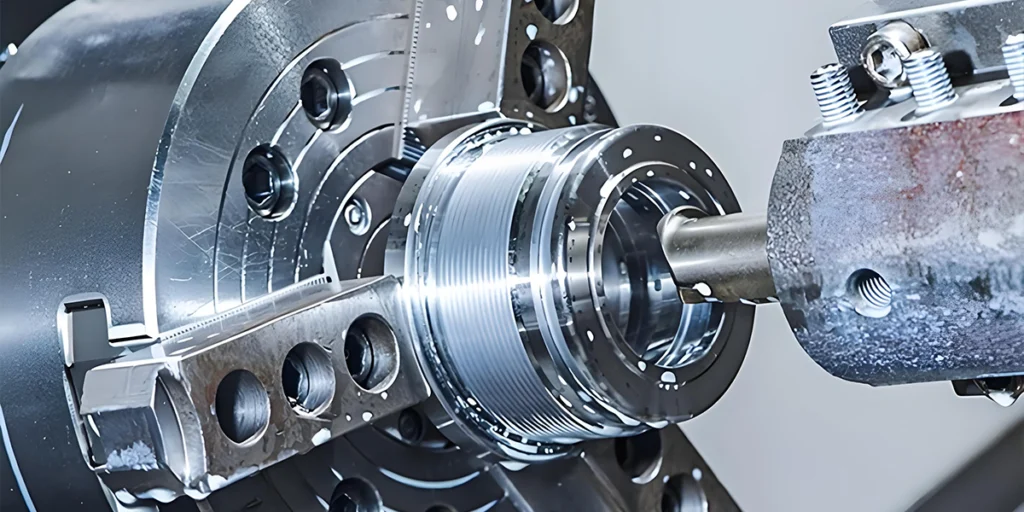
Medical and food industry applications
Stainless steel CNC machined parts have stable demand across many industries, but the two areas with the highest requirements and the most cautious procurement are typically:
- Healthcare industry
- Food processing industry
The reasons are clear: these two industries not only focus on whether parts are usable, but also on hygiene, safety, corrosion resistance, long-term stability, and traceability. This is why 304 and 316 stainless steel are used so extensively in these two fields.
1. Applications in the medical industry
Medical components are typically small in size, but their requirements are far higher than those of ordinary industrial parts. Many customers are not just concerned with tolerances, but rather:
- Surface cleanliness
- Burr-free treatment
- Corrosion resistance
- Assembly stability
- Batch consistency
- Material traceability
Common medical turning parts include:
- Medical device connectors
- Surgical instrument shaft components
- Precision threaded connectors
- Monitoring equipment sleeve
- Miniature parts for pumps and valves
- Laboratory instrument structural components
Why does the medical industry prefer 316/316L?
Because of its superior corrosion resistance, it can adapt to:
- Disinfectant environment
- High-frequency cleaning environment
- Humid environment
- Long-term usage requirements
The 316L low-carbon version is also more suitable for some high-standard applications.
Medical Project Manufacturing Focus
For medical clients, the manufacturing process typically requires close monitoring.
- Sharp edge removal
- Precision of micro-hole positions
- Surface roughness
- Clean Packaging Requirements
- Stable repetitive production capacity
At Zhuohua Hardware, we can provide high-precision CNC turning according to customer requirements, along with surface treatment, inspection, and batch delivery support.
2. Applications in food processing equipment
The food processing equipment industry also has stringent requirements for materials because the parts often come into direct contact with the outside:
- Moisture
- Food ingredients
- Cleaning agent
- Acidic and alkaline environments
- High-frequency flushing system
If the wrong materials are selected, problems such as rust, contamination, or shortened lifespan may occur.
Commonly machined parts in the food industry:
- Pipe joints
- Valve core
- Nozzle components
- Conveyor equipment bushing
- Filling equipment connectors
- Sealing structural components
304 stainless steel is commonly used in food processing equipment
304 has the following features:
- Good corrosion resistance
- The cost is relatively reasonable
- High acceptance in the food industry
- Easy to clean and maintain
For ordinary food processing equipment, 304 stainless steel is often sufficient.
In what situations is 316 used ?
If the equipment is in the following environments, 316 is more suitable:
- High-salt environment
- High-frequency chemical cleaning
- High humidity environment
- Longer lifespan requirements
- High-end food/pharmaceutical grade equipment
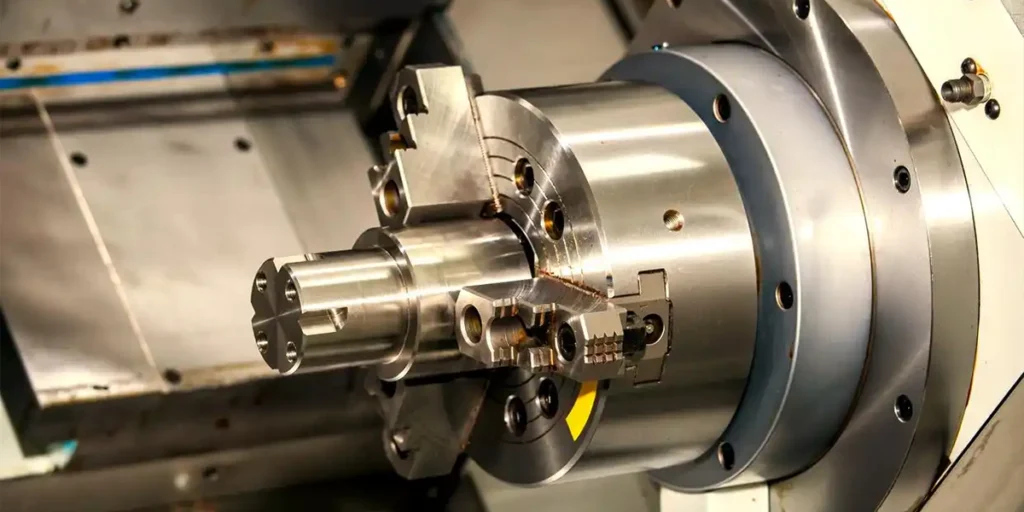
How to ensure surface quality
For CNC-machined stainless steel parts, many customers don’t look at the dimensions first, but rather the surface finish. Especially in the following projects, surface quality directly impacts purchasing decisions:
- Medical components (cleanliness)
- Food processing equipment parts (hygienic and corrosion resistant)
- Exterior components (visual effects)
- Seal quality (contact surface quality)
- Precision mating parts (friction and life)
Therefore, meeting dimensional standards does not guarantee that a part is truly qualified. High-quality stainless steel parts must achieve both dimensional stability and surface stability.
Core factors affecting the surface quality of stainless steel
1. Tool Status
Common problems after tool wear:
- Surface texture
- Roughness deteriorates
- Increased burrs
- Localized burns
Professional factories establish tool life management systems instead of waiting until they break before replacing them.
2. Cutting parameters
Improper settings for rotation speed, feed rate, and depth of cut can lead to:
- Vibrating knife pattern
- Heat discoloration
- Surface unevenness
The parameters should also be different for different material grades (304 / 316).
3. Clamping stability
If the clamping rigidity is insufficient, the workpiece may vibrate slightly, causing:
- Roundness deviation
- Surface ripples
- Size instability
This is especially evident in slender shafts.
4. Cooling and chip removal
Stainless steel is prone to heat accumulation; if it is not cooled sufficiently, the surface may develop the following issues:
- Burn marks
- Sticky knife texture
- The knife marks deepened
A stable cooling system is crucial.
Post-processing also determines the final appearance.
Many customers overlook this point: the surface quality is not truly finished after CNC machining is completed.
Common post-processing methods include:
- Deburring: Remove burrs from holes, threads, and edges to improve assembly and safety.
- polishing: Suitable for appearance parts, medical parts, and contact parts.
- Sandblasting: It creates a uniform matte texture, enhancing the consistency of the appearance.
- passivation: Enhanced corrosion resistance, commonly found in stainless steel parts.
Electropolishing (High-requirement project)
Suitable for high-cleanliness and high-corrosion-resistant applications.
What surface requirements should be specified during procurement?
We suggest that customers indicate this in their drawings or inquiries:
- Surface roughness (Ra value)
- Is a mirror effect required?
- Are knife marks allowed?
- Is sandblasting/polishing required?
- Is passivation necessary?
- Exterior surface location
Otherwise, suppliers are likely to follow “general industry standards” rather than your actual needs.
If you have stainless steel turning parts manufacturing services , we can recommend more suitable surface standards based on the application and provide manufacturing and post-processing solutions.