


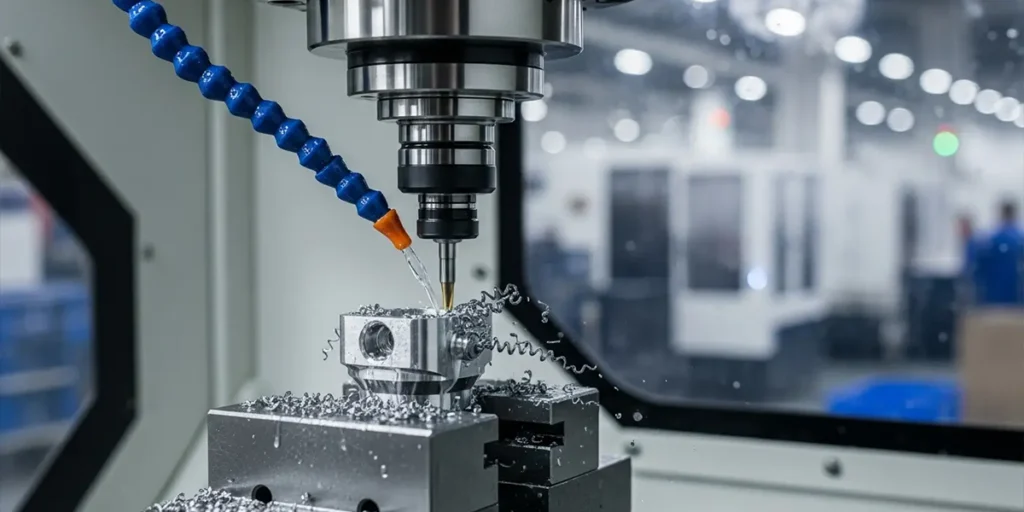
304 stainless steel is one of the most widely used stainless steel materials in the world, and is used extensively in medical, food equipment, automobiles, industrial automation, electronic equipment and consumer products.
For many engineers and purchasing teams, 304 stainless steel offers several advantages:
- Corrosion resistance
- Processing stability
- Cost control
- Strength performance
- Long-term reliability
Therefore, it has become the default material choice for many CNC machining projects. However, on the other hand, 304 stainless steel is not an “easy-to-machine” material.
Compared to aluminum alloys or low-carbon steel, 304 stainless steel is more prone to defects during CNC machining.
- Tool wear
- Work hardening
- Surface tear
- Heat distortion
- Burr problem
This is why more and more companies are starting to look for CNC suppliers who truly have experience in stainless steel processing.
At Zhuohua Hardware, we have long provided CNC machining services for 304 stainless steel to global customers , supporting:
- CNC milling
- CNC turning
- Multi-axis complex machining
- Prototype development
- Mass production
We can optimize 304 stainless steel processing solutions for our clients based on different part structures, surface requirements, and assembly needs, helping projects achieve a more stable balance between quality, delivery time, and cost.
Why is 304 stainless steel widely used?
Excellent corrosion resistance
One of the biggest advantages of 304 stainless steel is its excellent corrosion resistance.
It can maintain stable performance in a variety of industrial environments, including:
- Humid environment
- Food processing environment
- General chemical environment
- Outdoor environment
This makes 304 an ideal material for many long-term used parts.
Compared to ordinary carbon steel, 304 stainless steel can effectively reduce:
- Rust problem
- Surface oxidation
- Maintenance costs
- Service life risk
Therefore, many industrial equipment and commercial products prioritize the use of 304 material.
Good processing and welding properties
Although 304 is not classified as a “free-machining material”, it still possesses good overall manufacturing performance.
304 is suitable for:
- CNC milling
- CNC turning
- Drilling
- Tapping
- Welding
- Polishing
This means engineers can design complex parts with greater flexibility. For many OEM projects, 304 stainless steel not only meets structural strength requirements but also accommodates subsequent assembly and surface treatment needs.
Excellent balance between strength and toughness
304 stainless steel possesses stable mechanical properties. Compared to some brittle materials, 304 is more suitable for complex structural components and long-term load-bearing parts.
Its advantages include:
- Good impact resistance
- High toughness
- Stable structural strength
- Long-term durability
Therefore, it is widely used in:
- Automated equipment
- Industrial machinery
- Medical devices
- Consumer electronics
- Food processing equipment
Strong adaptability to surface treatment
304 stainless steel can support a variety of surface treatment processes.
- Wire drawing
- Mirror polishing
- Sandblasting
- Electropolishing
- Passivation treatment
For many exterior parts and high-end equipment components, 304 can simultaneously meet the following requirements:
- Functional requirements
- Appearance requirements
- Corrosion resistance requirements
This is one of the key reasons why 304 has been widely used in the high-end manufacturing industry for a long time.
Mature global supply chain
304 stainless steel has become one of the globally standardized materials. This means:
- Stable material procurement
- Costs are relatively controllable
- International standardization
- Alternative materials are easy to match
Many customers prioritize long-term supply stability when choosing materials, and 304 stainless steel perfectly meets this requirement.
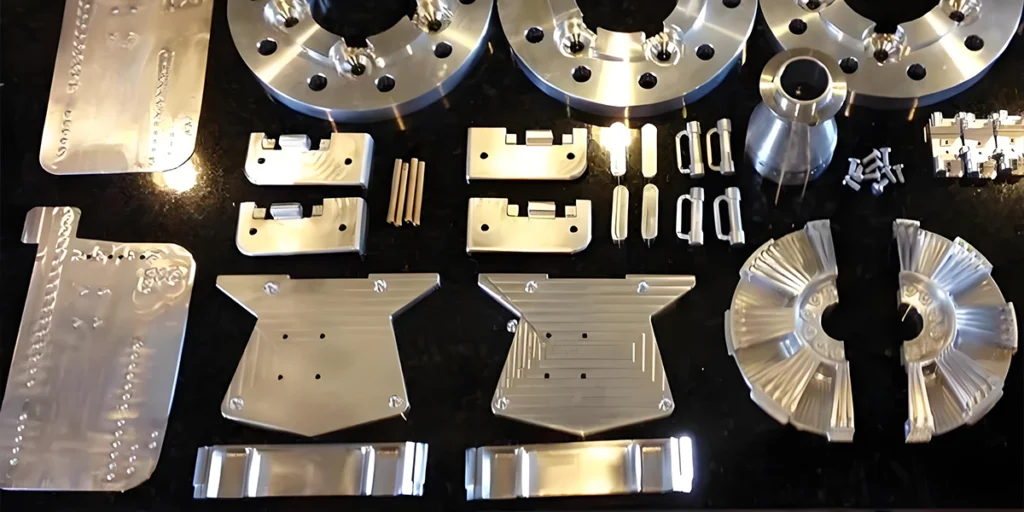
Difficulties in processing 304 stainless steel
Significant work hardening
One of the biggest challenges in processing 304 stainless steel is its susceptibility to work hardening. When excessive heat is generated during cutting, the material surface hardens rapidly.
This will lead to:
- Accelerated tool wear
- Increased cutting force
- Surface quality deteriorates
- Decreased dimensional stability
If the cutting parameters are not controlled properly, subsequent machining will become increasingly difficult. Therefore, machining 304 typically requires a more stable cutting strategy and an experienced engineering team.
Poor thermal conductivity
Compared to aluminum, 304 stainless steel has lower thermal conductivity.
The heat generated during processing is more likely to be concentrated in:
- Knives
- Cutting area
- Workpiece surface
This will further increase:
- Tool wear
- Risk of thermal deformation
- Surface burn problem
Therefore, 304 machining usually requires a more reasonable cooling solution.
The tool wears out quickly.
304 material has strong toughness.
During prolonged processing, the following issues may occur:
- Plastygium
- Blade tip wear
- Tool breakage
Especially in:
- Deep cavity machining
- Knife processing
- High-speed machining
These problems will become even more apparent. Therefore, stainless steel machining places extremely high demands on the quality of cutting tools and machining experience.
Burr control is quite difficult
304 stainless steel is prone to burr problems during hole machining and edge machining.
Especially in:
- Small hole
- Thin-walled structure
- Precision assembly position
If burrs are not properly controlled, it may directly affect:
- Assembly accuracy
- Sealing performance
- Product appearance
Therefore, professional stainless steel processing manufacturers usually establish specialized deburring and quality inspection processes.
Thin-walled parts are prone to deformation
For thin-walled 304 stainless steel parts, machining deformation is a common problem.
The main reasons include:
- Cutting stress
- Heat accumulation
- Clamping pressure
This is why complex stainless steel parts often require:
- Optimization through multiple clamping operations
- Phased processing
- Reasonable margin control
At Zhuohua Hardware, we have extensive experience in processing thin-walled stainless steel parts, enabling us to reduce the risk of deformation and improve batch consistency through process optimization.
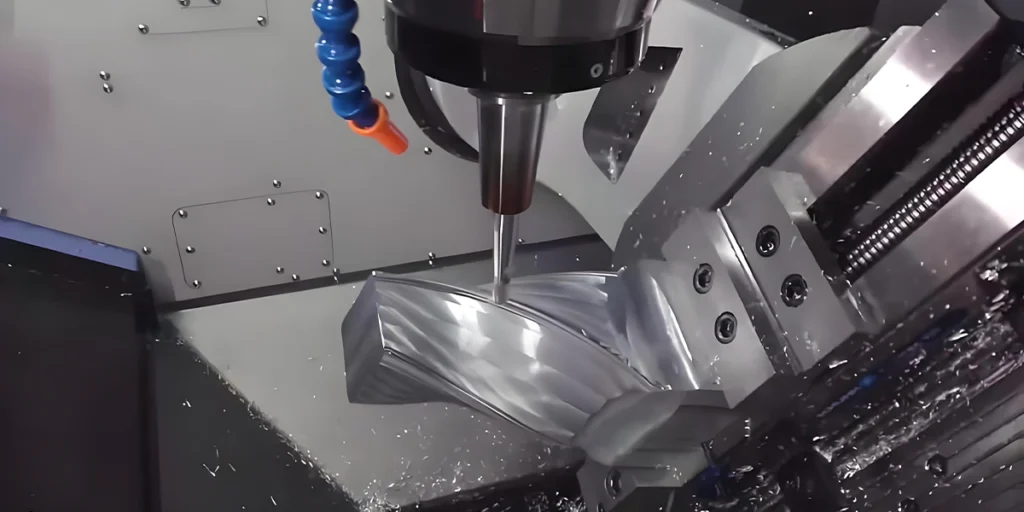
How to mill 304 stainless steel
Choose the right cutting tool
304 stainless steel has strong toughness and significant work hardening characteristics, so the choice of cutting tools is very critical.
In most cases, the recommended method is:
- Carbide cutting tools
- High-temperature resistant coated cutting tools
- High-rigidity short-bladed cutting tools
For machining deep cavities and complex structures, tool stability has a direct impact:
- Surface quality
- Dimensional accuracy
- Tool life
- Processing efficiency
In actual production, we will select different tooling solutions for customers based on the part’s structure, wall thickness, and surface requirements in order to balance processing efficiency and cost.
Controlling cutting parameters
One of the most important issues in the processing of 304 stainless steel is to avoid overwork hardening.
Therefore, it is generally not recommended:
- Repeated air cutting with the blade
- Shallow cutting
- Long-term dwell time cutting
Proper control of rotational speed, feed rate, and depth of cut can effectively reduce:
- Heat accumulation
- Surface hardening
- Abnormal tool wear
For high-precision 304 parts, machining parameters often need to be continuously optimized based on the actual structure, rather than simply relying on fixed empirical values.
The cooling system is very important.
304 stainless steel has poor thermal conductivity, and cutting heat tends to concentrate in the tool area.
If cooling is insufficient, the following may occur:
- Rapid tool wear
- Surface burns
- Size drift
- Surface roughness deteriorates
Therefore, stainless steel processing typically requires a stable coolant system.
Especially in:
- Deep cavity machining
- Small hole machining
- Long-term continuous processing
Cooling capacity directly affects processing stability.
Optimize clamping and machining path
304 stainless steel parts are prone to deformation due to stress release during the machining process.
- Thin-walled structure
- Long strip structure
- Large-size plate parts
If the clamping method is not reasonable, it can easily lead to dimensional deviation after machining.
Therefore, professional stainless steel processing usually focuses on optimization:
- Clamping position
- Processing sequence
- Balance allocation
- Tool path
At Zhuohua Hardware, we conduct DFM and process assessments before mass production to help customers identify potential deformation risks in advance.
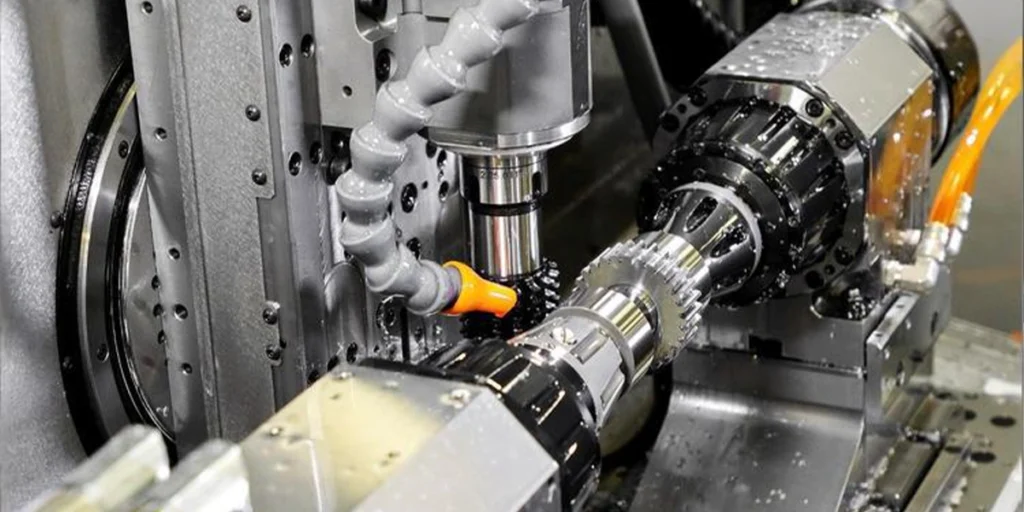
Typical industry applications of 304 stainless steel parts
Medical equipment
304 stainless steel has good corrosion resistance and hygienic properties, and therefore is widely used in:
- Structural components of medical equipment
- Surgical aids
- Instrument casing
- Support assembly
In the medical industry, in addition to precision, surface quality and stability are equally important.
Food and beverage equipment
304 is one of the most common stainless steel materials used in the food industry. Common applications include:
- Food machinery parts
- Conveying system components
- Valves and fittings
- Stainless steel casing
Its main advantages are:
- Easy to clean
- Corrosion resistant
- Long lifespan
- Surface stable
Industrial automation equipment
In the automation industry, a large number of structural and functional components use 304 stainless steel.
- Robot parts
- Connection structure
- Precision bracket
- Transmission components
Many automated devices operate at high frequencies for extended periods, so customers pay more attention to the durability and consistency of parts.
Consumer electronics and device housings
304 stainless steel is also an important material for many high-end appearance components. Especially in:
- Electronic devices
- Smart hardware
- Industrial control equipment
Clients typically require:
- A smoother surface
- More stable dimensions
- Higher assembly precision
Therefore, higher requirements are placed on processing technology and surface treatment capabilities.
Pumps, valves and fluid systems
304 is also very common in the fluid equipment industry.
- Pipe fittings
- Valve assembly
- Sealing structural components
- Fluid control components
Due to prolonged contact with liquid environments, corrosion resistance becomes a core requirement.
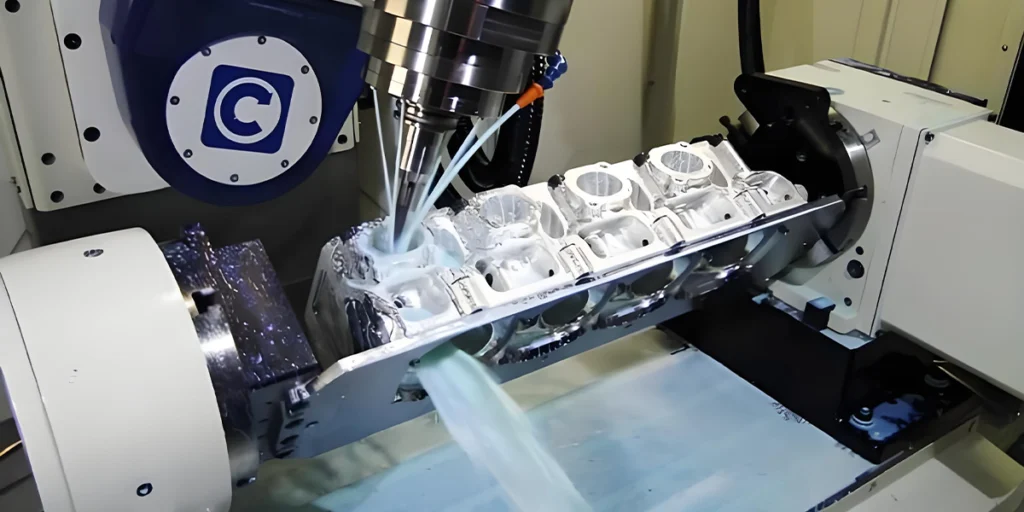
How to reduce the processing cost of 304 stainless steel
Optimize component structure design
Much of the cost of 304 stainless steel processing actually comes from unreasonable design.
- Excessively deep cavity
- Ultra-thin wall structure
- Difficult-to-machine interior angles
- Unnecessarily high tolerances
These factors will significantly increase machining time and tool consumption. Therefore, DFM optimization is crucial at the beginning of a project.
Reasonable control of tolerances
High precision is not required at all locations.
If high tolerance standards are used for the entire product, the cost will usually increase rapidly.
A more reasonable approach is:
- High precision in key positions
- Standard tolerances for non-critical areas
This can significantly reduce the overall processing cost.
Reduce complex clamping
Complex clamping means:
- More human time
- Longer production cycle
- Higher risk of error
Therefore, many complex 304 stainless steel parts will be given priority consideration:
- Multi-axis machining
- Process integration
- Milling and turning
This reduces redundant location.
Choose an experienced stainless steel processing supplier
Machining 304 stainless steel is not just a matter of equipment; it relies more on practical experience.
Inexperienced suppliers are prone to the following problems:
- Tool wear is too rapid
- Poor batch consistency
- Unstable surface quality
- Increased rework rate
Ultimately, this increases the overall procurement cost.
CNC machining services for 304 stainless steel to global customers , supporting everything from rapid prototyping to mass production, and helping customers reduce overall manufacturing costs through process optimization.