


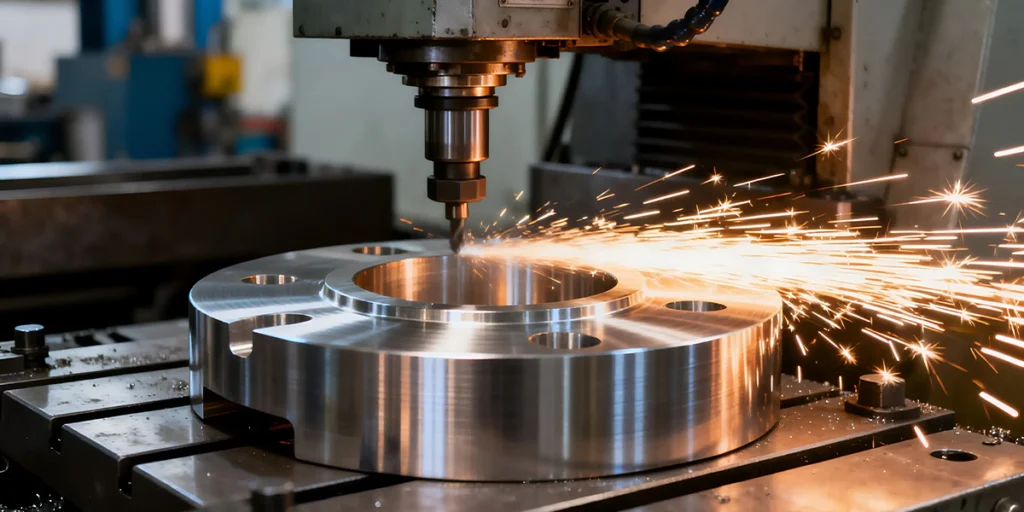
Stainless steel is one of the most common metal materials used in CNC machining, but there are significant differences between different grades in terms of cutting performance, corrosion resistance, strength, and cost.
For engineers and procurement teams, choosing the wrong stainless steel material can lead to:
- Increased processing costs
- Shortened component lifespan
- Unstable surface quality
- Increased maintenance costs
In actual projects, 303, 304, 316, and 416 stainless steel are some of the most common CNC machining materials. They are each suitable for different industrial environments and part types.
As a professional stainless steel CNC machining manufacturer, Zhuohua Hardware has long provided precision stainless steel CNC machining services to global customers, including:
- CNC milling
- CNC turning
- Multi-axis complex machining
- Prototype and mass production
We can help customers choose the most suitable material solutions based on the part’s structure, usage environment, and cost objectives.
Features of CNC machining of 303 stainless steel
Excellent cutting performance
The most significant characteristic of 303 stainless steel is its ease of machining. Compared to 304 and 316, 303 contains added sulfur, resulting in better machinability and effectively reducing:
- Tool wear
- Processing heat generation
- Burr problem
- Processing time
This is why 303 is frequently used in high-efficiency CNC turning and automated mass production. For small, precision parts that require mass production, 303 can typically significantly reduce overall manufacturing costs.
Suitable for high-efficiency mass production
303 stainless steel is widely used in:
- Fasteners
- Connector
- Valve parts
- Shaft-type parts
- Automated equipment parts
Especially in CNC turning projects, 303 has very stable machining performance.
At Zhuohua Hardware, we frequently use 303 stainless steel for high-precision turning, combining automated equipment with precision tool control to reliably achieve:
- High consistency
- Fast delivery
- Mass production stability
For export-oriented OEM projects, 303 is often the ideal choice that balances efficiency and cost.
Its corrosion resistance is lower than that of 304 and 316.
Although 303 has better processing performance, its corrosion resistance is weaker than that of 304 and 316.
Therefore, 303 is generally not recommended for:
- Marine environment
- Medical equipment
- Chemical equipment
- Long-term damp environment
If the project has high requirements for rust prevention, 304 or 316 stainless steel is usually more suitable.
Typical applications of 303 stainless steel
- Industrial automation parts: suitable for high-speed mass production.
- Precision shaft parts: possess excellent dimensional stability.
- Mechanical connectors: can reduce processing costs.
- Equipment for non-corrosive environments: suitable for general industrial applications.
Features of CNC machining of 304 stainless steel
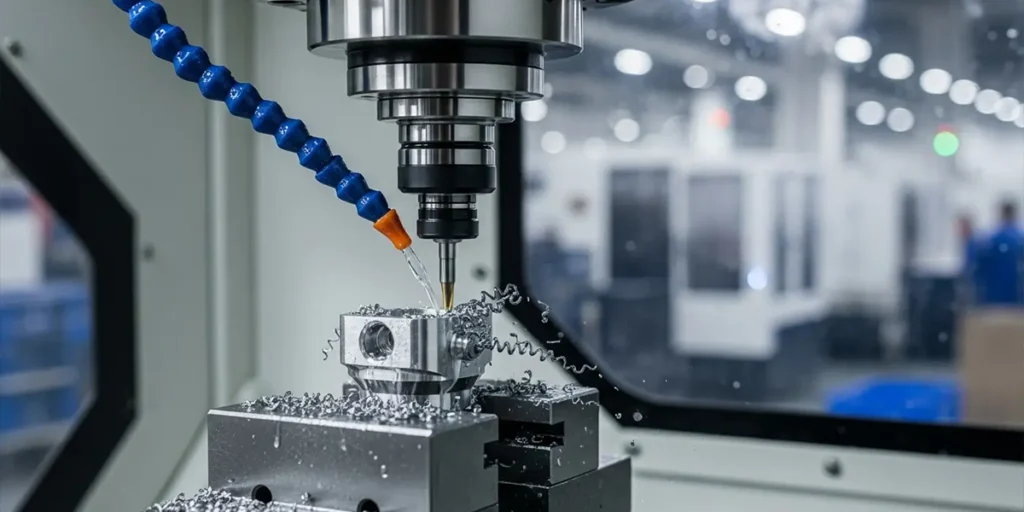
The most common stainless steel material
304 is one of the most widely used materials in CNC machining of stainless steel.
- Corrosion resistance
- Intensity
- Cost
- Welding performance
- Processing stability
Therefore, 304 is often regarded as the “standard stainless steel” in the industrial field. For most mechanical parts projects, 304 can achieve a good balance between performance and budget.
Excellent corrosion resistance
304 stainless steel contains a high proportion of chromium and nickel, thus it has good oxidation resistance and corrosion resistance.
It can adapt to:
- Humid environment
- Food processing environment
- Ordinary chemical environment
- Outdoor applications
Compared to ordinary steel, 304 stainless steel significantly reduces rust and maintenance issues. This is why a large number of industrial equipment, food processing machinery, and electronic equipment use 304 stainless steel parts.
304 is more difficult to process than 303.
Although 304 has excellent overall performance, its cutting performance is lower than that of 303.
304 is more likely to occur during CNC machining:
- Work hardening
- Tool wear
- Cutting temperature increases
- Burr problem
Therefore, 304 processing relies more on:
- Optimal toolpath
- Coolant control
- Stable clamping
- Experienced engineering team
For complex structural parts, improper control of machining parameters can easily affect dimensional accuracy and surface quality.
Common Applications of 304 Stainless Steel
- Food processing equipment parts: possessing good hygienic properties.
- Industrial structural components: balancing strength and cost.
- Electronic device housing: possesses excellent corrosion resistance.
- Medical assistive devices: suitable for general medical environments.
Features of CNC machining of 316 stainless steel
Stronger corrosion resistance
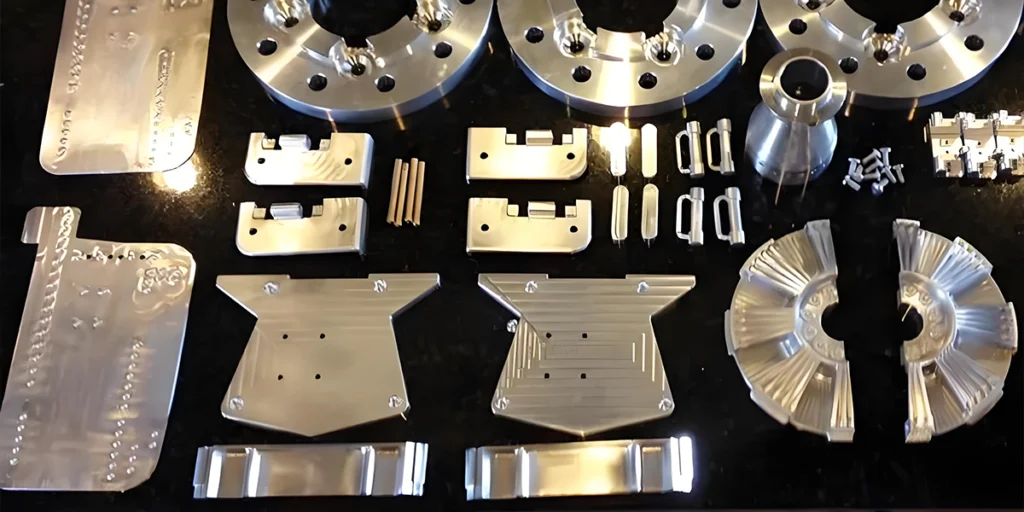
316 stainless steel is generally considered to be a higher grade of stainless steel than 304, and its core advantage lies in its stronger corrosion resistance.
Because molybdenum is added to 316, it is more stable in the following environments:
- Marine environment
- High humidity environment
- Chemically corrosive environments
- Medical and pharmaceutical environment
This is why 316 stainless steel is widely used in high-end industrial equipment and parts that are exposed to corrosive environments for extended periods.
Compared to 304, 316 can effectively reduce:
- Risk of rusting
- Surface corrosion
- Long-term maintenance costs
For precision parts that require long-term stable operation, 316 is usually a safer choice.
316 stainless steel is more difficult to process.
Although 316 has excellent performance, it is significantly more difficult to process than 303 and 304.
316 is more likely to occur during CNC machining:
- Work hardening
- Rapid tool wear
- Cutting heat accumulation
- Surface tear
Therefore, the processing of 316 stainless steel relies more on:
- High-rigidity equipment
- Stable clamping solution
- Appropriate tool materials
- Experienced process engineer
Especially in the machining of deep cavities, thin walls, and complex structures, the control of machining parameters is crucial. For ordinary machining plants, the 316 project often means a higher defect rate and a longer delivery time.
Typical applications of 316 stainless steel
316 is typically used in industries with high corrosion resistance requirements.
- Medical equipment: Suitable for prolonged contact with the human body and in disinfected environments.
- Marine equipment: Resistant to salt spray corrosion.
- Chemical equipment: suitable for corrosive liquid environments.
- Food and pharmaceutical equipment: Possesses more stable material properties.
Why does 316 stainless steel processing rely more on specialized suppliers?
316 not only has higher material costs, but also more complex stability control during processing.
At Zhuohua Hardware, we have a long history of machining precision parts made of 316 stainless steel, and we are able to:
- Multi-axis CNC machining
- Precision tooling strategy
- Stable cooling control
- Process Inspection Management
Helping clients achieve:
- More stable tolerances
- Better surface quality
- Lower batch risk
For medical, automation, and high-end industrial projects, 316 is typically a high-reliability solution.
Features of CNC machining of 416 stainless steel
416 has excellent cutting performance.
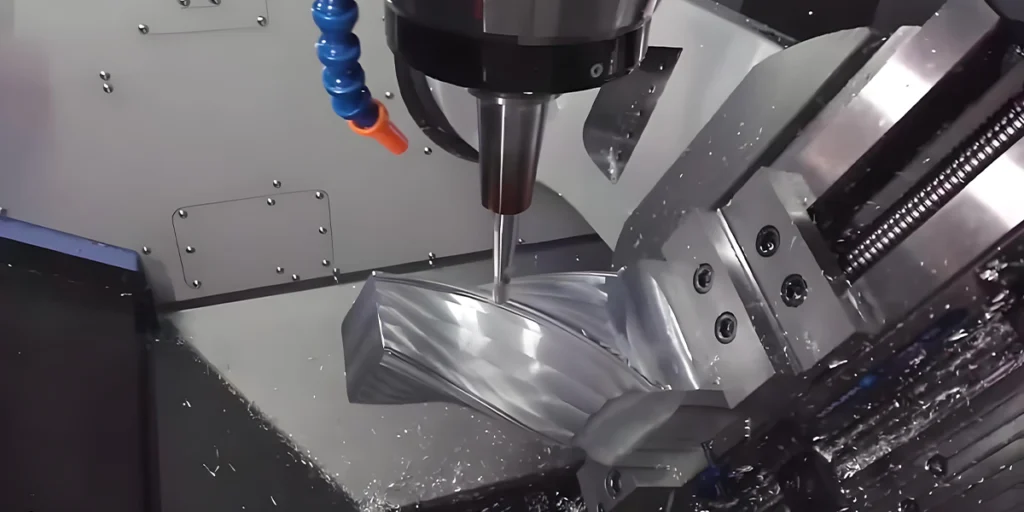
The most prominent feature of 416 stainless steel is its “high cutting efficiency”.
It belongs to martensitic stainless steel, and compared to 304 and 316, 416 is easier to machine, making it particularly suitable for:
- High-speed CNC turning
- Automated mass production
- High-precision shaft parts
Due to its low cutting resistance, 416 can effectively reduce:
- Tool wear
- Processing time
- Unit manufacturing cost
For precision mechanical parts that require mass production, 416 typically offers a significant efficiency advantage.
Suitable for high-precision mechanical parts
416 stainless steel is often used for:
- Motor shaft
- Gear parts
- Valve assembly
- Automated equipment parts
- Precision connectors
Especially in CNC turning, 416 stainless steel offers better dimensional stability and surface finish. For high-precision, mass-produced parts, 416 is often more suitable for automated production than 304 stainless steel.
Its corrosion resistance is lower than that of 304 and 316.
Although 416 has excellent machinability, its corrosion resistance is relatively weak.
Therefore, 416 is generally not applicable to:
- Marine environment
- Implantable medical devices
- Highly corrosive liquid environments
It is more suitable for:
- General industrial environment
- Dry environment
- Mechanical transmission system
When selecting materials, both processing efficiency and the final usage environment need to be considered.
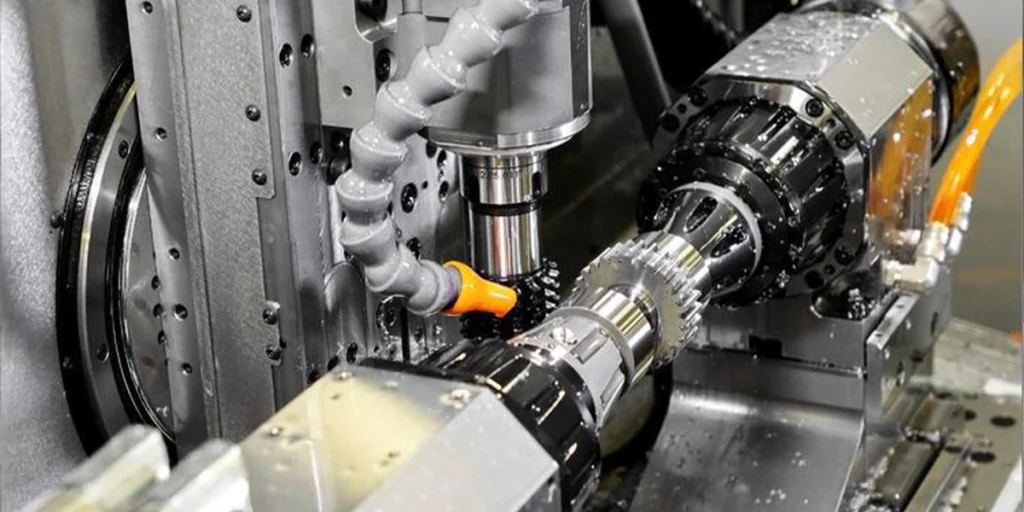
How to choose the right stainless steel material
For many purchasing personnel and product engineers, the biggest challenge in choosing stainless steel materials is not “which material is better”, but rather: which material is more suitable for the current project.
There is no absolute superiority or inferiority among 303, 304, 316 and 416, but rather different applications.
Choosing the wrong materials may result in:
- Increased processing costs
- Insufficient lifespan of parts
- Unstable surface quality
- Unnecessary material waste
Therefore, before formal production, it is usually necessary to consider processing performance, usage environment, cost budget, and part structure at the same time.
If processing efficiency is the priority
If the project focus is:
- Mass production
- Lower processing costs
- Higher processing efficiency
- High-speed CNC turning
Therefore, 303 and 416 are usually more suitable choices.
These two materials offer better cutting performance, reducing tool wear and increasing production efficiency.
in:
- 303 is more suitable for general industrial parts.
- 416 is more suitable for high-precision mechanical parts and shaft parts.
For OEM bulk projects, this type of material can usually effectively reduce the cost per unit.
If corrosion resistance is the priority
If the parts operate under the following conditions for a long period of time:
- Humid environment
- Chemical environment
- Food environment
- Marine environment
In this case, 304 or 316 stainless steel is generally more reliable. 304 is suitable for most standard industrial environments, while 316, due to its stronger corrosion resistance, is more suitable for high-end medical, marine, and chemical industries. Although 316 has a higher processing cost, it reduces the risk of later maintenance and replacement in the long run.
If the project requires a balance between cost and performance
For many industrial equipment and automation projects, 304 is often the most common solution.
- Cost control
- Corrosion resistance
- Mechanical properties
- Processing stability
Therefore, 304 is considered one of the most widely used stainless steel materials. For projects where material selection is uncertain, 304 is often a lower-risk choice.
Why professional stainless steel processing experience is important
Stainless steel CNC machining is not just about “cutting materials”.
Different grades of stainless steel, in:
- Tool selection
- Processing parameters
- Cooling control
- Clamping method
- Surface treatment
There are significant differences in all aspects.
Inexperienced processing plants are prone to the following problems:
- Size instability
- Surface burns
- Excessive burrs
- Low tool life
- Poor batch consistency
Zhuohua Hardware has long focused on precision stainless steel CNC machining , and supports:
- Machining of 303 / 304 / 316 / 416 stainless steel
- CNC milling and CNC turning
- Machining of multi-axis complex structures
- Prototyping and Mass Production
We can provide more suitable material and processing suggestions based on our clients’ industry, application environment, and budget requirements.