


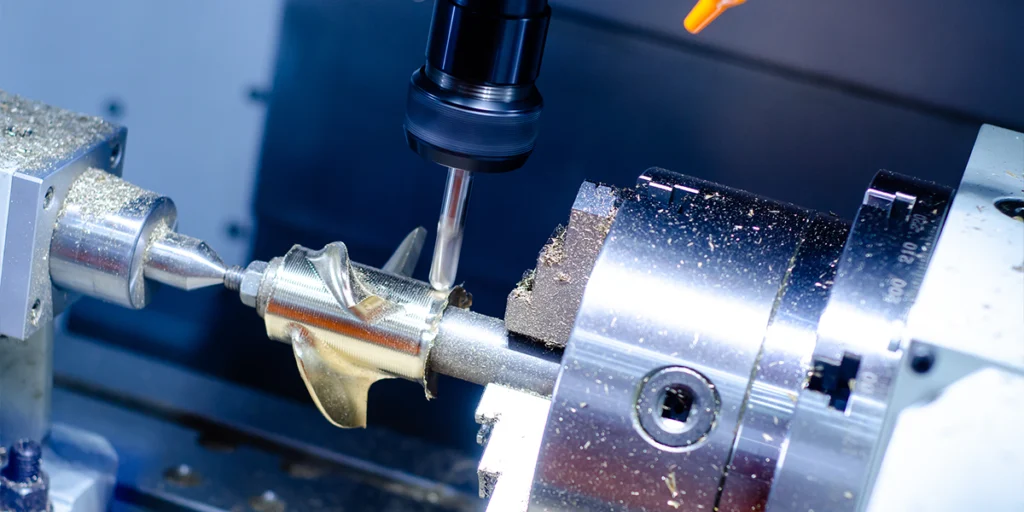
CNC precision machining of stainless steel has become an important manufacturing solution in industries such as aerospace, medical, robotics, automotive, and industrial automation. Compared to common metal materials, stainless steel achieves a better balance between strength, corrosion resistance, and long-term stability.
For parts requiring high reliability, high precision, and long service life, precision stainless steel CNC machining is usually a more stable choice.
As a professional CNC machining manufacturer, Zhuohua Hardware has long provided precision machining services for stainless steel to customers worldwide, supporting everything from rapid prototyping to mass production, and can provide 3-axis and 5-axis milling and high-precision turning solutions according to project requirements.
Advantages of CNC precision machining of stainless steel
High dimensional accuracy
One of the biggest advantages of precision stainless steel CNC machining is its ability to consistently achieve high dimensional accuracy and repeatability.
Modern CNC equipment and digital programming control can effectively reduce:
- Human error
- Clamping deviation
- Batch size fluctuation
This is especially important for high-precision industrial parts. In real-world projects, many assembly problems do not stem from the design, but from inconsistent machining tolerances.
Zhuohua Hardware currently offers machining accuracy up to ±0.02mm, suitable for:
- Precision mechanical parts
- Medical device components
- Automated structural components
- Highly compatible assembly parts
More suitable for complex geometric structures
Traditional machining methods often struggle to handle complex curved surfaces, multi-angle structures, and deep-cavity parts. However, modern CNC machining can achieve the manufacturing of complex structures through multi-axis linkage.
For example:
- Irregularly shaped structural components
- Multi-faceted machined parts
- Precision connection components
- Complex internal cavities
Especially in 5-axis CNC machining, it can reduce repeated clamping and improve overall machining accuracy. For stainless steel materials, reducing the number of clamping operations not only improves efficiency but also reduces the risk of machining deformation.
More stable batch consistency
For OEM projects and mass production, part consistency is often more important than individual piece precision.
Many suppliers can produce a acceptable sample, but cannot guarantee:
- Subsequent batch production stabilized.
- Consistent size
- Surface uniformity
- Long-term repetitive production capacity
The value of precision CNC machining lies not only in “making it”, but in “making it consistently and reliably”.
Zhuohua Hardware has a mature manufacturing process and quality control system that can support the entire production process from prototype development to mass delivery.
Wider material compatibility
Stainless steel comes in several different grades to suit various application needs.
Commonly processed materials include:
- 303 stainless steel: easier to cut, suitable for high-efficiency machining.
- 304 stainless steel: It has a balanced overall performance and is the most widely used.
- 316 stainless steel: It has stronger corrosion resistance and is suitable for medical and marine environments.
- 416 stainless steel: Excellent machinability, suitable for high-precision mechanical parts.
Different materials will have a direct impact:
- Processing efficiency
- Tool life
- Surface quality
- Cost structure
Professional processing plants typically help clients choose the most suitable material solutions based on project requirements.
Better surface treatment effect
Stainless steel parts typically need to balance functionality and aesthetics.
More stable results can be obtained through precision CNC machining.
- Surface roughness
- Edge quality
- Structural details
It can also be combined with post-processing techniques:
- Polishing
- Sandblasting
- Wire drawing
- Electropolishing
- Passivation treatment
For medical and food equipment as well as high-end industrial products, surface quality often directly affects the value of the final product.
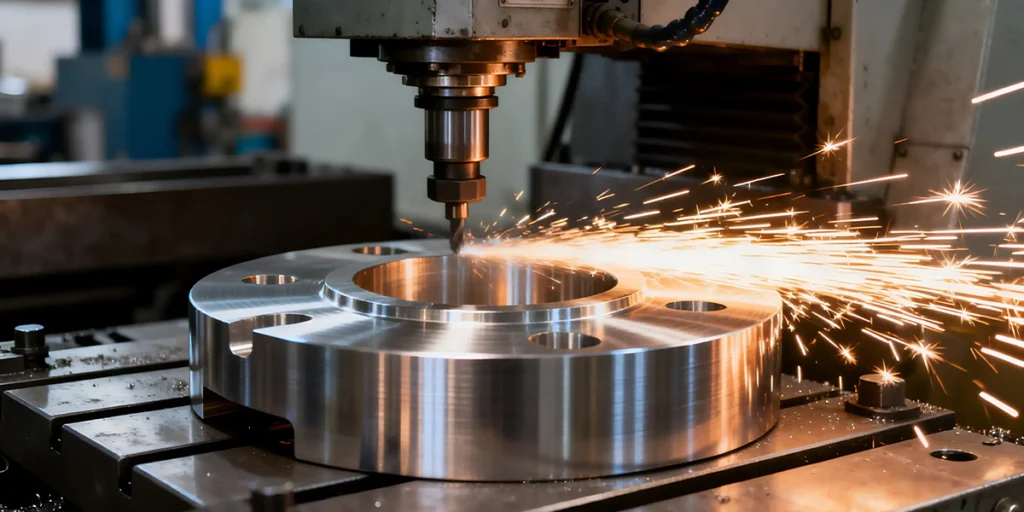
Advantages of corrosion resistance and high strength
Natural corrosion resistance
One of the most significant advantages of stainless steel is its excellent corrosion resistance. Compared to ordinary steel, stainless steel can maintain a longer service life in humid, chemical, or high-temperature environments. This is because a stable protective oxide layer forms on the surface of stainless steel, thereby reducing material corrosion.
Therefore, stainless steel parts are widely used in:
- Medical equipment
- Food machinery
- Marine equipment
- Automated systems
- Chemical industry
in:
- 304 stainless steel is suitable for most industrial environments.
- 316 stainless steel is more suitable for highly corrosive environments.
Higher mechanical strength
Stainless steel is not only corrosion resistant, but also has high mechanical strength.
This means the part can withstand:
- Higher load
- Higher pressure
- More complex operating conditions
- Long-term operation
For high-reliability equipment, high strength means:
- Lower risk of deformation
- Longer service life
- Lower maintenance costs
This is why more and more industrial equipment manufacturers are starting to use stainless steel instead of ordinary steel or aluminum.
Suitable for long-term industrial operation
In long-term operating environments, material stability is often more important than initial cost. Although stainless steel typically has higher processing costs than aluminum, its overall long-term cost may be lower.
Because it can reduce:
- Corrosion damage
- Replacement frequency
- Maintenance shutdown
- Structural failure risk
This long-term stability is crucial for industrial equipment, automation systems, and medical devices.
Why professional processing experience is important
Although stainless steel has excellent properties, it is significantly more difficult to process than ordinary metals.
Frequently asked questions include:
- Work hardening
- The cutting tool wears out quickly.
- Heat distortion
- Difficulty in controlling burrs
Therefore, precision machining of stainless steel relies not only on equipment, but also on practical machining experience.
Zhuohua Hardware has long provided precision machining services for stainless steel to global customers. It can develop more stable machining solutions based on different material grades, structural complexity and application scenarios, helping customers achieve a more reasonable balance between quality, delivery time and cost.
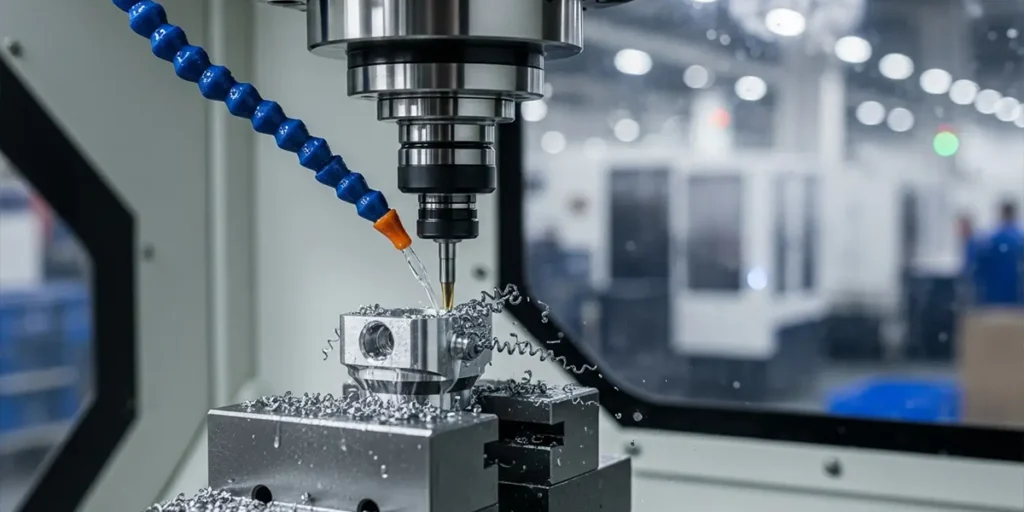
Suitable for complex structural parts
Multifaceted and irregular structure processing
CNC precision machining of stainless steel is ideal for manufacturing parts with complex geometries, especially in scenarios where traditional machining methods are difficult to complete.
- Multi-angle structural components
- Deep cavity parts
- Alien-shaped shell
- Curved surface structure
- Precision assembly components
3-axis, 3+2-axis, and 5-axis CNC machining can reduce repeated clamping and improve overall dimensional consistency. For complex stainless steel parts, reducing the number of clamping operations not only improves efficiency but also reduces cumulative errors and the risk of machining deformation.
More suitable for high-precision assembly of parts
Many industrial parts not only require precise individual machining but also need to ensure precision during subsequent assembly. This is especially true in:
- Automated equipment
- Medical equipment
- Robotic systems
- Aviation components
In these industries, there are often high requirements for the fit between parts.
Stainless steel itself has high stability, and when combined with high-precision CNC machining, it can better guarantee:
- Hole position consistency
- Assembly gap
- Planar accuracy
- Thread accuracy
This is also an important reason why precision stainless steel parts are widely used in high-end manufacturing industries.
Multi-process combination capability
Modern complex parts typically involve more than a single process. Many projects simultaneously address these issues.
- CNC milling
- CNC turning
- Drilling and tapping
- Surface treatment
If the supplier lacks complete processing capabilities, the project often requires multiple outsourcing processes, which can easily lead to:
- Delivery time has increased.
- Increased dimensional error
- Increased communication costs
Zhuohua Hardware supports one-stop machining of stainless steel turning and milling, and can provide surface treatment services such as sandblasting, polishing, wire drawing, and electropolishing to help customers reduce supply chain complexity.
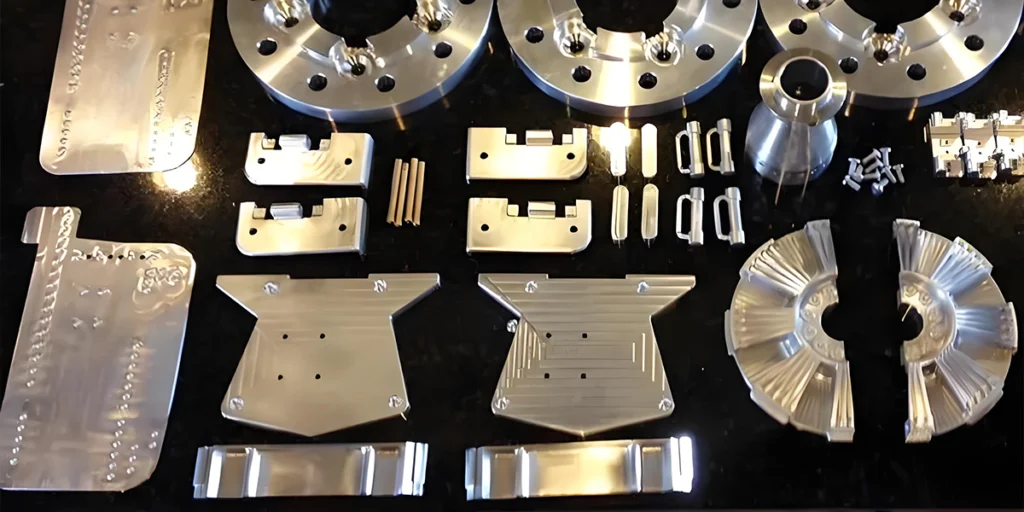
Long-term stability and lifespan
Longer service life
Compared to ordinary carbon steel or some aluminum alloys, stainless steel parts typically have a longer service life. Their core advantage lies in:
- Corrosion resistant
- Wear-resistant
- Structural stability
- Better fatigue resistance
For equipment that operates for extended periods, this translates to lower maintenance frequency and reduced downtime risk. The long-term stability advantages of stainless steel are particularly pronounced in humid, high-temperature, or chemically treated environments.
Reduce long-term maintenance costs
Many companies focus only on the initial price when purchasing parts, but for industrial equipment, long-term operating costs are often more important. If parts are frequently needed:
- Corrosion
- Deformation
- Cracks
- Decreased accuracy
Subsequent maintenance and replacement costs are often far higher than the initial manufacturing costs. Therefore, an increasing number of OEM manufacturers are prioritizing high-quality stainless steel precision parts to improve overall machine stability.
Mass production stability
Long-term stability depends not only on the material itself but also on the supplier’s mass production capabilities. For mass production projects, customers typically focus more on:
- Size consistency
- Delivery time stability
- Long-term repetitive production capacity
Zhuohua Hardware has a mature quality control process that supports everything from sample development to long-term mass production, helping customers maintain a stable supply.
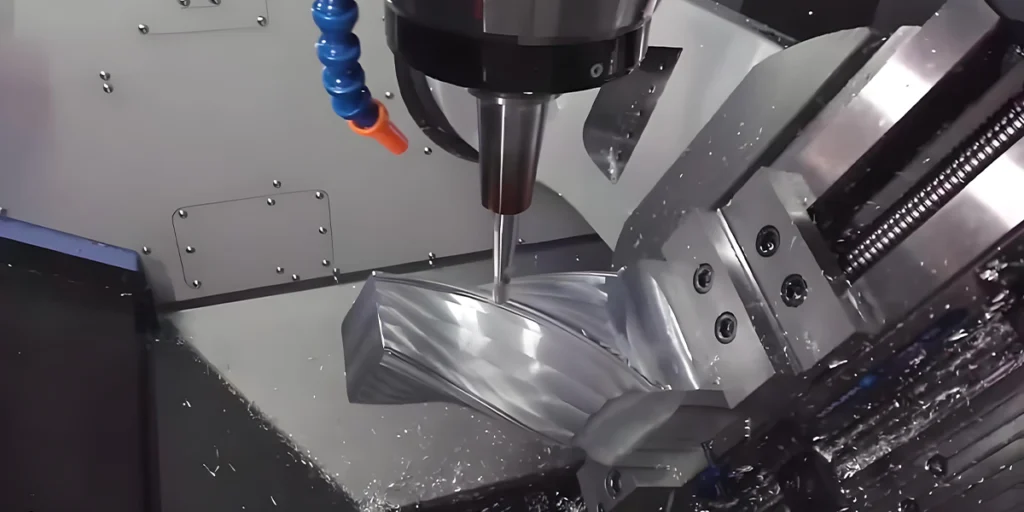
Why do high-end industries prefer stainless steel parts?
healthcare industry
Medical devices typically have high requirements for material safety, corrosion resistance, and surface quality.
316 stainless steel is widely used in: due to its superior corrosion resistance.
- Surgical equipment
- Medical structural components
- Precision instruments
- Testing equipment
At the same time, high-precision CNC machining can also ensure the dimensional stability of complex medical parts.
Aerospace industry
Aerospace components typically need to meet the following requirements simultaneously:
- High strength
- High stability
- High reliability
Stainless steel maintains good mechanical properties under complex working conditions, and is therefore widely used in:
- Connectors
- Structural components
- Support components
- Precision mechanical components
For aerospace projects, processing experience and quality control capabilities are particularly important.
Automation and Robotics Industry
As the complexity of automated equipment continues to increase, more and more robots and automated systems are beginning to use precision stainless steel parts.
The main reasons include:
- Better durability
- Higher assembly stability
- Longer service life
Especially in long-term continuous operation environments, stainless steel parts can maintain more stable structural performance.
Why are professional processing plants more important?
High-end industries not only focus on whether parts can be machined, but also on:
- Long-term stability
- Batch consistency
- Quality control
- Engineering support capabilities
Precision machining of stainless steel requires higher standards for equipment, process experience, and quality systems.
As a professional CNC machining manufacturer, Zhuohua Hardware has long served customers in industries such as medical equipment , robotics , and industrial machinery , supporting the rapid development and mass production of complex stainless steel parts, and providing DFM optimization suggestions and machining solutions based on different project requirements.