
Brass has always been one of the most stable and popular metal materials in the CNC machining field. It combines good machinability, corrosion resistance, electrical conductivity, and stable dimensional performance, and is therefore widely used in industries such as electronics, automotive, medical, industrial control, and fluid systems.
However, many purchasing personnel and product engineers encounter a practical problem when they actually start a project: which brass material is most suitable for their parts?
Different brass grades vary significantly in strength, processing efficiency, corrosion resistance, and cost. Choosing the wrong material can lead to increased processing costs, shortened part lifespan, and even affect subsequent assembly and product stability.
As a manufacturer that has long provided brass CNC machining services , Zhuohua Hardware helps customers select more suitable brass materials based on the part structure, usage environment, surface requirements, and batch size, rather than simply “machining according to drawings”.
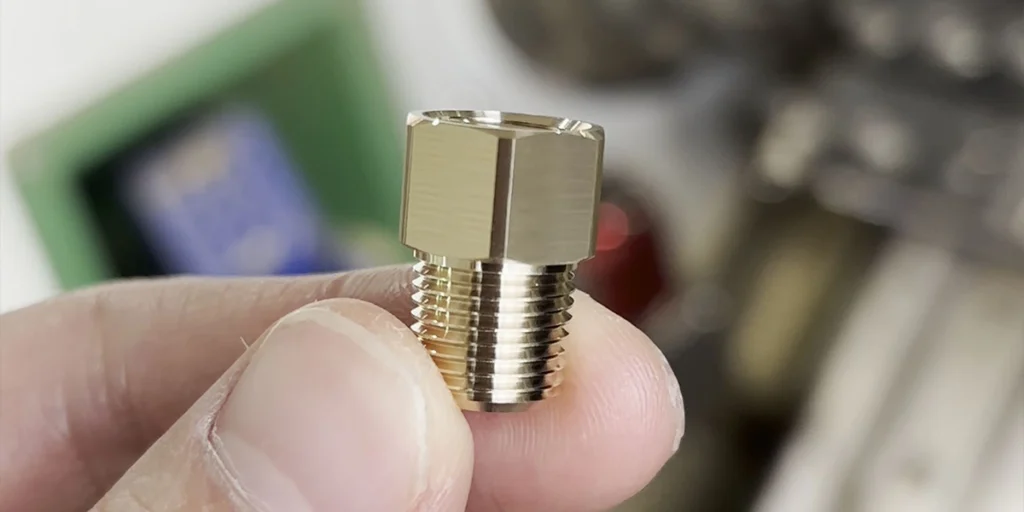
What are the best materials for brass processing?
There is no absolutely “best” among different brass materials; what truly matters is:
- Is it suitable for the intended use of the part?
- Is it suitable for the processing technology?
- Whether the cost target is met
- Is it suitable for mass production?
Below are some of the most common materials used in CNC brass machining.
C220 Brass
C220 brass is also commonly known as “commercial brass.” It has a high copper content, which gives it good ductility and corrosion resistance.
This material is ideal for:
- Decorative parts
- Architectural hardware
- Conductive components
- Products with high requirements for appearance
Characteristics of C220 Brass
- Good formability
- Excellent surface treatment effect
- Good electrical conductivity
- Suitable for light precision machining
However, C220 has inferior cutting performance compared to high-lead brass, so its machining efficiency is usually lower than that of 353 brass in complex high-speed CNC machining.
In actual projects, we usually recommend that if customers are more concerned about appearance, corrosion resistance and subsequent polishing or electroplating effects, C220 would be a more stable choice.
C230 Brass
C230 brass, also known as “red brass,” has a higher copper content than ordinary brass, thus possessing stronger corrosion resistance.
This material is widely used in:
- Piping system
- Heat exchange equipment
- Fluid control components
- Marine environmental components
Key advantages of C230 brass
- Excellent corrosion resistance
- Improved resistance to stress corrosion
- Good thermal conductivity
- Suitable for long-term industrial use.
Compared to regular brass, C230 is better suited for humid, high-temperature, or corrosive environments. For industrial components requiring long-term stable operation, we often advise customers to prioritize C230 rather than simply pursuing low-cost materials.
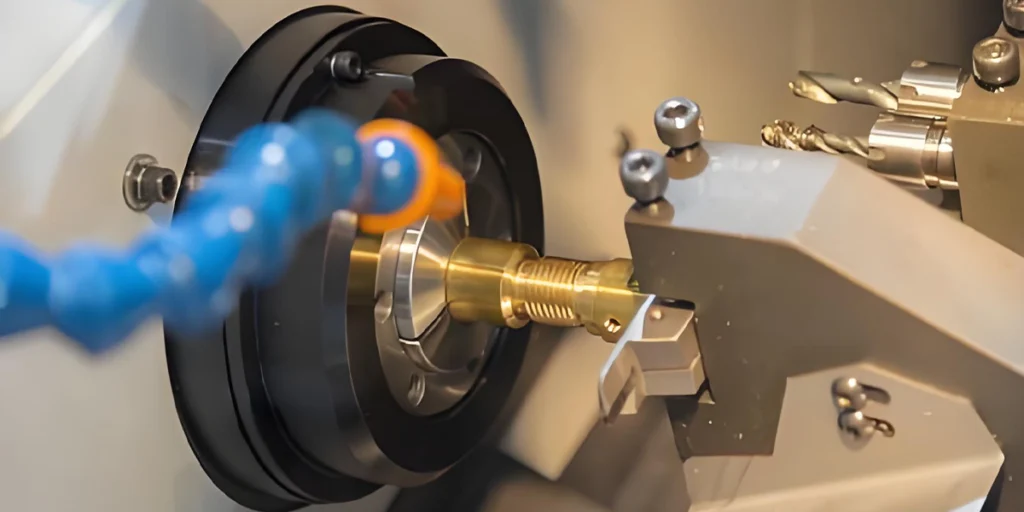
353 Brass
353 brass is one of the most common high-precision brass materials used in the CNC machining industry. Its most notable characteristic is its excellent machinability.
353 brass has a high lead content, therefore, during high-speed machining:
- Lower tool wear
- Higher processing efficiency
- More stable surface quality
- Tolerances are easier to control
This is why a large number of:
- Brass connectors
- Precision-machined parts
- Electronic components
- Automated equipment components
353 brass will be the preferred choice.
Why is 353 brass particularly suitable for CNC machining?
In multi-axis CNC turning and high-speed milling processes, 353 brass can effectively reduce burrs and vibration issues, which is especially important for complex small parts.
For batch projects, this means:
- Lower scrap rate
- More stable dimensional consistency
- Shorter production cycle
In Zhuohua Hardware’s precision brass machining projects, 353 brass is one of the most frequently used materials, especially suitable for high-precision turned parts and complex connector assemblies.
27450 Brass
27450 brass is typically used in industrial parts requiring high mechanical properties and wear resistance. Compared to ordinary brass, it is more suitable for:
- Heavy-duty industrial components
- High wear-resistant parts
- Valve system
- High-strength structural components
Characteristics of 27450 brass
- Higher mechanical strength
- Good wear resistance
- Suitable for long-term industrial use.
- Can withstand higher loads
However, this type of material is generally more difficult to process than 353 brass, and requires higher standards for cutting tools and process stability.
Inexperienced suppliers are prone to the following problems when processing 27450 brass:
- Size fluctuation
- The cutting tool wears out too quickly
- Unstable surface roughness
Therefore, for this type of industrial-grade brass project, it is very important to choose a supplier with mature brass processing experience.
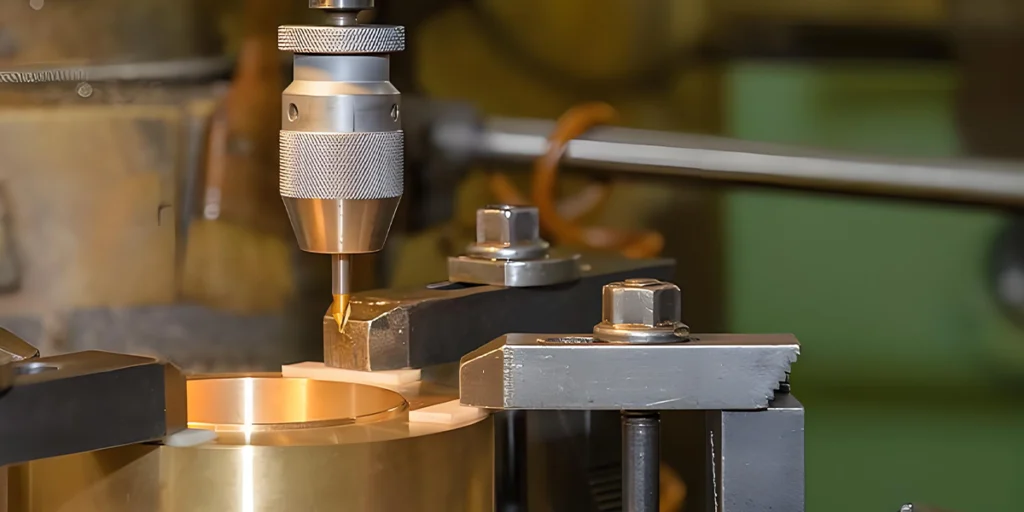
Comparison of the properties of different brass materials
In actual projects, many clients are not just concerned with “whether it can be processed,” but rather with:
- Which material has a longer lifespan?
- Which material has a more reasonable cost?
- Which material is more suitable for mass production?
The differences in performance between different brass materials directly affect the final performance of the product.
Strength of brass
From the perspective of mechanical strength, there are significant differences between different brass materials.
The strength performance is roughly as follows:
- 27450 Brass: High strength, suitable for industrial load environments.
- C230 Brass: Medium to high strength, with good corrosion resistance
- 353 brass: More focused on machinability and balanced strength
- C220 brass: Excellent ductility, but relatively low strength.
For structural components, valves, or pressure-bearing assemblies, we generally prefer C230 / 27450; while for high-precision small parts, 353 brass is more suitable.
Corrosion resistance of brass
Corrosion resistance typically determines the long-term stability of components. Especially in:
- Humid environment
- Marine environment
- Fluid systems
- Medical equipment
Material selection is crucial.
Corrosion resistance comparison
- C230 brass: Excellent corrosion resistance
- C220 brass: Suitable for general industrial environments
- 27450 Brass: Excellent wear resistance
- 353 brass: More focused on machinability
Many overseas customers prioritize processing costs in the early stages, but in actual long-term operation, higher corrosion resistance often means lower maintenance costs, which is why the industrial and fluid industries prefer to use C230 brass.
The electrical conductivity of brass
Conductivity is crucial for the electronics and connector industries. While brass is not as conductive as pure copper, it still possesses excellent conductivity compared to many other metals.
Electrical conductivity characteristics
- C220 and C230 have good electrical conductivity.
- 353 brass balances conductivity and processing efficiency
- High-strength brass typically has slightly lower electrical conductivity.
In electronic connector projects, we typically consider the following:
- Conductivity requirements
- Processing complexity
- Batch cost
- Surface treatment solutions
Instead of looking at just one performance metric.
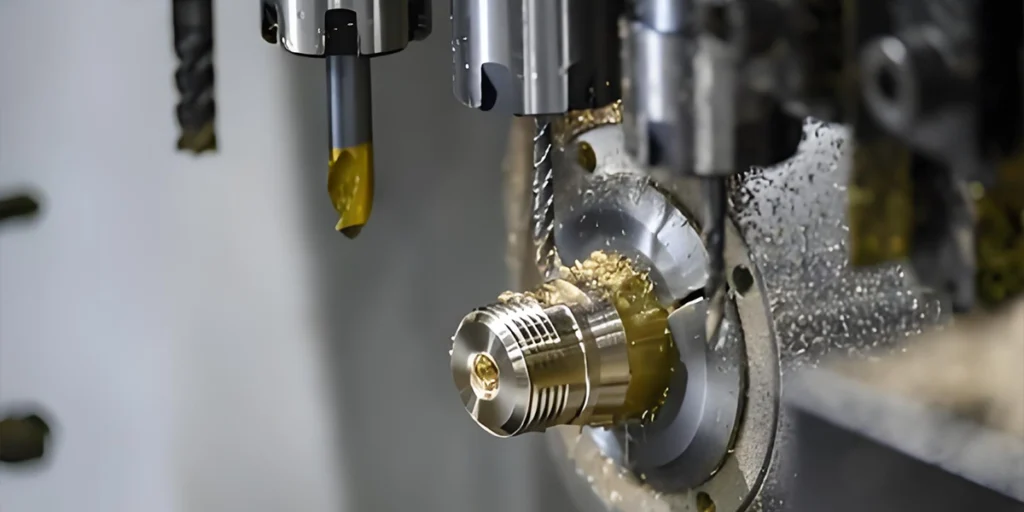
How to select brass materials for a project
Different brass materials have their own advantages, so in actual projects, material selection is usually not just about “choosing a metal that can be processed,” but requires consideration of the following:
- Product usage environment
- Processing complexity
- Tolerance requirements
- Surface treatment methods
- Batch size
- Cost control
Many problems that arise later in a project are not fundamentally due to insufficient processing capacity, but rather because risks were already present in the early material selection stage. Therefore, experienced brass CNC machining suppliers typically help clients optimize material solutions during the Design for Manufacturing (DFM) phase, rather than simply producing directly from the initial drawings.
Electronics industry
The electronics industry is one of the sectors with the greatest demand for CNC machining of brass, especially:
- Precision connectors
- Terminals
- Sensor assemblies
- Shielding components
- Conductive components
These types of parts typically require:
- Good electrical conductivity
- High dimensional accuracy
- Stable batch consistency
- Good surface treatment effect
Therefore, 353 brass is often the most common material in the electronics industry. It has excellent machinability, supports high-speed precision machining, and is especially suitable for the mass production of small, complex parts.
For some electronic products that require both higher conductivity and better appearance, customers also choose C220 brass. Especially when subsequent nickel plating, gold plating, or mirror polishing is required, C220 typically provides a more consistent surface finish.
In electronics industry projects, we typically pay special attention to:
- Stable fabrication of microstructures
- Burr control
- Thread accuracy
- Surface uniformity
These issues directly affect subsequent assembly and electrical conductivity.
Zhuohua Hardware has long provided precision brass machining services to the electronics and automation industries, enabling stable mass production of complex brass connectors, multi-axis turned parts, and high-precision small components.
Automotive industry
The automotive industry typically has higher requirements for brass parts, particularly in the following areas:
- Corrosion resistance
- Long-term stability
- Batch consistency
- Mechanical strength
Common applications include:
- Brake fittings
- Fluid control components
- Sensor accessories
- Brass valves
- Electrical connections
In automotive projects, C230 brass is often a common choice because it offers a good balance between corrosion resistance and strength, making it particularly suitable for parts that are exposed to humidity, temperature fluctuations, or complex industrial environments for extended periods.
For some high-wear-resistant industrial components, 27450 brass may be used to improve long-term service life.
Another very real problem in the automotive industry is that batch stability is more important than individual part precision.
Because automotive parts typically involve long-term, bulk supply, the supplier’s ability to maintain stable processes, automated manufacturing capabilities, and a mature quality control system directly impacts the stability of the customer’s supply chain.
This is why many overseas clients focus on the following when selecting brass processing suppliers:
- Does the company have experience in mass production?
- Does the company support long-term OEM projects?
- Does it have stable delivery capabilities?
Healthcare industry
The medical industry typically has more stringent requirements for brass parts than general industrial projects. In addition to precision requirements, customers usually also consider:
- Surface quality
- Material stability
- Microstructure fabrication capability
- Cleanliness
- Long-term consistency
Medical brass parts are typically used in:
- Medical device connectors
- Fluid control system
- Precision instrument components
- Testing equipment internal parts
In these types of projects, C220 and C230 brass are more common because they typically have better corrosion resistance and stability.
Meanwhile, parts in the medical industry are often smaller and more complex, which means that suppliers not only need to have high-precision machining capabilities, but also mature quality inspection processes.
For example, many factories tend to encounter the following problems when machining miniature brass parts:
- Microburrs
- Size fluctuation
- Deformation of small holes
- Surface scratches
These issues might have little impact on ordinary industrial projects, but in medical devices, they can directly affect product reliability. Therefore, for medical industry customers, choosing a supplier with experience in precision machining is usually more important than simply pursuing the lowest price.
How can professional suppliers guarantee material quality?
For CNC machining of brass, what truly affects project stability is not just the machining equipment. Often, the material itself determines the outcome.
- Stability of subsequent processing
- Surface quality
- Tolerance consistency
- Product lifespan
Inexperienced suppliers often only focus on “whether it can be processed”, but experienced brass processing manufacturers start controlling quality from the material procurement stage.
First, there’s the source of raw materials. Professional suppliers typically prioritize stable brass material supply chains and ensure that each batch of materials meets the following criteria:
- Materials certification
- Component analysis
- Traceability
Even for the same brass grade, significant variations in material composition can lead to:
- Abnormal tool wear
- Unstable surface roughness
- Machining dimension drift
- Inconsistent electroplating results
Especially in high-precision brass parts projects, material stability directly affects batch consistency.
Secondly, there’s the issue of process control. While brass is an easily machinable material, machining parameters remain crucial for complex structural parts. Established suppliers typically optimize machining parameters based on different brass grades.
- Cutting speed
- Tool type
- Clamping method
- Cooling solution
This reduces the risk of burrs, deformation, and dimensional fluctuations.
For high-precision or long-term OEM projects, many customers are more concerned with whether the same batch and different batches can maintain consistency over a long period. Therefore, a stable production process and quality system are often more important than simply having the lowest price.
At Zhuohua Hardware, we not only provide CNC turning and CNC milling services for brass, but also assist in optimizing material selection, machining processes, and post-processing solutions based on client project needs. For complex brass parts projects, we can support:
- Multi-axis precision machining
- Small batch rapid prototyping
- Large-scale stable production
- Surface treatment integration
- Global order delivery
This is also a key reason why many overseas clients prefer to cooperate with professional brass processing suppliers in the long term rather than frequently changing factories.