


Copper is one of the most important engineering materials in modern manufacturing, especially in the fields of electronics, electrical connections, thermal management, and high-performance industrial equipment. With the growing demand for AI servers, new energy systems, and high-power electronic devices, the market is placing higher demands on the processing capabilities of high-precision copper parts.
Compared to common metals, copper is more difficult to machine. It places stricter requirements on machine tool rigidity, cutting tool strategy, thermal control, and machining experience. This is why many buyers find that, even with the same drawings, the quality of copper parts produced by different suppliers varies significantly.
This guide will systematically explain the core knowledge, common challenges, and capabilities that a professional copper machining supplier should possess from a manufacturing and engineering perspective.
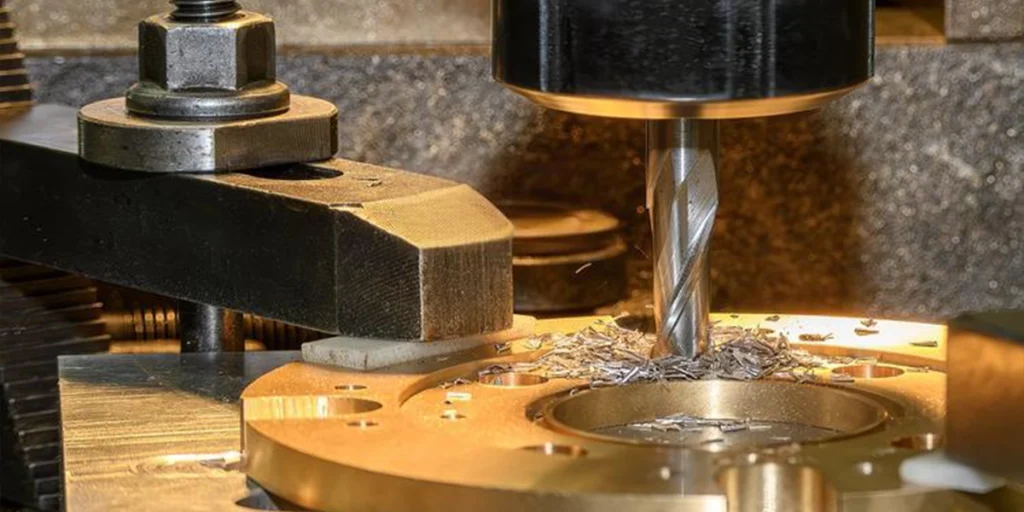
What is CNC copper machining?
Copper CNC machining refers to the process of using computer numerical control (CNC) equipment to perform high-precision cutting on pure copper or copper alloy materials. Common processes include CNC milling, CNC turning, drilling, tapping, and precision cutting.
This processing method can reliably manufacture copper parts with complex structures, high conductivity, and high dimensional accuracy, and is widely used in:
- Electrical connection system
- Heat dissipation and cooling components
- High-frequency electronic equipment
- Industrial conductive components
- New energy system
Compared to traditional machining methods, CNC machining of copper can achieve higher consistency, more complex geometries, and more stable batch quality. For OEM projects, CNC machining is also one of the most mainstream solutions for manufacturing high-precision copper components.
Definition of Copper CNC Machining
From an engineering perspective, the core objective of copper CNC machining is not merely “cutting the material,” but rather achieving stable mass production while ensuring electrical conductivity, thermal conductivity, and dimensional accuracy. This is one of the biggest differences between copper machining and ordinary steel machining.
Typical machined copper parts include:
- Copper busbars
- Connectors
- PCB terminals
- Copper heat sinks
- Cooling plates
- Copper bushings
- Precision electrodes
- Conductive structural components
Depending on the structure of the part, the manufacturing process usually combines:
- 3-axis CNC milling
- 5-axis CNC milling
- CNC turning
- Microfabrication
- Precision surface treatment
In actual production, many copper parts not only require dimensional accuracy, but also need to be controlled:
- Surface roughness
- Contact surface quality
- Flatness
- Conductivity stability
- Thermal conductivity
Therefore, copper processing is essentially a type of precision manufacturing that requires high stability in the process.
At Zhuohua Hardware, we have long provided copper CNC machining services to customers in the consumer electronics , automation , and industrial equipment industries , supporting everything from rapid prototyping to mass production, and capable of machining complex copper alloy structures and high-precision conductive components.
Difference between copper processing and general metal processing
Many purchasing personnel believe that “copper is softer than aluminum, so it should be easier to process.” However, in reality, copper processing is often more complex than processing many steel and aluminum parts. This is because copper has very unique physical properties.
First, copper has extremely high thermal conductivity. This means that the heat generated during cutting dissipates rapidly, making temperature control in the cutting zone more difficult. Even slight instability in machining parameters can affect tool life and surface quality.
Secondly, pure copper is typically soft and highly ductile. This presents a typical problem:
- Sticky knife
- Increased burrs
- Surface tear
- Edge deformation
- Unstable finishing process
These problems are particularly noticeable when processing thin-walled structures, small precision copper parts, or microelectronic components.
Furthermore, copper materials require high rigidity from processing equipment. If the machine tool lacks stability, the following issues can easily occur:
- Vibrating knife
- Size drift
- Surface ripples
- Hole position deviation
This is why professional copper processing suppliers usually pay more attention to:
- Tooling strategy
- Cutting path optimization
- Cooling solution
- Online testing
- Secondary deburring control
For high-precision copper parts, it is often difficult to guarantee long-term stable batch consistency by relying solely on ordinary CNC equipment.
Therefore, when choosing a copper CNC machining supplier, customers should not only focus on the price, but also evaluate whether the supplier truly has experience in copper material processing.
Why is copper so difficult to process?
Compared to aluminum, stainless steel, and even some alloy steels, copper, although a soft metal, is not easy to process. Especially in high-precision electronic components, thermal management components, and complex conductive structures, copper materials often have higher requirements for the stability of processing techniques.
Many suppliers can machine common metal parts, but in the mass production of copper parts, problems such as dimensional instability, surface scratches, severe burrs, or inconsistent conductive contact surfaces often occur. This is why high-quality copper CNC machining usually relies more on experienced manufacturing teams than just the equipment itself.
High thermal conductivity effect
One of copper’s most notable characteristics is its extremely high thermal conductivity, which is a major reason for its widespread use in heat dissipation systems and the electronics industry. However, for processing purposes, high thermal conductivity can actually increase manufacturing difficulties.
During the cutting process, heat spreads rapidly to the workpiece and tool, making it difficult to maintain a stable temperature in the cutting area. When machining parameters are not appropriate, it can easily lead to accelerated tool wear, decreased surface quality, and even affect the final dimensional accuracy.
Especially in high-speed or deep-cavity machining, insufficient cooling control can easily lead to problems such as dulling of the copper surface, uneven tool marks, or localized deformation. Therefore, professional copper machining typically places greater emphasis on:
- Cutting speed control
- Coolant stability
- Selection of knife material
- Processing path optimization
For products such as heat sinks, cold plates, and highly conductive components, thermal control capabilities often directly affect the final performance of the parts.
Material sticking to the knife
Pure copper is highly ductile and tends to adhere to the surface of cutting tools during processing, which is one of the most common problems in copper machining.
Once built-up edge develops, subsequent cutting becomes unstable, and common consequences include:
- Surface roughness deteriorates
- Increased dimensional error
- Edge tearing
- Deterioration of pore wall quality
The problem of tool sticking is particularly noticeable in copper parts with microstructures, deep holes, or high surface finish requirements.
To mitigate these issues, experienced copper machining suppliers typically employ tool geometries better suited to copper, combined with appropriate feed parameters and lubrication schemes. For high-precision parts, stability needs to be optimized through trial cuts and process verification, rather than solely relying on standard machining parameters.
In actual OEM projects, many customers have no problems with the initial samples, but the size fluctuates significantly after mass production begins. This is often due to insufficient process stability.
Deformation and burr control
Copper is a relatively soft material, making it more prone to edge burrs and localized deformation during processing, especially in thin-walled structures, small holes, and precision contact areas.
For example, in electronic connectors, PCB terminals, or copper heat sinks, poor burr control can directly affect:
- Electrical contact stability
- Assembly accuracy
- Thermal conductivity
- Subsequent coating quality
Meanwhile, copper parts are more prone to slight deformation due to uneven force during clamping, so a more stable clamping scheme and reasonable cutting load control are required during processing.
For high-precision copper parts, post-processing is also crucial, including:
- Fine deburring
- Surface polishing
- Ultrasonic cleaning
- Surface protection treatment
In Zhuohua Hardware’s copper CNC machining projects, we typically optimize the machining plan in advance based on the intended use of the parts. For example, for highly conductive contacts, we focus on controlling the surface roughness; for cooling plates and heat dissipation structures, we prioritize flatness and flow channel stability to reduce assembly and performance issues later on.
Main processes of CNC copper machining
Different copper parts have different structures, dimensions, and functional requirements, so a single process is usually not used in actual production. For high-precision copper components, many projects combine CNC milling, CNC turning, and precision cutting processes.
Choosing the right processing method not only affects the quality of parts, but also directly impacts cost, delivery time, and batch stability.
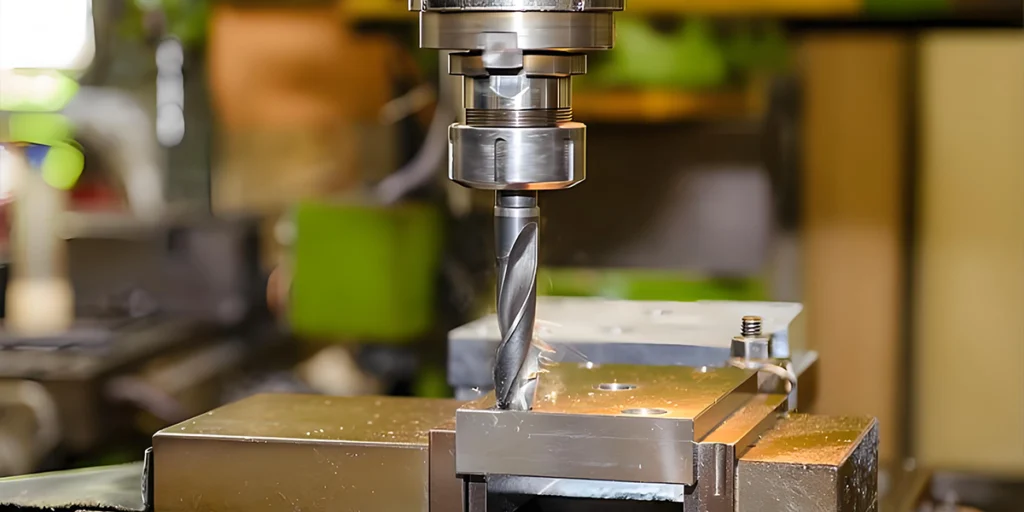
Copper CNC Milling
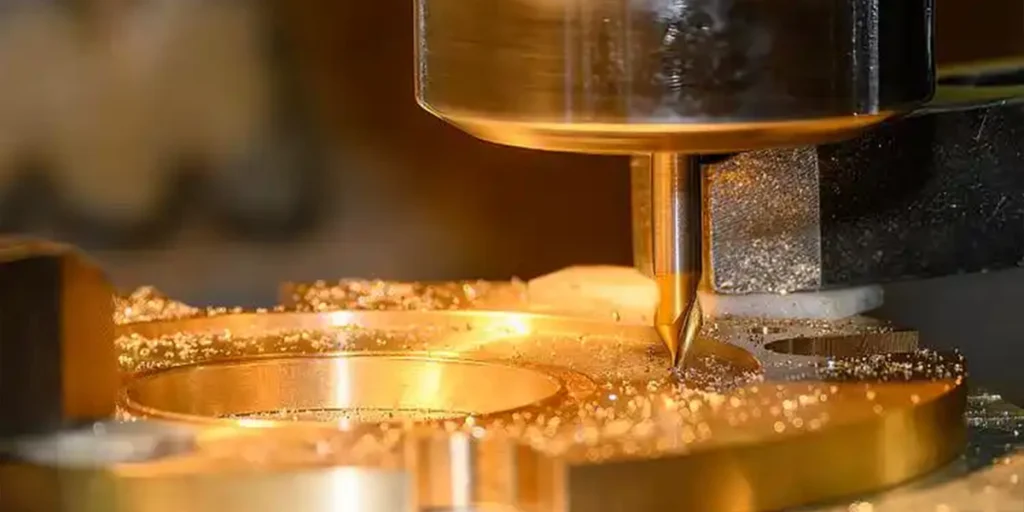
Copper CNC milling is mainly used to process parts with complex geometries, irregular contours, and multi-faceted structures, and is especially suitable for high-precision components in electronics, thermal management, and industrial equipment.
Commonly milled copper parts include:
Heat sink
- Cooling plate
- Copper electrode
- Conductive module
- Busbar structure
- High-frequency communication component
Because copper is prone to tool sticking, copper milling typically relies more heavily on tool strategy and cutting parameter control than aluminum machining. Especially in parts with deep cavities, thin-walled areas, and high surface quality requirements, machining stability directly impacts finished product yield.
For complex copper parts, 5-axis CNC milling can reduce the number of clamping operations, improve positional accuracy, and reduce the risk of edge deformation. This is also an important reason why many high-end electronics and AI hardware projects are increasingly favoring multi-axis machining.
At Zhuohua Hardware, we support 3-axis, 3+2-axis, and 5-axis copper CNC milling, capable of machining complex thermally conductive structures and high-precision conductive components, and supporting everything from rapid prototyping to mass production.
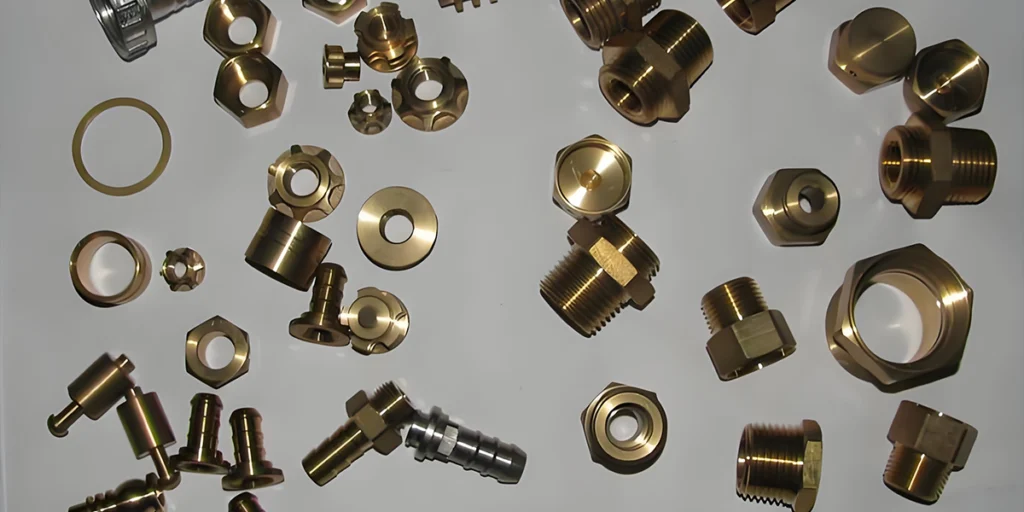
Copper CNC turning
Copper CNC turning is mainly used for machining cylindrical, shaft, and highly concentric parts, and is widely used in electronic connections, industrial equipment, and precision component manufacturing.
Typical machined copper parts include:
- Copper connectors
- Conductive pins
- Connectors
- Copper bushings
- Valve assemblies
- Precision terminals
Compared to milling, turning is more suitable for high-efficiency mass production, especially for parts with high requirements for dimensional consistency.
However, copper turning also presents challenges related to material stretching and burr control. Inappropriate machining parameters can easily lead to:
- Scratches on the outer cylindrical surface
- Unstable thread quality
- Edge turning
- Small dimensional deviation
For miniature copper parts, special attention is still needed:
- Coaxiality
- Roundness
- Aperture consistency
Therefore, high-precision copper turning projects typically require more stable equipment rigidity and mature process control capabilities.
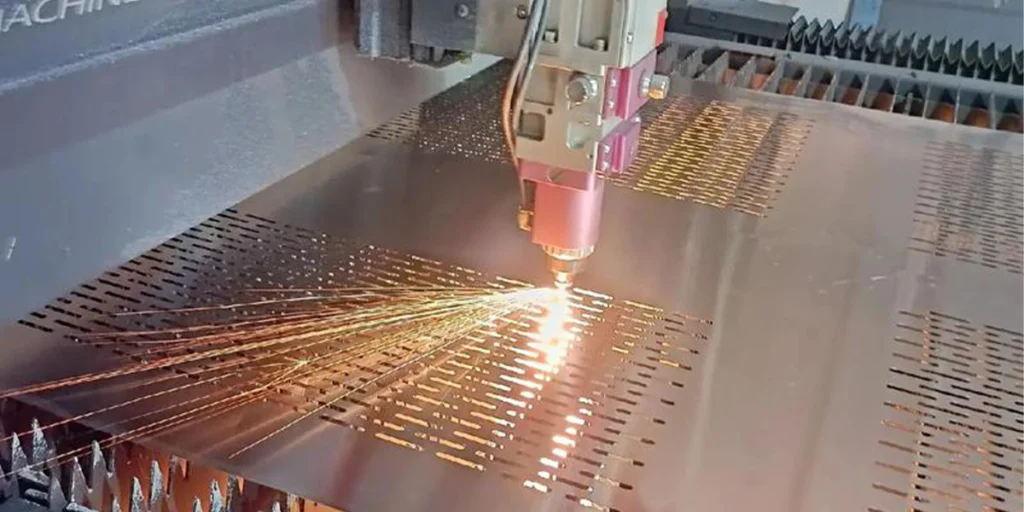
Copper CNC cutting
CNC cutting is also a common manufacturing method for some flat copper parts, conductive sheets, and thin structural parts.
Copper CNC cutting is mainly used for:
- Copper plate processing
- Conductive sheets
- Copper gaskets
- Thin-walled structural components
- Parts with special contours
Compared with traditional mechanical cutting, CNC control can improve contour accuracy and edge consistency, making it especially suitable for medium- to high-precision mass production.
However, due to the high thermal conductivity of copper, some thermal cutting processes will be affected. Therefore, in actual production, it is usually necessary to select a suitable solution based on the material thickness, precision requirements, and surface quality requirements.
For high-precision electronic copper components, many customers pay more attention to:
- Edge burr control
- Surface oxidation status
- Flatness
- Compatibility with subsequent coatings
Therefore, professional copper processing suppliers typically offer not only single cutting services, but also complementary services:
- Finishing
- Deburring
- Surface treatment
- Size inspection
This ensures that the parts can directly enter the subsequent assembly stage.
Common Applications of Copper CNC Machining
With the development of electronic devices, new energy systems, and high-performance computing hardware, the demand for copper components is growing rapidly. Compared to ordinary metals, copper has significant advantages in electrical conductivity, thermal conductivity, and corrosion resistance, so many high-performance components still cannot be completely replaced by other materials.
Currently, the most common applications of copper CNC machining are concentrated in the fields of electronics, electrical engineering, thermal management, and industrial equipment.
Electronics industry
The electronics industry is one of the sectors with the greatest demand for CNC machining of copper. Due to copper’s extremely low resistance and excellent conductivity, a large number of electronic components rely on high-precision copper parts.
Common applications include:
- PCB terminals
- Terminal blocks
- High-frequency connectors
- Conductive needle
- Power connection components
- Conductive modules for communication equipment
These types of parts are typically small in size but require extremely high precision. Many projects not only require stable tolerances but also pay close attention to:
- Contact surface quality
- Coating compatibility
- Burr control
- Conductivity stability
Especially in high-frequency communications, servers, and new energy equipment, the consistency of copper components directly affects system stability. For these types of projects, suppliers not only need precision machining capabilities, but also stable quality control processes and experience in mass production.
Thermal Management System
Copper’s excellent thermal conductivity makes it a key material in thermal management systems. With the development of AI servers, electric vehicles, and high-power electronic devices, the market demand for copper heat dissipation components is continuously increasing.
Common copper thermal management components include:
- Copper heat sink
- Cooling plate
- Heat exchanger
- Liquid cooling module
- Thermally conductive structural components
Compared to aluminum, copper can transfer heat faster, making it more advantageous in high-power-density applications. However, at the same time, the manufacturing difficulty of complex heat dissipation structures is also significantly higher.
For example, the internal flow channels of the liquid cooling plate, the deep cavity structure, and the ultra-thin heat dissipation fins, for:
- Tool control
- Multi-axis machining capability
- Surface quality
- Flatness
They all have higher requirements.
In real-world projects, many thermal management copper components not only require high-precision machining, but also subsequent surface treatment and leak testing to ensure long-term operational stability.
Zhuohua Hardware has long supported the processing of complex copper heat dissipation components, including multi-axis milling, precision flow channel structures, and small-batch rapid prototyping, suitable for AI hardware, industrial electronics, and automation equipment projects.
Industrial machinery
Besides the electronics and thermal management industries, copper parts are also widely used in industrial machinery. Due to the excellent wear resistance, thermal conductivity, and stability of copper and copper alloys, many mechanical systems are made using copper materials.
- Bushing
- Bushing
- Gasket
- Conductive slip ring
- Dedicated coil assembly
- Wear-resistant structural components
These types of parts usually receive more attention:
- Long-term durability
- Assembly stability
- Batch consistency
Especially in automated equipment and high-frequency operating systems, dimensional deviations or surface defects may affect the overall lifespan of the machine.
For industrial copper parts, many customers also require:
- Precision machining
- Surface treatment
- Bulk delivery
- Long-term stable supply
Therefore, CNC machining suppliers with complete supply chain capabilities are usually more suitable for long-term OEM project cooperation.
Why Choose a Professional Copper CNC Machining Supplier?
Copper processing is not as simple as “cutting out the material”. For electronics, thermal management and high-precision industrial components, what truly determines the quality of the parts is often the supplier’s understanding of the properties of copper and their long-term accumulated process experience.
Many projects appear to be without problems at the sample stage, but once mass production begins, issues such as dimensional fluctuations, increased burrs, surface inconsistencies, or assembly problems gradually emerge. The underlying cause is usually not incorrect drawings, but rather the supplier’s lack of stable copper processing capabilities.
Therefore, for OEM customers, when choosing a professional copper CNC machining supplier, the key is not just the number of machines, but whether the supplier can consistently control quality, delivery time, and batch consistency in the long term.
Precision control
Copper is a relatively soft material, and it has fast thermal conductivity and high ductility, which makes high-precision machining significantly more difficult than that of ordinary steel or aluminum parts.
Especially in the following parts:
- High-frequency connectors
- Conductive contacts
- Micro copper components
- Liquid cooling heat dissipation structure
- Precision electronic modules
Clients typically require:
- Strict tolerances
- High coaxiality
- Flatness control
- Stabilize surface roughness
This depends not only on the precision of the equipment, but also on comprehensive process control capabilities, including:
- Tooling solutions
- Processing path optimization
- Thermal deformation control
- Online testing
- Deburring process
At Zhuohua Hardware, we support high-precision CNC machining of copper with tolerances controllable within ±0.02mm. We also optimize machining strategies based on the characteristics of different copper materials to improve the stability and consistency of complex copper parts.
Surface treatment capability
Many copper parts, after machining, cannot directly enter the assembly process but require further surface treatment. Because copper is inherently prone to oxidation, improper treatment can affect:
- Electrical conductivity
- Contact stability
- Appearance quality
- Corrosion resistance
Common copper surface treatments include:
- Polishing
- Nickel plating
- Tin plating
- Gold plating
- Passivation
Different applications have vastly different requirements for surface treatment. For example, electronic connectors prioritize conductivity stability, while thermal management components prioritize surface smoothness and heat exchange efficiency.
Therefore, professional copper processing suppliers typically not only provide processing services but also need to have stable post-processing capabilities to reduce supply chain risks associated with secondary outsourcing by clients. For OEM projects, one-stop processing and surface treatment capabilities can often significantly shorten delivery cycles.
Batch stability
For many purchasing teams, the real challenge isn’t prototyping, but rather achieving stable mass production. In copper processing, if the process window is unstable, issues can easily arise as production volumes increase.
- Size drift
- Abnormal tool wear
- Surface quality fluctuation
- Increased burrs
- Inconsistent assembly
These types of problems are particularly common in electronics and precision industry projects.
Therefore, established copper CNC machining suppliers typically place greater emphasis on:
- Standardized process flow
- First article inspection
- Process quality control
- Batch consistency management
In long-term project collaborations, consistent delivery capability is often more important than a single low offer.
copper CNC machining services from rapid prototyping to mass production . It can process pure copper, brass, and various copper alloys, and combines CNC milling , CNC turning , and surface treatment capabilities to provide customers with a more stable one-stop manufacturing solution.