


Copper is a widely used material in electronics, electrical engineering, thermal management, and industrial equipment, but it is not one of the easiest metals to machine. Its high thermal conductivity, viscosity, and demanding surface finish requirements make CNC machining of copper require higher standards in terms of equipment, processes, and experience.
For procurement teams and product engineers, understanding the manufacturing process of copper parts not only helps optimize designs, but also reduces project risks, controls costs, and improves the stability of mass production.
At Zhuohua Hardware, we have long provided copper CNC machining services to customers in the consumer electronics , automation , and industrial equipment sectors , including precision copper milling, copper turning, and the manufacture of complex copper components. Below is a complete workflow for a typical copper part from drawing to finished product.
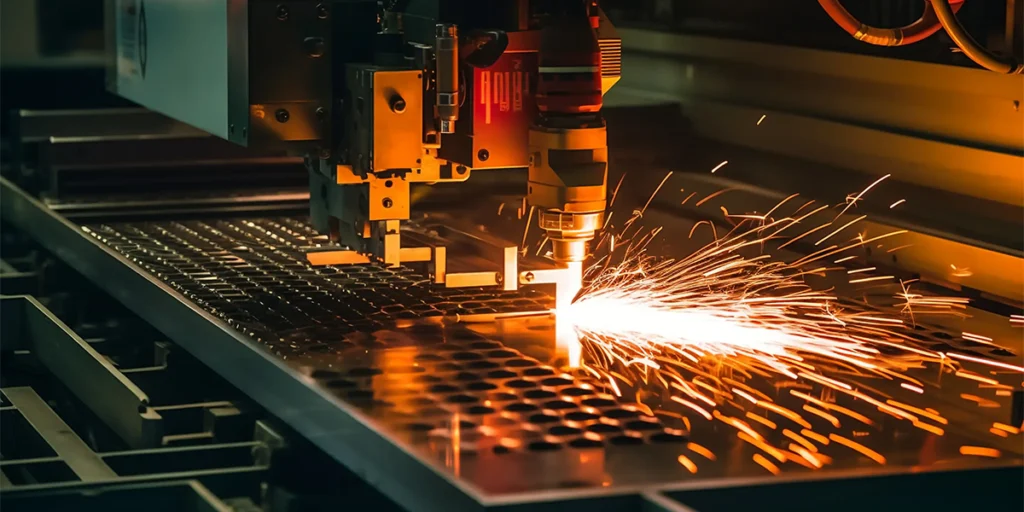
Complete process of copper CNC machining
Machining copper parts is more than just “cutting out the material.” Truly reliable CNC machining of copper requires controlling risks from the design stage.
CAD and DFM Analysis
A high-quality copper parts project typically begins with DFM (Design for Manufacturing).
Many copper parts are not structurally complex, but due to the material properties, certain designs can significantly increase the difficulty of manufacturing, for example:
- Deep cavity structure
- Ultra-thin walls
- Micro-aperture
- High-density heat dissipation fins
- Acute angles and narrow grooves
Before starting the actual coding, the engineering team usually analyzes:
- Is it prone to burrs?
- Is there tool interference?
- Is it easily deformed?
- Is it suitable for mass production?
- Can the number of clamping operations be reduced?
For high-conductivity copper parts, DFM also pays close attention to the processing quality of the contact surfaces, because even tiny surface defects can affect conductivity.
In actual projects, we usually discuss the following issues with clients in advance:
- Is it necessary to optimize the wall thickness?
- Does the chamfer need adjustment?
- Is it possible to reduce the depth of the trench structure?
- Is it necessary to add a positioning reference?
This kind of preliminary analysis can significantly reduce the scrap rate in the later stages and shorten the overall delivery cycle.
This step is especially important for OEM projects because it directly impacts:
- Subsequent batch consistency
- Processing costs
- Yield
- Delivery stability
Material selection
There is more than one type of copper. Different copper alloys vary greatly in terms of electrical and thermal conductivity, strength, and machinability, so the choice of material usually depends on the end use of the part.
Common copper materials include:
| Material | Features | Common Applications |
| C101/C110 pure copper | Extremely high conductivity | Busbars, connectors |
| brass | Easy to process | Valves, fittings |
| beryllium copper | High strength | Precision elastic components |
| Tellurium copper | Excellent cutting performance | Precision machined parts |
Many clients default to “pure copper” at the beginning of a project, but in reality, pure copper is not necessarily the most suitable solution for processing.
In certain scenarios, using easier-to-machine copper alloys can:
- Reduce processing costs
- Improve dimensional stability
- Improve surface quality
- Shorten production cycle
As a copper CNC machining supplier, we typically base our decisions on:
- Application Environment
- Tolerance requirements
- Conductivity requirements
- Post-processing methods
- Annual demand
Helping clients choose more suitable material solutions is especially important for long-term, high-volume projects.
Programming and Toolpath
The cutting behavior of copper differs from that of aluminum and steel, therefore the machining process cannot simply replicate the parameters of other metals.
Because copper conducts heat very quickly, the heat in the cutting area dissipates rapidly, which means:
- Different heating methods for cutting tools
- Cutting stability changes more rapidly
- Prone to vibration of the blade
- Surface texture is more difficult to control
During the CAM programming phase, the focus is usually on optimization:
- Cutting method
- Cutting layer thickness
- Rotation speed and feed
- Chip removal path
- Finishing trajectory
For complex copper parts, multi-axis machining can usually reduce the need for secondary clamping, thereby improving concentricity and dimensional consistency.
At Zhuohua Hardware, we select based on the component structure:
- 3-axis machining
- 3+2 processing
- 5-axis machining
- Precision CNC turning
This reduces processing risks and improves the stability of complex copper parts.
For high-precision copper components, a reasonable toolpath not only affects machining efficiency but also directly impacts:
- Surface roughness
- Burr control
- Quality of conductive contact surface
- Stability of subsequent coatings
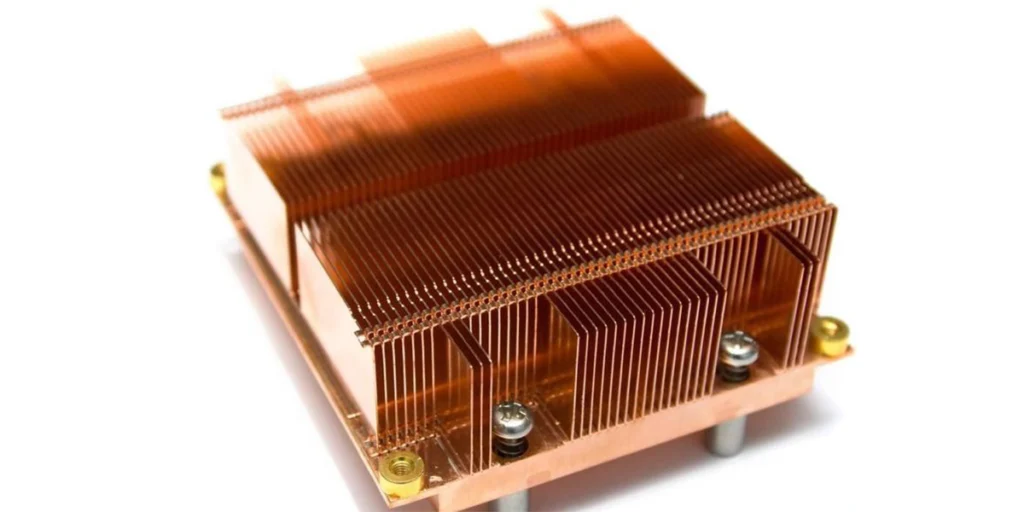
Key challenges in copper processing
Although copper has excellent electrical and thermal conductivity, these properties also increase the difficulty of processing it.
Copper is more likely to be found than aluminum and low-carbon steel.
- Unstable cutting
- Surface tear
- Burrs
- Accelerated tool wear
- Minor dimensional deviations
Therefore, copper CNC machining often relies more on experienced engineering teams than on the equipment itself.
Rapid heat dissipation leads to unstable cutting.
One of the most significant characteristics of copper is its extremely high thermal conductivity. This causes heat to dissipate rapidly in the cutting zone, resulting in constantly changing cutting conditions between the tool and the material.
Common problems encountered in actual processing include:
- The cutting tool suddenly vibrates
- Surface ripples
- Decreased dimensional stability
- Uneven finishing texture
This is especially noticeable when machining pure copper at high speeds. For thin-walled copper parts, rapid heat dissipation can also cause localized stress changes, resulting in slight deformation.
Therefore, copper processing typically requires:
- More stable spindle
- More reasonable cutting parameters
- Shorter tool overhang
- Higher rigidity clamping system
Many low-cost processing plants directly apply aluminum part parameters to process copper parts, which usually leads to:
- Rough surface
- Obvious knife marks
- Poor batch consistency
Professional copper CNC machining focuses more on long-term stability than on single-shot machining speed.
Tool wear problem
While copper isn’t as “hard” as stainless steel, it can cause another problem: “material adhesion.” During cutting, copper tends to adhere to the cutting edge, forming a built-up edge.
This will lead to:
- Decreased cutting capability of the tool
- Surface quality deterioration
- Increased dimensional error
- More burrs
This effect is particularly noticeable for tiny copper parts.
Therefore, copper processing typically uses:
- Sharper blade geometry
- Special tool coating
- High-frequency tool monitoring
- More stable cooling method
In mass production, we typically base our decisions on:
- Processing time
- Surface condition
- Size Trends
Replacing cutting tools in advance, rather than waiting until they are completely worn out, allows for more stable control over the quality of batch parts.
Precision control of micro parts
As electronic devices and AI hardware become increasingly miniaturized, more and more copper parts are entering the field of micromachining. For example:
- Miniature connectors
- PIN pins
- PCB terminals
- Precision conductive components
These parts typically have:
- Micro-aperture
- Ultra-thin structure
- High concentricity requirement
- Minimal tolerance range
Copper is relatively soft, so it is more prone to indentation and slight deformation during clamping.
For these types of projects, the focus is usually not just on “whether it can be made,” but rather:
- Can it achieve stable mass production?
- Can consistency be maintained?
- Can burrs be controlled?
- Can it meet the subsequent assembly requirements?
This is why high-precision copper CNC machining typically requires:
- High-speed equipment
- Precision fixtures
- Online testing
- Stable temperature control environment
For long-term OEM projects, this stability is often more important than simply offering a low price.
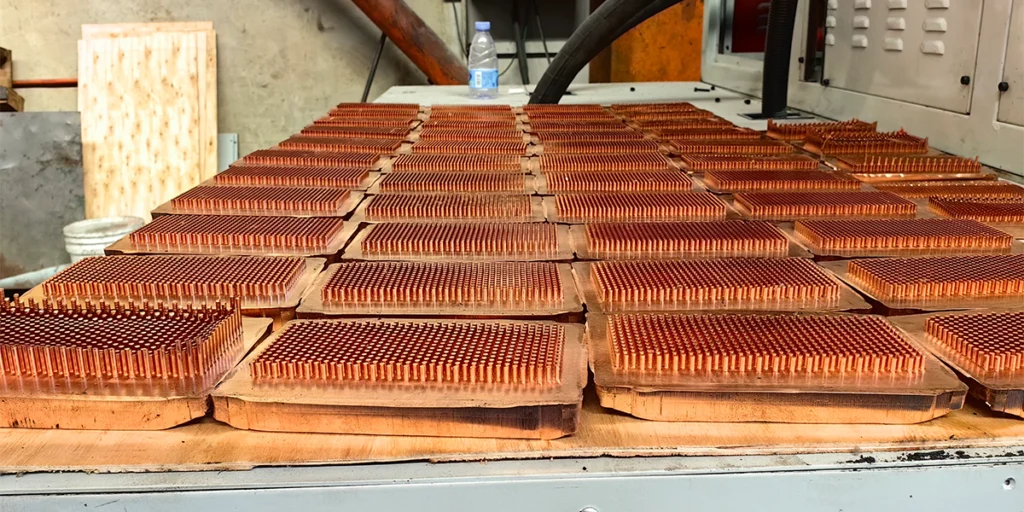
How to improve the machining quality of copper parts
High-quality CNC machining of copper does not solely rely on high-end equipment. What truly determines the stability of parts is usually process control, parameter experience, and meticulous management during the production process.
In the fields of electronics, thermal management, and precision industry, copper parts often require not only dimensional accuracy but also the following:
- Surface quality
- Electrical conductivity
- Thermal conductivity
- Assembly consistency
- Long-term stability
Therefore, professional copper processing usually optimizes three aspects simultaneously: cutting parameters, equipment rigidity, and inspection process.
Reasonable cutting parameters
The cutting characteristics of copper are completely different from those of aluminum and stainless steel. If the parameters are not set properly, even if the equipment itself is precise enough, burrs, chatter marks, and dimensional drift can easily occur.
In actual machining, engineering teams typically adjust the spindle speed, feed rate, and depth of cut dynamically based on various factors, such as:
- Copper material grades
- Component structure
- Tool diameter
- Surface roughness requirements
- Processing depth
For thin-walled copper parts and miniature copper assemblies, parameter control is particularly critical. Excessive cutting forces can easily lead to:
- Local deformation
- Edge turning
- Micro-hole offset
- Surface tear
Therefore, high-quality copper processing typically does not simply pursue the “fastest processing speed,” but rather focuses on:
- Surface stability
- Tool life
- Batch consistency
- Subsequent assembly yield
In long-term OEM projects, this stable process is often more important than a single low price.
High rigidity equipment
Although copper is a soft metal, high-precision copper machining actually places higher demands on equipment stability. This is because copper amplifies equipment vibration and tool fluctuations.
Especially during the finishing stage, when the machine tool lacks rigidity, the following issues can easily occur:
- Uneven surface texture
- Minor dimensional deviations
- Concentricity is unstable
- Precision edge chipping
For complex copper parts, multi-axis equipment can usually reduce repeated clamping, thereby reducing cumulative errors.
At Zhuohua Hardware, we select different processing solutions based on the component structure, including:
- 3-axis CNC milling
- 3+2 positioning machining
- Machining of complex 5-axis structures
- Precision CNC turning
For high-precision copper components, a stable spindle, high-rigidity fixtures, and reliable temperature control are often more important than simply increasing the processing speed.
This is why many projects involving high-conductivity copper parts tend to choose specialized processing plants with stable batch production capabilities rather than general-purpose machining workshops.
Online testing
A common problem in the machining of copper parts is that the parts may gradually drift in size during the machining process, and the operators will not notice it immediately.
Especially during long-term mass production, tool wear, temperature changes, and clamping pressure changes can all cause dimensions to gradually deviate from the standard.
Therefore, high-precision copper processing typically incorporates online inspection processes, rather than relying solely on final sampling inspections.
Common testing items include:
- Critical dimensions
- Concentricity
- Aperture
- Flatness
- Surface roughness
For precision copper connectors, pins, and conductive components, some projects may even add:
- Microscopic detection
- Contact surface inspection
- Pre-coating inspection
This allows for early detection of problems, preventing the scrapping of entire batches of parts. For OEM customers, a stable online inspection system not only means higher yield rates but also lower supply chain risks and more stable delivery cycles.
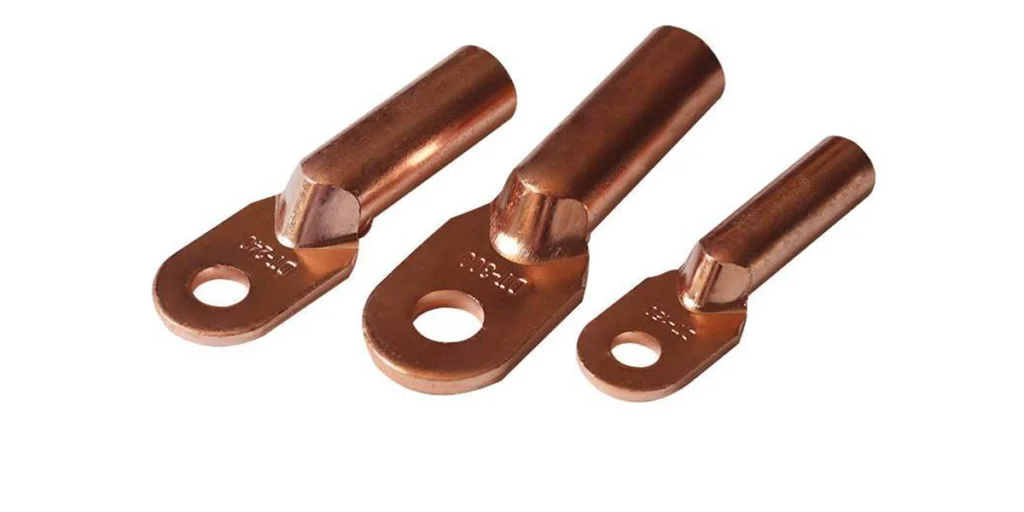
How can professional copper processing plants reduce scrap rates?
In copper CNC machining, the scrap rate often directly impacts project costs. Especially in projects involving high-value copper materials, even a small amount of scrap can significantly increase overall manufacturing costs.
Many customers find that after switching suppliers:
- Deterioration in dimensional consistency
- Surface quality fluctuation
- Unstable batch delivery
- Increased assembly issues
These problems are usually not caused by a single piece of equipment, but rather by insufficient control over the entire processing flow.
Professional copper processing plants typically mitigate risks at multiple stages, including:
- Preliminary DFM analysis
- Stable clamping solution
- Specialized copper machining tools
- Standardized parameter library
- Online testing
- Tool life management
For example, in the machining of complex copper heat sinks, improper toolpath control can easily lead to localized deformation and burrs on the heat sink fins. In miniature copper connector projects, even slight changes in clamping pressure can affect the final concentricity.
Therefore, experienced engineering teams are often more important than simply having a large number of machines. At Zhuohua Hardware, we have long provided copper CNC machining services to the electronics, industrial automation, and thermal management industries , including:
- Precision CNC milling
- High -quality CNC turning
- Machining of tiny copper parts
- Copper heat dissipation components
- OEM copper component manufacturing
From prototype development to mass production, we optimize the processing plan based on the part structure and actual application scenarios to help customers reduce costs.
- Scrap rate
- Processing costs
- Risk of rework
- Supply chain instability
For long-term projects, stable quality control capabilities are usually more valuable than simply offering a low price.