


Among high-strength aluminum alloys, 7075 has long been considered one of the most important materials in the fields of aerospace, defense, and high-performance machinery.
Compared to conventional 6061 aluminum, 7075 boasts higher strength, better fatigue performance, and superior structural stability, making it widely used in parts with extremely high requirements for weight and mechanical properties. However, at the same time, the processing difficulty, material cost, and process control requirements of 7075 are significantly higher than those of ordinary aluminum alloys.
For the purchasing team and product engineers, the real focus should not be on “whether 7075 can be manufactured,” but rather:
- Does it possess stable precision machining capabilities?
- Whether deformation can be controlled
- Can batch consistency be guaranteed?
- Does it possess mature aerospace-grade machining experience?
In this article, we will analyze in detail the processing characteristics of 7075 aluminum, its differences from 6061, and its practical applications in high-end manufacturing from an engineering and manufacturing perspective.
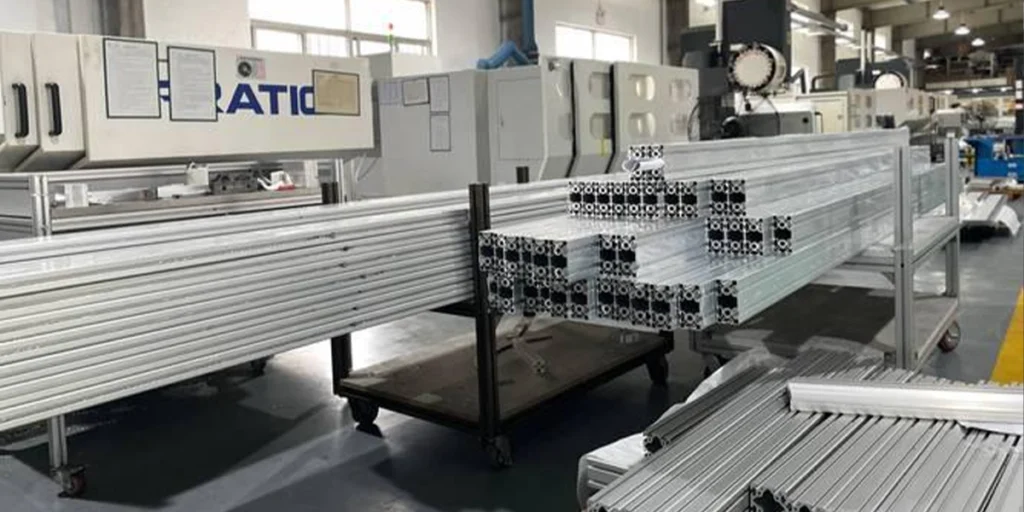
7075 aluminum processing properties
7075 is a high-strength aluminum-zinc alloy, originally used primarily in the aerospace industry. Even today, it remains one of the most common aluminum alloys used in aerospace structural components.
The most significant characteristic of 7075 is its extremely high strength, while maintaining a relatively light weight. This makes it an important material for many steel alternatives.
High strength performance
7075-T6 aluminum can typically reach about 510–570 MPa, which is close to that of some low-carbon steels.
Compared to ordinary industrial aluminum, 7075 aluminum can withstand higher loads, making it ideal for:
- High-stress structural components
- Aviation connectors
- Motion mechanical components
- Drone frame
- Core components of automated equipment
In many lightweight design projects, the 7075 can simultaneously achieve the following:
- Structural strength
- Weight control
- Dynamic stability
Excellent rigidity and fatigue properties
7075 aluminum not only has high strength but also good rigidity. For high-speed moving equipment, this means:
- Smaller deformation
- More stable motion accuracy
- Longer fatigue life
aluminum is commonly used in robotics, racing, and aerospace applications for :
- Load-bearing support components
- High-speed motion mechanism
- Precision mounting structure
Especially for parts that need to withstand vibration and cyclic loads for a long time, 7075 aluminum has a significant advantage over ordinary aluminum materials.
Good CNC machining adaptability
Although 7075 aluminum is a high-strength aluminum, it still possesses good machinability. Compared to titanium alloys or stainless steel, 7075 is easier to work with.
- High-speed cutting
- Precision milling
- Machining of complex curved surfaces
- Thin-walled structure processing
Therefore, 7075 aluminum is very suitable for:
- Five-axis CNC machining
- High-precision milling
- Manufacturing of complex structural parts
This advantage in processing efficiency is very important for complex aerospace parts.
Excellent anodizing effect
After anodizing, 7075 aluminum can yield:
- Better wear resistance
- More stable surface protection
- Higher corrosion resistance
It also improves the consistency of product appearance. Therefore, many high-end industrial equipment and aerospace parts undergo anodizing after CNC machining.
Zhuohua Hardware currently supports a variety of aluminum surface treatment solutions, including:
- Anodizing
- Sandblasting
- Wire drawing
- Fine processing
- Electropolishing
It can meet the different appearance and functional requirements of industrial equipment, robots and aerospace parts.
7075 aluminum is more suitable for high-performance parts .
Although the processing cost of 7075 aluminum is higher than that of 6061 aluminum , it can significantly improve product performance in many projects.
Especially in the following scenarios:
- Lightweight design is required
- Requires high strength
- Requires high dynamic stability
- Requires complex and precise structures
7075 is usually a more reasonable choice. This is why more and more European and American equipment manufacturers are starting to use 7075 aluminum alloy extensively in high-end structural components.
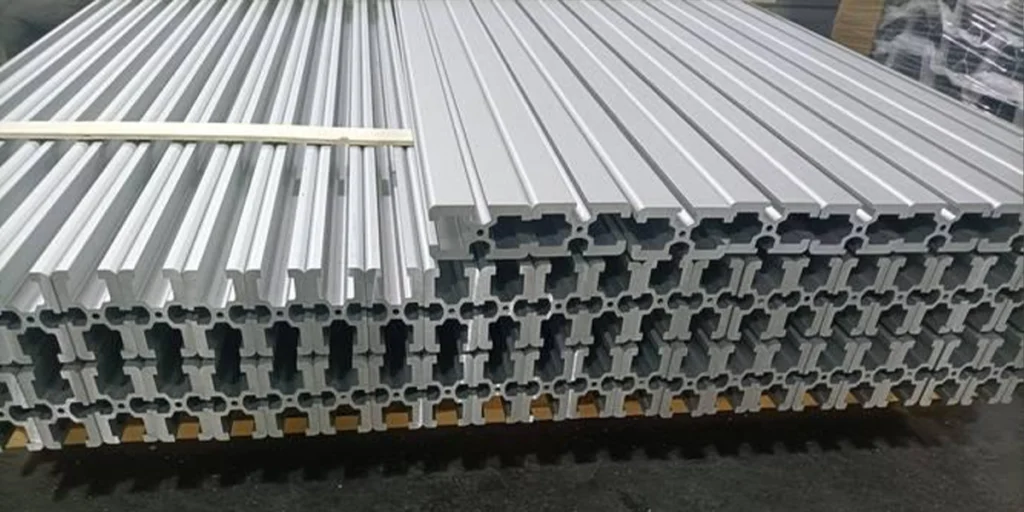
Differences between 7075 aluminum and 6061 aluminum
7075 aluminum and 6061 aluminum are currently the two most common aluminum alloys used in CNC machining. However, many customers face the same question at the beginning of a project: should they choose 7075 aluminum or 6061 aluminum ?
In reality, there is no absolute “better” between these two materials. The real key point is:
- Product application scenarios
- Strength requirements
- Cost target
- Processing complexity
- Surface requirements
Significant differences in strength
7075 aluminum is its strength. In the T6 temper:
| Material | tensile strength |
| 6061-T6 | About 310 MPa |
| 7075-T6 | About 570 MPa |
The table shows that 7075 aluminum is almost twice the size of 6061 aluminum .
therefore:
- High-load structural components
- Aviation components
- High-speed moving parts
It is usually more suitable for 7075 aluminum .
6061 aluminum is more suitable for:
- General industrial parts
- Automated equipment
- Casing and stand
- Common structural components
Different processing costs
6061 aluminum is a general-purpose industrial aluminum material. Its advantages are:
- Low material cost
- Stable processing
- Longer tool life
- More suitable for mass production
7075 aluminum has good machinability, it also has the following drawbacks:
- Higher material prices
- Higher requirements for process control
- More prone to stress deformation
Therefore, the overall manufacturing cost is usually higher than that of 6061 aluminum . For budget-sensitive projects, 6061 aluminum is often more advantageous.
Different corrosion resistance
6061 aluminum generally has better corrosion resistance than 7075 aluminum . While 7075 aluminum has higher strength, its natural corrosion resistance is slightly weaker, therefore many projects will increase its corrosion resistance.
- Anodizing
- Surface sealing
- Anti-corrosion coating
This is especially important in wet or outdoor environments.
Differences in welding performance
6061 aluminum has better weldability. 7075 aluminum is generally not recommended for complex welded structures. Therefore:
- Welded frame
- Large-scale modular structure
It is usually more suitable for 6061 aluminum .
7075 aluminum is more suitable for:
- Integrated CNC machined structural components
- High-precision load-bearing components
How to choose more suitable materials
| Recommended materials | need |
| 7075 | High-strength structural components, lightweight + high performance, aerospace |
| 6061 | General industrial parts, cost priority, welded structure |
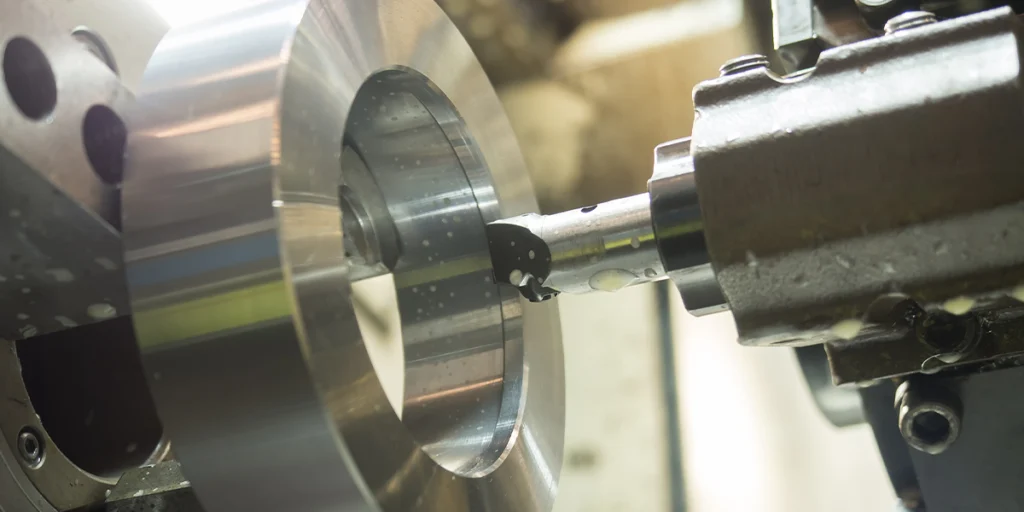
Why is the 7075 widely used in aerospace?
The 7075 is widely used in the aerospace industry because it can provide very high structural strength while maintaining a relatively light weight.
For aviation equipment, weight has a direct impact:
- Fuel efficiency
- Flight performance
- Load capacity
- Dynamic stability
Therefore, the aerospace manufacturing industry has always been pursuing materials that are “lighter but stronger”, and the 7075 perfectly meets this requirement.
Currently, 7075 is widely used in:
- Aircraft structural components
- Wing connectors
- Aviation support
- UAV frames
- High-load mounting components
- Aviation fasteners
Compared to ordinary industrial aluminum, 7075 has better fatigue resistance under high stress environments, which means that parts can withstand vibration, impact and cyclic loads for a long time without failing quickly.
In addition, the 7075 is also well-suited for machining complex and precision structures. Modern aerospace parts increasingly emphasize:
- Integrated structure
- Lightweight design
- Reduce the number of components
- Improve overall rigidity
This makes five-axis CNC machining increasingly important in the aerospace industry.
Through five-axis machining, many structures that originally required the assembly of multiple parts can now be directly machined from a single piece of 7075 aluminum, which not only reduces assembly errors but also improves the overall structural strength.
However, the aerospace industry has much higher requirements for manufacturing stability than general industrial sectors. Many aerospace projects not only focus on dimensional accuracy but also on:
- Material batch consistency
- Surface quality
- Processing stress control
- Traceability
- Batch consistency
Therefore, suppliers capable of stably processing 7075 aerospace parts typically need to have mature equipment capabilities and quality management experience.
Zhuohua Hardware has long provided high-precision aluminum CNC machining services for the robotics, automation and high-end industrial fields, supporting 3-axis, 3+2-axis and 5-axis machining, and has the capability to manufacture complex aluminum structural parts, supporting the complete manufacturing process from prototype development to mass production.
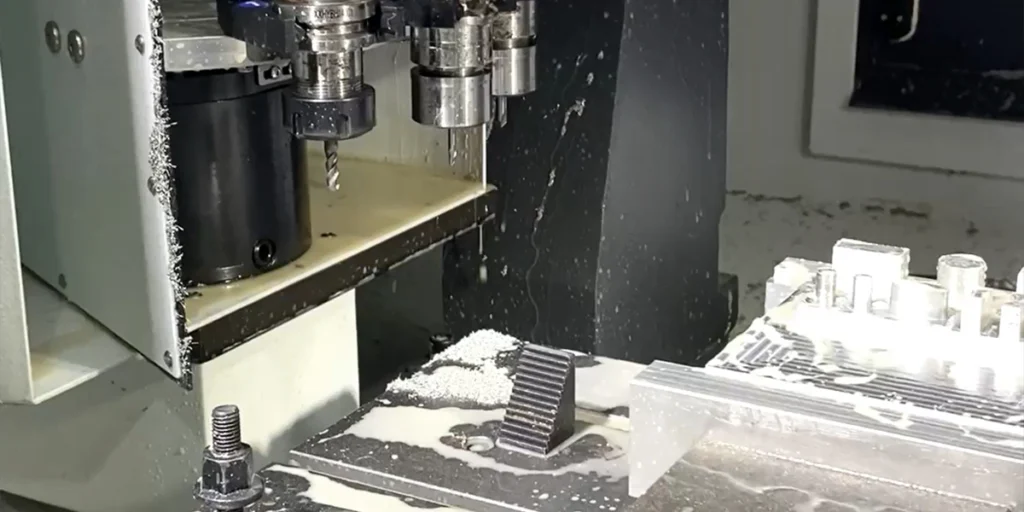
Challenges of milling 7075 aluminum
Although 7075 aluminum has good machinability, it is still significantly more difficult to machine than ordinary 6061 aluminum. So how can we reliably machine complex 7075 parts while ensuring dimensional consistency?
One of the biggest challenges here is material stress. 7075 is a high-strength aluminum alloy with relatively high internal residual stress. When a large amount of material is removed, the parts may exhibit the following:
- Deformation
- Warping
- Size drift
This type of problem is particularly common in the machining of thin-walled parts, deep cavity structures, and large aluminum parts.
Therefore, 7075 machining typically requires:
- Phased roughing and finishing
- Allow reasonable margin
- Optimize toolpath
- Control cutting heat
Otherwise, even if the machine tool is accurate enough, the final part may still be out of tolerance.
Another challenge comes from high-speed machining. The 7075 is suitable for high-speed cutting, but high-speed machining also means:
- Higher spindle stability requirements
- Higher tool quality requirements
- More stringent vibration control
If the equipment lacks rigidity, the following problems can easily occur:
- Knife pattern
- Burrs
- Surface vibrating knife
- Unstable dimensions
Especially in the machining of aerospace parts or precision assembly surfaces, surface quality directly affects product performance.
Furthermore, the 7075 requires a higher level of five-axis machining programming ability. Complex curved surface parts typically involve:
- Multi-angle processing
- Deep cavity machining
- Long knife processing
- Interference control
This not only tests the equipment’s capabilities but also the engineering team’s experience.
Therefore, for high-end 7075 projects, what truly matters is not the lowest bid, but whether the supplier possesses the necessary qualifications.
- Stable processing experience
- Precision control capability
- Process optimization capability
- Batch consistency capability
These factors ultimately determine whether the project can be successfully mass-produced.
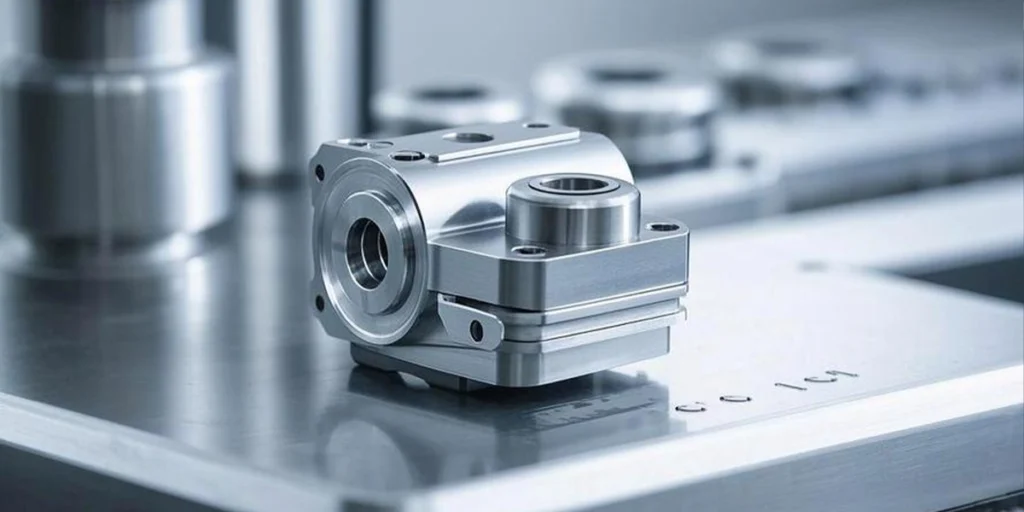
Advantages of China’s 7075 Aluminum Processing Supply Chain
In the past, many European and American companies’ understanding of “Made in China” was limited to “low-cost production.” However, in the past decade or so, China’s CNC machining industry has undergone very significant changes.
Especially in the field of precision machining of aluminum alloys, China has formed a very mature supply chain system, including:
- Aluminum supply
- CNC machining
- Surface treatment
- Detection
- Fast logistics
This is also a key reason why more and more European and American companies are shifting their 7075 aluminum parts projects to China.
First, China possesses a very complete processing capacity system. For high-performance materials like 7075, many projects require not only sample development but also stable mass production. A mature supply chain can support both simultaneously.
- Small-batch prototype
- Medium-volume production
- Large-scale orders
This is very important for growing companies.
Secondly, China’s capabilities in five-axis machining and the manufacturing of complex aluminum parts have improved significantly. More and more processing plants are beginning to equip themselves with these technologies.
- Five-axis CNC equipment
- High-speed machining center
- Automated testing equipment
It can meet the needs of aviation, robotics and high-end industrial equipment for complex structural components.
In addition, China’s supply chain still has a significant advantage in cost control, including:
- Material procurement costs
- Equipment utilization rate
- Engineering collaboration efficiency
- Surface treatment accessories
Therefore, even for high-precision 7075 projects, Chinese suppliers are usually still able to offer more competitive overall manufacturing costs.
Of course, not all suppliers have the capability to reliably process 7075 stainless steel. For overseas customers, the real focus should be on:
- Do they have practical experience in high-precision machining?
- Does it have a quality system?
- Whether stable communication is possible
- Does it support DFM optimization?
- Does it have mass production capabilities?
Zhuohua Hardware currently supports machining of 50+ metal and plastic materials, including various high-performance aluminum alloys such as 7075, 7050, and 6061. We support the machining of complex aluminum structural parts, five-axis precision CNC machining , and complete surface treatment services , and can provide global customers with one-stop aluminum CNC machining solutions from rapid prototyping to mass production.