


In aluminum CNC machining projects, 6061 and 7075 usually have higher market attention, but for marine equipment, automotive structural parts, tank systems and highly corrosive environments, 5052 and 5083 Aluminum are actually more common engineering choices.
Both of these aluminum alloys belong to the 5-series aluminum alloys, and their core characteristics are excellent corrosion resistance, good weldability, and high forming stability. Therefore, they are widely used in shipbuilding, transportation, industrial equipment, and lightweight structural components.
So what are the differences between 5052 and 5083 Aluminum ? Which one is more suitable for CNC machining? In fact, although these two materials look similar, there are significant differences in strength, cutting performance, weldability, and final application.
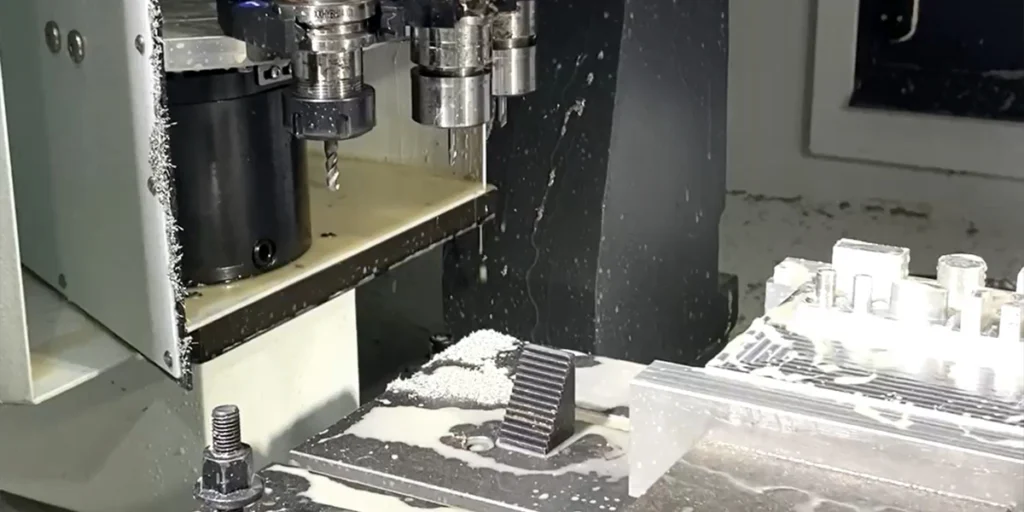
5052 aluminum processing properties
5052 is one of the most common aluminum sheet materials in industrial manufacturing, and is especially suitable for projects that require corrosion resistance, formability and cost control.
Compared to high-strength aerospace aluminum, 5052 aluminum does not have particularly high mechanical strength, but its overall performance in actual manufacturing is very balanced, so it is widely used in medium-strength structural components and appearance parts.
Why is 5052 Aluminum suitable for CNC machining?
5052 Aluminum has good cutting stability and is less prone to significant cracking or brittle edges during CNC milling and drilling. This means it is very suitable for:
- Thin-walled structural components
- Shell-type parts
- Electronic device components
- Medium and light load structural components
For projects requiring large-scale aluminum sheet processing, 5052 also maintains good planar stability, which is very important in the manufacture of automotive body panels and industrial housings.
In actual processing, 5052 Aluminum typically has the following advantages:
- Low tool wear
- Surface quality is relatively stable
- Subsequent anodizing yielded good results.
- Material costs are relatively reasonable
Therefore, many European and American customers use 5052 as a “general-purpose industrial aluminum sheet”.
Common Application Areas of 5052 Aluminum
5052 Aluminum is widely used in:
- Automotive sheet metal parts
- Electric vehicle structural components
- Industrial housing
- Heat sink assembly
- Medical device panel
- Protective covers for automated equipment
Especially in the new energy vehicle industry, 5052 Aluminum is often used in internal support structures and lightweight components due to its light weight and stable corrosion resistance.
In Zhuohua Hardware’s actual projects, 5052 aluminum alloy is also one of the most frequently used materials in robot shells, automated equipment panels, and industrial aluminum structural components. Due to its good processing stability, we are usually able to further optimize processing efficiency and overall cost while ensuring accuracy.
Limitations of 5052 Aluminum
While 5052 Aluminum has excellent machinability, it is not suitable for high-strength load-bearing applications. Compared to 7075 or 5083, 5052 Aluminum has lower strength, therefore it may not be the optimal choice in the following scenarios:
- High-load structural components
- Aerospace core components
- High-impact environments
- Heavy equipment structure
In addition, the 5052 Aluminum is prone to slight softening of the material surface during high-speed precision machining. Therefore, for ultra-high precision assembly surfaces, it is usually necessary to further optimize the cutting parameters and tool path.
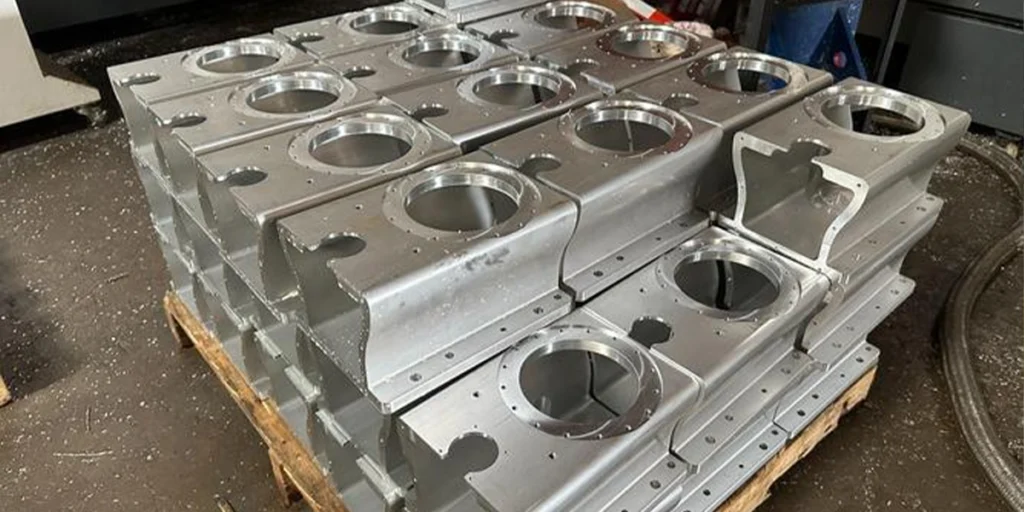
5083 aluminum processing properties
5083 is a high-strength, corrosion-resistant aluminum alloy, particularly suitable for high-humidity, high-salt-spray, and long-term corrosive environments. Compared to 5052 , 5083 Aluminum has higher mechanical strength while maintaining excellent resistance to seawater corrosion, making it widely used in shipbuilding, marine engineering, and heavy transportation industries.
In many European industrial projects, 5083 is even considered a marine grade aluminum alloy.
Core processing features of 5083
The most significant characteristic of 5083 is its excellent balance between high strength and corrosion resistance. This makes it particularly suitable for:
- Marine equipment
- Ship structural components
- Pressure vessels
- Heavy transport components
- High-load lightweight structure
However, from a CNC machining perspective, 5083 is generally more difficult to cut than 5052 Aluminum .
Due to the higher strength of the material, the following may occur during high-speed processing:
- Higher cutting resistance
- Faster tool wear
- Higher calorie accumulation
Therefore, processing 5083 typically requires:
- More stable clamping system
- More reasonable cutting parameters
- Higher rigidity equipment
For large 5083 parts, it is especially important to control thermal deformation and processing stress.
5083 is suitable for machining large structural components.
5083 is very common in the manufacture of large aluminum structural components. For example:
- Hull structure
- Offshore platform components
- Industrial Transportation Framework
- Heavy-duty robot chassis
Because of its higher strength, 5083 steel can maintain good structural stability while reducing material thickness. This is why more and more automated and new energy equipment are beginning to use 5083 to replace some traditional steel structures.
In Zhuohua Hardware’s large aluminum machining projects, we typically combine five-axis machining with staged finishing to reduce stress deformation issues during 5083 machining and ensure that large parts maintain stable dimensional accuracy.
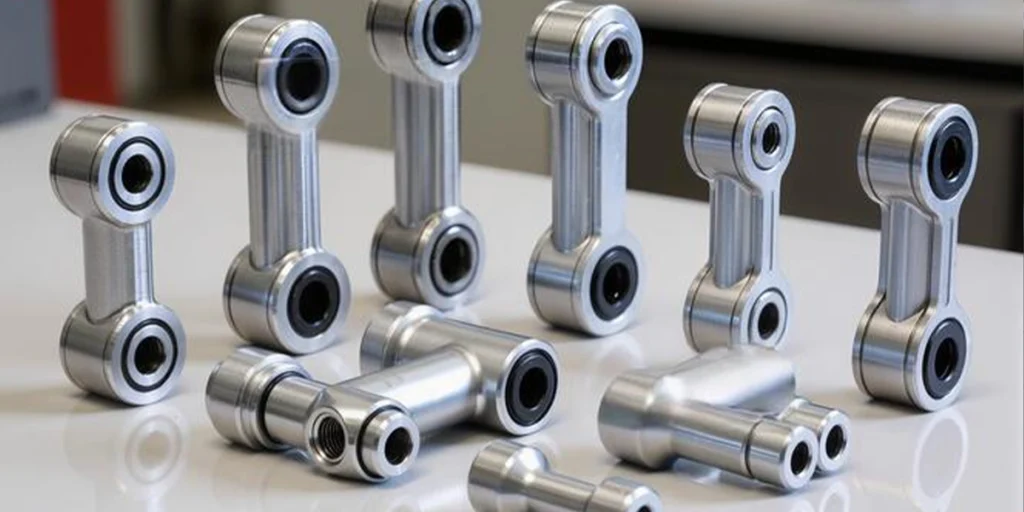
Marine/Automotive Industry Applications
Although 5052 and 5083 both belong to the 5-series aluminum alloys, their applications in actual industries are not entirely the same. Simply put:
- 5052 Aluminum is more geared towards general industrial and automotive lightweighting.
- 5083 Aluminum is more suited for marine, highly corrosive, and heavy-duty structures.
Understanding this is crucial for material selection.
Applications of 5052 Aluminum in the automotive industry
Due to its excellent formability and stable processing performance, 5052 Aluminum steel is widely used in the automotive industry. Especially in the field of new energy vehicles, an increasing number of manufacturers are using 5052 Aluminum to replace some traditional steel parts to reduce overall vehicle weight and improve energy efficiency.
Common applications include:
- Battery pack casing
- Heat dissipation components
- Internal support structure
- Lightweight panel
- Automotive electronic housing
Another advantage of 5052 Aluminum is that it is very suitable for medium to large batch CNC machining and subsequent surface treatment.
For example, after anodizing, 5052 Aluminum typically achieves good appearance consistency, making it a preferred material for many automotive electronics and industrial equipment housings. For projects requiring rapid prototyping and mass production switchover, 5052 Aluminum also makes it easier to control overall manufacturing costs.
Applications of 5083 Aluminum in marine and heavy industries
Compared to 5052, 5083 Aluminum is more suitable for extreme environments. Its advantages are particularly evident when exposed to seawater, moisture, or chemical corrosion over extended periods.
Therefore, it is widely used for:
- Ship structural components
- Offshore platform components
- Tank system
- Heavy transport equipment
- High-load framework
In the marine industry, material failure often translates to extremely high maintenance costs, so customers are typically more concerned about:
- Long-term corrosion resistance
- Welding stability
- Structural fatigue life
5083 performs very stably in these aspects.
In addition, due to its high strength, 5083 can maintain structural rigidity while reducing weight, which is also very important for large automated equipment and transportation systems.
Currently, an increasing number of robot chassis, large automated structural components, and new energy equipment frames are also starting to use 5083 as a core material.
Material selection trends in the aerospace and robotics industries
While 7075 is more common in the aerospace field, 5052 and 5083 Aluminum are also being used more and more in auxiliary structural components and large support assemblies.
The reason is simple:
- Costs are more controllable
- More stable corrosion resistance
- Welding is easier
- The supply of large-size boards is more mature.
Especially in the robotics industry, many customers will prioritize:
- Weight
- Processing efficiency
- Post-maintenance costs
Therefore, 5052 and 5083 Aluminum are becoming increasingly common in robot frames, housings, mobile platforms, and automated equipment structures.
At Zhuohua Hardware, we have long provided aluminum CNC machining services to the robotics automation , industrial equipment , and new energy equipment industries . For large aluminum structural components, we help customers evaluate different material options such as 5052, 5083, and 6061 Aluminum based on actual stress, weight, and machining complexity, rather than simply machining according to drawings.
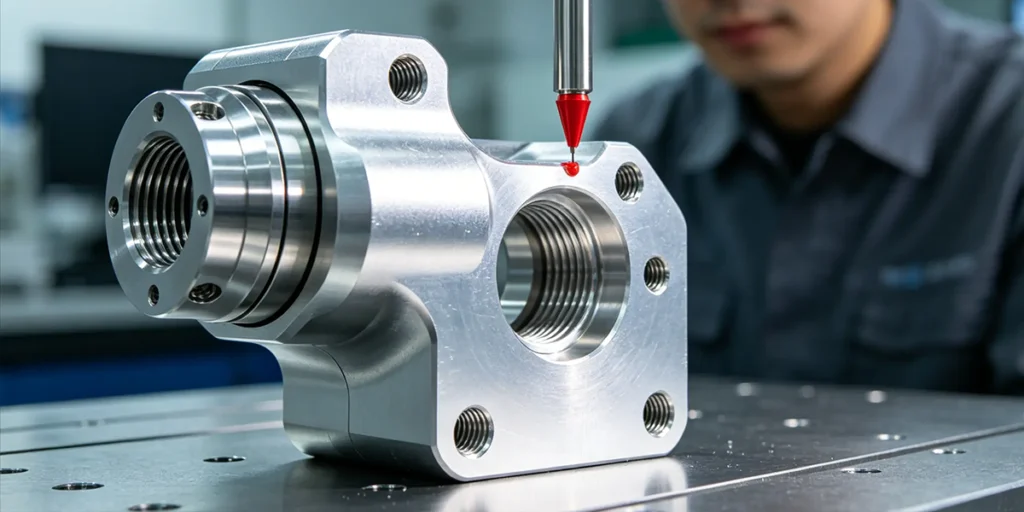
Comparison of weldability and corrosion resistance
For many industrial projects, material selection is not solely determined by processing performance. What truly impacts product lifespan is often:
- Welding stability
- Long-term corrosion resistance
- Environmental adaptability
This is also an important reason why 5052 and 5083 Aluminum are widely used in the marine, transportation and industrial equipment industries.
Corrosion resistance performance of 5052 Aluminum
5052 Aluminum possesses excellent resistance to atmospheric corrosion. It maintains long-term stability in typical industrial environments and is therefore widely used in:
- Industrial housing
- Automotive body panels
- Electronic device structure
- Medical device components
In addition, 5052 Aluminum has good resistance to moisture, so it is stable in moderately corrosive environments.
However, if exposed to:
- High salt spray
- Seawater
- High humidity chemical environment
5083 is usually a more reliable choice.
Why is 5083 called marine-grade aluminum alloy?
One of the biggest advantages of 5083 is its extremely strong resistance to seawater corrosion. Even when exposed to marine environments for extended periods, 5083 can still maintain good mechanical properties and structural stability.
This is why:
- Hull
- Marine equipment
- Port machinery
- Maritime transport system
5083 is used extensively.
Welding performance comparison
Both 5052 and 5083 Aluminum have good weldability, but 5083 is generally more suitable for large welded structures. Especially in:
- Thick plate welding
- High-load structure
- Marine equipment
Among them, 5083 has a better ability to maintain strength after welding.
This is why large ship structural components tend to use the 5083.
However, it should be noted that high-quality welding depends not only on the materials, but also on these factors:
- Machining accuracy
- Assembly tolerances
- Surface treatment
- Thermal input control
Therefore, for CNC machined parts that require subsequent welding, the manufacturing accuracy in the early stages is crucial.
How to choose the right aluminum plate material
For many customers, the real challenge isn’t “processing,” but rather finding a balance between performance, cost, and manufacturing efficiency. There’s no inherently “better” difference between the 5052 and 5083 Aluminum ; the key lies in the project requirements.
When to choose 5052 Aluminum
If your project focuses more on:
- Cost control
- Processing efficiency
- Appearance quality
- Medium intensity demand
Therefore, 5052 Aluminum is usually a more economical choice. Especially suitable for:
- Industrial equipment enclosures
- Automotive parts
- Automated equipment
- Consumer electronics structural components
5052 Aluminum can also shorten the overall processing cycle, making it more suitable for rapid development projects.
When to choose 5083
If the project involves:
- Marine environment
- Highly corrosive areas
- Heavy structure
- Large load-bearing components
5083 is generally more reliable. Although the manufacturing cost is slightly higher, its long-term stability is usually better. Especially in large structural projects, 5083 can maintain high rigidity while reducing weight.
The supplier’s engineering capabilities are equally important.
In fact, the problems with many aluminum processing projects are not with the material itself, but rather:
- Inadequate structural design
- Mismatched processing technology
- Incorrect material selection
- Design tolerances exceeded manufacturing capabilities
Therefore, professional suppliers not only need to have processing capabilities, but also engineering support capabilities.
At Zhuohua Hardware, we will base our decisions on:
- Usage Environment
- Strength requirements
- Surface requirements
- Batch size
- Cost target
Help customers choose the most suitable aluminum material solutions.
We support:
- 3-axis and 5-axis CNC machining
- Processing of large aluminum structural components
- High-precision aluminum parts manufacturing
- Anodizing and Surface Treatment
- Rapid prototyping and mass production
From DFM analysis to final delivery, we help clients advance the entire project more steadily.