


In the aerospace manufacturing industry , material selection often directly determines the strength, weight, durability, and long-term stability of parts. Compared to ordinary industrial aluminum alloys, the aerospace industry places greater emphasis on high strength, fatigue resistance, and stress corrosion cracking resistance, which is a key reason for the widespread use of 7050 aluminum alloy.
7050 is a high-strength aerospace aluminum alloy, commonly used in aircraft structural components, wing assemblies, frame structures, and high-load connectors. It possesses strength approaching that of some steels while maintaining the lightweight advantage of aluminum, making it a long-standing choice for manufacturing high-performance aerospace structures.
However, from a CNC machining perspective, 7050 is not an “easy” material to machine. It places high demands on equipment rigidity, tooling strategy, thermal control, and finishing stability.
For aerospace customers, what really matters is not just the material itself, but whether the processing supplier has the ability to reliably handle high-strength aerospace aluminum.
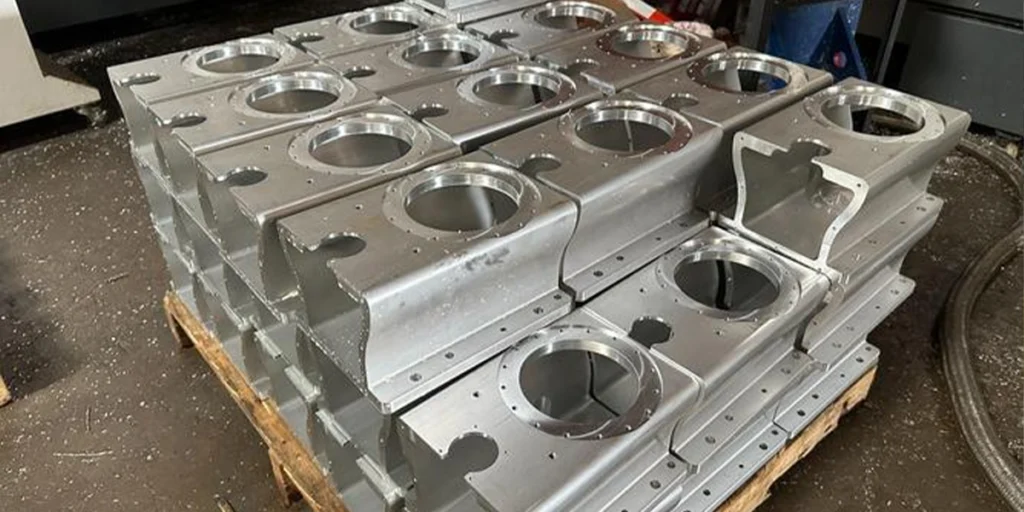
Features of 7050 aluminum alloy
7050 is a high-strength aluminum alloy with zinc as the main alloying element, and is usually classified as an aerospace-grade material. Compared with general industrial aluminum such as 6061, 7050 has higher mechanical properties, especially showing greater stability under high loads and long-term fatigue environments.
Its biggest advantage is:
- High strength
- High fatigue resistance
- Excellent resistance to stress corrosion
- Good fracture toughness
- Lightweight
This is why the 7050 has long been used for:
- Aircraft wing structure
- Aerospace frame components
- Landing gear perimeter structure
- High-load connectors
- Military-grade lightweight structure
Compared to 7075, 7050 is generally more stable in terms of resistance to stress corrosion cracking. Therefore, many aerospace projects will give priority to 7050 in high humidity or long-term complex environments.
Why is 7050 suitable for aerospace structural components?
Aerospace parts often need to meet two seemingly contradictory requirements simultaneously:
- As light as possible
- As strong as possible
7050 strikes a perfect balance between these two.
It not only reduces the overall structural weight but also maintains high stability under high dynamic load environments. For aircraft, a lighter structure means:
- Lower fuel consumption
- Higher load capacity
- Longer driving range
Therefore, high-strength aluminum alloys still occupy a very important position in modern aerospace manufacturing.
7050’s processing stability
Although 7050 has high strength, its processing stability is not as “friendly” as that of 6061.
During high-speed cutting, the 7050 generates greater cutting forces and causes more significant tool wear. If machining parameters are not properly controlled, the following issues can easily arise:
- Tool vibration
- Surface microcracks
- Heat distortion
- Size drift
The stress release problem is particularly pronounced in the machining of thin-walled aerospace parts.
Therefore, 7050 processing typically relies more on:
- High-rigidity equipment
- Stable clamping solution
- Multi-stage finishing
- Reasonable heat dissipation strategy
In Zhuohua Hardware’s aerospace aluminum machining projects, we typically combine five-axis CNC machining with layered cutting strategies to reduce the impact of internal stress during 7050 machining and maximize the dimensional stability of complex structural parts.
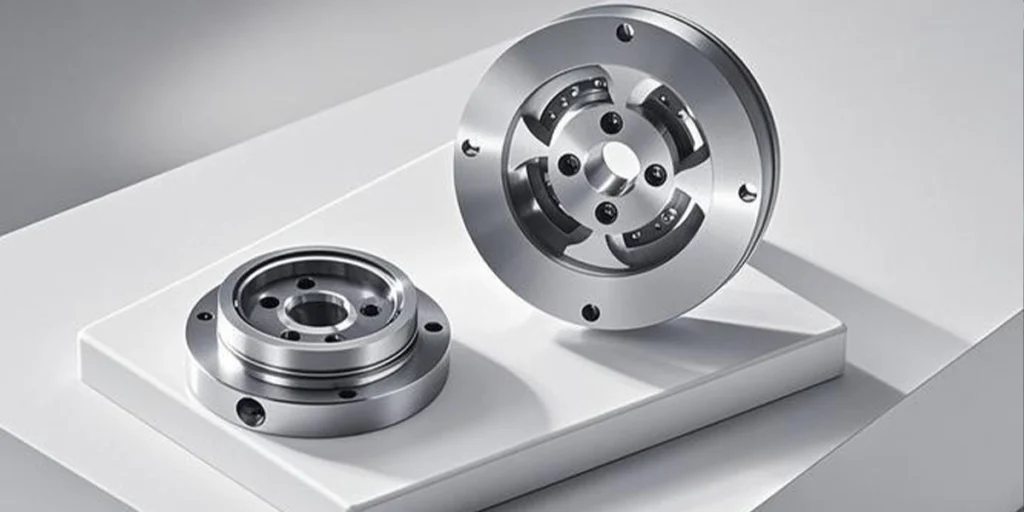
Aerospace aluminum grade requirements
The aerospace industry has far higher requirements for materials than ordinary industrial manufacturing. Many customers believe that “as long as it is high-strength aluminum, it can be used in aerospace projects.”
However, in reality, aerospace manufacturing focuses more on the comprehensive performance of materials in long-term complex environments, including:
- Fatigue life
- Corrosion resistance
- Temperature stability
- Structural reliability
- Batch consistency
Therefore, not all aluminum alloys are suitable for aerospace applications.
Common aluminum grades in the aviation industry
The most common aluminum alloys used in the aerospace industry currently include:
| Aluminum grades | Features | Common uses |
| 2024 | High fatigue strength | Aircraft skin |
| 6061 | Universal | Auxiliary structural components |
| 7075 | Ultra-high strength | High load parts |
| 7050 | Stronger resistance to stress corrosion | Main structural components |
The 7050 is typically used in structural applications with higher requirements than the 7075. Particularly in large aircraft and military projects, the 7050 provides more stable long-term performance under complex stress environments.
Requirements of the supply chain for aerospace materials
The aerospace industry not only requires stable material properties, but also places great emphasis on:
- Material traceability
- Batch consistency
- Test Records
- Process control
This means that suppliers not only need to have processing capabilities, but also need to have:
- Strict quality management
- Stable process flow
- Precision testing system
For many European and American aerospace customers, the focus is more on the supplier’s ability to deliver reliably over the long term, rather than the quality of a single sample. Therefore, aerospace aluminum processing typically relies more on supply chain systems with mature manufacturing experience.
In real-world projects, Zhuohua Hardware supports high-precision aluminum CNC machining , complex structural component manufacturing, and a complete quality inspection process. It can also provide full-process support to customers, from prototype verification to mass production.
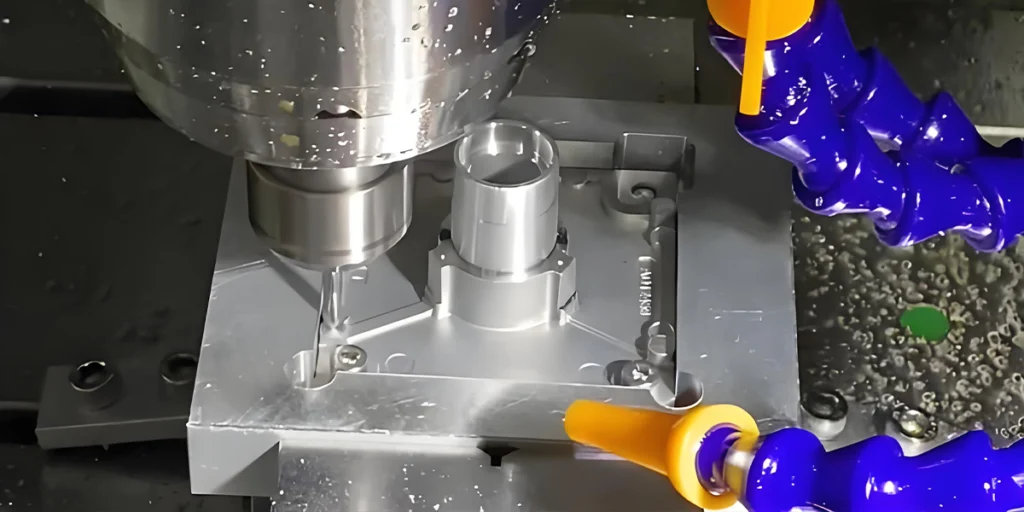
High-strength aluminum processing challenges
The processing difficulty of high-strength aerospace aluminum is far greater than that of ordinary industrial aluminum alloys. Many customers believe at the beginning of a project that “aluminum is easier to process than steel”.
This conclusion holds true for general-purpose aluminum materials like 6061, but the actual situation is completely different for aerospace-grade high-strength aluminum materials such as 7050 and 7075.
As material strength increases, higher cutting loads, more complex thermal deformation issues, and more significant internal stress release occur during processing. This is why many ordinary machining plants can produce simple aluminum parts, but struggle to stably manufacture aerospace structural components.
Higher cutting forces and tool wear
Although 7050 is an aluminum alloy, its cutting resistance is significantly higher than that of ordinary aluminum materials. During high-speed machining, if the equipment lacks sufficient rigidity, the following problems can easily occur:
- Tool vibration
- Unstable surface texture
- Size offset
- Tool life decreases rapidly
Especially in deep cavity structures and high removal rate machining, the force on the tool will increase further.
Therefore, aerospace aluminum processing typically requires:
- High-rigidity spindle
- Stable high-speed cutting system
- Appropriate tool coating
- Refined cutting parameters
For complex aerospace parts, multi-axis linkage machining is often a necessity because it can reduce repeated clamping and improve the overall structural accuracy.
Thin-walled parts are prone to deformation
To reduce weight, aerospace parts often employ the following techniques:
- Thin-walled structure
- Hollowed-out design
- Deep cavity machining
- Large-size lightweight frame
While this type of structure can reduce weight, it also significantly increases the difficulty of manufacturing.
The 7050 releases internal stress during material removal. If the cutting strategy is not appropriate, the following problems can easily occur:
- Warping
- Edge deformation
- Flatness out of control
- Assembly deviation
Therefore, high-strength aluminum machining is usually not completed in one go, but rather by:
- Phased rough processing
- Stress relief
- Semi-finishing
- Final finishing
This processing strategy can effectively improve the stability of parts.
In Zhuohua Hardware’s large-scale aerospace aluminum projects, we pre-determine the processing path based on the part structure and combine it with multiple positioning inspections to reduce the risk of deformation after processing complex parts.
Higher requirements for thermal control
The 7050 mill accumulates a significant amount of heat during high-speed cutting. Insufficient cooling can lead to:
- Surface burns
- Size drift
- Microcracks
- Unstable surface roughness
For aerospace parts, even minute thermal deformation can affect the final assembly accuracy.
Therefore, aerospace aluminum processing usually places greater emphasis on:
- Coolant control
- Tool thermal management
- Optimize processing rhythm
- Stability during long-term continuous processing
This is why aerospace-grade machining relies more on mature process experience than just the equipment itself.
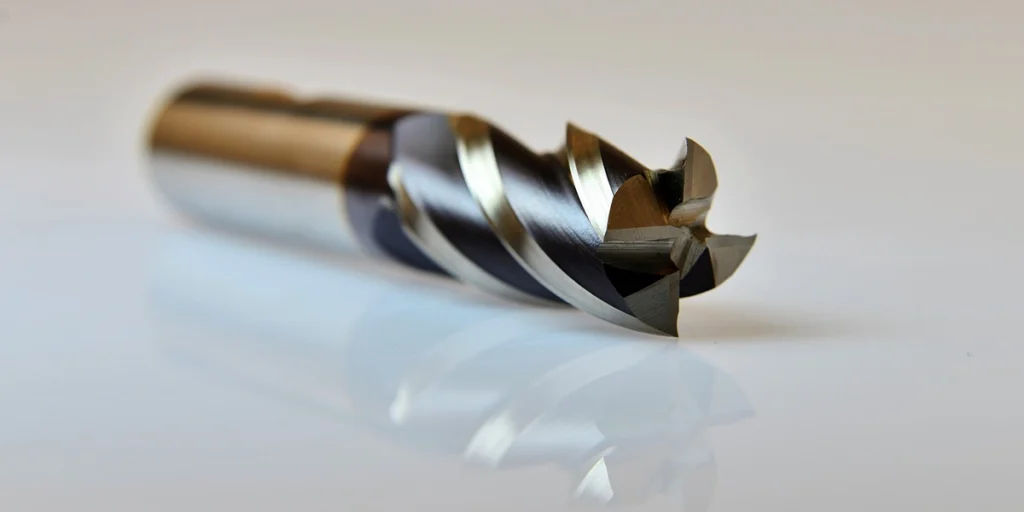
Aerospace aluminum precision machining requirements
The aerospace industry’s precision machining requirements are typically far higher than those of general industrial standards. Many industrial parts only need to meet dimensional tolerances, but aerospace parts often need to simultaneously meet the following requirements:
- Surface integrity
- Structural stability
- Fatigue life
- Long-term reliability
Therefore, precision machining of aerospace aluminum is not just about “making the dimensions accurate,” but requires controlling every detail of the entire manufacturing process.
Strict dimensional tolerance control
Aerospace structural components typically require extremely high assembly precision, especially in:
- Aircraft frame
- Connection structure
- High-speed motion components
In these areas, even minor errors can affect the overall system stability.
Therefore, aerospace manufacturing typically requires:
- High-precision CNC equipment
- Online testing
- Precision measurement system
- Stable temperature environment
In actual projects, many critical dimensional tolerances are controlled within ±0.02mm or even more stringent ranges.
Surface quality affects fatigue life
For aerospace components, the surface not only affects appearance but also long-term reliability. If the surface has:
- Microcracks
- Burrs
- The machining lines are too deep
- Stress concentration
Parts may fail due to fatigue under long-term vibration.
Therefore, aerospace precision machining usually pays special attention to:
- Surface roughness
- Edge processing
- Tool mark control
- Microscopic integrity
Many aerospace projects also require subsequent anodizing or special surface treatments to further enhance corrosion and wear resistance.
Batch consistency is more important than single-item consistency
The real challenge in the aviation industry is often not “making a prototype,” but maintaining consistency throughout long-term mass production.
Therefore, established suppliers typically establish comprehensive process controls, including:
- Fixed machining parameters
- Tool life management
- Tooling standardization
- Full-process quality record
For European and American airline customers, they are usually more concerned with:
- Long-term stable delivery
- Process consistency
- Supply chain reliability
Not just the lowest price.
Zhuohua Hardware has long served the high-precision manufacturing industry, supporting 3-axis, 3+2-axis and 5-axis aluminum CNC machining . It can handle complex aerospace aluminum structural parts and provides one-stop support from prototype development to mass production, including precision machining, quality inspection and surface treatment services.