


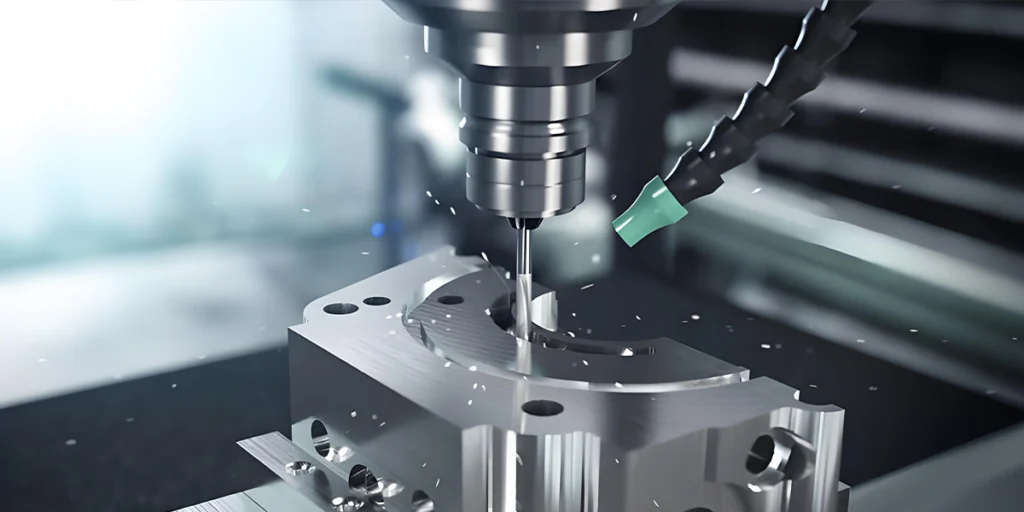
Alloy steel is widely used in aerospace, oil and gas, automotive, industrial equipment, and heavy machinery due to its high strength, wear resistance, and excellent mechanical properties. However, compared to ordinary carbon steel, alloy steel is more difficult to process, requiring more stringent standards in processing technology, equipment capabilities, and engineering experience.
For purchasing personnel and product engineers, choosing the right alloy steel processing method not only affects the precision of parts and delivery cycle, but also directly affects the overall manufacturing cost.
As a professional CNC machining service provider for alloy steel, we often encounter customers raising similar questions:
- Is alloy steel better suited for CNC machining or laser cutting?
- Can alloy steel still be processed after heat treatment?
- Which process is more suitable for complex structural parts?
- How to reduce the processing cost of alloy steel parts?
This article will systematically introduce common alloy steel processing methods and the application scenarios suitable for different processes.
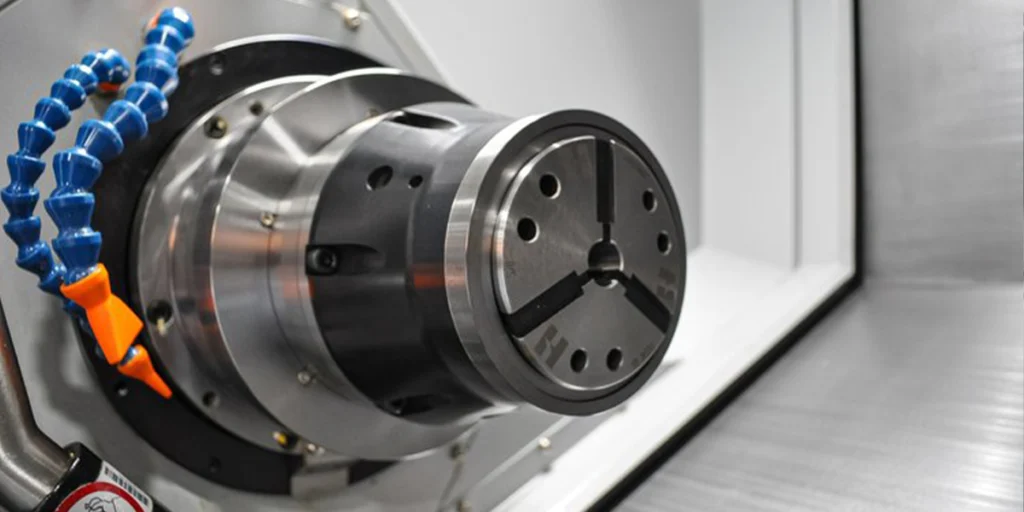
Overview of steel alloy processing methods
Alloy steel machining is usually not a single process, but a combination of multiple manufacturing steps. Different part structures, material hardness, tolerance requirements, and production batches all affect the final process route.
Common alloy steel processing methods in the industrial field currently include:
- CNC milling
- CNC turning
- Drilling and tapping
- Grinding
- Laser cutting
- Casting and post-processing
In real-world projects, many high-precision alloy steel parts often require a combination of processes to complete. For example:
- Laser cutting is used for material preparation.
- CNC roughing is used for rapid material removal.
- Precision grinding is used for final dimensional control.
- Surface treatment is used to improve corrosion resistance.
Therefore, professional alloy steel processing service providers not only need to have equipment capabilities, but also need to have complete process integration experience.
CNC milling
CNC milling is one of the most common machining methods for alloy steel, and it is particularly suitable for complex structural parts, irregular contours, and multi-faceted parts.
In the CNC machining of alloy steel, the cutting tool cuts the material at high speed, achieving the following:
- Planar machining
- Groove machining
- Cavity machining
- Surface machining
- Machining of multi-axis complex structures
For common alloy steel materials such as 4140, 4340, and 8620, CNC milling can achieve high dimensional accuracy while ensuring strength.
However, alloy steel is generally harder than ordinary steel, so it is prone to problems during processing:
- Accelerated tool wear
- Increased cutting heat
- Vibration problems
- Unstable surface roughness
This is why professional alloy steel CNC machining suppliers typically use:
- High-rigidity equipment
- Coated carbide cutting tools
- Multi-axis machining center
- High-pressure cooling system
To improve processing stability.
At Zhuohua Hardware, we support 3-axis, 3+2-axis, and 5-axis CNC milling, capable of machining a variety of high-strength alloy steel materials, and supporting complete manufacturing needs from prototyping to mass production.
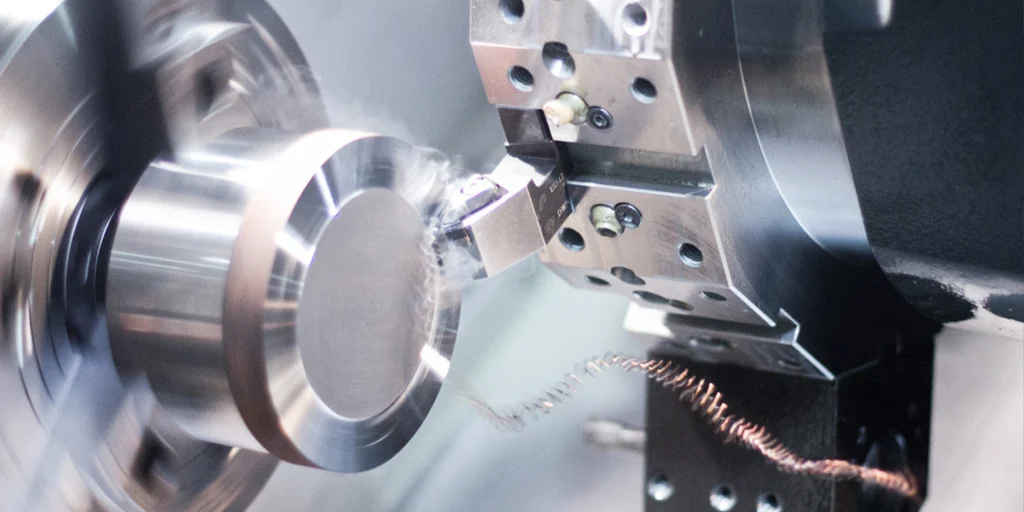
CNC turning
CNC turning is mainly used for machining cylindrical alloy steel parts, such as:
- Shaft-type parts
- Flange
- Bushing
- Connector
- Threaded parts
Unlike CNC milling, turning is a cutting process that involves rotating the workpiece, making it more suitable for axisymmetric structures.
For alloy steel materials, the main challenges of CNC turning come from:
- High hardness leads to shortened tool life.
- Long shaft-type parts are prone to vibration.
- The material becomes more difficult to cut after heat treatment.
Especially when turning hardened alloy steel, the control of machining parameters is crucial.
If the cutting speed, feed rate, or cooling method is not appropriate, the following problems may occur:
- Size instability
- Surface burns
- Chipped edge of the knife
- Workpiece deformation
Therefore, experienced alloy steel CNC machining manufacturers usually adjust their cutting strategies according to different material conditions (annealing, tempering, quenching).
Our CNC turning capabilities can achieve:
- Maximum turning diameter: 431mm
- Maximum length 990mm
- Accuracy ±0.02mm
Suitable for manufacturing high-precision alloy steel shafts and connectors.
Drilling and tapping
Drilling and tapping are essential machining steps for many alloy steel parts, especially in mechanical connectors and industrial equipment parts.
However, alloy steel is more difficult to drill than ordinary steel. The main reasons include:
- High material hardness
- Cutting heat concentration
- Difficulty in removing debris
- Threading tools wear out quickly
Especially in deep hole machining, insufficient cooling can easily lead to hole diameter deviation and tool breakage.
To improve processing stability, professional alloy steel processing services typically employ the following methods:
- Internal cooling drill bits
- Step-by-step drilling
- High-pressure cooling
- Specialized tapping tools
For high-precision threaded parts, it is also necessary to combine subsequent testing processes to ensure thread accuracy and assembly consistency.
Grinding
Grinding is typically used in the final finishing stage of alloy steel parts.
When parts undergo heat treatment, the material hardness increases significantly, and traditional cutting methods may not be able to meet the surface quality and dimensional accuracy requirements.
Grinding can achieve:
- Higher dimensional accuracy
- Lower surface roughness
- Better flatness
- More stable fitting accuracy
Therefore, it is very common in the following parts:
- Precision shafts
- Mold parts
- High-precision mating parts
- Bearing parts
However, grinding is generally less efficient, so it is more suitable as a final finishing process rather than a process for removing large quantities of material.
For high-precision alloy steel parts projects, we typically combine:
- CNC rough machining
- Heat treatment
- Precision grinding
A complete manufacturing process is established, thereby ensuring part performance while controlling costs.
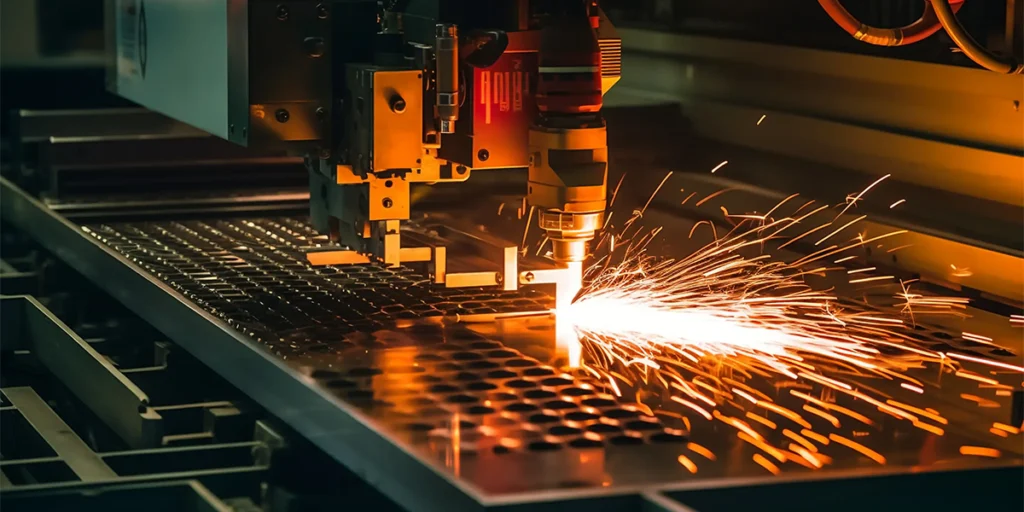
Alloy steel laser cutting service
In addition to traditional CNC machining, laser cutting of alloy steel has become increasingly common in recent years. Especially in the fields of sheet metal parts, structural components, and large-scale shape cutting, laser cutting can significantly improve processing efficiency and reduce upfront manufacturing costs.
For many industrial projects, laser cutting and CNC machining are not competing but complementary. Many projects using complex alloy steel parts employ a combination of laser cutting for blanking and CNC finishing. This improves material utilization and reduces overall processing time.
Laser cutting principle of alloy steel
Laser cutting is a process that uses a high-energy laser beam to rapidly melt materials and then uses an auxiliary gas to complete the cutting.
Compared to traditional mechanical cutting, laser cutting of alloy steel has the following advantages:
- Fast cutting speed
- No mold required
- High flexibility
- Suitable for complex contours
Especially in the processing of thin and medium-thin alloy steel plates, laser cutting efficiency is usually much higher than that of traditional processing methods.
Common laser cutting methods currently include:
- Fiber laser cutting
- CO₂ laser cutting
- High-power laser cutting
Among them, fiber lasers have become the mainstream solution in the industrial field.
Which parts are suitable for laser cutting?
Laser cutting of alloy steel is mainly suitable for:
- Sheet metal structural components
- Casing parts
- Bracket components
- Flange blank
- Sheet metal parts for industrial equipment
For projects requiring extensive two-dimensional contour cutting, laser cutting can typically significantly reduce processing costs.
But if the part exists:
- Deep cavity structure
- High-precision mating surfaces
- Multi-faceted processing requirements
- High coaxiality requirement
Then it is still necessary to combine CNC machining to complete the subsequent finishing.
Laser cutting vs. CNC machining
Many clients ask at the beginning of a project: “Should we choose laser cutting or CNC machining for alloy steel parts?” In fact, the two processes are suitable for different scenarios.
Laser cutting is more suitable for:
- Rapid processing of sheet metal
- Medium and low precision structural components
- Mass production of 2D contour cutting
CNC machining is more suitable for:
- High-precision parts
- Three-dimensional complex structure
- Precision assembly parts
- Parts with high tolerance requirements
For many industrial projects, the best solution is often not an either-or choice, but a combination of processes.
For example:
- Laser cutting is used for rapid material preparation.
- CNC milling is used for machining critical structures
- Grinding is used for final precision control.
This process integration approach can effectively balance:
- Cost
- Accuracy
- Delivery time
- Material utilization rate
This is why more and more customers tend to choose alloy steel processing service providers with complete processing capabilities, rather than single-process suppliers.
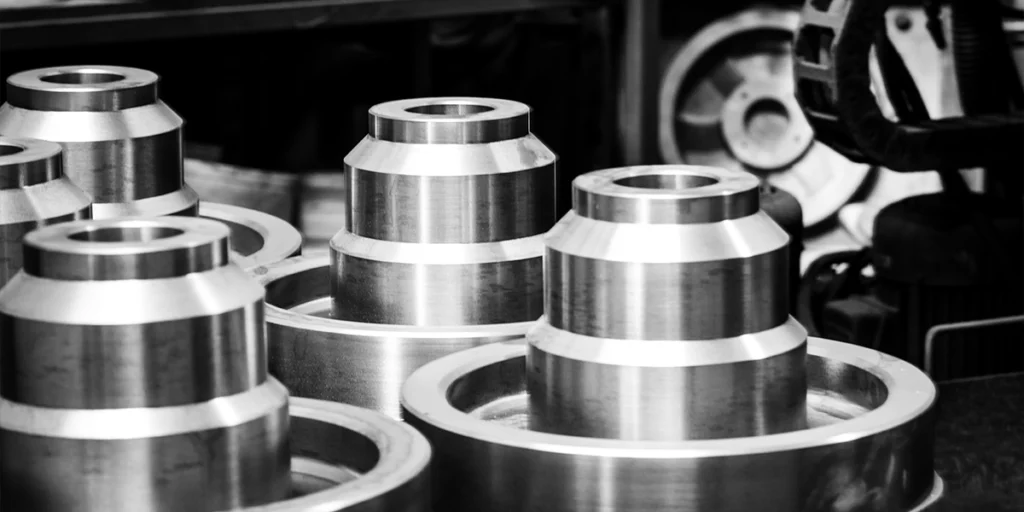
Alloy steel casting and deep processing
For large, high-strength, or complex alloy steel parts, relying solely on CNC machining is not necessarily the most economical solution. Many industrial projects first form the basic shape of the part through casting, and then combine this with subsequent machining to complete the key dimensions and precision structure. This is also a very common manufacturing route in the deep processing of alloy steel.
Compared to cutting directly from a single piece of material, casting can significantly reduce material waste, and is especially suitable for complex parts such as large flanges, valve bodies, pump bodies, and mechanical structural components.
Alloy steel casting process
Alloy steel casting typically involves melting and then injecting the molten metal into a mold to form the final product. Depending on the part’s structure and precision requirements, common processes include:
- Sand casting
- Precision casting
- Investment casting
- Centrifugal casting
Different casting processes are suitable for different applications. For example, large industrial structural parts are usually made using sand casting, while high-precision and complex parts are better suited for precision casting.
However, cast alloy steel parts usually cannot directly meet the final assembly requirements because many key dimensions, sealing surfaces and mating structures still need to be completed by subsequent CNC machining.
This is why professional alloy steel processing service providers usually offer the following:
- Casting
- CNC machining
- Heat treatment
- Surface treatment
Complete manufacturing capabilities.
Deep processing flow of alloy steel
Deep processing of alloy steel usually refers to the secondary precision processing after casting or forging, and its core objective is to make the parts meet the final assembly and use standards.
The complete process typically includes: raw material preparation → casting/forging → heat treatment → CNC rough machining → semi-finishing → finishing → surface treatment → inspection.
For high-strength alloy steel parts, deformation control after heat treatment is a key challenge in deep machining. Many parts undergo dimensional changes after quenching or tempering, so it is necessary to allow for reasonable machining allowances and restore critical dimensions through subsequent finishing.
In actual projects, we often optimize the process route in advance based on the part structure, for example:
- Rough machining followed by heat treatment
- Stress release in stages
- Multiple clamping reduces deformation
- Final processing of critical dimensions
This process experience is especially important for large alloy steel parts.
Precision casting alloy steel machining
Precision casting is suitable for alloy steel parts with complex structures, high dimensional requirements, and high material utilization requirements. Compared with traditional sand casting, precision casting can achieve better surface quality and higher dimensional consistency.
Precision-cast alloy steel parts are used in many industries, for example:
- Aerospace
- Food processing equipment
- Oil and natural gas
- Industrial valves
- Automated equipment
However, it should be noted that even with precision casting, most critical functional surfaces still require CNC finishing, especially:
- Mating hole
- Threaded structure
- Sealing surface
- High-precision assembly area
Therefore, what truly determines the final quality of a part is often not just the casting itself, but the overall subsequent processing capabilities.
As a professional alloy steel CNC machining service provider, we can provide services according to our clients’ project needs:
- Precision casting post-machining
- Multi-axis CNC finishing
- Heat treatment equipment
- Surface treatment support
We help customers reduce supply chain links and improve overall manufacturing stability.
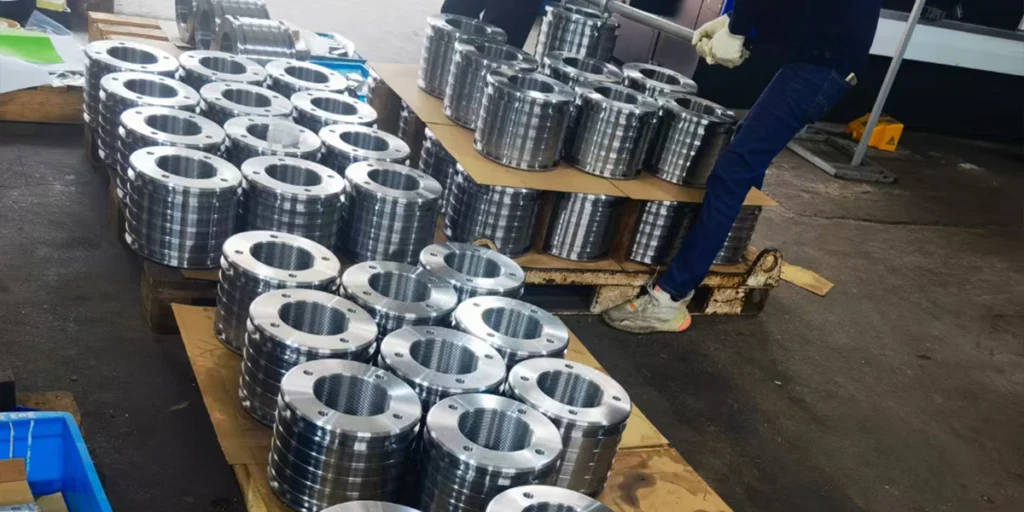
How to select the right alloy steel for processing
For many purchasing personnel and product engineers, the real difficulty is not finding a processing supplier, but rather being unsure which processing technology to choose.
Because different processes will directly affect:
- Parts cost
- Processing cycle
- Dimensional accuracy
- Material utilization rate
- Subsequent assembly stability
Especially in alloy steel parts projects, incorrect process selection often means higher rework risks and manufacturing costs.
According to the part structure
Part structure is usually the primary factor determining the manufacturing process. If so:
- Complex three-dimensional structures
- Multi-faceted machined parts
- High-precision cavity
It is usually more suitable for CNC milling.
in the case of:
- Shaft-type parts
- Cylindrical structure
- Threaded fasteners
It is more suitable for CNC turning.
For two-dimensional sheet metal structural components, laser cutting often offers greater efficiency advantages.
Many complex industrial parts actually combine multiple processes. For example: laser cutting → welding → CNC precision machining → grinding.
Therefore, suppliers with complete manufacturing capabilities are usually better able to control overall quality and delivery time.
According to accuracy requirements
Different processes can achieve different ranges of precision.
- Laser cutting is more suitable for medium-precision structural components.
- CNC machining is suitable for high-precision functional parts.
- Grinding is suitable for ultra-high precision surfaces.
If the parts involve:
- High coaxiality
- Precision fit
- Sealed structure
- High surface quality
Precision CNC machining or even grinding processes are usually required.
For high-precision alloy steel parts, we usually develop a complete process route based on the material condition, heat treatment conditions, and final tolerance requirements, rather than simply relying on a single processing method.
Based on batch requirements
Production volume also influences process selection. For small-batch or prototype projects, CNC machining is often more flexible because it eliminates the need for additional molds and is suitable for rapid iteration.
For large-volume projects, casting or forging combined with subsequent finishing typically offers a cost advantage. For example:
- Single, complex parts are better suited for five-axis CNC machining.
- Thousands of repetitive parts are better suited for casting + CNC post-machining
Therefore, it is very important to conduct DFM (manufacturability analysis) at the beginning of a project.
Professional alloy steel processing service providers not only offer manufacturing capabilities, but more importantly, help customers optimize their manufacturing solutions.
At Zhuohua Hardware, we support:
- CNC milling of alloy steel
- CNC turning of alloy steel
- Precision machining
- Laser cutting accessories
- From prototype to mass production
We can recommend more reasonable alloy steel processing solutions for customers based on the part’s structure, precision, and budget requirements.